
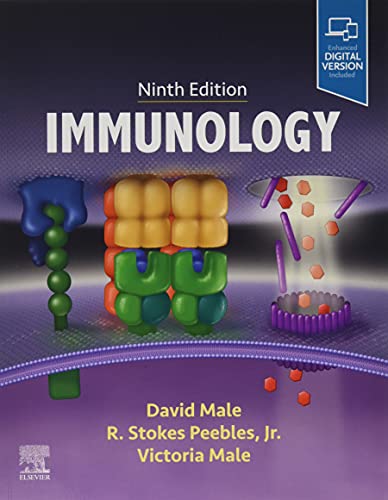
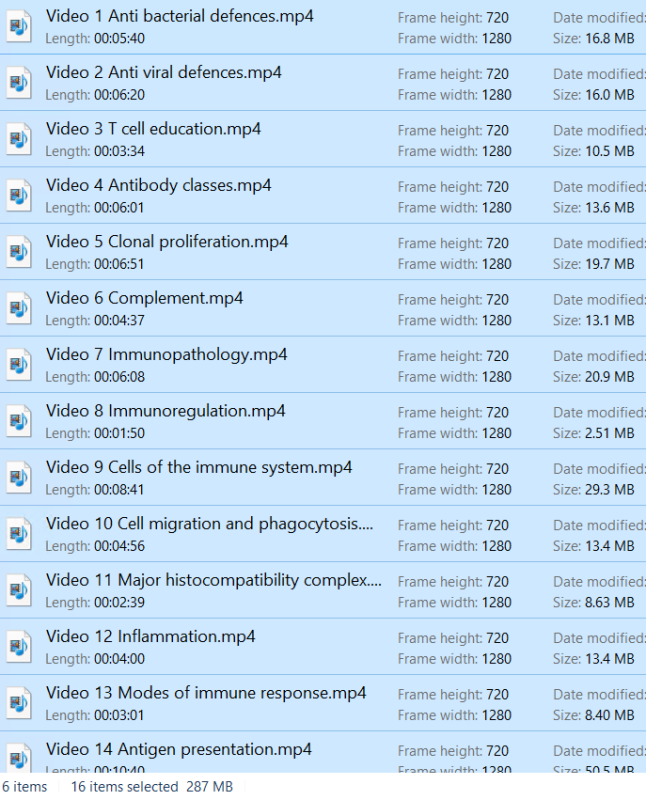
Immunology, 9th Edition (Videos, Organized)


Original price was: $70.00.$10.00Current price is: $10.00.
Samples for Courses Can be found here : Free Samples Here!
Immunology, 9th Edition (Videos, Organized)
Immunology, 9th Edition (Videos, Organized)
Comprehensive Immunology Learning Resource Based on the Best-Selling Textbook
Immunology, 9th Edition is a comprehensive educational resource based on the internationally recognized textbook edited by David Male, R. Stokes Peebles Jr., and Victoria Male. This organized video collection is designed to help students and healthcare professionals understand the fundamental principles of immunology, immune system function, immune disorders, host defense mechanisms, and the clinical applications of immunological science.
Course Features
- Organized Video Lectures
- Chapter-Based Learning Structure
- Clinical Correlations
- Immunology Fundamentals
- Adaptive and Innate Immunity
- Immune Disorders and Diseases
- Medical Student Friendly Format
- Board Exam-Oriented Concepts
Program Overview
Immunology remains one of the most important foundational sciences in modern medicine, influencing virtually every medical specialty. This educational resource provides a structured review of the immune system, covering both basic immunological principles and clinical applications.
The content emphasizes the relationship between immune mechanisms and disease processes, helping learners understand how immunology applies to infectious diseases, autoimmune disorders, transplantation, allergy, cancer immunotherapy, and vaccine development.
Learning Objectives
Upon completion of this program, learners should be able to:
- Understand the structure and function of the immune system.
- Differentiate innate and adaptive immune responses.
- Explain mechanisms of antigen recognition and immune activation.
- Identify major immune cell populations and their functions.
- Understand the pathogenesis of immune-mediated diseases.
- Apply immunologic principles to clinical medicine.
- Interpret immune responses in infection, cancer, and autoimmunity.
Topics Covered
Introduction to Immunology
- Overview of the Immune System
- Cells and Tissues of Immunity
- Immune System Organization
Innate Immunity
- Physical and Chemical Barriers
- Phagocytes
- Natural Killer Cells
- Complement System
- Inflammatory Responses
Adaptive Immunity
- B Lymphocytes
- T Lymphocytes
- Antibody Responses
- Cellular Immunity
- Immunological Memory
Antigens and Antibodies
- Antigen Recognition
- Immunoglobulin Structure
- Antibody Functions
- Monoclonal Antibodies
Major Histocompatibility Complex (MHC)
- Antigen Presentation
- MHC Class I and II
- T-Cell Activation
Cytokines and Immune Regulation
- Interleukins
- Interferons
- Tumor Necrosis Factors
- Immune Signaling Networks
Infection and Immunity
- Viral Immunity
- Bacterial Immunity
- Fungal Immunity
- Parasitic Infections
Hypersensitivity Reactions
- Type I Hypersensitivity
- Type II Hypersensitivity
- Type III Hypersensitivity
- Type IV Hypersensitivity
Autoimmune Diseases
- Systemic Lupus Erythematosus
- Rheumatoid Arthritis
- Multiple Sclerosis
- Autoimmune Pathogenesis
Immunodeficiency Disorders
- Primary Immunodeficiencies
- Secondary Immunodeficiencies
- HIV/AIDS
Transplantation Immunology
- Graft Rejection
- Histocompatibility
- Immunosuppressive Therapy
Tumor Immunology
- Cancer Immunity
- Immune Surveillance
- Immunotherapy
- Checkpoint Inhibitors
Vaccines
- Vaccine Development
- Mechanisms of Protection
- Modern Vaccine Technologies
Target Audience
This resource is ideal for:
- Medical Students
- Nursing Students
- Pharmacy Students
- Physician Assistant Students
- Biomedical Science Students
- Residents and Trainees
- Healthcare Professionals
- Educators in Medical Sciences
Educational Highlights
✔ Based on the Best-Selling Immunology Textbook
✔ Structured Chapter-Based Learning
✔ Strong Clinical Correlations
✔ Board Examination Preparation
✔ Modern Immunology Concepts
✔ Autoimmunity and Immunodeficiency Coverage
✔ Cancer Immunotherapy Updates
✔ Vaccine and Infectious Disease Immunology
Clinical & Educational Value
Immunology, 9th Edition provides a comprehensive understanding of immune system biology and its clinical relevance. By integrating foundational science with modern medical applications, the program helps learners build a strong immunology foundation applicable across medicine, pathology, infectious diseases, rheumatology, oncology, and transplantation.
Related products
Cardiology

Internal Medicine

Critical Care - Emergency medicine

Critical Care - Emergency medicine

Internal Medicine

Anesthesiology & pain medicine
Critical Care - Emergency medicine
2022 UPDATES IN THERAPEUTICS: CRITICAL CARE PHARMACY PREPARATORY REVIEW AND RECERTIFICATION COURSE
Critical Care - Emergency medicine