
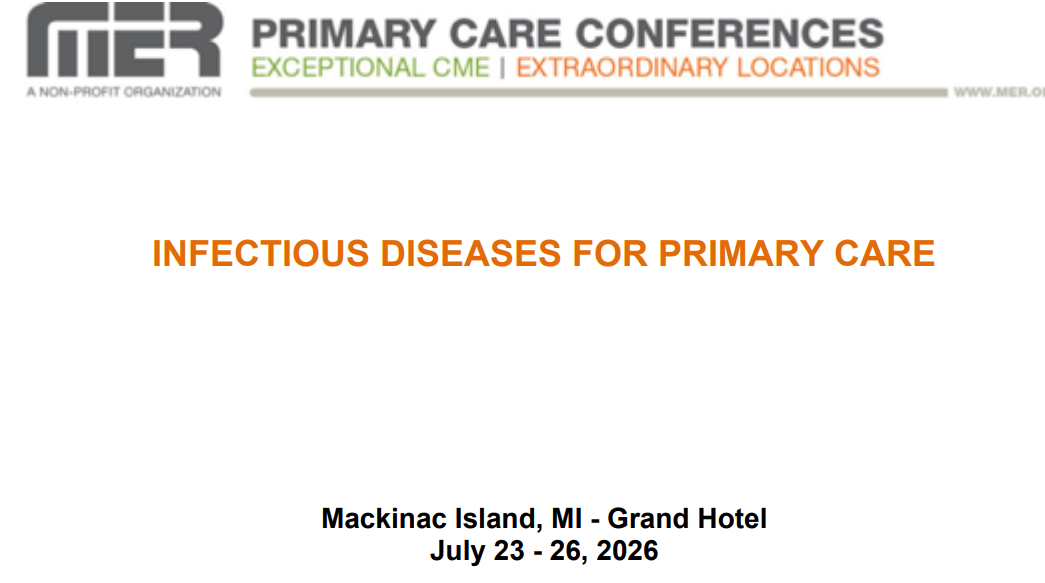
MER Primary Care Conferences Infectious Diseases for Primary Care Jul 23-26, 2026

$130.00
A primary care infectious diseases review spanning antimicrobial stewardship and common system-based infections.
Delivery Information: This Product is shared via google drive download link.
Please note: there are no CME points or certificate associated with this course.
For assistance, contact us on Telegram: https://t.me/medicalamboss1
MedicalAmboss File Scope: This listing summarizes the official educational program for reference. Provider registration, live participation, streaming access, CME or MOC credit, certificates, apps, accounts, and post-course access are not represented as included unless they are explicitly present in the listed store files. MedicalAmboss.
MER Primary Care Conferences Infectious Diseases for Primary Care 2026
Comprehensive Infectious Disease Updates for Primary Care
Stay current with practical approaches to the diagnosis, prevention, and management of infectious diseases with the MER Primary Care Conferences – Infectious Diseases for Primary Care 2026.
Organized by Medical Education Resources (MER), this continuing medical education program provides physicians and healthcare professionals with clinically relevant updates covering common, complex, and emerging infectious diseases encountered in primary care and multidisciplinary clinical practice.
The conference was held July 23–26, 2026, at the Grand Hotel in Mackinac Island, Michigan.
The program emphasizes practical clinical decision-making across antimicrobial therapy, respiratory and gastrointestinal infections, genitourinary disease, immunocompromised patients, CNS infections, musculoskeletal infections, travel medicine, emerging infections, vaccination, and antimicrobial stewardship.
Course Details
- Course: Infectious Diseases for Primary Care
- Provider: Medical Education Resources (MER)
- Year: 2026
- Conference Dates: July 23–26, 2026
- Location: Grand Hotel, Mackinac Island, Michigan
- Specialty: Infectious Diseases / Internal Medicine / Primary Care
- Educational Focus: Diagnosis, treatment, prevention, and management of infectious diseases
- Language: English
Course Overview
Infectious diseases remain a significant component of primary care and hospital-based clinical practice. Physicians must be prepared to recognize serious infections, select appropriate diagnostic strategies, prescribe antimicrobial therapy responsibly, and identify patients who require urgent or specialized management.
The MER Infectious Diseases for Primary Care 2026 program provides a comprehensive review of important infectious disease topics through clinically focused education.
Participants will review the evaluation and treatment of respiratory tract infections, gastrointestinal infections, genitourinary infections, skin and soft tissue infections, osteomyelitis, joint infections, CNS infections, Candida infections, and healthcare-associated infections.
Special attention is also given to antimicrobial stewardship, emerging infectious diseases, travel-associated infections, immunization strategies, infections in immunocompromised patients, and infectious complications associated with cancer therapy.
Who Should Attend?
This program is designed for office-based primary care providers and other healthcare professionals seeking current information and practical strategies for managing infectious diseases.
It is particularly relevant for:
- Primary Care Physicians
- Family Medicine Physicians
- Internal Medicine Physicians
- Infectious Disease Specialists
- Emergency Medicine Physicians
- Oncologists
- Neurologists
- Orthopedic Surgeons
- Gastroenterologists
- Urologists
- Gynecologists
- Other healthcare professionals involved in the diagnosis and management of infectious diseases
Learning Objectives
Upon completion of this program, participants should be better able to:
- Recognize risk factors, diagnostic indicators, and clinical features associated with osteomyelitis and joint infections.
- Develop an appropriate clinical approach to febrile patients with potentially life-threatening diseases in hospital and outpatient settings.
- Describe unique infectious risks affecting cancer patients receiving immunotherapy.
- Diagnose and manage common and complicated genitourinary infections.
- Recommend appropriate immunizations based on patient-specific risk factors.
- Discuss emerging infectious diseases, including resurgence of vaccine-preventable diseases, zoonoses, and diseases associated with animal exposure.
- Apply case-based clinical reasoning to the diagnosis and treatment of respiratory tract infections.
- Evaluate the severity of diarrhea and determine when antimicrobial or supportive treatment is appropriate.
- Describe the goals of an antimicrobial stewardship program and strategies for responsible antimicrobial therapy.
- Review important travel-associated infections and their clinical presentations.
- Identify patients at increased risk for healthcare-associated infections.
- Apply appropriate evaluation strategies for infections in immunocompromised patients.
- Review the epidemiology and microbiology of skin and soft tissue infections (SSTIs).
- Describe the epidemiology, diagnosis, and treatment of common central nervous system infectious disease syndromes.
- Recognize risk factors and clinical manifestations associated with Candida infections.
Key Topics Covered
The program provides clinically relevant updates across major areas of infectious disease medicine, including:
Musculoskeletal Infections
Review the recognition and management of serious infections involving bones and joints, including:
- Osteomyelitis
- Septic arthritis
- Risk factors for musculoskeletal infections
- Diagnostic approaches
- Clinical presentation and treatment considerations
Fever & Serious Infections
Develop a systematic approach to evaluating febrile patients and recognizing potentially life-threatening infectious diseases in both outpatient and hospital settings.
Infections in Cancer Patients
Understand the unique infectious risks encountered in patients receiving cancer therapy, including patients undergoing modern immunotherapy.
Genitourinary Infections
Review diagnosis and management strategies for common and complicated urinary and genitourinary infections.
Immunizations
Apply patient-specific risk assessment when recommending vaccinations and preventive infectious disease strategies.
Emerging Infectious Diseases
Review important emerging and re-emerging infectious threats, including:
- Vaccine-preventable diseases
- Zoonotic infections
- Animal-associated infections
- Emerging infectious pathogens
Respiratory Tract Infections
Use case-based clinical scenarios to improve diagnosis and treatment decisions involving common respiratory infections.
Gastrointestinal Infections & Diarrhea
Assess diarrhea severity, determine appropriate diagnostic testing, and identify patients who may benefit from targeted treatment.
Antimicrobial Stewardship
Review the principles of responsible antimicrobial prescribing, including:
- Antimicrobial selection
- Appropriate treatment duration
- Prevention of antimicrobial resistance
- Goals of antimicrobial stewardship programs
Travel Medicine
Recognize important infections associated with international travel and apply appropriate diagnostic and management strategies.
Healthcare-Associated Infections
Identify patients at increased risk for healthcare-associated infections and review approaches to prevention and clinical management.
Infections in Immunocompromised Patients
Review evaluation strategies for infectious complications in patients with impaired immune function.
Skin & Soft Tissue Infections
Review the epidemiology, microbiology, diagnosis, and clinical management of common skin and soft tissue infections (SSTIs).
CNS Infections
Review common central nervous system infectious syndromes with emphasis on:
- Epidemiology
- Clinical presentation
- Diagnosis
- Treatment
Candida Infections
Recognize important risk factors and clinical manifestations associated with Candida infections and invasive candidiasis.
Why This Course Is Useful
The MER Primary Care Conferences Infectious Diseases for Primary Care 2026 provides a broad clinical review of infectious disease topics encountered across primary care and multiple medical specialties.
The program is particularly useful for clinicians looking to strengthen their approach to:
- Infectious disease diagnosis
- Antimicrobial treatment
- Antimicrobial stewardship
- Immunization
- Emerging infections
- Respiratory infections
- Gastrointestinal infections
- Genitourinary infections
- CNS infections
- Musculoskeletal infections
- Skin and soft tissue infections
- Immunocompromised patients
- Healthcare-associated infections
- Travel medicine
- Infection prevention
Its multidisciplinary focus makes it valuable not only for primary care physicians but also for specialists who routinely encounter infectious complications in their clinical practice.
Topics
Thursday, July 23, 2026
-
Bone and Joint Infections: Presentation on the most important syndromes and pathogens involved in bone and joint infections – e.g., osteomyelitis, septic arthritis, bursitis, prosthetic joint infections and others – including related diagnostic, therapeutic and prevention pearls.
-
Ambulatory Care Infectious Disease Emergencies: Case-based interactive discussion around exemplary cases that addresses key diagnostic and management strategies for potentially emergent outpatient infectious disease challenges.
-
Animal Bites and Related Syndromes: Bite-wound management and infections caused by pets, with clinical presentations, diagnostic and therapeutic management strategies and important clinical pearls related to rabies prophylaxis and other potentially life-threatening conditions.
-
Immunizations: Presentation on key vaccine preventable diseases and their presentations with an emphasis on the latest recommendations including newest schedules, safety and efficacy information.
-
Emerging Infectious Diseases: Novel influenza viruses, resurgence of vaccine-preventable diseases, zoonoses and disease related to animal exposures (including vectors such as mosquitoes that bear west Nile virus and dengue), bioterrorism and food/waterborne illness.
Friday, July 24, 2026
-
Respiratory Tract Infections: A case-based interactive discussion highlighting critical points regarding the diagnosis and management of pneumonia and bronchitis – with a focus on the impact of multidrug resistant pathogens.
-
Gastrointestinal Infections & Clostridiodes Difficile: Presentation on important enteric pathogens and their recognition, diagnosis and management; special emphasis on clostridiodes difficile colitis and related updates from the ID and infection control literature.
-
Genitourinary Infections: Presentation on a relevant and clinically practical approach to the patient with genitourinary complaints focusing on the latest guidelines for the range of urinary tract infections and highlights of selected and important sexually-transmitted disease syndromes.
-
Antimicrobial Stewardship and Multidrug Resistance: Definition of an antimicrobial stewardship program (ASP); Concepts of the antimicrobial stewardship program; Four goals of antimicrobial stewardship; Most recent additions to the antimicrobial armamentarium.
-
Travel-Associated Infections: Presentation on key travel-associated infections including tick-borne infections in North America and emerging pathogens (including zoonotic infections of public health significance). Emphasis will also be given to protecting health care workers as they travel abroad.
Saturday, July 25, 2026
-
Healthcare-Associated Infections: Presentation on important pathogens in the healthcare setting and related clinical, epidemiologic and infection control information (please note that the discussion on blood-borne pathogens will NOT suffice for standard hospital CME requirements for BBP training).
-
Infectious Diseases in the Special Host: Case-based interactive discussion involving important infectious disease syndromes in three special hosts: the diabetic patient, the HIV/AIDS patient and the pregnant woman.
-
Skin & Soft Tissue Infections: Presentation on important skin and soft-tissue infections and their prompt recognition, emphasizing evaluation and management strategies.
-
Central Nervous System Infections: Presentation on common CNS infectious disease presentation and syndromes including basic epidemiology, diagnosis and treatment strategies.
Sunday, July 26, 2026
-
Infections in Cancer Patients on Immunotherapy: Discussion of the unique infectious risks faced by cancer patients receiving immunotherapy; Discussion of how immune checkpoint inhibitors alter host defenses; Review of the common infection patterns, diagnostic challenges, and strategies for the prevention and management in this growing patient population.
-
Candida Infections: Discussion of Candida and emerging C.auris as a major cause of opportunistic infection; Review of the epidemiology, risk factors, and clinical manifestations of Candida infections; Review of current approaches to diagnosis, antifungal therapy, and emerging resistance trends relevant internists and PCPs.
Related products
Critical Care - Emergency medicine

Critical Care - Emergency medicine

Internal Medicine

Cardiology

Medical Accounts

Medical Accounts

Internal Medicine