
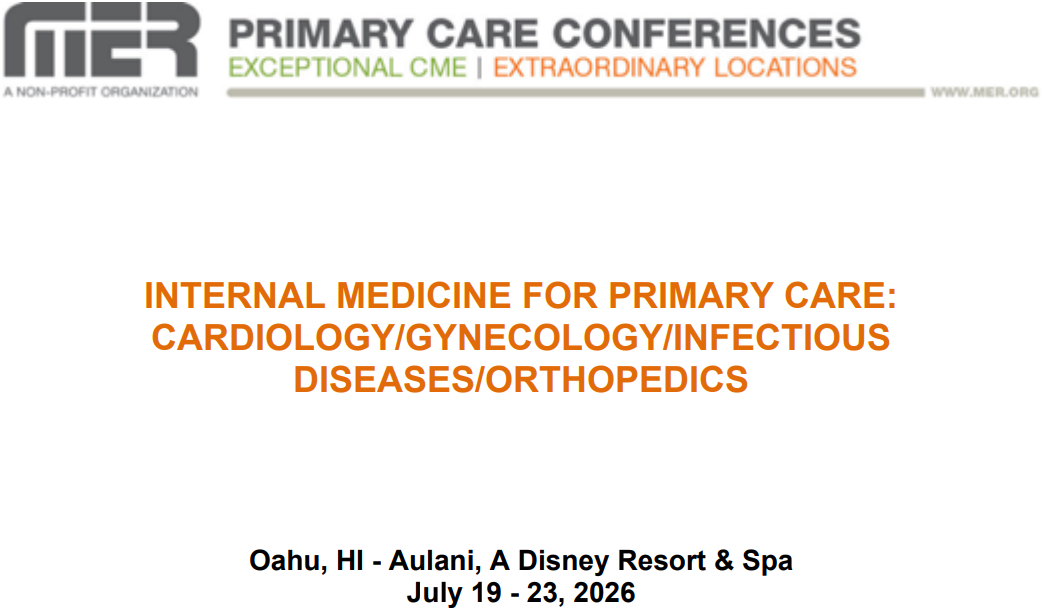
MER Primary Care Conferences Internal Medicine for Primary Care Cardio Gyn ID Ortho Jul 19-23, 2026

Original price was: $1,395.00.$140.00Current price is: $140.00.
MER Primary Care, July 19–23, 2026, covers cardiology, gynecology, infectious diseases and orthopedics for outpatient practice.
This Product is shared via google drive download link. Please share your correct Gmail id while placing the order.
Please note: there are no CME points or certificate associated with this course.
Samples for Courses Can be found here: Free Samples Here!
MedicalAmboss File Scope: This listing provides only the downloadable files described on this page. Provider registration, live or streaming access, platform features, CME or other credit, certificates, and related subscription benefits are not included unless explicitly stated in the product files section. MedicalAmboss.
MER Primary Care 2026: Cardiology, Gynecology, Infectious Diseases & Orthopedics
Comprehensive Primary Care Review in Cardiology, Women’s Health, Infectious Diseases & Orthopedics
The MER Internal Medicine for Primary Care: Cardiology, Gynecology, Infectious Diseases & Orthopedics 2026 program provides a multidisciplinary clinical review of common and important conditions encountered in primary care practice.
Organized by Medical Education Resources (MER), the original live conference was held from July 19–23, 2026, at Aulani, A Disney Resort & Spa in Oahu, Hawaii.
The curriculum integrates evidence-based updates across four major clinical specialties:
- Cardiology
- Gynecology and Women’s Health
- Infectious Diseases
- Orthopedics and Musculoskeletal Medicine
Topics include cardiovascular prevention, coronary artery disease, heart failure, arrhythmias, hypertension, abnormal uterine bleeding, HPV and cervical cancer screening, menopause, common orthopedic injuries, low back pain, respiratory infections, CNS infections, skin and soft tissue infections, gastrointestinal infections, and genitourinary infections.
Course Details
- Provider: Medical Education Resources (MER)
- Official Course: Internal Medicine for Primary Care: Cardio/Gyn/ID/Ortho
- Year: 2026
- Original Conference Dates: July 19–23, 2026
- Location: Aulani, A Disney Resort & Spa
- Location Region: Oahu, Hawaii
- Specialties: Internal Medicine, Cardiology, Gynecology, Infectious Diseases, Orthopedics
- Focus: Evidence-Based Primary Care Updates
- Original MER Conference Listing: 20 Credit Hours
Who Should Attend?
This program is designed primarily for office-based primary care providers and other healthcare professionals seeking clinically relevant updates across multiple specialties.
Best For
- Primary Care Physicians
- Internal Medicine Physicians
- Family Medicine Physicians
- Cardiologists
- Gynecologists
- OB/GYN Physicians
- Infectious Disease Specialists
- Orthopedic Physicians
- Sports Medicine Physicians
- Nurse Practitioners
- Physician Assistants
- Other healthcare professionals involved in primary care
Cardiology
Cardiovascular Disease Prevention
Review contemporary approaches to cardiovascular risk reduction including:
- Cardiovascular risk assessment
- Lifestyle modification
- Exercise
- Lipid management
- Cholesterol guidelines
- Cardiometabolic disease prevention
- Pharmacologic treatment
- Primary prevention strategies
Suspected Coronary Artery Disease
Develop a structured clinical approach to patients with suspected CAD.
Topics include:
- Cardiovascular risk assessment
- Symptom evaluation
- ECG
- Echocardiography
- Nuclear imaging
- Advanced cardiovascular imaging
- Appropriate test selection
- Special patient populations
Heart Failure
Review contemporary evidence-based approaches to heart failure.
Topics include:
- Heart failure classification
- HFrEF
- HFpEF
- Guideline-directed medical therapy
- ACE inhibitors
- ARBs
- ARNI therapy
- Beta blockers
- Mineralocorticoid receptor antagonists
- SGLT2 inhibitors
- Device therapy
- Acute decompensated heart failure
Arrhythmias & Atrial Fibrillation
Review current diagnostic and management approaches to:
- Palpitations
- Cardiac arrhythmias
- Atrial fibrillation
- Rate control
- Rhythm control
- Anticoagulation
- Stroke-risk assessment
- Ventricular arrhythmias
- Referral considerations
Hypertension
Review contemporary hypertension assessment and treatment.
Topics include:
- Hypertension diagnosis
- Treatment thresholds
- Blood pressure targets
- Initial pharmacotherapy
- Combination therapy
- Resistant hypertension
- Hypertension in diabetes
- Hypertension in older adults
- Hypertension in renal disease
Gynecology & Women’s Health
Annual Women’s Health Visit
Review evidence-based approaches to the annual women’s health examination.
Topics include:
- Preventive screening
- Clinical breast examination
- Pelvic examination
- Vaccination
- Health-risk assessment
- Preventive counseling
- Age-appropriate screening
Abnormal Uterine Bleeding
Review evaluation and treatment of:
- Menstrual abnormalities
- Ovulatory bleeding
- Anovulatory bleeding
- Abnormal uterine bleeding
- Diagnostic approaches
- Appropriate treatment options
Abnormal Pap Smears & HPV
Review current approaches to:
- Cervical cancer screening
- Abnormal cytology
- ASC-US
- LSIL
- HSIL
- Atypical glandular cells
- HPV testing
- HPV vaccination
- Management of abnormal Pap results
Perimenopause
Review the physiologic transition of perimenopause and its clinical manifestations.
Topics include:
- Hormonal changes
- Physical symptoms
- Emotional symptoms
- Clinical assessment
- Medical treatment options
- Non-pharmacologic management
Menopause
Review clinical management of menopause including:
- Menopausal symptoms
- Physical changes
- Cognitive changes
- Emotional changes
- Hormonal therapy
- Benefits and risks of treatment
- Bioidentical hormone concepts
- Compounded therapies
- Supplements
Orthopedics & Musculoskeletal Medicine
Shoulder Disorders
Review the anatomy, diagnosis, examination, and management of common shoulder conditions including:
- Rotator cuff disorders
- Shoulder impingement
- Frozen shoulder
- Subacromial bursitis
- Bicipital tendinitis
- Acromioclavicular joint disease
Wrist, Hand & Finger Disorders
Review common upper-extremity conditions including:
- Carpal tunnel syndrome
- Thumb CMC arthritis
- Ganglion cysts
- Trigger finger
- De Quervain tenosynovitis
- Wrist injuries
- Hand injuries
- Finger injuries
Low Back Pain
Develop a systematic approach to spinal pain.
Topics include:
- Diagnostic triage
- Mechanical low back pain
- Radicular pain
- Concerning spinal symptoms
- Clinical assessment
- Current management principles
- Home-based exercise strategies
Knee Disorders
Review knee anatomy, examination, diagnosis, and treatment.
Topics include:
- ACL injuries
- Meniscal pathology
- MRI considerations
- Common sports injuries
- Knee osteoarthritis
- Prepatellar bursitis
- Pes anserine bursitis
- Baker’s cyst
- Joint injection
- X-ray interpretation
Foot & Ankle Disorders
Review common acute and chronic foot and ankle conditions encountered in primary care.
Topics include:
- Acute injuries
- Chronic injuries
- Pain syndromes
- Injury mechanisms
- Clinical examination
- Differential diagnosis
- Initial management
Infectious Diseases
Respiratory Tract Infections
Use case-based clinical learning to review:
- Pneumonia
- Bronchitis
- Respiratory infection diagnosis
- Treatment planning
- Antibiotic considerations
- Multidrug-resistant pathogens
Central Nervous System Infections
Review common CNS infectious disease syndromes including:
- Epidemiology
- Clinical presentation
- Diagnostic assessment
- Treatment strategies
- Recognition of serious CNS infection
Skin & Soft Tissue Infections
Review important skin and soft tissue infections with emphasis on:
- Epidemiology
- Microbiology
- Clinical recognition
- Patient evaluation
- Management strategies
Gastrointestinal Infections
Review important enteric pathogens and infectious diarrhea.
Topics include:
- Infectious diarrhea
- Severity assessment
- Diagnostic evaluation
- Treatment decisions
- Enteric pathogens
- Clostridioides difficile infection
- Infection-control considerations
Genitourinary Infections
Review the diagnosis and management of common genitourinary infectious diseases.
Topics include:
- Urinary tract infections
- Genitourinary complaints
- UTI treatment
- Sexually transmitted infections
- Diagnostic evaluation
- Guideline-based management
Learning Objectives
Upon completion of this program, participants should be better able to:
- Implement lifestyle changes and lipid and cholesterol recommendations for prevention of coronary artery disease.
- Describe the work-up, risk assessment, and test selection for patients with suspected CAD.
- Implement treatment strategies consistent with evidence-based approaches to heart failure.
- Describe current diagnostic and treatment approaches to arrhythmias and atrial fibrillation.
- Explain current concepts in the diagnosis and treatment of hypertension.
- Identify evidence-based tools for incorporating appropriate elements into the annual women’s health visit.
- Assess and manage abnormal uterine bleeding.
- Describe the management of abnormal Pap smears and HPV.
- Discuss the menopausal transition and the risks and benefits of treatment options.
- Review management of HPV infection and abnormal cervical screening results.
- Diagnose and treat common shoulder injuries and disorders.
- Diagnose and treat common wrist, hand, and finger conditions.
- Review effective management strategies for low back pain.
- Describe the anatomy and function of the knee joint.
- Recognize common chronic injuries and pain syndromes involving the foot and ankle.
- Utilize case-based approaches to develop treatment plans for respiratory tract infections.
- Describe the epidemiology, diagnosis, and treatment of common CNS infectious disease syndromes.
- Review the epidemiology and microbiology of skin and soft tissue infections.
- Evaluate the severity of infectious diarrhea and determine when treatment may be indicated.
- Diagnose and manage common genitourinary infections.
Major Clinical Topics
Cardiology
- Coronary Artery Disease
- Cardiovascular Prevention
- Dyslipidemia
- Heart Failure
- HFrEF
- HFpEF
- Arrhythmias
- Atrial Fibrillation
- Hypertension
Gynecology
- Women’s Health
- Abnormal Uterine Bleeding
- Pap Smears
- HPV
- Cervical Cancer Screening
- Perimenopause
- Menopause
- Hormone Therapy
Infectious Diseases
- Pneumonia
- Bronchitis
- CNS Infections
- Skin & Soft Tissue Infections
- Infectious Diarrhea
- C. difficile
- Urinary Tract Infections
- Sexually Transmitted Infections
Orthopedics
- Shoulder Injuries
- Rotator Cuff Disorders
- Wrist & Hand Disorders
- Low Back Pain
- Knee Injuries
- Knee Osteoarthritis
- Foot & Ankle Disorders
- Sports Injuries
Why This Course Is Valuable
The MER Internal Medicine for Primary Care: Cardiology, Gynecology, Infectious Diseases & Orthopedics 2026 program combines four highly relevant areas of everyday clinical practice within one multidisciplinary review.
Rather than concentrating on one specialty, the program provides clinicians with practical updates across:
Cardiovascular Medicine → Women’s Health → Musculoskeletal Medicine → Infectious Diseases
This broad clinical scope makes it particularly relevant for primary care and internal medicine practitioners managing diverse patient populations.
4. Short Description
The MER Internal Medicine for Primary Care: Cardiology, Gynecology, Infectious Diseases & Orthopedics 2026 program provides a multidisciplinary review covering CAD, heart failure, arrhythmias, hypertension, women’s health, HPV, menopause, orthopedic injuries, low back pain, respiratory infections, CNS infections, SSTIs, gastrointestinal infections, and genitourinary infections.
Topics
Sunday, July 19, 2026
-
The Knee: Anatomy, Common Injuries, and Exam Techniques (Orthopedics): Discussion of the anatomy and function of the knee joint; Discussion of clinical approaches to treating ACL injuries, meniscus, common sports injuries, osteoarthritis, knee bursitis, prepatellar and pes anserine bursitis, and Baker’s cyst; The basics and common pitfalls of orthopedic x-ray interpretation; How and when to utilize joint aspiration and injection for the knee joint.
-
Hip and Thigh (Orthopedics): Emphasizing the tools, physical diagnostic techniques and basic investigations available to the primary care practitioner, a practical approach to the undifferentiated hip problem will be reviewed. Diagnostic triage, historical clues and physical examination pearls pertaining to hip conditions will be covered, and evidence-based management.
-
Ankle and Foot (Orthopedics): This presentation will address a series of common acute and chronic injuries and pain syndromes to the foot and ankle as they would present in the primary care setting. The focus will be on developing a working differential diagnosis based on the historical mechanism of injury and exam findings.
Monday, July 20, 2026
-
Annual Exam for Women (Gynecology): Best practices in offering annual pelvic examinations in asymptomatic non-pregnant women; Determination of who should be offered a clinical breast exam as a routine part of the annual women’s health exam; The principal elements of the annual women’s health visit: screening, vaccinations, evaluation of health risks and needs, counseling; Evidence-based tools to guide components of the annual women’s health visit based on age and health needs.
-
Abnormal Uterine Bleeding (Gynecology): Overview of normal/abnormal menstrual physiology/profile; Menstrual disturbances; Ovulatory and anovulatory uterine bleeding; Other menstrual abnormalities; Diagnosis and appropriate treatment options.
-
Abnormal Pap Smears and High Risk HPV (Gynecology): Current recommendations for cervical cancer screening; Incorporating the ASCCP consensus guidelines for management of cytologic cervical abnormalities (including ASCUS, LGSIL, HGSIL and atypical glandular cells) into your practice; Algorithm for the appropriate use of HPV testing; History of HPV and effectiveness of its use; Recommendations for missed doses; Storage and administration of HPV vaccines.
-
The Shoulder: Anatomy, Common Injuries, and Exam Techniques (Orthopedics): Discussion of the anatomy and function of the shoulder joint; Discussion of the clinical approaches to treating rotator cuff syndrome, shoulder impingement, frozen shoulder, subacromial bursitis, bicipital tendonitis, and A-C joint disease; The basics and common pitfalls of orthopedic x-ray interpretation; Discussion of how and when to utilize joint aspiration and injection for the shoulder joint.
-
Wrist, Hand, and Fingers (Orthopedics): Discussion of the anatomy and function of the wrist, hand, and finger joints; Discussion of clinical approaches to treating carpal tunnel, CMC arthritis of the thumb, ganglion cyst, trigger finger, de Quervains disease; The basics and common pitfalls of orthopedic x-ray interpretation; How and when to utilize joint aspiration and injection for the wrist, hand and finger joints.
Tuesday, July 21, 2026
-
Primary Prevention of Cardiometabolic CVD (Cardiology): Definitions; AHA/ACC and other lipid guidelines updates; HDL Cholesterol: The good cholesterol?; Metabolic syndrome and/or obesity; Who needs treatment and how much; The role of lifestyle changes, exercise and cardiac rehabilitation; Drug therapy updates; Risk calculation; Role of pooled equations for risk estimates.
-
Work-up of Patients with Suspected CAD (Cardiology): Risk factor evaluation and risk assessment models; 2021 ACC/AHA Chest Pain Guidelines; Test selection including ECG, echo, nuclear and newer imaging modalities (including discussion of appropriate use criteria–AUC); The usefulness of CT scanning; The role of bio markers and EBCT; Suspected CAD in special populations (women, diabetics, the elderly).
-
Heart Failure (Cardiology): Etiologies and stages of heart failure; ACC/AHA Heart Failure Guidelines; Heart failure with reduced EF (HFrEF) and heart failure with preserved EF (HFpEF); Determining patients for referral using biomarkers, eg NT Pro BNP; Treatment options: ACE inhibitors, ARBs, ARNI, beta blockers, mineralocorticoid receptor antagonists, SGLT2i; The role of devices (ICD and/or CRT) in treatment and antiplatelet drugs; Issues related to the hospitalized patient with acute decompensated heart failure and readmissions.
-
Perimenopause: The Beginning and Middle Leading to the End (Gynecology): Discussion of how the body changes in response to diminishing hormones in the body and why patients feel the way they feel during this transformation; Discussion of how to treat perimenopause as a natural physiological transition; Discussion of ways to help patients ease into this next phase using medical and alternative therapies.
-
Menopause: A Diagnosis Not a Disease (Gynecology): Recognition and definition of menopause as the renaissance after the reproductive roller coaster; Discussion of the physical, emotional and cognitive changes that occur as well as breaking down definitions of bioidentical, compounded and “natural” menopausal hormonal therapy; discussion of supplements and what they can and cannot do for the menopausal patient.
Wednesday, July 22, 2026
-
Central Nervous System Infections (Infectious Diseases): Presentation on common CNS infectious disease presentation and syndromes including basic epidemiology, diagnosis and treatment strategies.
-
Skin & Soft Tissue Infections (Infectious Diseases): Presentation on important skin and soft-tissue infections and their prompt recognition, emphasizing evaluation and management strategies.
-
Respiratory Tract Infections (Infectious Diseases): A case-based interactive discussion highlighting critical points regarding the diagnosis and management of pneumonia and bronchitis – with a focus on the impact of multidrug resistant pathogens.
-
Arrhythmias (Cardiology): Types and symptoms of arrhythmias; Approach to the patient: when to treat, when to refer, when to admit; Evaluation of the patient with palpitations; Atrial fibrilation: the use of anticoagulants indications, CVA risk scores, warfarin vs newer oral anticoagulants, controlling heart rate vs rhythm; Ventricular and other arrhythmias: when are they serious.
-
Hypertension (Cardiology): The 2025 AHA/ACC Hypertension Guidelines; The 2024 ESC Guidelines for hypertension; Approaches to treatment thresholds and goals; Choices for initial and combination therapy; Resistant hypertension; Treating special populations: diabetics, the elderly, patients with renal failure; Risk factors by new pooled equations.
Thursday, July 23, 2026
-
Genitourinary Infections (Infectious Diseases): Presentation on a relevant and clinically practical approach to the patient with genitourinary complaints focusing on the latest guidelines for the range of urinary tract infections and highlights of selected and important sexually-transmitted disease syndromes.
-
Gastrointestinal Infections & Clostridiodes Difficile (Infectious Diseases): Presentation on important enteric pathogens and their recognition, diagnosis and management; special emphasis on clostridiodes difficile colitis and related updates from the ID and infection control literature.
Related products
Critical Care - Emergency medicine
2022 UPDATES IN THERAPEUTICS: CRITICAL CARE PHARMACY PREPARATORY REVIEW AND RECERTIFICATION COURSE

Critical Care - Emergency medicine

Internal Medicine

Internal Medicine

Internal Medicine
Internal Medicine

Cardiology

Anesthesiology & pain medicine