
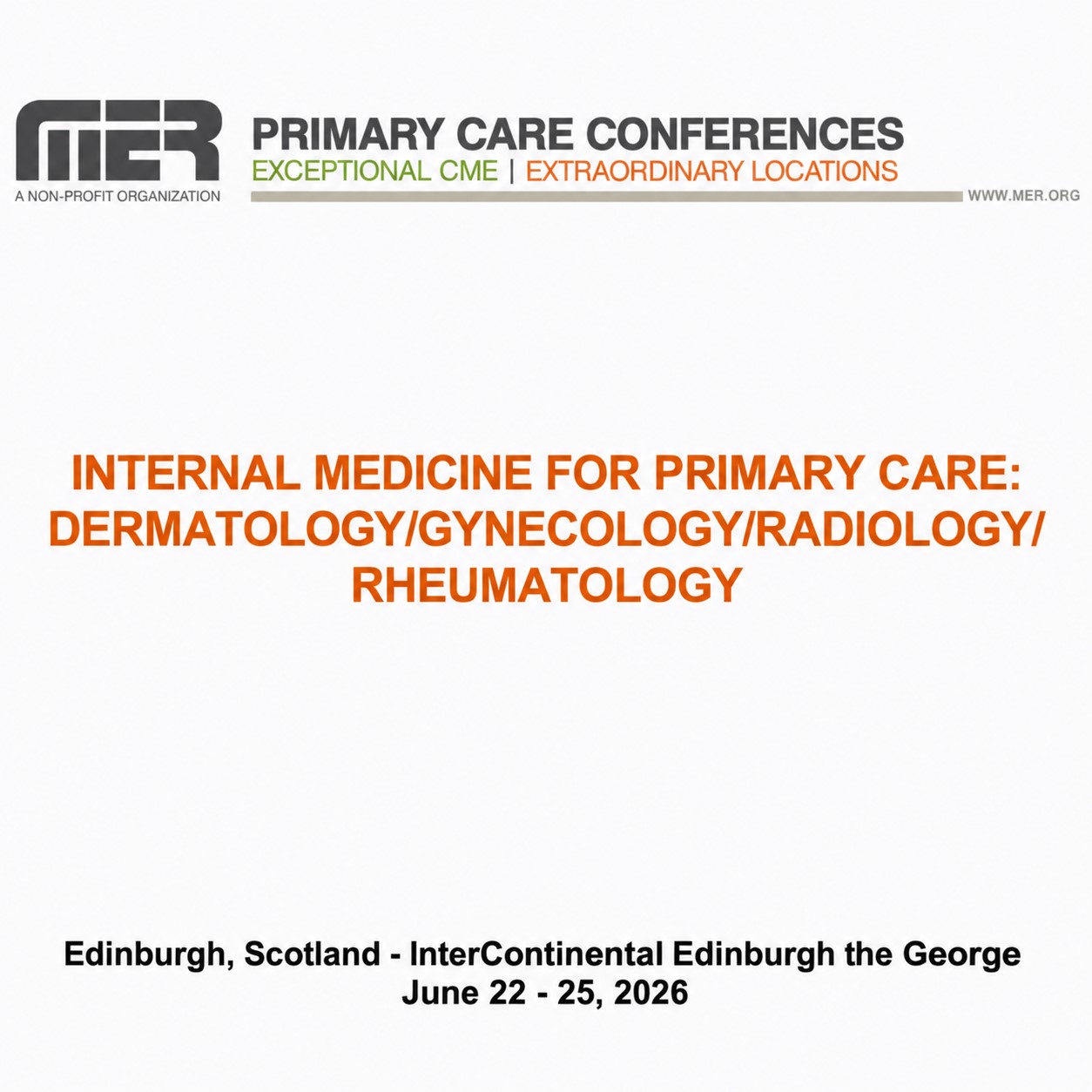
MER Primary Care Conferences Internal Medicine for Primary Care Derm Gyn Rad Rheum Jun 22-25, 2026
$150.00
A June 2026 primary care review spanning dermatology, gynecology, radiology, rheumatology, and practical internal medicine topics.
CME: No CME credit or certificate is included.
Support: https://t.me/medicalamboss1
EXPRESS DISCOVER PayPal
MER Internal Medicine for Primary Care: Derm/Gyn/Rad/Rheum 2026
Dermatology • Gynecology • Radiology • Rheumatology
June 22–25, 2026 | Edinburgh, United Kingdom
Expand your practical primary care knowledge across four important clinical specialties with MER Internal Medicine for Primary Care: Derm/Gyn/Rad/Rheum 2026, an educational program organized by Medical Education Resources (MER).
The original conference was held June 22–25, 2026, at InterContinental Edinburgh the George in Edinburgh, United Kingdom.
The four-day curriculum provides clinically oriented updates in:
- Dermatology
- Gynecology / Women’s Health
- Radiology
- Rheumatology
- Internal Medicine
- Primary Care
Major topics include:
- Atopic and contact dermatitis
- Benign skin tumors
- Premalignant and malignant skin lesions
- Melanoma
- Acne and acneiform eruptions
- Arthritis pharmacology
- NSAIDs and COX-2 inhibitors
- Conventional and biologic DMARDs
- Osteoarthritis
- Rheumatoid arthritis
- Systemic lupus erythematosus
- Spondyloarthropathies
- Gout and pseudogout
- Annual women’s health visits
- Abnormal uterine bleeding
- Contraceptive counseling
- Menopause and hormone replacement therapy
- Appropriate imaging selection
- Contrast utilization
- Thyroid ultrasound
- Superficial soft-tissue masses
- Acute abdominal imaging
- Incidental radiologic findings
The program is particularly useful for clinicians who want evidence-based, practical updates that can be incorporated into everyday outpatient medicine.
Course Details
- Course: Internal Medicine for Primary Care: Derm/Gyn/Rad/Rheum
- Provider: Medical Education Resources – MER
- Year: 2026
- Dates: June 22–25, 2026
- Duration: 4 Days
- Venue: InterContinental Edinburgh the George
- Location: Edinburgh, United Kingdom
- Primary Focus: Primary Care / Internal Medicine
- Specialties: Dermatology / Gynecology / Radiology / Rheumatology
- Original Live Activity: 16 Credit Hours
- Original Pharmacotherapeutic Content: 5.50 ANCC Pharmacotherapeutic Contact Hours
- MedicalAmboss Delivery: Google Drive
- CME / Certificate with MedicalAmboss: Not Included
- Language: English
Course Overview
Primary care frequently requires clinicians to manage disorders that cross traditional specialty boundaries.
During the same clinic session, a physician may evaluate:
- A new rash
- Chronic acne
- A suspicious skin lesion
- Joint pain
- Gout
- Menstrual abnormalities
- Contraceptive questions
- Menopausal symptoms
- A thyroid nodule
- Acute abdominal pain
- An unexpected imaging finding
The MER Derm/Gyn/Rad/Rheum 2026 curriculum provides a practical framework for approaching these diverse problems.
A useful clinical pathway throughout the course is:
Recognize → Build Differential → Select Appropriate Testing → Treat → Counsel → Follow Up / Refer
Learning Objectives
Upon completion of the original educational program, participants should be better able to:
- Differentiate major forms of dermatitis.
- Distinguish atopic, irritant contact, allergic contact, and nummular dermatitis.
- Differentiate common benign and malignant skin tumors.
- Recognize premalignant and cancerous skin lesions.
- Apply an appropriate approach to skin biopsy and referral.
- Develop a stepwise treatment plan for acne and acneiform eruptions.
- Review risks and benefits of pharmacologic arthritis treatment.
- Understand traditional NSAIDs and COX-2 inhibitors.
- Review conventional and biologic DMARDs.
- Apply evidence-based strategies to osteoarthritis.
- Develop a differential diagnosis for inflammatory arthritis.
- Recognize rheumatoid arthritis, SLE, spondyloarthropathies, infectious arthritis, and systemic sclerosis.
- Diagnose and manage gout and pseudogout.
- Apply evidence-based principles to the annual women’s health visit.
- Evaluate abnormal uterine bleeding.
- Provide patient-centered contraceptive counseling.
- Address contraceptive decisions in medically complex patients.
- Review menopausal transition and treatment options.
- Discuss benefits and risks of menopausal hormone therapy.
- Select appropriate imaging studies for common clinical problems.
- Determine when contrast may be appropriate.
- Apply ultrasound principles to thyroid nodules.
- Review ultrasound assessment of superficial soft-tissue masses.
- Use imaging appropriately in acute abdominal disease.
- Apply guideline-based management to common incidental imaging findings.
DERMATOLOGY
Dermatitis
The dermatology curriculum begins with a practical review of common inflammatory skin disorders.
Major forms include:
- Atopic dermatitis
- Allergic contact dermatitis
- Irritant contact dermatitis
- Nummular dermatitis
- Seborrheic dermatitis
- Exfoliative dermatitis
Differentiating Dermatitis
Many forms of dermatitis can appear similar.
A useful clinical approach considers:
Morphology + Distribution + Exposure History + Symptoms + Timing + Chronicity
This helps distinguish one inflammatory pattern from another.
Atopic Dermatitis
Important clinical characteristics may include:
- Pruritus
- Chronic or relapsing inflammation
- Characteristic distribution
- Personal or family atopic history
- Skin-barrier dysfunction
Management depends on severity and clinical pattern.
Contact Dermatitis
Contact dermatitis may be:
Irritant
Produced by direct skin injury from an irritant.
Allergic
Produced through an immune-mediated reaction to a sensitizing substance.
Exposure history can therefore be central to diagnosis.
Nummular Dermatitis
Nummular dermatitis classically presents with coin-shaped inflammatory lesions.
The differential may include:
- Fungal infection
- Psoriasis
- Atopic disease
- Other inflammatory dermatoses
Blistering, Oozing, Crusting & Flaking
The official curriculum also reviews management principles for common surface manifestations including:
- Blistering
- Oozing
- Crusting
- Flaking
These findings should be interpreted within the overall dermatologic pattern rather than treated as isolated diagnoses.
Benign Skin Tumors
The program reviews commonly encountered benign lesions such as:
- Nevi
- Seborrheic keratoses
- Keloids
- Hemangiomas
- Other selected benign tumors
When Is a Skin Lesion Benign?
Evaluation may involve:
- Morphology
- Color
- Border
- Symmetry
- Surface
- Growth pattern
- Clinical history
The clinician must decide whether the lesion can be observed or whether it requires:
- Biopsy
- Histopathology
- Excision
- Dermatology referral
Skin Biopsy
The curriculum reinforces the role of office procedures and histopathologic examination when the diagnosis is uncertain or malignancy must be excluded.
Premalignant & Malignant Skin Tumors
The course includes recognition and management principles for:
- Actinic keratosis
- Bowen’s disease
- Squamous cell carcinoma
- Basal cell carcinoma
- Melanoma
- Other selected cutaneous tumors
Actinic Keratosis
Actinic keratosis is an important premalignant lesion associated with chronic ultraviolet exposure.
Recognition is relevant because some lesions may progress to squamous cell carcinoma.
Bowen’s Disease
Bowen’s disease represents squamous cell carcinoma in situ and requires appropriate diagnosis and treatment.
Basal Cell Carcinoma
Basal cell carcinoma is one of the most commonly encountered cutaneous malignancies.
Appropriate recognition helps guide:
- Biopsy
- Treatment
- Referral
- Follow-up
Squamous Cell Carcinoma
Squamous cell carcinoma can vary in biologic behavior.
Risk assessment depends on factors such as:
- Location
- Size
- Histology
- Patient characteristics
- Immune status
Melanoma
Early recognition of melanoma is particularly important because prognosis is strongly influenced by disease stage.
Suspicious lesions should be evaluated appropriately rather than treated empirically.
Excisional & Punch Biopsy
The official curriculum reviews both:
- Excisional biopsy
- Punch biopsy
as relevant office procedures for selected lesions.
Appropriate procedure selection depends on:
- Lesion type
- Size
- Location
- Suspected diagnosis
- Need for histopathology
Skin Cancer Risk Reduction
Primary care clinicians also have an important role in:
- Sun-protection counseling
- Identifying high-risk patients
- Evaluating new or changing lesions
- Referring suspicious lesions
Acne & Acneiform Eruptions
The course provides a stepwise approach to acne diagnosis and treatment.
Topics include:
- Open comedones
- Closed comedones
- Inflammatory lesions
- Acne severity grading
- Topical treatment
- Systemic treatment
Acne Severity & Treatment
A practical approach can be summarized as:
Identify Lesion Type → Grade Severity → Select Therapy → Monitor → Escalate if Needed
Acne Mimics & Related Disorders
The official curriculum extends beyond routine acne and reviews:
- Bacterial folliculitis
- Drug-induced acne
- Hidradenitis suppurativa
- Miliaria
- Perioral dermatitis
- Pseudofolliculitis barbae
- Rosacea
- Seborrheic dermatitis
This is particularly useful because not every acne-like eruption should be treated as acne vulgaris.
RHEUMATOLOGY
Update in Pharmacology for Arthritis
The pharmacology section reviews major medication classes used for arthritis and musculoskeletal symptoms.
These include:
- Traditional NSAIDs
- COX-2 inhibitors
- Acetaminophen
- Tramadol
- Opioid / narcotic analgesics
- Conventional synthetic DMARDs
- Biologic DMARDs
NSAIDs & COX-2 Inhibitors
Anti-inflammatory therapy requires assessment of:
- Gastrointestinal risk
- Renal function
- Cardiovascular risk
- Drug interactions
- Age
- Comorbid disease
- Duration of treatment
The same medication is not appropriate for every patient.
DMARDs
Disease-modifying antirheumatic drugs differ fundamentally from symptomatic analgesics.
DMARD therapy is particularly relevant to inflammatory conditions such as rheumatoid arthritis, where preventing structural damage and long-term disability is an important objective.
Conventional vs. Biologic DMARDs
The course reviews:
- Conventional synthetic DMARDs
- Biologic DMARDs
with emphasis on their clinical role within modern inflammatory arthritis management.
Osteoarthritis
Osteoarthritis is among the most common musculoskeletal disorders encountered in primary care.
The session reviews:
- Pathogenesis
- Diagnosis
- Clinical assessment
- Treatment
Osteoarthritis Management
A practical multimodal strategy may include:
Education → Exercise → Weight Management → Physical Therapy → Pharmacologic Therapy → Procedure / Referral When Appropriate
The treatment plan should consider both:
- Pain
- Function
rather than imaging findings alone.
Differential Diagnosis of Inflammatory Arthritis
The program provides a clinically oriented review of major inflammatory rheumatic conditions.
Topics include:
- Rheumatoid arthritis
- Systemic lupus erythematosus
- Spondyloarthropathies
- Infectious arthritis
- Systemic sclerosis
- Sjögren syndrome
- Polymyalgia rheumatica
Rheumatoid Arthritis
Important features may include:
- Inflammatory joint pain
- Morning stiffness
- Synovitis
- Symmetric small-joint involvement
- Serologic evaluation
- Disease-modifying treatment
Early identification is important because treatment can influence long-term structural outcomes.
Systemic Lupus Erythematosus
SLE may involve:
- Joints
- Skin
- Kidneys
- Blood cells
- Nervous system
- Cardiopulmonary structures
The clinical context is essential when interpreting serologic testing.
Spondyloarthropathies
Spondyloarthritis may present with:
- Axial pain
- Sacroiliac disease
- Enthesitis
- Peripheral arthritis
- Extra-articular manifestations
Recognizing inflammatory back-pain characteristics can support appropriate referral and further evaluation.
Infectious Arthritis
Septic arthritis is an important consideration in a patient with a painful, acutely swollen joint.
Prompt evaluation may be necessary because delayed treatment can cause serious joint and systemic complications.
Systemic Sclerosis
Systemic sclerosis may involve both:
- Cutaneous manifestations
- Internal organ disease
making it particularly relevant to the cross-specialty nature of this conference.
Sjögren Syndrome
Sjögren syndrome can present with:
- Ocular dryness
- Oral dryness
- Systemic manifestations
- Musculoskeletal symptoms
Polymyalgia Rheumatica
Polymyalgia rheumatica is an important inflammatory condition in older adults and may require differentiation from mechanical musculoskeletal disease.
Crystal Disease: Gout & Pseudogout
The course reviews diagnosis and management of:
- Gout
- Calcium pyrophosphate deposition disease / pseudogout
Gout
Gout results from deposition of monosodium urate crystals.
Clinical presentation can include:
- Acute severe pain
- Swelling
- Warmth
- Erythema
- Recurrent attacks
Pseudogout
Pseudogout may mimic:
- Gout
- Septic arthritis
- Osteoarthritis flare
Appropriate clinical evaluation is important before treatment.
GYNECOLOGY / WOMEN’S HEALTH
Annual Exam for Women
The women’s health curriculum begins with evidence-based approaches to the annual preventive visit.
Topics include:
- Annual pelvic examination
- Clinical breast examination
- Screening
- Vaccination
- Health-risk evaluation
- Counseling
- Age-specific preventive care
Evidence-Based Annual Women’s Health Visit
The annual visit should be individualized according to:
- Age
- Medical history
- Reproductive history
- Risk factors
- Screening needs
- Vaccination status
- Patient goals
The objective is not to perform every possible test at every visit.
Pelvic Examination
The course reviews when annual pelvic examination should be considered in asymptomatic, nonpregnant women and encourages evidence-based rather than routine indiscriminate use.
Clinical Breast Examination
The curriculum also reviews which patients should be offered clinical breast examination as part of preventive women’s health care.
Preventive Screening
The annual women’s health visit can incorporate:
- Cancer screening
- Cardiovascular risk
- Bone health
- Vaccination
- Sexual health
- Reproductive planning
- Mental health
- Lifestyle counseling
depending on patient age and risk.
Abnormal Uterine Bleeding
The course provides a practical review of normal and abnormal menstrual physiology.
Topics include:
- Menstrual disturbances
- Ovulatory bleeding
- Anovulatory bleeding
- Other menstrual abnormalities
- Diagnostic evaluation
- Treatment options
Evaluating Abnormal Uterine Bleeding
A useful approach considers:
Age → Pregnancy Status → Bleeding Pattern → Medication History → Structural Causes → Endocrine / Ovulatory Causes → Appropriate Testing
The objective is to identify both common causes and clinically significant pathology.
Ovulatory vs. Anovulatory Bleeding
Understanding whether bleeding occurs in the context of ovulatory or anovulatory cycles can help narrow the differential diagnosis and guide treatment.
Contraception: A Primary Care Review of Best Practice
The contraception session reviews:
- Effectiveness
- Side effects
- Non-contraceptive benefits
- Patient-centered counseling
- Medically complex decision-making
Patient-Centered Contraceptive Counseling
A central principle is that contraception counseling should be:
Informative + Individualized + Non-Coercive
Treatment decisions should reflect:
- Patient preferences
- Reproductive goals
- Medical history
- Contraindications
- Risk factors
- Non-contraceptive benefits
Complex Contraceptive Decisions
The official curriculum specifically includes patients with histories such as:
- Venous thromboembolism
- Breast cancer
- Hypertension
These scenarios require individualized risk-benefit assessment.
Menopause Transition & Hormone Replacement Therapy
The course reviews common menopausal symptoms including:
- Hot flashes
- Night sweats
- Genitourinary / vaginal atrophy
as well as broader health considerations.
Menopause & Long-Term Health
Relevant issues may include:
- Osteoporosis
- Cardiovascular disease
- Breast cancer
- Colon cancer
- Quality of life
Menopausal Hormone Therapy
The program discusses:
- Hormone therapy
- Estrogen-based approaches
- Alternative options
- SERMs
- Risk-benefit counseling
The goal is individualized therapy rather than a universal approach.
Hormone Therapy Risk Assessment
Clinical decisions may depend on:
- Age
- Time since menopause
- Symptoms
- Breast cancer history
- Cardiovascular risk
- VTE risk
- Bone health
- Patient preference
RADIOLOGY
Appropriate Ordering of Imaging & Contrast
The radiology curriculum helps referring clinicians select appropriate studies for common routine and acute presentations.
A major focus is:
Order the Right Test for the Right Clinical Question
Choosing an Imaging Modality
Clinical imaging choices may involve:
- Ultrasound
- Radiography
- CT
- MRI
- Other modalities
The ideal test depends on:
- Suspected diagnosis
- Urgency
- Patient characteristics
- Radiation exposure
- Need for contrast
- Availability
Contrast Utilization
The course provides special emphasis on when contrast agents should be used.
Appropriate contrast selection depends on:
- Clinical question
- Imaging modality
- Renal function
- Allergy history
- Patient risk factors
- Expected diagnostic benefit
Avoiding Unnecessary Imaging
Appropriate imaging can help reduce:
- Unnecessary radiation
- Incidental findings
- Cost
- Delays
- Additional testing
while improving diagnostic efficiency.
Ultrasound of the Thyroid
The program reviews thyroid ultrasound with attention to:
- Benign features
- Concerning features
- Thyroid nodule characterization
- Current management guidance
- Evidence-based recommendations
Thyroid Nodule Assessment
A practical pathway is:
Nodule Identified → Clinical Risk → Ultrasound → Risk Stratification → Determine Need for Further Evaluation
Not every thyroid nodule requires invasive testing.
Thyroid Ultrasound Features
Ultrasound assessment may consider:
- Composition
- Echogenicity
- Margins
- Shape
- Calcifications
- Size
- Associated lymph nodes
These characteristics can influence management recommendations.
Superficial Soft-Tissue Masses
The same ultrasound session reviews evaluation of common superficial:
“Lumps and Bumps”
Ultrasound can help characterize selected superficial soft-tissue findings and determine whether:
- Observation
- Additional imaging
- Biopsy
- Specialist referral
may be appropriate.
Imaging of the Acute Abdomen
The course provides a primary-care-focused discussion of imaging in acute abdominal disease.
Acute Abdominal Imaging
Clinical scenarios may require selection among:
- Ultrasound
- CT
- Plain radiography
- MRI in selected settings
The imaging strategy should reflect the suspected pathology and patient characteristics.
Common & Uncommon Abdominal Pathologies
The goal is not simply identifying which imaging modality is most powerful, but choosing the most useful test for a specific presentation.
A practical pathway is:
Clinical Presentation → Differential Diagnosis → Appropriate Imaging → Interpretation → Management
Managing Common Incidental Findings
Modern imaging frequently detects abnormalities unrelated to the reason the test was ordered.
These are known as:
Incidental Findings
Incidentalomas
Examples may arise in:
- Adrenal glands
- Kidneys
- Liver
- Lungs
- Thyroid
- Other organs
Not every incidental finding requires intervention.
Guideline-Based Management
The course discusses management recommendations based on guidance from organizations including the American College of Radiology (ACR) and relevant medical and surgical societies.
The objective is to avoid both:
Under-Evaluation
of clinically important findings
and:
Over-Evaluation
of benign findings that do not require aggressive workup.
Major Dermatology Topics
- Atopic Dermatitis
- Allergic Contact Dermatitis
- Irritant Contact Dermatitis
- Nummular Dermatitis
- Seborrheic Dermatitis
- Exfoliative Dermatitis
- Benign Skin Tumors
- Nevi
- Seborrheic Keratoses
- Keloids
- Hemangiomas
- Actinic Keratosis
- Bowen’s Disease
- Squamous Cell Carcinoma
- Basal Cell Carcinoma
- Melanoma
- Punch Biopsy
- Excisional Biopsy
- Acne
- Acneiform Eruptions
- Bacterial Folliculitis
- Hidradenitis Suppurativa
- Perioral Dermatitis
- Pseudofolliculitis Barbae
- Rosacea
Major Rheumatology Topics
- Arthritis Pharmacology
- NSAIDs
- COX-2 Inhibitors
- Acetaminophen
- Tramadol
- DMARDs
- Biologic DMARDs
- Osteoarthritis
- Rheumatoid Arthritis
- Systemic Lupus Erythematosus
- Spondyloarthritis
- Infectious Arthritis
- Systemic Sclerosis
- Sjögren Syndrome
- Polymyalgia Rheumatica
- Gout
- Pseudogout
- Crystal Arthritis
Major Gynecology Topics
- Annual Women’s Health Visit
- Pelvic Examination
- Clinical Breast Examination
- Preventive Screening
- Vaccination
- Abnormal Uterine Bleeding
- Ovulatory Bleeding
- Anovulatory Bleeding
- Contraception
- Contraceptive Counseling
- Venous Thromboembolism
- Menopause
- Hot Flashes
- Vaginal Atrophy
- Hormone Replacement Therapy
- SERMs
- Osteoporosis
- Breast Cancer Risk
- Cardiovascular Risk
Major Radiology Topics
- Appropriate Imaging
- Imaging Guidelines
- Contrast Agents
- Ultrasound
- Thyroid Ultrasound
- Thyroid Nodules
- Superficial Soft-Tissue Masses
- Acute Abdominal Imaging
- CT
- MRI
- Incidental Findings
- Incidentalomas
- ACR Guidelines
Cross-Specialty Clinical Learning
One of the strongest features of this MER conference is the overlap among its four disciplines.
Dermatology + Rheumatology
Systemic rheumatologic disorders may produce important skin findings.
Examples can include:
- Lupus
- Systemic sclerosis
- Other autoimmune disorders
Gynecology + Rheumatology
Treatment decisions may become more complex in patients with:
- Autoimmune disease
- Thrombotic risk
- Medication exposure
- Osteoporosis
Gynecology + Radiology
Imaging is an important component of evaluating many women’s health concerns, including abnormal bleeding and pelvic pathology.
Dermatology + Radiology
Ultrasound may assist in selected superficial soft-tissue masses, complementing physical examination.
Gynecology + Rheumatology + Bone Health
Both menopausal health and rheumatologic treatment can intersect with:
- Bone density
- Osteoporosis
- Fracture prevention
Who Should Take This Course?
The original MER activity was designed for office-based primary care providers and other healthcare professionals seeking updates in primary care medicine.
It is particularly relevant for:
- Primary Care Physicians
- Family Medicine Physicians
- Internists
- Dermatologists
- Gynecologists
- Obstetrician-Gynecologists
- Radiologists
- Rheumatologists
- Hospitalists
- General Practitioners
- Residents
- Fellows
- Nurse Practitioners
- Physician Assistants / Associates
- Other healthcare professionals involved in adult primary care
Why This Course Is Useful
MER Internal Medicine for Primary Care: Derm/Gyn/Rad/Rheum 2026 combines four specialties that frequently intersect in outpatient medicine.
The program can help clinicians:
- Differentiate common dermatitis patterns
- Recognize benign and malignant skin lesions
- Improve skin-cancer detection
- Review office biopsy principles
- Treat acne more systematically
- Review arthritis pharmacology
- Apply evidence-based osteoarthritis treatment
- Recognize major inflammatory arthritides
- Diagnose gout and pseudogout
- Improve annual women’s health visits
- Evaluate abnormal uterine bleeding
- Provide patient-centered contraception counseling
- Manage menopausal symptoms
- Improve imaging selection
- Determine when contrast is useful
- Evaluate thyroid nodules with ultrasound
- Use imaging appropriately in acute abdominal disease
- Manage incidental imaging findings more rationally
The curriculum can be summarized as:
Dermatology → Rheumatology → Women’s Health → Radiology
within a practical primary-care framework.
Original Conference Accreditation
The original MER activity was listed as:
Internal Medicine for Primary Care: Derm/Gyn/Rad/Rheum – 16 Credit Hours
with:
5.50 ANCC Pharmacotherapeutic Contact Hours
Important CME / Certificate Notice
These credit hours relate to participation in the official MER educational activity and its applicable requirements.
The MedicalAmboss digital product states that:
CME points and certificate are not included.
The following official MER participation benefits are not included with this MedicalAmboss file package:
- 16 CME Credits Included
- 5.50 Pharmacology Hours Included
- MER CME Certificate Included
- Official MER Certificate Included
unless official MER participation and credit eligibility are actually included.
The correct distinction is:
Original MER Activity: 16 Credit Hours
and:
MedicalAmboss Product: CME / Certificate Not Included
Product / Delivery Information
- Product: MER Internal Medicine for Primary Care: Derm/Gyn/Rad/Rheum 2026
- Provider: Medical Education Resources – MER
- Year: 2026
- Original Conference: June 22–25, 2026
- Venue: InterContinental Edinburgh the George
- Location: Edinburgh, United Kingdom
- Specialties: Dermatology / Gynecology / Radiology / Rheumatology
- Original Activity: 16 Credit Hours
- Delivery: Google Drive
- CME Points: Not Included
- Certificate: Not Included
4. Short Description
MER Internal Medicine for Primary Care: Derm/Gyn/Rad/Rheum 2026 provides a four-day multidisciplinary update covering dermatology, gynecology, radiology, and rheumatology.
Topics include dermatitis, benign and malignant skin tumors, melanoma, acne and acneiform eruptions, arthritis pharmacology, osteoarthritis, inflammatory arthritis, rheumatoid arthritis, lupus, gout, pseudogout, annual women’s health visits, abnormal uterine bleeding, contraception, menopause, thyroid ultrasound, acute abdominal imaging, contrast selection, and incidental imaging findings.
4. Topics
Dermatology
-
Dermatitis: Overview of the causes and forms of skin irritants; Contact, atopic, irritant, nummular, seborrheic and exfoliative; Treatment of blistering, oozing, crusting and flaking; Dagnostic principles and management strategies.
-
Benign Skin Tumors: Proper diagnosis and treatment of common benign tumors; Biopsies and histopathologic examination; Nevi, seborrheic keratosis keloids, hemangiomas and miscellaneous tumors; When to refer.
-
Premalignant and Malignant Skin Tumors: Recognition of precursors of malignancies; Excisional and punch biopsies; Actinic keratosis, Bowen’s disease, squamous cell carcinoma, basal cell carcinoma, melanoma and other selected tumors; Risk reduction education.
-
Acne and Acneiform Eruptions: Identification of noninflammatory open or closed comedones and inflammatory lesions; Determination of treatment therapies based on acne grading scale; Bacterial folliculitis, drug-induced acne, hidradenitis suppurativa, miliaria, perioral dermatits, pseudofolliculitis barbae, rosacea, seborrheic dermatitis; Topical and systemic therapy.
Rheumatology
-
Update in Pharmacology for Arthritis: Review risks and benefits of traditional NSAIDs and cox-2 inhibitors; Analgesics (narcotics and tramadol), acetaminophen, conventional-synthetic DMARDs, and bDMARDs.
-
Osteoarthritis: Pathogenesis, diagnosis and treatment.
-
Differential Diagnosis of Inflammatory Arthritis: Clinical presentation and laboratory work-up and treatment for rheumatoid arthritis, systemic lupus erythematosus, spondyloarthropathies (SPA), infectious arthritis and systemic sclerosis; Treatment of RA with DMARDs; Treatment principles of SLE, Sjogren’s, SPA and PMR.
-
Crystal Disease: Gout & Pseudogout: Properly diagnosing and treating crystal diseases such as gout and pseudogout.
Gynecology
-
Annual Exam for Women: Best practices in offering annual pelvic examinations in asymptomatic non-pregnant women; Determination of who should be offered a clinical breast exam as a routine part of the annual women’s health exam; The principal elements of the annual women’s health visit: screening, vaccinations, evaluation of health risks and needs, counseling; Evidence-based tools to guide components of the annual women’s health visit based on age and health needs.
-
Abnormal Uterine Bleeding: Overview of normal/abnormal menstrual physiology/profile; Menstrual disturbances; Ovulatory and anovulatory uterine bleeding; Other menstrual abnormalities; Diagnosis and appropriate treatment options.
-
Contraception: A Primary Care Review of Best Practice: Coverage of the effectiveness, side effects and non-contraceptive benefits of available contraceptive options in the U.S.; Discussion of contraceptive counseling that is patient-centric including communicating without coercion; Management strategies for medically complex contraceptive decisions (patients with a history of VTE, breast cancer, hypertension).
-
Menopause Transition and Hormone Replacement Therapy: Symptoms of menopause, including hot flashes, night sweats, and atrophy; Menopause syndromes, including osteoporosis, breast cancer, cardiac disease, and colon cancer; Estrogen analogs; Counseling patients in options and alternatives to hormone therapy; Designer estrogens; SERMS; HRTs; Discussion of risks and benefits, especially in breast cancer and CHD.
Radiology
-
Appropriate Ordering of Imaging and Contrast: Guidelines to assist referring providers in ordering the most appropriate and effective imaging studies for routine and acute presentations; Special emphasis given to when to use contrast agents.
-
Ultrasound of the Thyroid and Superficial Soft Tissue Masses: Review of benign and concerning features of thyroid nodules, as well as management recommendations according to current guidelines and supportive evidence; Discussion of the role of ultrasound in the evaluation of common superficial soft tissue masses (lumps and bumps); Management recommendations.
-
Imaging of the Acute Abdomen: Primary care focused discussion of the role of imaging and special considerations for imaging in the diagnosis and management of both common and uncommon acute abdominal pathologies.
-
Managing Common Incidental Findings: Discussion of common incidental findings in radiology; Review of management guidelines according to the American College of Radiology (ACR) and other medical and surgical societies.
Related Medical Resources
Explore these related medical resources for additional study and clinical reference:
| Select | Full course Videos+Qbank, Only Videos, Only Qbank |
|---|
Related products

Family medicine
Critical Care - Emergency medicine
2022 ISICEM International Symposium on Intensive Care & Emergency Medicine

Critical Care - Emergency medicine


Critical Care - Emergency medicine
Critical Care - Emergency medicine
The Brigham Board Review in Infectious Diseases Brigham and Women’s Hospital Board Review
Internal Medicine