
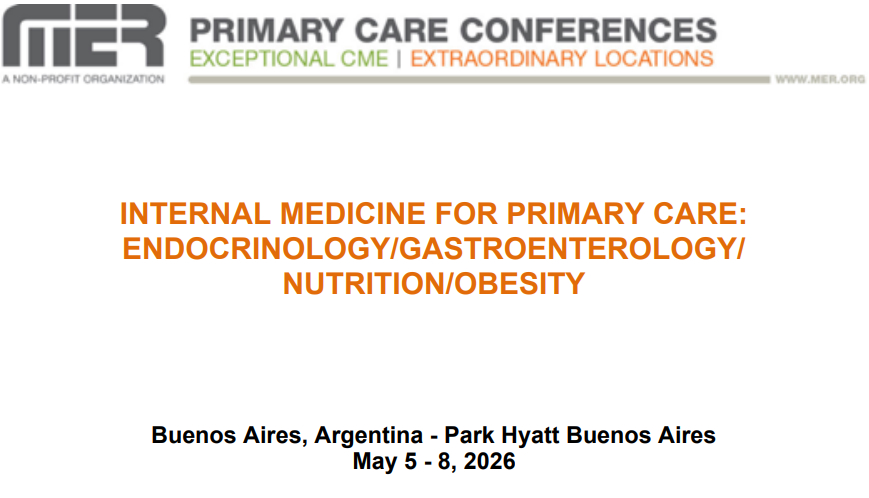
MER Primary Care Conferences Internal Medicine for Primary Care Endo Gastro Nutrition Obesity May 05-08, 2026
$150.00
A May 2026 primary care review of endocrinology, gastroenterology, clinical nutrition, obesity medicine, and preventive care.
Delivery Information: This Product is shared via google drive download link. Please use your correct Gmail address at checkout.
Please note: there are no CME points or certificate associated with this course.
Samples for Courses Can be found here: Free Samples Here!
MER Primary Care Conferences – Internal Medicine for Primary Care: Endocrinology • Gastroenterology • Nutrition • Obesity 2026 (Videos)
Comprehensive Primary Care Updates in Endocrinology, Gastroenterology, Clinical Nutrition, Obesity Medicine, Diabetes Management & Evidence-Based Internal Medicine
Enhance your clinical expertise with the MER Primary Care Conferences – Internal Medicine for Primary Care: Endocrinology • Gastroenterology • Nutrition • Obesity 2026, a comprehensive continuing medical education (CME) program developed by Medical Education Resources (MER). Designed specifically for office-based clinicians, this multidisciplinary conference delivers the latest evidence-based updates in endocrine disorders, gastrointestinal diseases, nutrition science, obesity medicine, and preventive internal medicine.
Held May 5–8, 2026, at the Park Hyatt Buenos Aires in Buenos Aires, Argentina, this educational program combines expert-led lectures, clinical case discussions, guideline updates, and practical treatment strategies that help healthcare professionals confidently manage common and complex chronic diseases encountered in everyday primary care practice.
Through a balanced combination of preventive medicine, metabolic health, lifestyle intervention, pharmacologic therapy, and individualized patient care, participants gain practical tools to improve long-term health outcomes while applying the latest clinical guidelines to daily practice.
Product Details
- Course: MER Primary Care Conferences – Internal Medicine for Primary Care: Endocrinology • Gastroenterology • Nutrition • Obesity 2026
- Provider: Medical Education Resources (MER)
- Conference Dates: May 5–8, 2026
- Location: Park Hyatt Buenos Aires, Buenos Aires, Argentina
- Format: Videos
- Language: English
- Educational Level: Intermediate to Advanced
- Learning Format: Expert Lectures, Evidence-Based Reviews, Clinical Case Discussions, Guideline Updates
Course Overview
Primary care physicians are increasingly responsible for managing chronic metabolic diseases, gastrointestinal disorders, obesity, and nutrition-related conditions. As clinical guidelines evolve rapidly with new medications, preventive strategies, personalized nutrition, and metabolic therapies, clinicians require practical education that integrates multiple specialties into everyday patient care.
The MER Internal Medicine for Primary Care 2026 conference provides an evidence-based review of endocrine diseases, obesity management, nutritional science, gastrointestinal disorders, and preventive medicine. Nationally recognized faculty present practical approaches for diagnosing and treating diabetes, thyroid disease, dyslipidemia, obesity, celiac disease, liver disease, lower gastrointestinal bleeding, and colorectal cancer screening while emphasizing lifestyle medicine and individualized care.
The recordings provide a review of the conference’s 2026 approaches to metabolic, nutritional and gastrointestinal care. They do not guarantee diagnostic proficiency or improved patient outcomes.
What You’ll Learn
This course reviews the following educational themes; viewing files alone does not establish clinical competence:
- Develop individualized treatment plans for patients with Type 1 and Type 2 diabetes mellitus.
- Diagnose and manage dyslipidemia using current evidence-based recommendations.
- Recognize thyroid disorders and understand the clinical implications of abnormal thyroid function.
- Explain the mechanisms contributing to obesity and implement personalized medical weight management strategies.
- Evaluate surgical and non-surgical treatment options for obesity, including post-bariatric surgery care.
- Apply nutritional science to develop individualized nutrition plans across the lifespan.
- Diagnose and manage common gastrointestinal disorders including lower GI bleeding, celiac disease, and abnormal liver function tests.
- Integrate preventive medicine and lifestyle interventions into comprehensive primary care.
Comprehensive Topics Covered
Diabetes Mellitus
Strengthen evidence-based diabetes management.
Topics include:
- Type 1 diabetes
- Type 2 diabetes
- Glycemic control
- Individualized treatment
- Insulin therapy
- Non-insulin medications
- Diabetes complications
Faculty review current standards of care and personalized treatment algorithms.
Endocrinology
Expand expertise in common endocrine disorders.
Topics include:
- Thyroid disease
- Hypothyroidism
- Hyperthyroidism
- Endocrine disorders
- Hormonal regulation
- Metabolic disease
- Clinical endocrinology
Dyslipidemia & Cardiometabolic Risk
Improve cardiovascular prevention strategies.
Topics include:
- Dyslipidemia
- Hypercholesterolemia
- Lipid management
- ASCVD prevention
- Statin therapy
- Cardiovascular risk assessment
- Evidence-based treatment
Obesity Medicine
Master comprehensive obesity management.
Topics include:
- Obesity
- Metabolic syndrome
- Weight management
- Obesity pharmacotherapy
- Lifestyle modification
- Medical nutrition therapy
- Long-term weight maintenance
Faculty review the latest evidence supporting individualized obesity treatment.
Bariatric Medicine
Understand surgical and post-operative obesity care.
Topics include:
- Bariatric surgery
- Patient selection
- Surgical procedures
- Post-bariatric nutrition
- Long-term follow-up
- Weight-loss outcomes
- Metabolic surgery
Clinical Nutrition
Apply modern nutritional science in primary care.
Topics include:
- Clinical nutrition
- Personalized nutrition
- Healthy eating
- Nutritional assessment
- Therapeutic diets
- Preventive nutrition
- Nutrition counseling
Lifestyle Medicine
Promote sustainable healthy behaviors.
Topics include:
- Lifestyle medicine
- Behavioral modification
- Exercise counseling
- Weight reduction
- Dietary interventions
- Preventive health
- Patient motivation
Gastroenterology
Enhance diagnosis and management of gastrointestinal disease.
Topics include:
- Lower gastrointestinal bleeding
- Gastrointestinal disorders
- Digestive diseases
- Clinical gastroenterology
- GI diagnostics
- Outpatient management
- Evidence-based treatment
Colorectal Cancer Screening
Implement preventive gastrointestinal care.
Topics include:
- Colorectal cancer screening
- Colonoscopy
- Surveillance guidelines
- Early detection
- Preventive gastroenterology
- Screening recommendations
- Risk assessment
Celiac Disease
Strengthen recognition of gluten-related disorders.
Topics include:
- Celiac disease
- Gluten-sensitive enteropathy
- Serologic testing
- Intestinal biopsy
- Nutritional deficiencies
- Gluten-free diet
- Long-term management
Liver Disease
Improve evaluation of abnormal liver function.
Topics include:
- Elevated liver enzymes
- Liver function tests
- Fatty liver disease
- Hepatic disorders
- Diagnostic evaluation
- Chronic liver disease
- Clinical management
Preventive Internal Medicine
Optimize long-term patient outcomes.
Topics include:
- Preventive medicine
- Chronic disease prevention
- Risk reduction
- Population health
- Evidence-based medicine
- Patient-centered care
- Longitudinal disease management
Learning Objectives
Educational topics for review include the following; clinical application requires appropriate training, current guidance and patient-specific judgment:
- Develop individualized treatment strategies for Type 1 and Type 2 diabetes mellitus.
- Diagnose dyslipidemia and create patient-specific lipid management plans.
- Recognize thyroid dysfunction and understand its clinical consequences.
- Explain the pathophysiology of obesity, including the roles of genetics, metabolism, hormones, and environmental influences.
- Evaluate medical and surgical treatment options for obesity while providing comprehensive post-bariatric surgery care.
- Apply nutritional science to develop personalized dietary interventions across all stages of life.
- Diagnose and manage lower gastrointestinal bleeding, implement colorectal cancer screening guidelines, evaluate celiac disease, and investigate abnormal liver function tests using current evidence-based recommendations.
Educational Highlights
- Internal Medicine
- Primary Care
- Endocrinology
- Gastroenterology
- Clinical Nutrition
- Obesity Medicine
- Type 1 Diabetes
- Type 2 Diabetes
- Dyslipidemia
- Thyroid Disorders
- Bariatric Medicine
- Lifestyle Medicine
- Celiac Disease
- Colorectal Cancer Screening
- Liver Disease
- Preventive Medicine
- Metabolic Health
- Chronic Disease Management
- Evidence-Based Medicine
- Continuing Medical Education (CME)
Why This Course Stands Out
The MER Primary Care Conferences – Internal Medicine for Primary Care: Endocrinology • Gastroenterology • Nutrition • Obesity 2026 offers a uniquely integrated educational experience that combines four critical disciplines frequently encountered in outpatient internal medicine. Rather than focusing on isolated disease states, the conference emphasizes comprehensive metabolic health, lifestyle medicine, gastrointestinal disease prevention, and individualized nutrition. With its strong focus on evidence-based guidelines, chronic disease management, and practical clinical application, this program equips clinicians with immediately applicable strategies for delivering higher-quality, patient-centered care.
Target Audience
This educational activity is ideal for:
- Internists
- Primary Care Physicians
- Family Medicine Physicians
- Endocrinologists
- Gastroenterologists
- Nutritionists
- Obesity Medicine Specialists
- Hospitalists
- General Practitioners
- Nurse Practitioners
- Physician Assistants
- Internal Medicine Residents
- Family Medicine Residents
- Healthcare Professionals seeking comprehensive updates in metabolic and gastrointestinal medicine
Why Choose This Course?
Whether you practice internal medicine, family medicine, endocrinology, gastroenterology, nutrition, or obesity medicine, the MER Internal Medicine for Primary Care: Endocrinology • Gastroenterology • Nutrition • Obesity 2026 conference provides one of the most comprehensive multidisciplinary updates available. Through expert-led lectures, guideline-focused education, practical case discussions, and evidence-based treatment recommendations, participants gain the knowledge needed to improve diabetes care, optimize metabolic health, personalize nutrition, manage obesity effectively, and deliver comprehensive preventive care across diverse patient populations.
4. Topics
Tuesday, May 5, 2026
-
Endocrinology – Type 2 Diabetes Mellitus: Diagnosis and treatment; lessons from the DCCT; managing diabetic emergencies; screening; pre-diabetes.
-
Endocrinology – Insulin Therapy for Diabetes: Treating T2DM with insulin; T1DM.
-
Endocrinology – Lipid Metabolism and Treatment: Review of the most recent American Heart Association Dietary and Lipid Guidelines; Discussion of the most recent ADA guidelines for lipid management for both primary and secondary CV prevention; Detail of treatments for elevated triglycerides and evidence on fish-oil preparations and cardiovascular outcomes.
-
Obesity – Pathophysiology of Obesity: A guide to understanding practice demographics and considerations; The what and why of epigenetics; A practical guide to behavioral and medication management.
-
Obesity – Medical Management of Obesity: Overview of obesity as a disease state; Costs to the individual of being obese; Use of appetite suppressant medications and lifestyle modifications.
Wednesday, May 6, 2026
-
Obesity – Complications and Considerations of Bariatric Surgery: An overview of risks and effectiveness of bariatric surgery; Overview of potential surgical options; Potential complications; The role of support and behavior modification, nutrition, and the stages of patient management post-surgery.
-
Obesity – Patient Management Post-bariatric Surgery: The role of the clinician for support and behavior modification, nutrition, and the stages of patient management post-surgery.
-
Endocrinology – Disorders of Thyroid Function: Prevalence, diagnosis and treatment options of hypothyroidism and hyperthyroidism.
-
Nutrition – Myths vs. Science in Nutritional Trends: Approach for the Medical Professional: Discussion of how to scientifically navigate the nutritional maze of popular diets and nutritional trends; The potential nutrition benefits and pitfalls of various dietary preferences and related patient concerns; Ways nutrition affects healthy lifestyles.
-
Nutrition – Nutrition Through the Ages: Prevention and Potential Pitfalls: A working guide for a nutritional and behavioral rubric to understand what is expected (and what may undermine) optimal health from infancy through the elderly; Barriers patients face in implementing and sticking with nutritional strategies.
Thursday, May 7, 2026
-
Gastroenterology – Management of Lower GI Bleeding- From Occult to Massive: The correct use and interpretation of tests for occult blood in the stool will be discussed in relation to lower GI bleeding; focus on the utility of different diagnostic and management approaches to the spectrum of patients presenting with hematochezia.
-
Gastroenterology – Colorectal Cancer Screening and Surveillance: Reviews the most recent recommendations for CRC screening in the general population at average risk for CRC.
-
Nutrition – Medical Nutrition Therapy: A Practical Approach to Diet and Disease: Science-based Nutrition and Behavioral Guide to Treating “The Big” Medical Problems that are taking over your practice; Essential (and proven) strategies to help guide patients’ diet and behaviors in the treatment of diabetes, cardiovascular disease, and GI health; Travel through the google-mess of what patients hear and why they turn to these as resources; The science-based strategies and resources that can be implemented to help patients take rational control of their health.
-
Nutrition – Cutting Edge Nutrition Innovation: A Personalized Approach: How to critically evaluate nutrition tools that patients can use to promote optimal health; Review the “latest and greatest” nutrition applications and technologies that can be used to greatly improve patients’ nutrition and health pursuits; Creation of personalized health plans based on unique, patient-specific plans, tests, and analyses.
Friday, May 8, 2026
-
Gastroenterology – Celiac Disease and Chronic Diarrhea: Millions of Americans are now on a gluten free diet. Only some of them actually have Celiac disease. We will review the workup of diarrhea and malabsorption with a focus on celiac disease; We will discuss how to diagnose celiac disease when a patient is already on a gluten free diet and an appropriate differential diagnosis.
-
Gastroenterology – Approach to Elevated Liver Function Tests: The elevation of elevated liver function tests can be challenging, how much testing is needed?; Discussion of common sources of elevated liver function tests; Recognition of Non Alcoholic Fatty Liver Disease; Hepatitis B evaluation and treatment; Hemochromatosis evaluation; A primary care perspective on Hepatitis C.
Related products
Cardiology
Internal Medicine
Harvard Updates in General Internal Medicine for Specialists 2022
Internal Medicine
Endocrine and Nutrition
Harvard The Blackburn Course in Obesity Medicine Treating Obesity 2023
Cardiology