
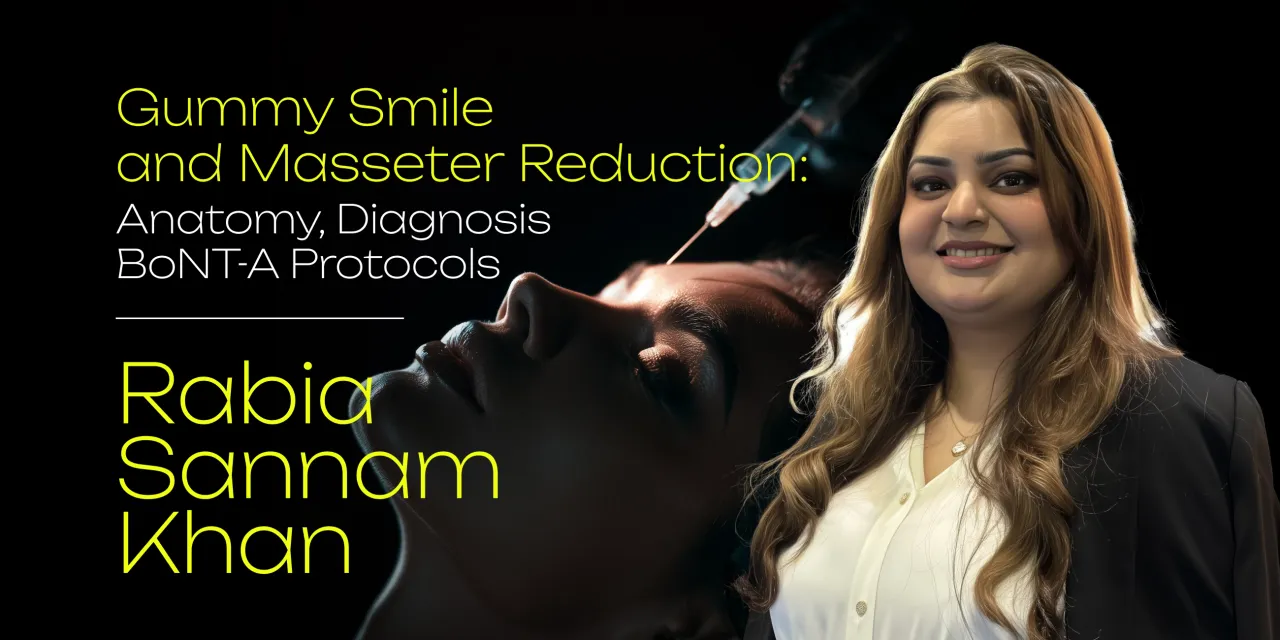
OHI-S Gummy Smile and Masseter Reduction Anatomy, Diagnosis BoNT-A Protocols 6 lessons 1h 17m

$20.00
This Product is shared via google drive download link, So please share your correct Gmail id while placing the order .Please note that there are no CME points or certificate associated with this course Samples for Courses Can be found here : Free Samples Here!
OHI-S Gummy Smile and Masseter Reduction: Anatomy, Diagnosis & BoNT-A Protocols
Advanced Botulinum Toxin Training for Gummy Smile, Bruxism & Masseter Reduction
The OHI-S Gummy Smile and Masseter Reduction: Anatomy, Diagnosis & BoNT-A Protocols course is a focused clinical training program covering the anatomical assessment, diagnosis, patient selection, and Botulinum Toxin Type A (BoNT-A) injection protocols used in gummy smile correction and masticatory muscle modulation.
Presented by Rabia Sannam Khan, this 6-lesson, 1-hour 17-minute course combines facial anatomy, diagnostic principles, injection landmarking, dosing concepts, complication prevention, and clinical outcome assessment.
The program places particular emphasis on the Yonsei Point Technique for gummy smile correction and anatomical safe-zone mapping for masseter reduction, bruxism management, jawline slimming, and masticatory hyperfunction.
Course Details
- Provider: OHI-S
- Instructor: Rabia Sannam Khan
- Course Length: 1 Hour 17 Minutes
- Lessons: 6
- Language: English
- Focus: Gummy Smile, Masseter Reduction, Bruxism & BoNT-A
- Level: Clinical / Professional
- Format: Medical and Dental Aesthetic Education
Who Should Attend?
This course is designed for healthcare professionals involved in dental aesthetics, facial aesthetics, neuromodulator treatments, and management of masticatory muscle hyperfunction.
Best For
- Dentists
- Cosmetic Dentists
- Oral and Maxillofacial Surgeons
- Dermatologists
- Plastic Surgeons
- Aesthetic Medicine Physicians
- Facial Aesthetic Practitioners
- Clinicians treating bruxism and masseter hypertrophy
What You Will Learn
Through six focused lessons, participants explore a structured clinical approach to BoNT-A treatment beginning with anatomical diagnosis and progressing through injection technique, patient selection, risk reduction, and evaluation of therapeutic outcomes.
Key areas include:
- Gummy smile anatomical assessment
- Etiological classification of excessive gingival display
- Upper-lip elevator muscle anatomy
- Yonsei Point Technique
- BoNT-A injection landmarks
- Gummy smile dosing protocols
- Patient selection
- Treatment outcome assessment
- Complication prevention
- Bruxism diagnosis
- Masseter hypertrophy
- Masticatory muscle anatomy
- Facial nerve and vascular anatomy
- Masseter injection safe zones
- Jawline slimming
- TMJ-related functional symptoms
- Long-term treatment assessment
- Evidence-based combination treatment strategies
Lesson 1: Anatomy & Etiological Classification of the Gummy Smile
The first lesson establishes the anatomical and diagnostic foundations required to evaluate excessive gingival display.
Topics include:
- Clinical definition of gummy smile
- Diagnostic criteria
- Skeletal and muscular causes of excessive gingival display
- Clinical classification systems
- Smile aesthetics and gingival visibility
- Mid-face muscular anatomy
- Upper-lip elevator muscles
- Dynamic muscular contributions to gummy smile
Understanding the underlying cause of excessive gingival display is critical before selecting an appropriate BoNT-A treatment approach.
Lesson 2: The Yonsei Point Technique – Protocols & Clinical Injection Guide
This lesson provides a structured review of the Yonsei Point Technique for gummy smile neuromodulation.
Topics include:
- Definition and rationale of the Yonsei Point
- Surface anatomical landmarks
- Injection-point mapping
- Upper-lip elevator anatomy
- Anatomical target muscles
- Botulinum toxin mechanism of action
- Injection workflow
- Dosing concepts
- Reconstitution considerations
- Treatment planning
The Yonsei Point is anatomically associated with the convergence of important upper-lip elevator muscles involved in excessive gingival exposure.
Lesson 3: Gummy Smile Clinical Outcomes, Case Studies & Risk Management
This section moves from technique to clinical decision-making and treatment assessment.
Topics include:
- Expected treatment onset
- Result timelines
- Duration of clinical response
- Patient case evaluation
- Ideal candidate selection
- Contraindication assessment
- Smile asymmetry prevention
- Upper-lip ptosis risk
- Treatment complication management
- Alternative treatment options
- Combination treatment strategies
- Review of clinical evidence
The lesson emphasizes that successful treatment depends not only on injection technique but also on accurate diagnosis and patient selection.
Lesson 4: Masticatory Muscle Anatomy, Diagnostics & Bruxism Etiology
The fourth lesson shifts attention to the jaw and masticatory muscle complex.
Topics include:
- Bruxism definition
- Bruxism pathology
- Functional impact of bruxism
- Masseter hypertrophy
- Aesthetic manifestations of masseter hypertrophy
- Functional manifestations
- Contributing physiological factors
- Lifestyle-related factors
- Clinical assessment
- Masseter anatomy
- Temporalis anatomy
- Masticatory muscle complex
- Facial artery
- Parotid duct
- Facial nerve branches
This anatomical foundation supports safer and more precise treatment planning for masseter neuromodulation.
Lesson 5: Masseter Reduction – Injection Techniques, Safe Zones & Dosing Protocols
This practical section focuses on BoNT-A injection strategies for the masseter muscle.
Topics include:
- Masseter injection landmarks
- Anatomical safe zones
- Facial nerve anatomy
- Marginal mandibular nerve considerations
- Zygomatic facial nerve considerations
- Depth control
- Injection-point distribution
- Dosing protocols
- Masseter hypertrophy treatment
- Bruxism management
- Jawline contouring
- Avoiding risorius involvement
- Smile asymmetry prevention
Special attention is given to anatomical mapping to reduce the risk of unwanted effects on adjacent muscles and neurovascular structures.
Lesson 6: Therapeutic Results, Patient Selection & Evidence-Based Practice
The final lesson focuses on long-term clinical management and evaluation of aesthetic and functional outcomes.
Topics include:
- Treatment-result timelines
- Jawline contour evolution
- Structural facial slimming
- Bruxism-related symptom improvement
- Functional pain assessment
- TMJ-related symptom management
- Patient selection
- Contraindication screening
- Clinical case analysis
- Masticatory fatigue
- Muscle weakness
- Paradoxical masseteric bulging
- Complication management
- Combination treatment strategies
- Current clinical evidence
Learning Objectives
Upon completion of this course, participants should be better able to:
- Assess the anatomical foundation, underlying etiology, and clinical classification of excessive gingival display.
- Identify muscular and skeletal factors contributing to gummy smile.
- Understand the anatomical basis of the Yonsei Point Technique.
- Identify appropriate surface landmarks and target muscles for gummy smile treatment.
- Review BoNT-A dosing and injection protocols for excessive gingival display.
- Establish appropriate patient selection criteria for gummy smile treatment.
- Recognize and manage potential complications including smile asymmetry and upper-lip ptosis.
- Diagnose the functional anatomy and underlying causes of bruxism and masseter hypertrophy.
- Identify relevant masticatory muscles and surrounding neurovascular structures.
- Map appropriate anatomical safe zones for masseter injections.
- Understand techniques designed to minimize risorius impairment and unwanted smile changes.
- Evaluate aesthetic and therapeutic outcomes following masseter reduction.
- Review long-term approaches to structural jawline slimming.
- Understand the role of BoNT-A in management strategies for masticatory hyperfunction and TMJ-related symptoms.
- Evaluate evidence-based combination treatment approaches.
Major Clinical Topics
Gummy Smile
- Excessive gingival display
- Smile analysis
- Etiological classification
- Upper-lip elevator muscles
- Facial anatomy
- Patient assessment
Yonsei Point Technique
- Anatomical landmarks
- Injection mapping
- Target muscles
- BoNT-A protocols
- Dosing considerations
Masseter Reduction
- Masseter hypertrophy
- Jawline slimming
- Injection safe zones
- Facial nerve anatomy
- Injection depth
- Dose distribution
Bruxism & Masticatory Hyperfunction
- Bruxism diagnosis
- Masticatory muscle anatomy
- Masseter hyperactivity
- Functional symptoms
- Clinical assessment
Complication Prevention
- Smile asymmetry
- Upper-lip ptosis
- Risorius impairment
- Muscle weakness
- Masticatory fatigue
- Paradoxical masseteric bulging
Why This Course Is Valuable
The OHI-S Gummy Smile and Masseter Reduction BoNT-A course combines two highly relevant areas of modern facial aesthetic practice within one concise clinical program.
Rather than focusing only on injection points, the course emphasizes the sequence of:
Anatomy → Diagnosis → Patient Selection → Injection Planning → Treatment → Outcome Assessment
This approach is particularly useful for clinicians who want to strengthen their understanding of the anatomical structures involved in gummy smile correction, bruxism management, and masseter reduction while reducing the risk of functional complications.
4. Short Description
The OHI-S Gummy Smile and Masseter Reduction: Anatomy, Diagnosis & BoNT-A Protocols course by Rabia Sannam Khan includes 6 lessons (1h 17m) covering gummy smile diagnosis, Yonsei Point injections, facial anatomy, bruxism, masseter hypertrophy, injection safe zones, dosing protocols, complication management, jawline slimming, and therapeutic outcomes.
Topics
Lesson 1. Anatomy & Etiological Classification of the Gummy Smile
-
Gummy smile: clinical definition and diagnostic criteria
-
Underlying etiology and contributing skeletal/muscular factors
-
Classification systems of excessive gingival display
-
Perception of smile attractiveness in relation to gingival display
-
Relevant muscular anatomy: upper lip elevators and dynamic muscular contributions
Lesson 2. The Yonsei Point Technique: Protocols & Clinical Injection Guide
-
The Yonsei Point technique: definition and clinical rationale
-
Botulinum toxin clinical benefits in perioral neuromodulation
-
Pharmacodynamic mechanism of action in hyperfunctional facial muscles
-
Yonsei Point mapping: landmark identification and injection marking
-
Primary anatomical target muscles for gummy smile correction
-
Dosing protocols, reconstitution guidelines, and step-by-step injection technique
Lesson 3. Gummy Smile Clinical Outcomes, Case Studies & Risk Management
-
Result timelines, onset expectations, and documented clinical outcomes
-
Comprehensive clinical case study analysis
-
Complication avoidance, risk mitigation, and management of adverse events
-
Patient assessment and ideal candidate selection criteria
-
Alternative options and synergistic combination treatment pathways
-
Evidence summary and literature review
Lesson 4. Masticatory Muscle Anatomy, Diagnostics & Bruxism Etiology
-
Bruxism: clinical definition, pathology, and functional impact
-
Masseter hypertrophy: definition and aesthetic/functional manifestations
-
Etiology and contributing physiological/lifestyle factors
-
Clinical presentation patterns and diagnostic patient assessment
-
Applied muscle anatomy: masseter, temporalis, and masticatory complex
-
Local neurovascular mapping: course of facial vessels and nerve branches
Lesson 5. Masseter Reduction: Injection Techniques, Safe Zones & Dosing Protocols
-
Masseter injection landmarks in relation to facial nerve anatomy
-
Clinical benefits of BoNT-A in masseteric hypertrophy and bruxism
-
Mechanism of action: structural muscle atrophy and neuromuscular blockade
-
Mapping safety zones to prevent smile asymmetry and risorius impairment
-
Standardized injection techniques: depth control, point distribution, and dosing guidelines
Lesson 6. Therapeutic Results, Patient Selection & Evidence-Based Practice
-
Therapeutic result timelines and long-term aesthetic/functional outcomes
-
Clinical case analysis: structural slimming and pain management benefits
-
Management of complications (e.g., paradoxical masseteric bulging, muscle weakness)
-
Patient selection framework and contraindication screening
-
Synergistic combination therapies for facial contouring and TMJ relief
-
Current evidence base and literature review
Related products

Plastic Surgery
South American Plastic Surgery Breast & Body Experts Cancun 2020
ENT / Otolaryngology
Plastic Surgery
Plastic Surgery
AMWC 19th Aesthetic & Anti-Aging Medicine World Congress 2021
Plastic Surgery
Plastic Surgery