
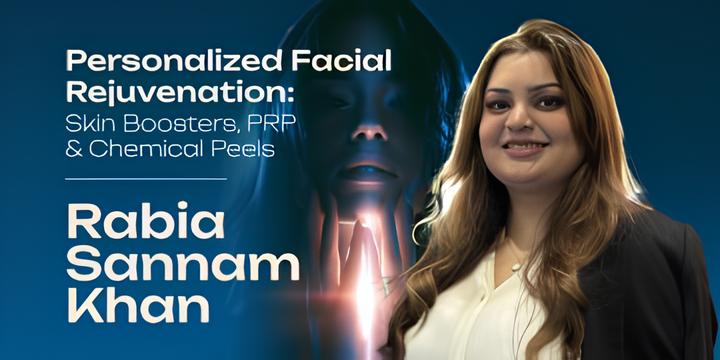
OHI-S Personalized Facial Rejuvenation Skin Boosters, PRP & Chemical Peels 4 lesson 1h
$20.00
This Product is shared via google drive download link, So please share your correct Gmail id while placing the order .Please note that there are no CME points or certificate associated with this course Samples for Courses Can be found here : Free Samples Here!
OHI-S Personalized Facial Rejuvenation: Skin Boosters, PRP & Chemical Peels
4 Lessons | 1 Hour | Instructor: Rabia Sannam Khan
Develop a personalized, multimodal approach to modern facial rejuvenation with OHI-S Personalized Facial Rejuvenation: Skin Boosters, PRP & Chemical Peels.
This focused aesthetic medicine course combines skin boosters, Platelet-Rich Plasma (PRP), chemical peeling, regenerative medicine, injectable treatments, and chemical resurfacing within a practical framework for individualized patient care.
Rather than relying on a single procedure, the program emphasizes careful patient assessment, appropriate modality selection, treatment sequencing, realistic expectations, and evidence-based combination protocols.
Across four structured lessons, participants review the pathophysiology of skin aging, hyaluronic acid skin boosters, autologous PRP therapy, chemical peel classification and application, post-treatment care, contraindications, and multimodal rejuvenation strategies.
The objective is to help clinicians build personalized facial rejuvenation protocols designed for natural, gradual, and predictable outcomes.
Course Details
- Course: Personalized Facial Rejuvenation: Skin Boosters, PRP & Chemical Peels
- Provider: OHI-S
- Instructor: Rabia Sannam Khan
- Format: Online Course
- Lessons: 4
- Duration: 1 Hour
- Language: English
- Specialty: Aesthetic Medicine / Dermatology / Plastic Surgery
- Focus: Facial Rejuvenation, Skin Boosters, PRP & Chemical Peels
Course Overview
Modern facial rejuvenation increasingly involves a combination of treatments rather than dependence on one isolated procedure.
Successful treatment planning requires clinicians to consider:
- Patient age
- Skin quality
- Skin-aging pattern
- Pigmentation
- Fine lines and wrinkles
- Dermal hydration
- Tissue quality
- Treatment history
- Medical history
- Contraindications
- Patient expectations
- Desired outcome
- Appropriate treatment sequence
OHI-S Personalized Facial Rejuvenation provides a structured approach to these decisions.
The curriculum brings together three important treatment categories:
Skin Boosters
Injectable strategies designed to improve dermal hydration, skin quality, elasticity, and tissue appearance.
Platelet-Rich Plasma – PRP
Autologous regenerative treatment utilizing platelet-derived biological factors to support tissue remodeling.
Chemical Peels
Controlled chemical resurfacing procedures used for concerns including pigmentation, acne, fine lines, texture abnormalities, and photoaging.
The final lesson integrates these modalities into individualized combination protocols.
Who Should Take This Course?
This program is designed for aesthetic practitioners who want to improve their clinical decision-making and treatment planning in non-surgical facial rejuvenation.
It is particularly relevant for:
- Dermatologists
- Plastic Surgeons
- Aesthetic Medicine Physicians
- Facial Plastic Surgeons
- Cosmetic Physicians
- Medical Aesthetic Practitioners
- Injectable Treatment Providers
- Physicians performing skin booster treatments
- Physicians performing PRP treatments
- Clinicians performing chemical peels
- Practitioners interested in regenerative aesthetics
- Clinicians developing combination facial rejuvenation protocols
Learning Objectives
After completing the course, participants should be better able to:
- Conduct comprehensive patient assessments before facial rejuvenation procedures.
- Identify individual skin concerns and aging patterns.
- Select appropriate aesthetic treatment strategies.
- Understand the role of skin boosters in modern facial rejuvenation.
- Recognize appropriate indications for skin booster therapy.
- Select suitable candidates for injectable skin-quality treatments.
- Understand the biological mechanisms underlying Platelet-Rich Plasma therapy.
- Review PRP preparation and processing principles.
- Understand PRP injection strategies for aesthetic applications.
- Review protocols combining PRP with microneedling.
- Classify chemical peels according to treatment depth.
- Select appropriate chemical peel strategies based on patient needs.
- Understand peel preparation, application, and neutralization.
- Recognize potential adverse reactions and complications.
- Apply appropriate post-peel care principles.
- Combine skin boosters, PRP, and chemical resurfacing when clinically appropriate.
- Develop individualized, evidence-based facial rejuvenation plans.
- Set realistic patient expectations for gradual treatment outcomes.
Course Curriculum
Lesson 1: Modern Facial Rejuvenation – Skin Booster Protocols & Patient Selection
Duration: 21 Minutes
The first lesson establishes the foundation for modern facial rejuvenation and introduces a structured approach to injectable skin-quality treatments.
Rather than beginning with a specific product or procedure, clinicians first review the mechanisms of facial and cutaneous aging and determine which level of treatment is appropriate.
Modern Facial Rejuvenation
Contemporary facial rejuvenation may target multiple aspects of aging, including:
- Skin hydration
- Texture
- Elasticity
- Fine lines
- Pigmentation
- Dermal quality
- Structural support
- Volume
- Muscle activity
Treatment should therefore be adapted to the patient’s primary concern rather than applying the same procedure to every patient.
Pathophysiology of Skin Aging
The course reviews important structural and cellular changes associated with aging.
Relevant factors include:
- Reduced collagen
- Changes in elastin
- Altered extracellular matrix
- Reduced hydration
- Skin thinning
- Photoaging
- Oxidative stress
- Cellular aging
- Reduced regenerative capacity
Understanding these processes helps clinicians determine which treatments are most likely to address a patient’s specific concerns.
The Aesthetic Treatment Pyramid
A central concept is prioritizing aesthetic interventions according to patient needs.
Instead of immediately selecting injectables, treatment planning should consider the broader hierarchy of:
Skin Health → Skin Quality → Regenerative Treatments → Structural Treatments → Combination Therapy
This approach helps clinicians identify the appropriate clinical starting point.
Skin Boosters
Skin boosters represent an important category of injectable facial rejuvenation.
Unlike traditional volumizing fillers, skin booster treatments are generally focused more on improving skin quality and dermal characteristics than creating major structural volume.
The course reviews:
- Definition of skin boosters
- Mechanisms of action
- Different categories of skin boosters
- Hyaluronic acid-based formulations
- Targeted dermal improvements
- Patient selection
- Treatment areas
- Clinical benefits
Potential Skin Booster Treatment Goals
Depending on the formulation and patient, treatment objectives may include improvement in:
- Hydration
- Skin quality
- Fine lines
- Elasticity
- Texture
- Radiance
- Dermal appearance
Skin Booster Treatment Areas
Skin-quality treatments may be considered for multiple aesthetic regions depending on product characteristics and patient indications.
The course helps practitioners understand how treatment zones should be selected according to anatomical and clinical assessment rather than standardized protocols.
Patient Selection
Appropriate candidate selection is essential.
Assessment should include:
- Skin condition
- Age
- Treatment goals
- Medical history
- Previous procedures
- Skin-aging pattern
- Expectations
- Potential contraindications
Contraindications & Precautions
The lesson reviews important situations in which treatment may be inappropriate or require additional caution.
The clinician should evaluate both:
- Absolute contraindications
- Relative contraindications
- Higher-risk patients
before proceeding with injectable rejuvenation.
Treatment Journey & Expected Results
Aesthetic rejuvenation often develops gradually rather than immediately.
The course discusses the importance of explaining:
- Treatment milestones
- Expected timeline
- Number of sessions
- Maintenance
- Gradual improvement
- Realistic outcomes
before treatment begins.
Evidence-Based Skin Booster Therapy
The lesson also reviews available scientific and clinical evidence surrounding skin booster treatments.
This supports treatment selection based on clinical rationale rather than marketing claims alone.
Lesson 2: Autologous Regenerative Therapy – PRP Mechanism, Preparation & Injection Protocols
Duration: 14 Minutes
The second lesson focuses on Platelet-Rich Plasma (PRP) as an autologous regenerative treatment.
Participants review PRP biology, preparation, clinical applications, injection techniques, combination treatments, and safety considerations.
What Is Platelet-Rich Plasma?
PRP is prepared from the patient’s own blood and contains a concentrated platelet component.
Platelets contain biologically active mediators involved in:
- Tissue signaling
- Healing
- Regeneration
- Cellular communication
- Remodeling
The course explores how these properties have contributed to the use of PRP in aesthetic and regenerative medicine.
PRP Growth Factor Cascade
Platelet activation results in the release of various biological mediators.
The course reviews the concept of a growth factor cascade and its relationship to:
- Cellular signaling
- Fibroblast activity
- Tissue regeneration
- Collagen synthesis
- Remodeling
Understanding the biological basis of PRP helps practitioners evaluate both its potential and its limitations.
PRP & Collagen Synthesis
One objective of regenerative aesthetic treatment is to support tissue remodeling rather than simply create temporary structural volume.
PRP is discussed in relation to:
- Collagen synthesis
- Skin quality
- Tissue repair
- Skin texture
- Skin tone
Clinical Applications of PRP
The course reviews potential aesthetic applications involving:
- Facial rejuvenation
- Skin quality
- Texture
- Tone
- Regenerative treatment
- Hair density
PRP Preparation
Participants review the major steps involved in preparing autologous PRP.
The workflow includes:
Patient Assessment → Blood Collection → Centrifugation → Separation → PRP Preparation → Treatment
Important procedural considerations include:
- Blood draw
- Centrifugation
- Separation
- Preparation technique
- Maintaining appropriate clinical conditions
PRP Injection Protocols
The course reviews general clinical injection principles for PRP facial rejuvenation.
Treatment planning should consider:
- Patient indication
- Treatment region
- Injection approach
- Treatment schedule
- Session interval
- Combination therapies
PRP + Microneedling
The program also discusses combination treatment using:
PRP + Microneedling
sometimes popularly referred to as a Vampire Facial approach.
The concept combines controlled microneedling with autologous PRP as part of a regenerative treatment protocol.
PRP Treatment Scheduling
Rather than considering PRP a single isolated treatment, practitioners review standardized concepts surrounding:
- Treatment courses
- Repeated sessions
- Session intervals
- Outcome assessment
- Maintenance
PRP Safety & Patient Screening
Because PRP is autologous, clinicians may incorrectly assume that every patient is automatically an appropriate candidate.
The program emphasizes screening for:
- Contraindications
- Medical conditions
- Blood-related considerations
- Infection risk
- Treatment-related risks
Appropriate patient assessment remains necessary even for autologous therapies.
Evidence for PRP Therapy
Participants review the clinical evidence behind PRP and its potential applications.
The goal is to distinguish evidence-supported clinical use from exaggerated claims surrounding regenerative medicine.
Lesson 3: Chemical Peeling Protocols – Classification, Application & Post-Care
Duration: 16 Minutes
The third lesson provides a structured introduction to chemical resurfacing and chemical peeling.
Chemical peels can vary dramatically in intensity, indication, recovery, risk, and clinical effect.
Understanding peel depth and appropriate patient selection is therefore essential.
What Is a Chemical Peel?
Chemical peeling involves controlled application of a chemical agent to produce a predictable degree of epidermal and/or dermal injury followed by regeneration.
Potential treatment goals include improvement in:
- Skin texture
- Hyperpigmentation
- Acne
- Fine lines
- Photoaging
- Uneven skin tone
- Overall skin quality
Chemical Peel Classification
The program reviews the major categories of chemical peel according to depth.
Superficial Chemical Peels
Primarily affect superficial epidermal layers.
They may be selected for certain concerns involving:
- Mild pigmentation
- Texture
- Acne
- Superficial photoaging
Medium-Depth Chemical Peels
Produce deeper controlled injury and require more careful:
- Patient selection
- Preparation
- Technique
- Recovery planning
- Post-treatment care
Deep Chemical Peels
Deep resurfacing involves substantially greater tissue penetration and associated risk.
Appropriate:
- Training
- Patient selection
- Clinical environment
- Technique
- Follow-up
are critical.
Clinical Indications
The course reviews chemical peeling in relation to common aesthetic concerns including:
- Hyperpigmentation
- Acne
- Fine lines
- Photoaging
- Uneven skin texture
- Skin-quality concerns
Pre-Peel Assessment
Proper chemical peeling begins before the peel itself.
Assessment should consider:
- Skin type
- Indication
- Pigmentation risk
- Previous procedures
- Medical history
- Medications
- Skin sensitivity
- Patient expectations
Pre-Peel Skin Conditioning
Certain patients may require skin preparation before treatment.
The course discusses the role of pre-treatment planning in reducing complications and improving procedural consistency.
Chemical Peel Procedure Workflow
A structured treatment sequence can be summarized as:
Patient Assessment → Skin Preparation → Peel Selection → Application → Clinical Monitoring → Neutralization When Appropriate → Post-Care
Each step can affect both safety and outcome.
Application Techniques
Correct application depends on:
- Product
- Concentration
- Treatment depth
- Skin condition
- Anatomical area
- Clinical endpoint
The course emphasizes following appropriate treatment protocols rather than applying all chemical peeling agents in the same manner.
Neutralization
Some chemical peeling protocols require a defined neutralization step.
Practitioners should understand:
- When neutralization is necessary
- Appropriate timing
- Clinical endpoints
- Product-specific considerations
Side Effects & Complications
Potential problems following chemical resurfacing may include:
- Erythema
- Irritation
- Prolonged inflammation
- Pigment alteration
- Barrier disruption
- Infection
- Scarring in higher-risk situations
Appropriate patient selection, technique, and follow-up help minimize these risks.
Post-Treatment Care
Aftercare is a critical component of chemical resurfacing.
Important principles include:
- Skin barrier support
- Appropriate moisturization
- Sun protection
- Avoidance of unnecessary irritation
- Patient instructions
- Monitoring for complications
Chemical Peels in Combination Therapy
Chemical peels do not always need to be used as isolated treatments.
The course discusses their potential integration with other aesthetic modalities when clinically appropriate.
The key is correct:
Treatment Selection + Sequencing + Timing + Recovery Planning
Lesson 4: Multimodal Rejuvenation – Personalized Treatment Planning & Evidence
Duration: 7 Minutes
The final lesson integrates the individual modalities into a personalized facial rejuvenation strategy.
Instead of asking:
“Which treatment is best?”
the more useful clinical question is:
“Which treatment or combination is most appropriate for this specific patient?”
Personalized Facial Rejuvenation
Treatment planning may incorporate:
- Skin boosters
- Hyaluronic acid-based skin treatments
- PRP
- Microneedling
- Chemical peels
- Combination protocols
The appropriate strategy depends on the individual’s:
- Skin concerns
- Aging pattern
- Anatomy
- Treatment history
- Risk profile
- Expectations
- Desired timeline
Multimodal Treatment Planning
Different aesthetic modalities target different aspects of facial aging.
For example:
Skin Boosters
May primarily target skin quality and hydration.
PRP
May contribute to regenerative and tissue-remodeling strategies.
Chemical Peels
May primarily target epidermal or dermal resurfacing depending on treatment depth.
Combining modalities allows clinicians to approach multiple aspects of skin aging within a structured treatment plan.
Treatment Sequencing
Combination therapy requires thoughtful sequencing.
Clinicians should consider:
- Which treatment should come first?
- How much recovery is necessary?
- What is the appropriate interval between procedures?
- Which treatments should not be performed together?
- What is the patient’s tolerance for downtime?
- What are the primary and secondary clinical objectives?
Managing Patient Expectations
Modern aesthetic rejuvenation frequently produces gradual improvement rather than a single dramatic endpoint.
Patient counseling should explain:
- Expected timeline
- Number of sessions
- Treatment milestones
- Maintenance
- Degree of expected improvement
- Limitations
- Downtime
- Potential complications
Clear expectations can improve patient satisfaction and treatment adherence.
Evidence-Based Combination Therapy
The final lesson reviews comparative evidence and clinical outcomes involving:
- Hyaluronic acid skin boosters
- PRP
- Chemical peels
- Combination approaches
This allows practitioners to make treatment decisions based on:
Patient Need + Clinical Evidence + Safety + Realistic Outcome
rather than procedure popularity alone.
Major Topics Covered
The course provides focused education across:
- Personalized Facial Rejuvenation
- Skin Rejuvenation
- Skin Aging
- Skin Boosters
- Hyaluronic Acid Skin Boosters
- Injectable Skin Treatments
- Biorevitalization
- Skin Hydration
- Regenerative Aesthetics
- Regenerative Medicine
- Platelet-Rich Plasma
- PRP
- PRP Facial
- PRP Injection
- PRP Preparation
- PRP Centrifugation
- Growth Factors
- Collagen Stimulation
- Microneedling
- PRP Microneedling
- Chemical Peels
- Chemical Resurfacing
- Superficial Chemical Peels
- Medium Chemical Peels
- Deep Chemical Peels
- Hyperpigmentation
- Acne
- Photoaging
- Fine Lines
- Post-Peel Care
- Skin Barrier Repair
- Combination Aesthetic Treatments
- Multimodal Facial Rejuvenation
- Patient Selection
- Aesthetic Consultation
- Treatment Planning
- Evidence-Based Aesthetic Medicine
Skin Aging & Modern Rejuvenation
A central principle throughout the course is that facial aging is multifactorial.
Changes may involve:
- Epidermis
- Dermis
- Collagen
- Elastin
- Hydration
- Pigmentation
- Cellular activity
- Tissue regeneration
A single procedure may therefore not adequately address every component.
Personalized treatment planning helps clinicians determine whether a patient would benefit most from:
Skin Quality Treatment → Regenerative Therapy → Chemical Resurfacing → Combination Therapy
Skin Boosters vs. Traditional Dermal Fillers
An important practical distinction exists between treatments primarily designed for skin quality and those intended for significant structural augmentation.
Skin boosters are typically selected with goals such as:
- Dermal hydration
- Fine-line improvement
- Skin quality
- Elasticity
- Texture
whereas traditional fillers may be chosen primarily for:
- Volume restoration
- Projection
- Contouring
- Structural support
Recognizing these different objectives helps improve treatment selection.
PRP & Regenerative Aesthetic Medicine
PRP represents an important component of the growing field of regenerative aesthetics.
Because it uses autologous biological material, it provides a different treatment strategy from manufactured injectable products.
The course helps practitioners understand:
- Biological mechanism
- Preparation
- Clinical application
- Treatment scheduling
- Safety
- Combination treatments
- Evidence
Chemical Peels & Skin Resurfacing
Chemical peels remain an important component of modern aesthetic practice despite the growth of injectable and energy-based treatments.
They can offer targeted approaches to:
- Pigmentation
- Acne
- Fine lines
- Photoaging
- Uneven texture
Appropriate peel depth and patient selection remain central to both effectiveness and safety.
Why Combination Therapy Matters
Patients often present with more than one aesthetic concern.
For example, the same patient may have:
- Dehydrated skin
- Fine lines
- Pigmentation
- Reduced skin quality
- Photoaging
Instead of attempting to address all concerns using a single treatment, multimodal rejuvenation allows clinicians to assign different modalities to different clinical objectives.
A potential conceptual framework is:
Assessment → Prioritize Concerns → Select Modalities → Determine Sequence → Perform Treatment → Evaluate Response → Maintain Results
Why This Course Is Useful
OHI-S Personalized Facial Rejuvenation: Skin Boosters, PRP & Chemical Peels is particularly useful because it connects three popular areas of aesthetic medicine within one structured treatment-planning framework.
The course can help practitioners:
- Improve patient assessment
- Understand the biology of skin aging
- Select candidates for skin boosters
- Understand skin booster treatment goals
- Review PRP preparation
- Understand regenerative mechanisms of PRP
- Review PRP injection concepts
- Integrate PRP with microneedling
- Classify chemical peels
- Select appropriate peel depth
- Improve chemical peel safety
- Understand aftercare
- Build combination treatment protocols
- Sequence aesthetic treatments more appropriately
- Manage patient expectations
- Develop evidence-based rejuvenation plans
- Aim for natural and gradual outcomes
Product Information
- Product: OHI-S Personalized Facial Rejuvenation: Skin Boosters, PRP & Chemical Peels
- Provider: OHI-S
- Instructor: Rabia Sannam Khan
- Lessons: 4
- Duration: 1 Hour
- Language: English
- Format: Online Educational Course
- Specialty: Aesthetic Medicine / Dermatology / Plastic Surgery
Lesson Durations
- Modern Facial Rejuvenation: Skin Booster Protocols & Patient Selection – 21 min
- Autologous Regenerative Therapy: PRP Mechanism, Preparation & Injection Protocols – 14 min
- Chemical Peeling Protocols: Classification, Application & Post-Care – 16 min
- Multimodal Rejuvenation: Personalized Treatment Planning & Evidence – 7 min
4. Short Description
OHI-S Personalized Facial Rejuvenation: Skin Boosters, PRP & Chemical Peels is a focused 4-lesson, 1-hour aesthetic medicine course presented by Rabia Sannam Khan.
The program covers skin aging, hyaluronic acid skin boosters, patient selection, PRP mechanisms and preparation, PRP injection protocols, PRP with microneedling, superficial/medium/deep chemical peels, complication management, post-treatment care, and multimodal facial rejuvenation planning.
Ideal for dermatologists, plastic surgeons, aesthetic medicine physicians, and facial plastic surgeons seeking practical guidance for personalized non-surgical facial rejuvenation.
Related products

Dermatology
Critical Care - Emergency medicine
Introduction to Adult EM Bootcamp + The Practice of Emergency Medicine (Hippo) 2020