
OHI-S OrthoEvolution 2.0 4 lessons 7h 41min
$40.00
This Product is shared via google drive download link, So please share your correct Gmail id while placing the order .Please note that there are no CME points or certificate associated with this course Samples for Courses Can be found here : Free Samples Here!
OHI-S OrthoEvolution 2.0 4 lessons 7h 41min
Orthodontics • Bone Regeneration • Autotransplantation • Retention & Relapse
4 Lessons | 7 Hours 41 Minutes
Advance your approach to complex orthodontic treatment with OHI-S OrthoEvolution 2.0 4 lessons 7h 41min, an advanced dental program focused on severe bone loss, orthodontic mechanics, periodontal tissue regeneration, dental autotransplantation, noncompliance orthodontic devices, and long-term treatment stability.
Across four lessons and 7 hours 41 minutes, the course examines challenging clinical situations involving adult orthodontics, compromised periodontal support, torque and extrusion mechanics, skeletal anchorage, mandibular retrognathia, molar distalization, TMJ-related treatment considerations, and orthodontic relapse.
The curriculum covers:
- Adult orthodontics
- Severe bone loss
- Intrusion arch mechanics
- Torque control
- Bone regeneration
- Bone inductive agents
- Periodontal ligament regeneration
- Cementum regeneration
- Gingival contour correction
- Attached gingiva
- Extrusion mechanics
- Autotransplantation
- Dental transpositions
- Periodontal tissue regeneration
- Temporary anchorage devices – TADs
- SARA
- SUS
- Mandibular retrognathia
- Upper molar distalization
- Space closure
- TMJ dysfunction
- Orthodontic retention
- Orthodontic relapse
- Long-term stability
Course Details
- Course: OHI-S OrthoEvolution 2.0
- Provider: OHI-S
- Lessons: 4
- Duration: 7 Hours 41 Minutes
- Primary Focus: Orthodontics
- Clinical Focus: Advanced Orthodontic Mechanics / Tissue Regeneration / Retention
- Related Fields: Periodontics / Oral and Maxillofacial Surgery
- Major Topics: Bone Loss / Autotransplantation / TADs / Noncompliance Devices / Relapse Prevention
- Format: Dental Educational Program
- Language: English
Course Overview
Complex orthodontic treatment may require far more than conventional tooth alignment.
Patients can present with:
- Severe periodontal bone loss
- Reduced periodontal support
- Complex tooth-position problems
- Gingival contour deficiencies
- Dental transpositions
- Skeletal discrepancies
- Mandibular retrognathia
- Space-management problems
- Temporomandibular joint dysfunction
- High relapse risk
OHI-S OrthoEvolution 2.0 addresses these challenges through an advanced curriculum integrating orthodontic biomechanics with periodontal regeneration and long-term stability.
The overall clinical pathway can be summarized as:
Diagnosis → Biomechanical Planning → Tissue Management → Tooth Movement → Regeneration → Stability → Retention
The program emphasizes how carefully selected orthodontic mechanics can interact with periodontal tissues, skeletal anchorage, restorative goals, and long-term treatment stability.
Learning Objectives
Upon completion of this program, participants should be better able to:
- Manage adult patients with severe bone loss utilizing specialized intrusion arch mechanics and targeted torque control.
- Evaluate the efficacy of bone inductive agents in regenerating bone, periodontal ligament (PDL), and new cementum.
- Correct gingival contours and thicken attached gingiva through precise torque application during extrusion.
- Implement autotransplantation protocols to treat transpositions and encourage periodontal tissue regeneration.
- Utilize noncompliance orthodontic devices (TADs, SARA, SUS) to treat mandibular retrognathia, distalize upper molars, close spaces, and manage TMJ dysfunction.
- Formulate comprehensive retention protocols based on anatomical, functional, and occlusal factors to prevent orthodontic relapse.
ADVANCED ADULT ORTHODONTICS
Treating Patients with Severe Bone Loss
Adult orthodontic treatment can become especially complex when periodontal support has already been compromised.
The course addresses management of adult patients with severe bone loss, emphasizing controlled orthodontic mechanics rather than generalized tooth movement.
Clinical considerations include:
- Reduced periodontal support
- Direction of tooth movement
- Intrusion mechanics
- Torque control
- Periodontal tissue response
- Long-term stability
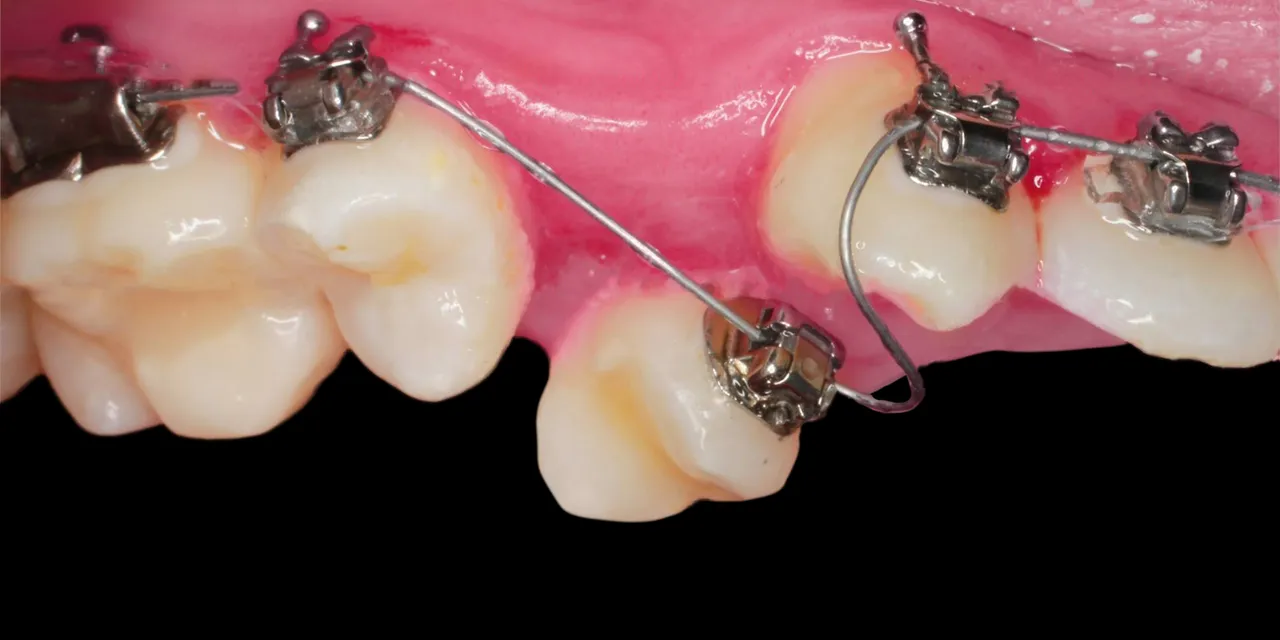
INTRUSION ARCH MECHANICS
Controlled Intrusion
The curriculum includes specialized intrusion arch mechanics for patients with significant periodontal bone loss.
Intrusion mechanics must be planned in conjunction with the condition of the supporting tissues and the overall orthodontic objective.
Important considerations include:
- Force control
- Direction of movement
- Tooth position
- Periodontal support
- Torque management
ORTHODONTIC TORQUE CONTROL
Targeted Torque Application
Precise torque control is an important theme throughout OrthoEvolution 2.0.
The course examines how targeted torque can be integrated into treatment of compromised or complex orthodontic cases.
Torque application is discussed particularly in relation to:
- Severe bone loss
- Tooth positioning
- Gingival contours
- Extrusion mechanics
- Periodontal tissue response
BONE REGENERATION
Bone Inductive Agents
The program reviews the potential role of bone inductive agents in tissue regeneration.
The learning objective focuses on evaluating their efficacy in regenerating:
- Bone
- Periodontal ligament – PDL
- New cementum
This creates an important connection between orthodontics and periodontal regenerative biology.
PERIODONTAL LIGAMENT REGENERATION
PDL Regeneration
The periodontal ligament plays a central role in supporting teeth and facilitating physiologic tooth movement.
The course considers regeneration of the periodontal ligament (PDL) within broader regenerative treatment strategies.
CEMENTUM REGENERATION
The curriculum also addresses the formation of new cementum as part of periodontal tissue regeneration.
The regenerative concept therefore involves three major structures:
Bone → Periodontal Ligament → Cementum
GINGIVAL CONTOUR MANAGEMENT
Orthodontic Correction of Gingival Contours
Orthodontic tooth movement can influence the relationship between teeth and surrounding gingival tissues.
The course addresses correction of gingival contours through controlled orthodontic mechanics.
ATTACHED GINGIVA
Thickening Attached Gingiva
One of the specific objectives of the program is to address how precise torque application during extrusion can contribute to the management of attached gingiva.
The course connects:
- Tooth movement
- Torque
- Extrusion
- Gingival positioning
- Periodontal tissue response
ORTHODONTIC EXTRUSION
Controlled Extrusion
Extrusion is examined not simply as tooth movement, but as part of an integrated periodontal and orthodontic strategy.
The clinical concept includes:
Extrusion + Torque Control → Tooth Position Change + Gingival Response
The objective is to understand how controlled mechanics may be used when addressing gingival contour and attached gingival tissues.
AUTOTRANSPLANTATION
Dental Autotransplantation
Autotransplantation represents a major advanced topic in OrthoEvolution 2.0.
The curriculum reviews protocols for relocating a tooth within the same patient as part of management of selected complex dental problems.
AUTOTRANSPLANTATION & TRANSPOSITIONS
Managing Dental Transpositions
The program specifically addresses the use of autotransplantation for treatment of dental transpositions.
The treatment pathway can involve:
Diagnosis → Transplant Planning → Surgical Procedure → Periodontal Healing → Orthodontic Management
PERIODONTAL REGENERATION AFTER AUTOTRANSPLANTATION
The course links successful autotransplantation with regeneration and preservation of supporting periodontal tissues.
Important biological structures include:
- Periodontal ligament
- Bone
- Cementum
The curriculum therefore integrates orthodontics, periodontal biology, and surgical treatment.
NONCOMPLIANCE ORTHODONTIC TREATMENT
Reducing Dependence on Patient Compliance
The course includes several noncompliance orthodontic devices designed to achieve mechanical objectives while reducing dependence on patient cooperation.
Devices addressed include:
- TADs
- SARA
- SUS
These appliances are discussed within several different orthodontic applications.
TEMPORARY ANCHORAGE DEVICES – TADs
Skeletal Anchorage
Temporary anchorage devices (TADs) provide anchorage options for complex orthodontic mechanics.
The program discusses their use in clinical strategies involving:
- Tooth movement
- Space management
- Molar movement
- Anchorage control
SARA
The curriculum includes SARA among the noncompliance orthodontic approaches discussed in the program.
Its use is considered within treatment strategies for selected skeletal and dental problems.
SUS
SUS is also included among the noncompliance devices addressed in the curriculum.
Together, TADs, SARA, and SUS provide different mechanical options for selected complex orthodontic cases.
MANDIBULAR RETROGNATHIA
Orthodontic Management Strategies
The noncompliance-device component includes treatment of mandibular retrognathia.
The program addresses how selected orthodontic appliances and mechanical strategies can be incorporated into management of these cases.
UPPER MOLAR DISTALIZATION
Distalization Mechanics
The course includes use of noncompliance orthodontic strategies to distalize upper molars.
This may contribute to:
- Space creation
- Molar-position correction
- Occlusal correction
- Treatment mechanics
ORTHODONTIC SPACE CLOSURE
Space closure is another application addressed within the program.
The curriculum examines how anchorage systems and noncompliance mechanics can support controlled space management.
TMJ DYSFUNCTION
Orthodontics & Temporomandibular Joint Management
The course also includes application of noncompliance orthodontic devices within treatment strategies involving TMJ dysfunction.
This creates an intersection between:
Orthodontic Mechanics + Occlusion + Functional Dentistry + TMJ Considerations
ORTHODONTIC RETENTION
Preserving Treatment Results
Retention is a central component of long-term orthodontic care.
The program emphasizes that retention planning should be based on more than tooth alignment alone.
Important considerations include:
- Anatomy
- Function
- Occlusion
- Original malocclusion
- Treatment mechanics
- Tissue adaptation
- Stability
ORTHODONTIC RELAPSE
Understanding Relapse
Orthodontic relapse can occur when teeth or supporting structures demonstrate a tendency to move away from the corrected position after active treatment.
The course focuses on developing comprehensive strategies to reduce this risk.
ANATOMICAL FACTORS IN RETENTION
Anatomy can influence long-term orthodontic stability.
Retention planning therefore considers the individual structural characteristics of the patient rather than relying exclusively on a universal protocol.
FUNCTIONAL FACTORS IN RETENTION
Functional influences may also affect tooth position and long-term stability.
The course includes functional assessment as part of comprehensive retention planning.
OCCLUSAL FACTORS IN RETENTION
Occlusion & Stability
The final occlusal relationship is considered when designing retention strategies.
This links active orthodontic treatment to the longer-term objective of maintaining a stable result.
RETENTION PROTOCOLS
A comprehensive retention strategy can be viewed as:
Evaluate Anatomy → Assess Function → Review Occlusion → Identify Relapse Risk → Select Retention Protocol → Monitor Stability
This systematic approach is a major part of the course’s long-term treatment philosophy.
ORTHODONTICS + PERIODONTICS
One of the important interdisciplinary themes of OrthoEvolution 2.0 is the relationship between orthodontic mechanics and periodontal tissues.
Topics connecting these areas include:
- Severe bone loss
- Controlled tooth movement
- Bone regeneration
- PDL regeneration
- Cementum regeneration
- Gingival contour correction
- Attached gingiva
ORTHODONTICS + ORAL SURGERY
Autotransplantation creates an important connection between orthodontic and surgical care.
Successful planning may require integration of:
- Tooth position
- Surgical access
- Donor tooth considerations
- Periodontal healing
- Subsequent orthodontic movement
ORTHODONTICS + FUNCTIONAL DENTISTRY
Treatment involving mandibular position, TMJ dysfunction, and occlusal stability can require consideration of both orthodontic and functional factors.
Cross-Specialty Clinical Focus
Orthodontics + Periodontal Regeneration
The program explores how orthodontic treatment can be coordinated with regenerative strategies involving:
- Bone
- Periodontal ligament
- Cementum
- Gingival tissues
Orthodontics + Autotransplantation
Autotransplantation combines surgical procedures with subsequent orthodontic and periodontal management.
Orthodontics + Skeletal Anchorage
TADs and other noncompliance systems provide mechanical options for complex cases in which conventional anchorage or patient cooperation may be limiting factors.
Orthodontics + Long-Term Stability
Successful orthodontic treatment ultimately requires both:
Correction + Stability
For this reason, retention and relapse prevention form a major component of the program.
Major Severe Bone Loss Topics
- Adult Orthodontics
- Severe Bone Loss
- Periodontal Bone Loss
- Intrusion Arch Mechanics
- Controlled Intrusion
- Torque Control
- Compromised Periodontal Support
- Orthodontic Biomechanics
Major Regeneration Topics
- Bone Regeneration
- Bone Inductive Agents
- Periodontal Regeneration
- Periodontal Ligament
- PDL Regeneration
- Cementum Regeneration
- Gingival Contours
- Attached Gingiva
- Orthodontic Extrusion
Major Autotransplantation Topics
- Dental Autotransplantation
- Tooth Autotransplantation
- Dental Transpositions
- Periodontal Healing
- Periodontal Tissue Regeneration
- Orthodontic-Surgical Treatment
- Transplant Protocols
Major Noncompliance Mechanics Topics
- Noncompliance Orthodontics
- TADs
- Temporary Anchorage Devices
- SARA
- SUS
- Skeletal Anchorage
- Mandibular Retrognathia
- Upper Molar Distalization
- Space Closure
- TMJ Dysfunction
Major Retention Topics
- Orthodontic Retention
- Orthodontic Relapse
- Relapse Prevention
- Long-Term Stability
- Anatomical Factors
- Functional Factors
- Occlusal Factors
- Retention Protocols
- Post-Treatment Stability
Who Should Take This Course?
OHI-S OrthoEvolution 2.0 is recommended for clinicians seeking advanced education in orthodontic biomechanics, periodontal tissue management, autotransplantation, anchorage systems, and long-term treatment stability.
It is particularly relevant for:
- Orthodontists
- Periodontists
- Oral and Maxillofacial Surgeons
- Dentists managing complex orthodontic cases
- Clinicians treating patients with periodontal bone loss
- Dental professionals interested in autotransplantation
- Clinicians using skeletal anchorage systems
- Dental professionals managing orthodontic relapse
- Clinicians interested in multidisciplinary orthodontic-periodontal care
Why This Course Is Useful
OHI-S OrthoEvolution 2.0 4 lessons 7h 41min provides an advanced clinical framework connecting orthodontic mechanics with periodontal biology, surgical techniques, skeletal anchorage, and retention.
The program can help learners review:
- Adult orthodontics with severe bone loss
- Intrusion arch mechanics
- Targeted torque control
- Bone inductive agents
- Bone regeneration
- PDL regeneration
- Cementum regeneration
- Gingival contour correction
- Thickening of attached gingiva
- Orthodontic extrusion
- Dental autotransplantation
- Management of dental transpositions
- TADs
- SARA
- SUS
- Mandibular retrognathia
- Upper molar distalization
- Space closure
- TMJ dysfunction
- Orthodontic retention
- Relapse prevention
- Anatomical, functional, and occlusal stability factors
The curriculum can be summarized as:
Advanced Mechanics → Periodontal Regeneration → Autotransplantation → Skeletal Anchorage → Long-Term Stability
within an advanced orthodontic and multidisciplinary dental treatment framework.
Product Information
- Product: OHI-S OrthoEvolution 2.0 4 lessons 7h 41min
- Provider: OHI-S
- Lessons: 4
- Duration: 7 Hours 41 Minutes
- Primary Focus: Orthodontics
- Specialties: Orthodontics / Periodontics / Oral and Maxillofacial Surgery
- Clinical Topics: Severe Bone Loss / Regeneration / Autotransplantation / TADs / Retention
- Available From: MedicalAmboss.com
Short Description
OHI-S OrthoEvolution 2.0 4 lessons 7h 41min is an advanced orthodontic program covering severe bone loss, intrusion mechanics, torque control, periodontal regeneration, autotransplantation, noncompliance appliances, and orthodontic retention.
Across four lessons and 7 hours 41 minutes, the course reviews bone and PDL regeneration, cementum formation, gingival contour management, autotransplantation for transpositions, TADs, SARA, SUS, mandibular retrognathia, upper molar distalization, space closure, TMJ dysfunction, and comprehensive relapse-prevention strategies.
You will find it on MedicalAmboss.com.
Topics
- Severe Bone Loss: Orthodontic management of adult patients with compromised periodontal bone support.
- Intrusion Arch Mechanics: Specialized orthodontic mechanics for controlled intrusion in complex adult cases.
- Torque Control: Targeted torque application for tooth positioning, periodontal management, and stability.
- Bone Inductive Agents: Evaluation of agents used to support regeneration of periodontal structures.
- Bone Regeneration: Regeneration of alveolar bone within complex periodontal-orthodontic treatment.
- Periodontal Ligament Regeneration: Regenerative considerations involving the PDL.
- Cementum Regeneration: Formation of new cementum as part of periodontal tissue regeneration.
- Gingival Contour Correction: Orthodontic management of gingival contours using controlled mechanics.
- Attached Gingiva: Strategies involving extrusion and torque to influence attached gingival tissues.
- Orthodontic Extrusion: Controlled extrusion used within periodontal and orthodontic treatment plans.
- Autotransplantation: Protocols for dental autotransplantation in complex orthodontic cases.
- Dental Transpositions: Use of autotransplantation as part of treatment for selected transposition cases.
- Periodontal Tissue Regeneration: Integration of periodontal healing and regeneration with orthodontic treatment.
- TADs: Temporary anchorage devices for anchorage control and complex tooth movement.
- SARA: Use of SARA as a noncompliance orthodontic device in selected clinical applications.
- SUS: Use of SUS within noncompliance orthodontic treatment strategies.
- Mandibular Retrognathia: Application of noncompliance mechanics in treatment of mandibular retrognathia.
- Upper Molar Distalization: Mechanical strategies for distal movement of maxillary molars.
- Space Closure: Anchorage-assisted approaches for orthodontic space management.
- TMJ Dysfunction: Use of orthodontic strategies in cases involving temporomandibular joint dysfunction.
- Orthodontic Retention: Comprehensive planning for preserving orthodontic results.
- Orthodontic Relapse: Identification and management of factors contributing to post-treatment relapse.
- Anatomical Stability Factors: Anatomical considerations influencing retention.
- Functional Stability Factors: Functional factors affecting long-term orthodontic results.
- Occlusal Stability Factors: Occlusal considerations used to guide retention planning.
Lesson 1. Management Of Adult Patients With Severe Bone Loss
-
Intrusion Arch Mechanics to manage teeth that extruded due to loss of the periodontium
-
Professor Rabie’s mechanics and wire design (live-demonstration of work on a typodont during a webinar)
-
Regulation of differential torque control of intruded teeth
-
Application of torque on TMA 17×25 rectangular wire
-
Bone inductive agents will be discussed and evidence to their ability to regenerate bone, PDL and new cementum will presented
Lesson 2. Clinical Management of Transpositions in Orthodontics with Emphasis on Autotransplantation
-
Achieving the perfect smile with gingival contour correction
-
Application of torque to ensure thickening of the attached gingiva before and during extrusion (live-demonstration during a webinar)
-
Autotransplantation protocol for periodontal tissue regeneration
Lesson 3. Fascination and limits of the noncompliance orthodontic TAD`s / SARA / SUS
-
Mandibular Retrognatie / class II (unilateral / bilateral)
-
Distalization in the upper Molars (headgear effect)
-
Mesialization in the lower jaw / space closure (aplasia of the 5s)
-
TMJ dysfunction (condyle repositioning effect)
-
Sleep apnea therapy
-
An interdisciplinary approach in the treatment of TMJ dysfunction
-
“Progressive bite jumping”: indications, limitations
-
Retention of orthodontic treatment results
Lesson 4. The orthodontic relapse etiology, prevention, management
-
Introduction to orthodontic retention / relapse
-
Anatomical, functional, dental, gingival and periodontal aspects
-
The controversial influence of growth, TMJ, tongue, habit, dysfunction and respiratory system
-
Retention aspects in diagnostics and therapy planning
-
Occlusal retention criteria, accurate occlusal finishing as a stability factor
-
Brackets or aligners, type and range of tooth movement in relation to Stability
-
Retention protocol and stability prognosis for individual dysgnathias
-
Ex versus non-Ex therapy in terms of stability
-
The role of the wisdom teeth between myth and truth
-
Physiological changes in the stomatognathic system (aging)
-
Risk groups for retention
-
Management of non-compliance patients
-
Fixed and removable retention devices and retainers
-
The bimaxillary “SARA retention concept”
-
Digital and analog retainers
-
Retention after dignathic surgery
-
Retention after dental trauma
-
Adjuvant and surgical retention measures
-
Management of proclination of the lower incisors while class 2 treatment
-
Relevant forensic and economic aspects
-
Future horizons in orthodontics
Related products

Basic science
DENTAL
DENTAL
DENTAL
Sinus Grafting for Implant Reconstruction (Pikos Online MasterClass Series) – Michael A. Pikos