
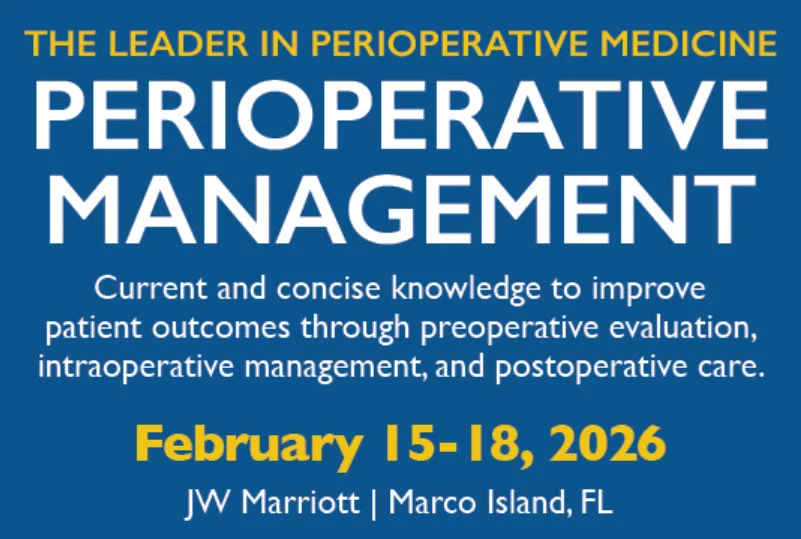
Perioperative Management-In Its 41st Year 2026


Original price was: $995.00.$110.00Current price is: $110.00.
Perioperative Management 2026 reviews surgical risk assessment, medical optimization and postoperative care through video study material.
Delivery Information: This Product is shared via google drive download link. Please use your correct Gmail address at checkout.
Please note: there are no CME points or certificate associated with this course.
Samples for Courses Can be found here: Free Samples Here!
Johns Hopkins Perioperative Management – In Its 41st Year 2026 (Videos)
Comprehensive Perioperative Medicine, Preoperative Assessment, Anesthesia, POCUS, AI & Surgical Patient Management
Perioperative Management 2026 is a video study resource based on the Johns Hopkins course in its 41st year, reviewing care before, during and after surgery. This listing is for study files, not conference registration.
The original Johns Hopkins meeting ran February 15–18, 2026. Its program covered perioperative assessment and management across medical and surgical specialties.
The original event offered optional in-person POCUS and wellness workshops. Workshop attendance, practical training and workshop recordings are not promised with this file listing.
Product Details
- Course: Johns Hopkins Perioperative Management – In Its 41st Year 2026
- Provider: Johns Hopkins Medicine
- Conference Dates: February 15–18, 2026
- Format: Videos
- Language: English
- Educational Level: Advanced
- Study Format: Video material; no live interaction or hands-on attendance is included.
Course Overview
Johns Hopkins Perioperative Management 2026 delivers an up-to-date review of perioperative medicine, incorporating the latest evidence, clinical guidelines, and technological advances. Participants will explore perioperative cardiovascular and pulmonary evaluation, blood management, anticoagulation, diabetes optimization, renal and hepatic disease, postoperative pain control, infection prevention, artificial intelligence, continuous physiologic monitoring, and ultrasound-guided perioperative procedures.
The curriculum also addresses clinician wellness and burnout while emphasizing patient safety, multidisciplinary teamwork, and evidence-based perioperative decision-making.
Comprehensive Topics Covered
Preoperative Evaluation
Optimize surgical risk assessment.
Topics include:
- Preoperative assessment
- Cardiac risk stratification
- Pulmonary evaluation
- Surgical optimization
- Functional assessment
- Risk prediction
- Clinical guidelines
Cardiovascular & Pulmonary Medicine
Improve perioperative outcomes.
Topics include:
- Cardiac complications
- Pulmonary complications
- Heart failure
- Hypertension
- Cardiopulmonary physiology
- Hemodynamic management
- Perioperative monitoring
Blood Management & Anticoagulation
Reduce perioperative complications.
Topics include:
- Perioperative anemia
- Blood transfusion
- Antithrombotic therapy
- Anticoagulation management
- Coagulation testing
- Antifibrinolytics
- Bleeding prevention
Medical Optimization
Manage complex comorbidities.
Topics include:
- Diabetes
- Chronic kidney disease
- Liver disease
- Frailty
- Delirium
- Obesity
- Endocrine disorders
Pain Management
Enhance postoperative recovery.
Topics include:
- Acute postoperative pain
- Multimodal analgesia
- Opioid stewardship
- Non-opioid analgesics
- Cannabis considerations
- Enhanced recovery
- Patient comfort
Infection Prevention
Improve surgical safety.
Topics include:
- Surgical site infections
- Healthcare-associated infections
- Antimicrobial strategies
- Infection prevention
- Perioperative antibiotics
- Patient safety
- Quality improvement
Artificial Intelligence & Digital Health
Explore future perioperative medicine.
Topics include:
- Artificial intelligence
- Clinical decision support
- Continuous physiologic monitoring
- Predictive analytics
- Workflow optimization
- Digital medicine
- Future healthcare technologies
Point-of-Care Ultrasound (POCUS)
Strengthen procedural and diagnostic skills.
Topics include:
- Ultrasound-guided vascular access
- Cardiac ultrasound
- Lung ultrasound
- Transthoracic echocardiography
- Peripheral nerve blocks
- Hemodynamic assessment
- Unstable patient algorithms
Wellness & Professional Development
Promote clinician well-being.
Topics include:
- Burnout prevention
- Emotional resilience
- Gratitude
- Workforce wellness
- Patient safety
- Professional satisfaction
- Healthcare quality
Learning Objectives
Upon completion of this educational activity, participants will be able to:
- Apply current guidelines for preoperative cardiac and pulmonary risk assessment and reduce perioperative complications.
- Implement evidence-based strategies for managing perioperative anemia, blood transfusion, anticoagulation, and coagulation disorders.
- Optimize perioperative care for patients with diabetes, renal insufficiency, liver disease, frailty, and delirium.
- Utilize multimodal analgesia and contemporary pain management strategies, including non-opioid therapies.
- Prevent, recognize, and manage healthcare-associated infections in surgical patients.
- Optimize perioperative medication management for hypertension, diabetes, obesity, heart failure, and immunomodulatory therapies.
- Recognize the impact of clinician well-being on patient safety and healthcare quality.
- Evaluate current and emerging applications of artificial intelligence in perioperative medicine.
- Perform basic ultrasound-guided vascular access and interpret essential cardiac and pulmonary ultrasound views.
- Apply POCUS algorithms in unstable perioperative patients and facilitate ultrasound-guided peripheral nerve blocks.
Target Audience
This educational activity is ideal for:
- Anesthesiologists
- Cardiologists
- Pulmonologists
- Surgeons
- Hospitalists
- Intensivists
- Nephrologists
- Endocrinologists
- Infectious Disease Specialists
- Geriatricians
- Internal Medicine Physicians
- Nurse Practitioners
- Physician Assistants
- Residents
- Fellows
- Healthcare Professionals involved in perioperative care
Using the Material
Use the videos for educational review alongside current guidelines and local protocols. The program outline below describes the original event, not an independently verified inventory of delivered files.
Original Conference Program
Day 1: Sunday, February 15, 2026
-
Introduction and Conference Goals
-
Preoperative Cardiac Risk Assessment and Testing
-
Prevention and Treatment of Perioperative Myocardial Injury
-
Perioperative Management of Patients with Cardiomyopathy
-
Preoperative Evaluation: Optimized, Not Cleared
-
Perioperative Management of Patients on Anti-Platelet Therapy
-
Perioperative Management of Patients on Warfarin and Direct Oral Anticoagulants (DOACs)
-
Preoperative Evaluation and Management of the Patient with Heart Failure
-
Preoperative Management of the Patient with “New ECG Abnormalities”
-
Practical Interpretation and Perioperative Implications of an ECHO Report
-
To Stop or Not to Stop: Managing Immune Modulating Agents and other meds before surgery
-
Resolving Common Perioperative Conundrums: The Role of Point of Care Ultrasound (POCUS)
Day 2: Monday, February 16, 2026
-
Preoperative Pulmonary Risk Assessment and Testing
-
Perioperative Management of the Patient with Pulmonary Hypertension
-
Management of Perioperative Anemia, Transfusion, and Bleeding
-
Burnout and Emotional Exhaustion- Impact on Healthcare Outcomes
-
Improving your Wellbeing and Patient Outcomes through Better Work-Life Integration
-
Perioperative Respiratory Insufficiency: Mechanisms and Management
-
Perioperative Management of the Patient with a Pacemaker or ICD
-
To Cath or Not to Cath: What to do with the Patient with a Positive Postop Troponin
-
Perioperative Hemodynamic Management- Can Goal Directed Therapy and Individualized Targets Improve Outcome?
-
Incidence, Implications, and Management of Postoperative Atrial Fibrillation
-
Challenging Airways: Keeping You and Your Patient Safe
-
“It’s only a sedation case…”: Strategies to Prevent a Cardiopulmonary Catastrophe
-
Acute Hypoxia in the PACU or Ward: Differentiating the Good, the Bad, and the Ugly
-
Optional Workshop: Point of Care Ultrasound (POCUS)
Day 3: Tuesday, February 17, 2026
-
Perioperative Management of Diabetes and Hyperglycemia
-
Perioperative Renal Dysfunction
-
Acute Pain Management: Limiting Narcotics through Multimodal Analgesia
-
Prevention and Treatment of Surgical Site Infections
-
Preventing, Identifying, and Managing Common Healthcare Associated Infections
-
Managing the Pregnant Patient for Obstetrical and Non-Obstetrical Surgery
-
Managing Surgical Patients with Diabetes and Hyperglycemia: Case presentations
-
Perioperative Management of Hyponatremia and Other Electrolyte Abnormalities
-
Perioperative Management of the Patient with Chronic Opioid Use Disorder: Methadone, Buprenorphine, and more
-
What’s New in Pain Management: suzetrigine and cannabis
-
Can we reduce acute kidney injury by improving perioperative hemodynamic management?
-
Perioperative Fluid Management
-
Identifying and Mitigating Perioperative Risks in Patients with Obstructive Sleep Apnea
-
Optional Workshop: Wellness Workshop
Day 4: Wednesday, February 18, 2026
-
Perioperative DVT and Pulmonary Embolism
-
Post-Operative Delirium: Prevention and Treatment
-
Identifying and Managing Risks in Ambulatory Surgery Patients
-
Perioperative Management of Hepatic Dysfunction
-
Improving Perioperative Quality and Safety through System and Culture Change
-
Frailty: Measurement, Prehabilitation, and Periop Management
-
Managing End of Life Care in Surgical Patients
-
ERAS (Enhanced Recovery After Surgery) for Ambulatory Surgery
-
Postoperative Mental Status Changes in Geriatric Patients – Head CT and Call Neurology?
-
Improving the Quality of Sepsis Care
-
Continuous Physiologic Monitoring After the PACU: Which one and for whom?
-
AI in Perioperative Medicine: Hype or Reality?
Delivery and Access
Google Drive delivery is for the listed study files. CME points, certificates, publisher accounts and conference or workshop registration are not included.
Official event reference: Johns Hopkins Perioperative Management, 41st Year.
Related products

Critical Care - Emergency medicine

Internal Medicine
Internal Medicine

Internal Medicine

Internal Medicine

Internal Medicine

Medical Accounts