
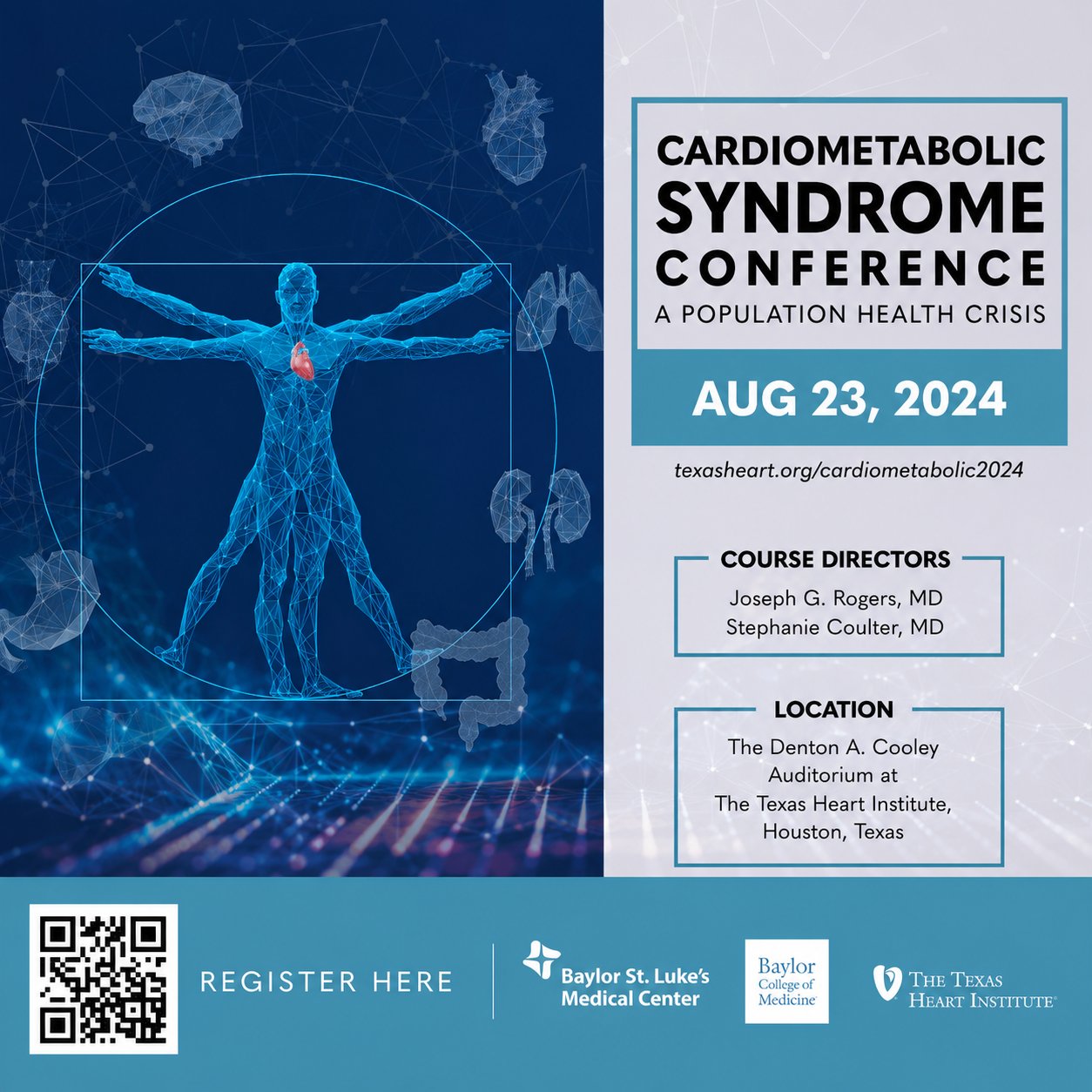
Texas Heart Institute Cardiometabolic Syndrome Conference 2024

Original price was: $200.00.$20.00Current price is: $20.00.
This Product is shared via google drive download link, So please share your correct Gmail id while placing the order .Please note that there are no CME points or certificate associated with this course Samples for Courses Can be found here : Free Samples Here!
Include: 20 videos, size: 4.67 GB
Texas Heart Institute Cardiometabolic Syndrome Conference 2024
Comprehensive Multidisciplinary Update on Cardiometabolic Syndrome, Obesity, Diabetes, Fatty Liver Disease, and Cardiovascular Risk Reduction
Overview
The Texas Heart Institute Cardiometabolic Syndrome Conference 2024 is a multidisciplinary educational program focused on the growing global burden of Cardiometabolic Syndrome (CMS) and its impact on cardiovascular disease, diabetes, obesity, fatty liver disease, cancer, and chronic inflammatory disorders.
This conference brings together experts from cardiology, endocrinology, hepatology, gastroenterology, rheumatology, pulmonology, neurology, internal medicine, and surgery to address the complex interactions between metabolic dysfunction and chronic disease. The program emphasizes evidence-based management strategies while exploring innovative solutions that extend beyond traditional healthcare approaches, including social determinants of health, community partnerships, nutrition interventions, and population health initiatives.
Through 20 expert-led lectures, participants gain practical insights into screening, prevention, treatment, and long-term management of cardiometabolic disease.
Course Specifications
Format
- 20 Video Lectures
Course Year
2024
Educational Level
Intermediate to Advanced
Specialty
Cardiometabolic Medicine
Learning Objectives
Upon completion of this activity, participants should be able to:
- Define cardiometabolic syndrome and its clinical implications.
- Apply guideline-based screening strategies for cardiometabolic disease.
- Implement evidence-based treatment approaches for obesity, diabetes, and dyslipidemia.
- Recognize the relationship between cardiometabolic syndrome and non-cardiac diseases.
- Evaluate the impact of social determinants of health on disease outcomes.
- Utilize nutrition-based interventions for cardiovascular risk reduction.
- Address cardiometabolic disease in pediatric populations.
- Integrate multidisciplinary approaches into clinical practice.
Core Topics Covered
Cardiometabolic Syndrome Fundamentals
Topics Include
- Definition of Cardiometabolic Syndrome
- Epidemiology
- Disease Burden
- Healthcare Costs
- Global Trends
- Future Projections
Participants review the growing prevalence and consequences of CMS worldwide.
Obesity and Metabolic Disease
Topics Include
- Obesity Pathophysiology
- Adipose Tissue Dysfunction
- Metabolic Inflammation
- Weight Management Strategies
- Obesity as a Chronic Disease
- Long-Term Treatment Approaches
Review of obesity as a central driver of cardiometabolic dysfunction.
Type 2 Diabetes and Insulin Resistance
Topics Include
- Insulin Resistance
- Prediabetes
- Type 2 Diabetes Mellitus
- Glycemic Control
- Cardiovascular Risk Reduction
- Emerging Therapies
Participants learn contemporary approaches to diabetes prevention and management.
Cardiovascular Disease and CMS
Topics Include
- Atherosclerotic Cardiovascular Disease (ASCVD)
- Coronary Artery Disease
- Stroke Prevention
- Heart Failure
- Vascular Disease
- Cardiovascular Risk Stratification
Focus on reducing cardiovascular morbidity and mortality in high-risk populations.
Hypertension Management
Topics Include
- Blood Pressure Control
- Resistant Hypertension
- Risk Assessment
- Lifestyle Interventions
- Pharmacologic Therapy
Review of current hypertension guidelines and management strategies.
Dyslipidemia and Lipid Disorders
Topics Include
- LDL Cholesterol Management
- Hypertriglyceridemia
- Residual Cardiovascular Risk
- Statin Therapy
- Novel Lipid-Lowering Agents
Participants review contemporary lipid management practices.
Fatty Liver Disease and Metabolic Dysfunction
A major focus of the conference.
Topics Include
- Metabolic Dysfunction-Associated Steatotic Liver Disease (MASLD)
- Nonalcoholic Fatty Liver Disease (NAFLD)
- Nonalcoholic Steatohepatitis (NASH)
- Liver Fibrosis
- Cardiovascular Risk in Liver Disease
- Emerging Treatments
The conference highlights the growing relationship between metabolic disease and chronic liver disorders.
Cardiometabolic Syndrome and Cancer
Topics Include
- Obesity-Associated Malignancies
- Chronic Inflammation
- Metabolic Risk Factors
- Cancer Prevention Strategies
Review of emerging evidence linking CMS to cancer development.
Pediatric Cardiometabolic Disease
Topics Include
- Childhood Obesity
- Pediatric Insulin Resistance
- Early Cardiovascular Risk
- Prevention Strategies
- Long-Term Outcomes
Participants explore the increasing burden of CMS among children and adolescents.
Nutrition as Therapy
Topics Include
- Food as Medicine
- Therapeutic Nutrition
- Dietary Counseling
- Weight Reduction
- Cardiovascular Risk Modification
- Community-Based Nutrition Programs
Special emphasis is placed on prescribing nutrition as part of comprehensive treatment plans.
Social Drivers of Health
Topics Include
- Health Equity
- Access to Care
- Socioeconomic Determinants
- Community Health Initiatives
- Population-Based Prevention
Participants learn how social factors contribute to cardiometabolic disease progression.
Innovative Models of Care
Topics Include
- Community Partnerships
- Preventive Health Programs
- Public Health Interventions
- Multidisciplinary Care Teams
- Population Health Management
Review of novel approaches to reducing the burden of CMS.
Rheumatologic and Inflammatory Disorders
Topics Include
- Chronic Inflammation
- Autoimmune Disease
- Cardiovascular Risk in Rheumatologic Conditions
- Metabolic Dysfunction
Exploration of the relationship between inflammation and cardiometabolic disease.
Pulmonary Manifestations of CMS
Topics Include
- Obstructive Sleep Apnea
- Obesity Hypoventilation Syndrome
- Pulmonary Hypertension
- Respiratory Consequences of Obesity
Neurologic Consequences
Topics Include
- Stroke Risk
- Cognitive Impairment
- Vascular Dementia
- Neurovascular Disease
Review of neurologic complications associated with metabolic disease.
Educational Features
Multidisciplinary Faculty
Features experts from cardiology, endocrinology, hepatology, gastroenterology, rheumatology, pulmonology, neurology, and surgery.
Population Health Perspective
Focuses on both individual patient care and broader public health approaches.
Evidence-Based Guidelines
Reviews contemporary recommendations for screening, diagnosis, and treatment.
Innovative Prevention Strategies
Explores novel approaches to reversing the growing burden of cardiometabolic disease.
Target Audience
Physicians
- Cardiologists
- Internists
- Endocrinologists
- Hepatologists
- Gastroenterologists
- Rheumatologists
- Pulmonologists
- Neurologists
- Surgeons
- Family Medicine Physicians
Advanced Practice Providers
- Nurse Practitioners
- Physician Assistants
Allied Health Professionals
- Nurses
- Dietitians
- Diabetes Educators
- Public Health Professionals
Trainees
- Residents
- Fellows
- Medical Students
Why Choose This Course?
- Comprehensive review of cardiometabolic syndrome.
- Strong focus on obesity, diabetes, and cardiovascular disease.
- Includes emerging links between CMS, liver disease, and cancer.
- Addresses social determinants of health and population health strategies.
- Multidisciplinary faculty from numerous specialties.
- Emphasizes innovative approaches beyond traditional medical treatment.
Topics:
- An Employer Perspective on Community Health Initiatives.mp4
Behavior Change and Health Outcomes in the Age of AI.mp4
Cardiometabolic Syndrome in Children A Sign of Things To Come.mp4
Cardiometabolic Syndrome in Women.mp4
Changing Dietary Habits at the Population Level.mp4
Defining the Epidemiologic Scope of Cardiometabolic Syndrome.mp4
From Streets to Heartbeats Urban Environment and Cardiometabolic Health.mp4
Impact of Contemporary Therapies on CMS.mp4
Implementation Science to Improve Patient Engagement and Leveraging Systems to Enhance Care.mp4
Leveraging Community Resources to Support Mental Health in the Workplace.mp4
Looking at Community Health Trends with Survey Data The Greater Houston Community Panel.mp4
National Priorities on Lifestyle and Cardiometabolic Health.mp4
Opening Plenary Session Panel Discussion Q&A.mp4
Research and Community Health Priorities Panel Discussion Q&A.mp4
Technology & Digital Health Innovations Non-Medical Management Panel Discussion Q&A.mp4
The Role of Local and State Governments.mp4
Using Big Data to Understand and Treat Cardiometabolic Syndrome.mp4
We Have the Tools, It’s Time To Unite The Intersection of CMH & MASLD MASH.mp4
We Know What To Do. Why Isn’t It Working.mp4
What the Guidelines Tell Us About Cardiometabolic Syndrome.mp4
Related products
Endocrine and Nutrition
Comprehensive Care for Persons with Diabetes 2022: A Certificate Program
Endocrine and Nutrition
Cardiology
Endocrine and Nutrition

Endocrine and Nutrition
Master Course Carotid and Vertebral Arteries (ABC Vascular) (Videos, Slides & Quizzes)

Endocrine and Nutrition
Internal Medicine
Endocrine and Nutrition