
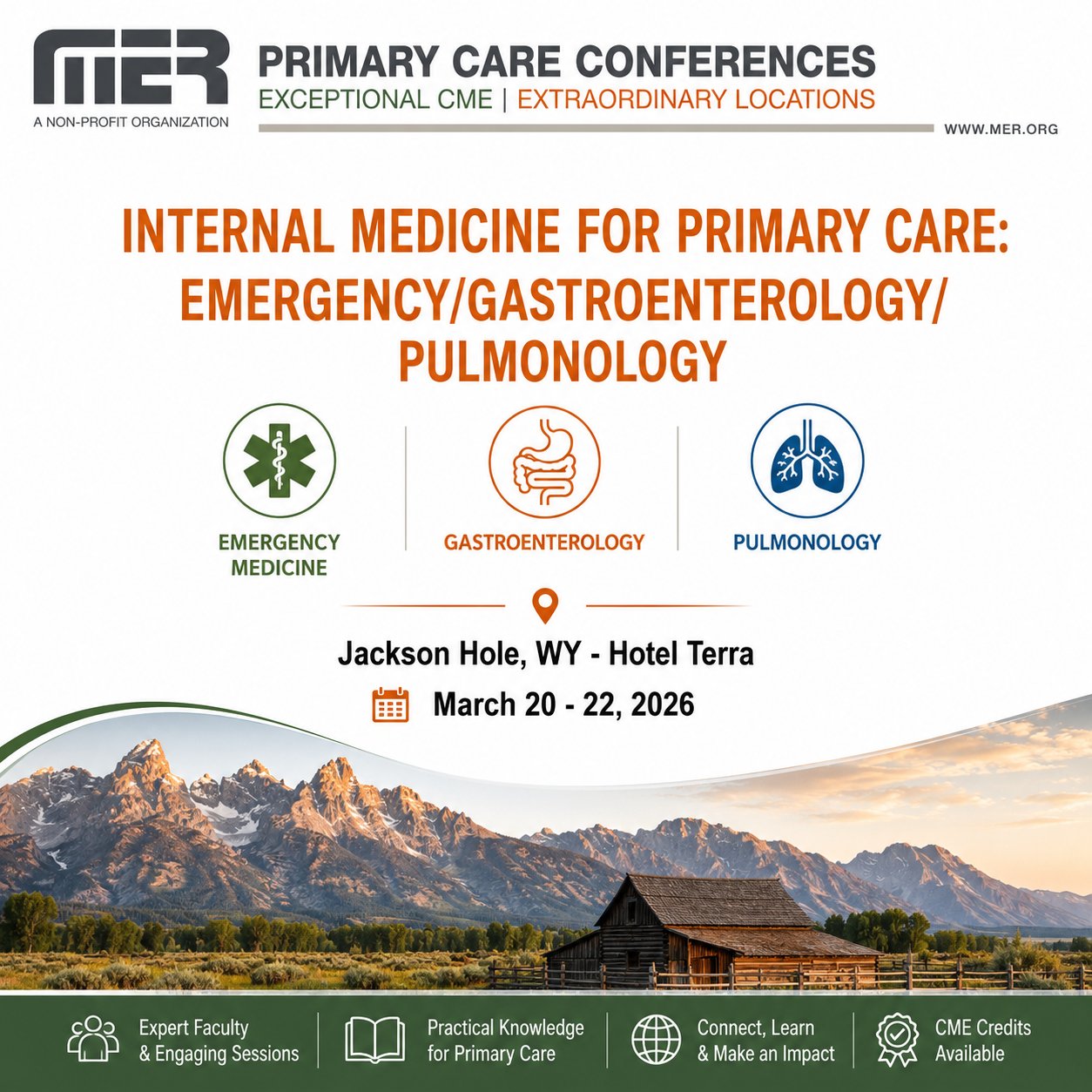
MER Primary Care Conferences Internal Medicine for Primary Care Emergency Gastro Pulm Mar 20-22, 2026
$100.00
This Product is shared via google drive download link, So please share your correct Gmail id while placing the order .Please note that there are no CME points or certificate associated with this course Samples for Courses Can be found here : Free Samples Here!
MER Primary Care Conferences – Internal Medicine for Primary Care: Emergency Medicine, Gastroenterology & Pulmonology 2026 (Videos)
Comprehensive Primary Care Updates in Emergency Medicine, Gastroenterology, Pulmonology, and Office-Based Acute Care
Stay current with the latest evidence-based practices in adult primary care through MER Primary Care Conferences – Internal Medicine for Primary Care: Emergency Medicine/Gastroenterology/Pulmonology 2026, a comprehensive continuing medical education (CME) program presented by Medical Education Resources (MER). Designed specifically for office-based clinicians, this multidisciplinary conference delivers practical, guideline-driven updates that help healthcare providers confidently diagnose, manage, and appropriately refer patients with common respiratory, gastrointestinal, liver, and emergency medical conditions.
Held March 20–22, 2026, at Hotel Terra, Jackson Hole, Wyoming, the conference features nationally recognized faculty who combine expert lectures with real-world clinical scenarios to strengthen diagnostic reasoning, improve patient management, and enhance decision-making in everyday primary care practice.
The curriculum integrates the latest recommendations in pulmonology, gastroenterology, emergency medicine, hepatology, and acute office management, providing clinicians with practical tools that can be immediately incorporated into patient care.
Product Details
- Course: Internal Medicine for Primary Care: Emergency Medicine/Gastroenterology/Pulmonology 2026
- Provider: Medical Education Resources (MER)
- Conference Dates: March 20–22, 2026
- Location: Hotel Terra, Jackson Hole, Wyoming, USA
- Format: Videos
- Language: English
- Educational Level: Intermediate to Advanced
Course Overview
Primary care clinicians frequently encounter patients with acute medical complaints that require rapid evaluation, stabilization, and appropriate referral. Simultaneously, they manage a wide variety of chronic respiratory, gastrointestinal, and liver diseases that require ongoing evidence-based treatment and timely specialist consultation.
Internal Medicine for Primary Care: Emergency Medicine/Gastroenterology/Pulmonology 2026 delivers an integrated review of these essential disciplines, focusing on practical clinical management rather than theoretical discussion. Faculty members present current diagnostic strategies, updated treatment recommendations, and guideline-based management approaches for common conditions encountered in outpatient practice.
Special emphasis is placed on recognizing medical emergencies, managing unstable patients in the office, evaluating respiratory diseases, interpreting liver abnormalities, and identifying situations that require urgent referral or hospital admission. Through case-based learning and practical clinical discussions, participants gain valuable knowledge that improves patient safety, diagnostic accuracy, and overall quality of care.
What You’ll Learn
After completing this course, participants will be able to:
- Diagnose and manage asthma using current evidence-based treatment guidelines.
- Develop effective treatment strategies for COPD and common respiratory infections.
- Evaluate lung nodules and recognize appropriate screening and referral pathways for lung cancer.
- Apply updated recommendations for hepatitis B (HBV) and hepatitis C (HCV) management.
- Interpret abnormal liver function tests and determine appropriate diagnostic evaluations.
- Identify appropriate indications for liver biopsy and liver transplantation referral.
- Recognize unstable patients in the outpatient setting and initiate emergency stabilization.
- Evaluate common office complaints that require urgent emergency department referral.
- Perform suicide risk assessment in psychiatric emergencies.
- Recognize toxidromes through focused history and physical examination.
Comprehensive Topics Covered
Pulmonology
Review contemporary evidence-based management of common respiratory disorders encountered in primary care, including asthma, chronic obstructive pulmonary disease (COPD), respiratory infections, pulmonary nodules, lung cancer screening, and chronic pulmonary disease management.
Asthma
Develop practical strategies for diagnosing asthma, initiating guideline-directed therapy, optimizing inhaler treatment, monitoring disease control, and preventing exacerbations.
Chronic Obstructive Pulmonary Disease (COPD)
Strengthen your understanding of COPD diagnosis, pharmacologic management, prevention of exacerbations, pulmonary rehabilitation, vaccination strategies, and long-term disease monitoring.
Respiratory Infections
Review current treatment recommendations for upper and lower respiratory tract infections while applying antimicrobial stewardship principles and evidence-based prescribing practices.
Lung Nodules & Lung Cancer
Learn current recommendations for evaluating pulmonary nodules, appropriate screening strategies, risk stratification, imaging follow-up, and referral for suspected lung malignancies.
Gastroenterology
Gain practical updates on the diagnosis and management of common gastrointestinal and hepatobiliary disorders encountered in outpatient internal medicine and primary care practice.
Hepatitis B & Hepatitis C
Review the latest treatment recommendations for chronic hepatitis B and hepatitis C, including antiviral therapies, monitoring strategies, and long-term patient management.
Liver Disease
Develop systematic approaches to evaluating abnormal liver function tests, interpreting laboratory abnormalities, determining indications for liver biopsy, and recognizing patients who require referral for liver transplantation.
Emergency Medicine for Primary Care
Learn practical approaches to recognizing, stabilizing, and managing medical emergencies that occur in outpatient practice, while improving triage decisions and emergency referral processes.
Key topics include:
- Office-based medical emergencies
- Initial stabilization of unstable patients
- Emergency transport preparation
- Recognition of high-risk clinical presentations
- Acute abdominal pain
- Psychiatric emergencies
- Suicide risk assessment
- Toxicology and toxidromes
Psychiatric Emergencies
Review evidence-based strategies for evaluating suicide risk, managing acute psychiatric crises, and determining appropriate emergency intervention and referral.
Toxicology
Strengthen diagnostic skills by learning to identify common toxidromes through focused history-taking, physical examination, and clinical pattern recognition.
Learning Objectives
Upon completion of this educational activity, participants will be able to:
- Diagnose and manage asthma using current evidence-based recommendations.
- Develop treatment strategies for COPD and common respiratory infections.
- Evaluate lung nodules and implement appropriate lung cancer screening and referral.
- Apply updated treatment recommendations for hepatitis B and hepatitis C.
- Interpret elevated liver function tests and determine indications for liver biopsy.
- Identify patients requiring referral for liver transplantation.
- Stabilize patients who become medically unstable in the outpatient setting.
- Recognize clinical situations requiring urgent emergency department referral.
- Perform suicide risk assessments during psychiatric emergencies.
- Recognize common toxidromes using history and physical examination.
Educational Highlights
- Emergency Medicine for Primary Care
- Office-Based Medical Emergencies
- Asthma Management
- Chronic Obstructive Pulmonary Disease (COPD)
- Respiratory Infections
- Lung Nodules
- Lung Cancer Screening
- Hepatitis B (HBV)
- Hepatitis C (HCV)
- Liver Function Test Interpretation
- Liver Biopsy Indications
- Liver Transplant Referral
- Psychiatric Emergencies
- Suicide Risk Assessment
- Toxicology & Toxidromes
- Case-Based Learning
- Evidence-Based Clinical Guidelines
- Continuing Medical Education (CME)
Why This Course Stands Out
MER Internal Medicine for Primary Care: Emergency Medicine/Gastroenterology/Pulmonology 2026 is specifically designed for busy primary care clinicians who need practical, immediately applicable education rather than highly specialized subspecialty content. By integrating emergency medicine, pulmonology, gastroenterology, and hepatology into one comprehensive program, the course equips participants with the knowledge and confidence to manage common outpatient conditions, recognize medical emergencies, and make timely referral decisions. The curriculum emphasizes guideline-based care, clinical efficiency, and real-world case discussions that directly improve everyday patient management.
Target Audience
This educational activity is ideal for:
- Internists
- Primary Care Physicians
- Family Medicine Physicians
- General Practitioners
- Gastroenterologists
- Pulmonologists
- Emergency Physicians
- Hospitalists
- Nurse Practitioners
- Physician Assistants
- Internal Medicine Residents
- Family Medicine Residents
- Healthcare Professionals involved in adult primary care
Why Choose This Course?
Whether you practice internal medicine, family medicine, urgent care, or outpatient primary care, MER Primary Care Conferences – Internal Medicine for Primary Care: Emergency Medicine/Gastroenterology/Pulmonology 2026 provides an outstanding evidence-based review of the conditions clinicians encounter every day. Combining expert faculty, practical clinical guidance, updated treatment recommendations, and case-based learning, this program helps healthcare professionals improve diagnostic accuracy, enhance patient safety, and deliver high-quality, guideline-driven care.
4. Topics
Friday, March 20, 2026
-
Pulmonology – Asthma: The medical impact of asthma; fundamental role of inflammation, with possible scarring and irreversible loss of lung function; practical points of diagnosis; goal setting management based on levels of severity; risk factors for mortality and treatment in the acute setting; management options for the difficult to control asthmatic patient.
-
Pulmonology – Controversies in the Treatment of Common Respiratory Infections: Acute and chronic bronchitis; pneumonia (community versus hospital-acquired); role of the Pneumonia Severity Index score in determining indication for hospitalization; cost- effective use of antibiotics; clinical significance of drug resistance; guidelines for management.
-
Pulmonology – COPD: Definition; pathophysiology; early detection and intervention; risk reduction; management update including new modalities (including lung volume reduction surgery) and the role of inhaled corticosteroids and domiciliary oxygen.
-
Gastroenterology – Hepatitis B and C Viruses: Review for the Primary Care Clinician: Hepatitis C virus: Review of background, screening recommendations, and treatment by the primary care provider; Hepatitis B virus: Review HBV screening, interpretation of testing, vaccinations guidelines and impact, and indications for treatment including for special populations.
-
Gastroenterology – Abnormal Liver “Function” Tests & Drug Induced Liver Injury (DILI): Elevation of elevated LFT’s are a common problem, but how should we interpret them? How much testing is necessary and when to refer? Review of indications for referral and liver biopsy; Drug-induced liver injury (DILI) will be reviewed including resources to help evaluate.
Saturday, March 21, 2026
-
Gastroenterology – Non-alcoholic Fatty Liver Disease: A New Name and Common Problem: Review of new nomenclature and definitions of non-alcoholic fatty liver disease (MASLD); Discussion of screening, available diagnostic testing, indications for liver biopsy, and risks associated with the disease; Discussion of newly available and future treatments for MASLD/MASH.
-
Gastroenterology – Cirrhosis and Indications for Liver Transplantation: Overall review of several of the potentially lethal complications of portal hypertension and end-stage liver disease including varices, hepatic encephalopathy and ascites; Review the role of liver transplantation, including indications for referral to a transplant center and contraindications to transplant; Review of the transplant selection process, including for patients with alcoholic cirrhosis.
-
Pulmonology – Lung Cancer Screening & Pulmonary Nodules: Appropriate use of the new lung cancer screening recommendations; Fleischner Society guidelines and American College of Chest Physician Lung Cancer guidelines; approach to definitive evaluation and management strategies.
-
Emergency Med – Approach to the Patient Who Becomes Unstable in the Office: Some patients come to the clinic and become unstable. What needs to be done prior to arrival of the ambulance. This course discusses the evaluation and treatment of unstable patient, initial resuscitation and transfer process.
-
Emergency Med – Common Office-Based Emergencies: Office-based evaluation of shortness of breath, chest pains, abdominal pain, syncope, seizure and endocrine related problems. Criteria for transfer to an emergency department will also be discussed.
Sunday, March 22, 2026
-
Emergency Med – Psychiatric Emergencies in Primary Care: Most patients with a mental illness come to the office for evaluation and treatment of their complaint. This presentation will review those common psychiatric conditions including depression, anxiety, and substance use disorder. Suicide risk assessment is essential to this evaluation process.
-
Emergency Med – Toxicology Emergencies Commonly Seen in the Office: Patients may walk into the clinic who have taken a toxic substance or drug overdose. It is important to do a detailed history, look for physical clues and determine if the patient has a toxidrome. The presentation will aid in determining who needs to go to emergency room and who can be treated in the office.
Related products
Critical Care - Emergency medicine

Internal Medicine
Critical Care - Emergency medicine
40th ISICEM International Symposium on Intensive Care & Emergency Medicine 2021

Pediatrics

Critical Care - Emergency medicine
The Brigham Board Review in Infectious Diseases Brigham and Women’s Hospital Board Review

Critical Care - Emergency medicine
Critical Care - Emergency medicine
2022 UPDATES IN THERAPEUTICS: CRITICAL CARE PHARMACY PREPARATORY REVIEW AND RECERTIFICATION COURSE