
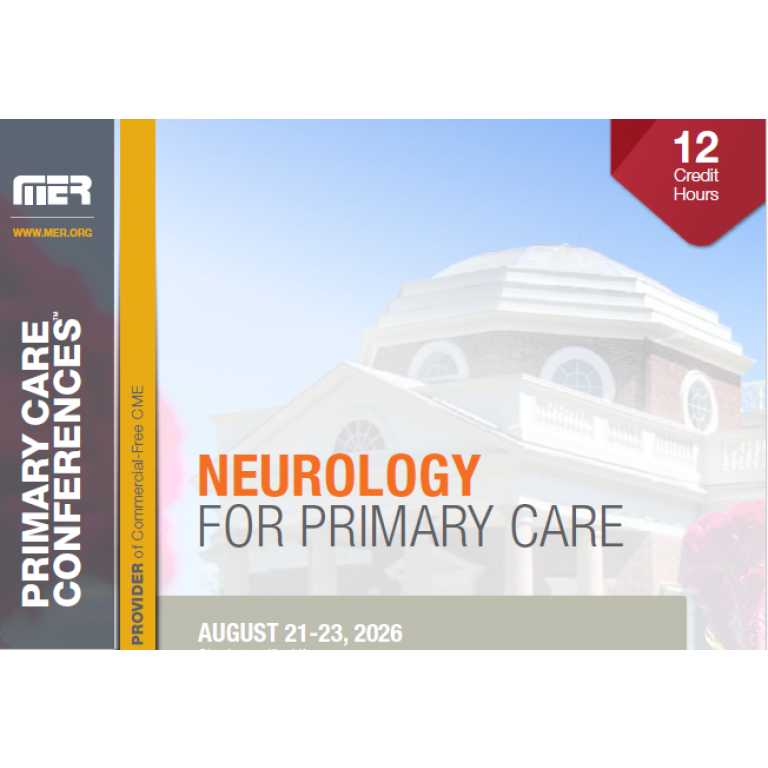
MER Neurology for Primary Care 2026
$100.00
This Product is shared via google drive download link, So please share your correct Gmail id while placing the order .Please note that there are no CME points or certificate associated with this course Samples for Courses Can be found here : Free Samples Here!
MER Neurology for Primary Care 2026
Videos + PDF Slides / Course Materials + Subtitles | Google Drive Delivery
Strengthen your practical approach to common and important neurological conditions with MER Neurology for Primary Care 2026, a clinically focused educational program designed for primary care physicians and other healthcare professionals who routinely evaluate patients with neurological symptoms.
Organized by Medical Education Resources (MER), the program was held August 21–23, 2026 at Boar’s Head Resort in Charlottesville, Virginia.
The course provides a practical review of neurological examination, seizures and epilepsy, Alzheimer’s disease and other dementias, Parkinson’s disease, movement disorders, weakness, low back pain, sleep disorders, neuropathy, cerebrovascular disease, migraine, headache, dizziness, and vertigo.
Rather than focusing exclusively on highly specialized neurology, the curriculum emphasizes neurological problems commonly encountered in primary care, family medicine, and internal medicine.
This digital course package includes available video lectures, PDF slides/course materials, and subtitles, with files delivered through Google Drive for convenient offline study.
Course Details
- Course: Neurology for Primary Care
- Provider: Medical Education Resources – MER
- Year: 2026
- Dates: August 21–23, 2026
- Location: Charlottesville, Virginia
- Venue: Boar’s Head Resort
- Specialty: Neurology / Primary Care
- Format: Digital / Offline Educational Content
- Included: Videos + PDF Slides / Course Materials + Subtitles
- Delivery: Google Drive
- Language: English
What Is Included?
✓ Video Lectures
Available recorded educational lectures covering the major neurological topics included in the MER Neurology for Primary Care curriculum.
✓ PDF Slides / Course Materials
Available presentation slides and supporting course materials provide a convenient reference while reviewing the lectures.
✓ Subtitles
Subtitles are included with available video content to support easier lecture review and study.
✓ Offline Educational Content
Study the course materials independently without needing to attend the original live conference.
The materials can be useful for:
- Clinical neurology review
- Primary care education
- Internal medicine review
- Family medicine study
- Neurology topic revision
- Repeated lecture review
- Independent medical education
✓ Google Drive Delivery
The available course files are delivered digitally through Google Drive.
This product provides educational files only and is not registration for the original MER live conference.
Course Overview
Neurological complaints are frequently encountered in primary care.
Patients may present with:
- Headache
- Dizziness
- Weakness
- Memory problems
- Tremor
- Sleep complaints
- Back pain
- Neuropathic symptoms
- Seizure-like episodes
- Transient neurological deficits
Primary care clinicians must be able to perform an appropriate neurological examination, develop a differential diagnosis, recognize urgent neurological conditions, determine when additional investigations are required, and identify patients who need neurological referral.
MER Neurology for Primary Care 2026 addresses these challenges through clinically oriented lectures covering the neurological conditions most relevant to everyday practice.
Learning Objectives
After reviewing this educational program, learners should be better able to:
- Perform a structured neurological examination.
- Explain the differential diagnosis of seizures.
- Distinguish seizures from epilepsy and other paroxysmal disorders.
- Review the clinical pharmacology and adverse-effect considerations of antiepileptic medications.
- Understand current approaches to epilepsy treatment and therapeutic monitoring.
- Discuss common sleep disorders and their management.
- Review evidence-based management options for Alzheimer’s disease.
- Recognize important features of Parkinson’s disease and other movement disorders.
- Evaluate patients presenting with weakness.
- Use history and physical examination to distinguish neurological weakness from nonspecific symptoms.
- Evaluate and manage common presentations of low back pain.
- Understand the mechanisms and clinical features of neuropathic pain.
- Identify patients at increased risk of cerebrovascular disease.
- Review prevention and treatment strategies for cerebrovascular disorders.
- Develop a differential diagnosis for headaches and migraines.
- Recognize potentially dangerous secondary headache presentations.
- Evaluate patients presenting with dizziness and vertigo.
- Distinguish common peripheral causes of vertigo from potentially serious central neurological disorders.
MER Neurology for Primary Care 2026 Course Content
1. The Neurological Exam
A structured neurological examination remains one of the most important tools in evaluating patients with neurological symptoms.
This session reviews practical principles involved in conducting and interpreting the neurological examination.
Topics Include:
- Characteristics of the neurological examination
- Objectives of neurological assessment
- Examination phases
- General mental status evaluation
- Clinical neurological assessment
- Conducting the examination
- Neurological localization
- Clinical interpretation of findings
The session can help primary care clinicians develop a systematic approach when evaluating patients with possible neurological disease.
Why the Neurological Examination Matters
Many neurological diagnoses begin with determining:
Where is the lesion?
Clinical history combined with a structured neurological examination can help distinguish conditions affecting:
- Brain
- Brainstem
- Spinal cord
- Peripheral nerves
- Neuromuscular junction
- Muscle
Developing these localization skills can improve differential diagnosis and help determine the next appropriate diagnostic step.
2. Diagnosis of Epilepsy, Paroxysmal Disorders & Status Epilepticus
This session reviews the diagnostic evaluation of patients presenting with seizures and other episodic neurological events.
Topics Include:
- Paroxysmal disorders
- Diagnosis of seizures
- Seizures versus epilepsy
- Seizure classification
- Epileptic syndromes
- Differential diagnosis
- Therapeutic monitoring
- Intractable epilepsy
- Status epilepticus
Seizure vs. Epilepsy
Not every episode resembling a seizure establishes a diagnosis of epilepsy.
The course helps reinforce the importance of considering:
- Clinical history
- Event characteristics
- Potential provoking factors
- Neurological findings
- Alternative diagnoses
- Appropriate investigation
This distinction is essential before initiating long-term antiepileptic treatment.
3. Treatment of Epilepsy & Status Epilepticus
This lecture focuses on practical principles of epilepsy management.
Topics Include:
- Goals of epilepsy treatment
- Antiepileptic drug therapy
- Initiating treatment
- Discontinuing therapy
- Therapeutic drug monitoring
- Treatment-resistant epilepsy
- Status epilepticus
- Treatment considerations
The course helps clinicians understand both the diagnostic and therapeutic aspects of seizure disorders.
4. Alzheimer’s Disease & Other Dementias
Cognitive decline is increasingly encountered in both primary care and specialty practice.
This lecture reviews Alzheimer’s disease and other causes of dementia, emphasizing evaluation, differential diagnosis, and management.
Topics Include:
- Neurological changes associated with normal aging
- Alzheimer’s disease
- Dementia epidemiology
- Neuropathology
- Etiological theories
- Vascular dementia
- Diagnostic investigations
- Social considerations
- Symptomatic treatment
- Emerging and research therapies
Dementia Evaluation
Patients presenting with cognitive decline require an assessment that considers more than Alzheimer’s disease alone.
Potential considerations may include:
- Alzheimer’s disease
- Vascular cognitive impairment
- Medication effects
- Metabolic disorders
- Depression
- Sleep disorders
- Other neurological diseases
A structured evaluation can help differentiate progressive neurodegenerative disease from potentially reversible contributors to cognitive symptoms.
5. Parkinson’s Disease & Other Movement Disorders
This session provides a clinically relevant review of Parkinson’s disease and other movement disorders.
Topics Include:
- Epidemiology
- Cardinal features of Parkinson’s disease
- Secondary manifestations
- Pathology
- Neurochemistry
- Differential diagnosis
- Treatment
- Treatment complications
- Other movement disorders
- Neuroleptic-induced movement disorders
- Chorea
Recognizing Parkinsonism
Important features reviewed in the context of Parkinson’s disease include:
- Tremor
- Rigidity
- Bradykinesia
- Gait abnormalities
- Postural changes
- Non-motor manifestations
The lecture also emphasizes the importance of considering other causes of parkinsonism and movement abnormalities.
6. Evaluating Weakness
Weakness can represent a neurological emergency, a progressive neurological disorder, a systemic disease, or a nonspecific symptom.
This session reviews how history and physical examination can help distinguish these possibilities.
Topics Include:
- True neurological weakness
- Nonspecific complaints of weakness
- Clinical history
- Physical examination
- Neurological localization
- Patterns of weakness
- Representative nervous system disorders
The goal is to help clinicians determine whether symptoms arise from:
- Central nervous system disease
- Peripheral neuropathy
- Neuromuscular disease
- Muscle disease
- Non-neurological causes
7. Evaluating the Patient with Lower Back Pain
Low back pain is one of the most common problems encountered in primary care.
Although most cases are musculoskeletal, some presentations require urgent neurological evaluation.
Topics Include:
- Magnitude of the problem
- Relevant anatomy
- Classification of pain
- Key elements of clinical history
- Physical examination
- Neurological assessment
- Clinical evaluation of back pain
Clinicians should be able to recognize when back pain may reflect more serious neurological or structural pathology.
8. Sleep Disorders
Sleep complaints are common and frequently managed initially in primary care.
This lecture reviews major sleep disorders and their diagnostic and therapeutic considerations.
Topics Include:
- Sleep patterns
- Insomnia
- Causes of insomnia
- Treatment of insomnia
- Sleep apnea
- Evaluation of sleep apnea
- Treatment of sleep apnea
- Narcolepsy
- Symptoms of narcolepsy
- Treatment considerations
Major Sleep Conditions Reviewed
Insomnia
Evaluation should include possible:
- Behavioral factors
- Medical conditions
- Psychiatric conditions
- Medication effects
- Sleep hygiene issues
Sleep Apnea
Clinicians should recognize symptoms and risk factors that may warrant formal sleep evaluation.
Narcolepsy
Characteristic symptoms and diagnostic considerations are reviewed to help differentiate narcolepsy from more common causes of excessive daytime sleepiness.
9. Neuropathy & Neuropathic Pain
Peripheral neuropathy can present with a wide spectrum of sensory and motor symptoms.
This session provides a practical approach to neuropathy and neuropathic pain.
Topics Include:
- Neuropathic symptoms
- Neuropathic signs
- Causes of neuropathy
- Bedside neurological examination
- Mechanisms of neuropathic pain
- Available therapies
- Clinical evaluation
Neuropathic Pain
Neuropathic pain differs from nociceptive pain and may present with symptoms such as:
- Burning pain
- Electric sensations
- Tingling
- Numbness
- Allodynia
- Hyperalgesia
Understanding the underlying mechanisms can help clinicians select more appropriate treatment strategies.
10. Cerebrovascular Disorders
Cerebrovascular disease remains a major cause of death and neurological disability.
This session focuses on recognizing high-risk patients and evaluating transient neurological symptoms.
Topics Include:
- Cerebrovascular epidemiology
- Identification of high-risk patients
- Stroke prevention
- Treatment effects
- Transient neurological deficits
- Carotid territory symptoms
- Vertebrobasilar symptoms
- Nonspecific cerebral symptoms
- Migraine versus TIA
- Treatment options
Migraine vs. TIA
Transient neurological symptoms may be challenging to interpret.
Clinicians frequently need to differentiate between:
- Migraine aura
- Transient ischemic attack
- Seizure phenomena
- Other neurological disorders
Accurate assessment is important because suspected cerebrovascular disease may require urgent evaluation.
11. Headaches & Migraines
Headache is among the most common neurological complaints encountered in medicine.
This lecture provides a structured review of both common primary headaches and potentially dangerous secondary causes.
Topics Include:
- Basic headache mechanisms
- Headache history
- Precipitating factors
- Associated medical conditions
- Migraine
- Tension-type headache
- Cluster headache
- Sinus-related headache
- Trigeminal neuralgia
- Giant cell arteritis
- Brain tumors
- Subarachnoid hemorrhage
- Emergency treatment considerations
Headache Red Flags
Although most headaches are benign, clinicians should recognize presentations that may indicate more serious disease.
Potential diagnoses reviewed in the curriculum include:
- Subarachnoid hemorrhage
- Brain tumor
- Giant cell arteritis
- Other secondary neurological causes
A detailed clinical history remains critical when deciding whether urgent investigation is needed.
12. Dizziness & Vertigo
Dizziness is another common but diagnostically challenging complaint in primary care.
The final session reviews the physiological mechanisms and differential diagnosis of dizziness and vertigo.
Topics Include:
- Definition of dizziness and vertigo
- Physiological mechanisms
- Clinical evaluation
- Neurological evaluation
- Laboratory assessment
- Acute vertigo
- Positional vertigo
- Meniere’s disease
- Acoustic neuroma
- Cerebellar hemorrhage
- Other causes of dizziness
Peripheral vs. Central Vertigo
One important clinical goal is distinguishing common peripheral vestibular disorders from potentially serious central neurological disease.
Possible causes discussed include:
Peripheral Causes
- Positional vertigo
- Meniere’s disease
- Other vestibular conditions
Central / Neurological Causes
- Cerebellar disorders
- Cerebrovascular disease
- Intracranial pathology
Appropriate neurological assessment can help identify patients who require urgent investigation or specialist referral.
Faculty
Paul W. Brazis, MD
Neurologist and neuro-ophthalmology specialist with extensive experience in clinical neurological localization and neuro-ophthalmology.
His teaching in this program contributes to the practical evaluation of neurological symptoms frequently encountered in primary care.
Bradley V. Vaughn, MD
Neurology specialist with particular clinical and academic interests involving:
- Epilepsy
- Sleep medicine
- Neurological disease
His sessions address important conditions such as seizure disorders and sleep-related neurological problems.
Joanne M. Wojcieszek, MD
Neurologist with expertise in movement disorders, including:
- Parkinson’s disease
- Tremor
- Dystonia
- Other movement disorders
Her teaching contributes to the course’s practical review of Parkinson’s disease and related movement abnormalities.
Major Neurology Topics Covered
The MER Neurology for Primary Care 2026 curriculum covers:
- Neurological Examination
- Neurological Localization
- Seizures
- Epilepsy
- Status Epilepticus
- Antiepileptic Therapy
- Alzheimer’s Disease
- Dementia
- Vascular Dementia
- Parkinson’s Disease
- Movement Disorders
- Tremor
- Chorea
- Neurological Weakness
- Low Back Pain
- Sleep Disorders
- Insomnia
- Sleep Apnea
- Narcolepsy
- Peripheral Neuropathy
- Neuropathic Pain
- Cerebrovascular Disease
- Stroke Prevention
- TIA
- Headaches
- Migraine
- Tension Headache
- Cluster Headache
- Trigeminal Neuralgia
- Giant Cell Arteritis
- Dizziness
- Vertigo
- Positional Vertigo
- Meniere’s Disease
- Neuro-Ophthalmology
Who Is This Course For?
MER Neurology for Primary Care 2026 is designed primarily for office-based primary care professionals and other healthcare providers seeking practical updates in clinical neurology.
It may be particularly useful for:
- Primary Care Physicians
- Family Medicine Physicians
- Internal Medicine Physicians
- General Practitioners
- Hospitalists
- Emergency Medicine Physicians
- Nurse Practitioners
- Physician Assistants
- Residents
- Fellows
- Medical Students
- Healthcare professionals interested in clinical neurology
Why This Course Is Useful for Primary Care
Primary care clinicians frequently serve as the first point of assessment for neurological symptoms.
This course helps strengthen practical knowledge across a spectrum of presentations including:
Headache → Dizziness → Weakness → Seizures → Cognitive Decline → Tremor → Neuropathy → Sleep Problems → Back Pain → Cerebrovascular Symptoms
The curriculum is particularly useful for clinicians who want to improve their ability to:
- Perform neurological examinations
- Develop neurological differential diagnoses
- Recognize urgent neurological disease
- Evaluate seizure disorders
- Assess cognitive decline
- Recognize Parkinson’s disease
- Evaluate neuropathic symptoms
- Manage common headaches
- Differentiate migraine from cerebrovascular events
- Evaluate dizziness and vertigo
- Recognize patients requiring neurological referral
Why This Course Is Useful for Internal & Family Medicine
Neurological complaints frequently overlap with general medical problems.
For example:
- Weakness may result from neurological, metabolic, medication-related, or systemic disease.
- Cognitive impairment may have neurological or medical causes.
- Dizziness may arise from vestibular, cardiovascular, medication-related, or neurological disorders.
- Neuropathic pain may occur in diabetes and other systemic diseases.
- Cerebrovascular risk is strongly influenced by common primary care conditions.
The program therefore provides a practical bridge between neurology and everyday primary care medicine.
Product / Delivery Information
- Product: MER Neurology for Primary Care 2026
- Provider: Medical Education Resources – MER
- Year: 2026
- Original Conference Dates: August 21–23, 2026
- Original Location: Boar’s Head Resort, Charlottesville, Virginia
- Format: Digital / Offline Course Content
- Included: Video Lectures + PDF Slides / Course Materials + Subtitles
- Delivery: Google Drive
- Language: English
- Primary Specialty: Neurology
- Additional Specialty: Primary Care / Family Medicine / Internal Medicine
Important CME / Certificate Notice
This product provides offline educational course files only.
Purchase of the digital files does not constitute registration for the original MER conference and does not provide CME/CE credit, ABIM MOC credit, or an official MER certificate.
Any accreditation associated with the original live MER activity is subject to MER’s official participation, evaluation, and credit-claiming requirements.
4. Short Description
MER Neurology for Primary Care 2026 is a clinically focused neurology course covering neurological examination, epilepsy and seizures, Alzheimer’s disease, Parkinson’s disease, movement disorders, weakness, low back pain, sleep disorders, neuropathy, cerebrovascular disease, headaches, migraine, dizziness, and vertigo.
The digital package includes available video lectures, PDF slides/course materials, and subtitles, delivered through Google Drive for convenient offline study.
Ideal for primary care physicians, family physicians, internists, residents, nurse practitioners, physician assistants, and clinicians seeking a practical update in neurology.
Related products
Critical Care - Emergency medicine

Critical Care - Emergency medicine
Critical Care - Emergency medicine
2022 UPDATES IN THERAPEUTICS: CRITICAL CARE PHARMACY PREPARATORY REVIEW AND RECERTIFICATION COURSE

Internal Medicine

Critical Care - Emergency medicine

Pediatrics