
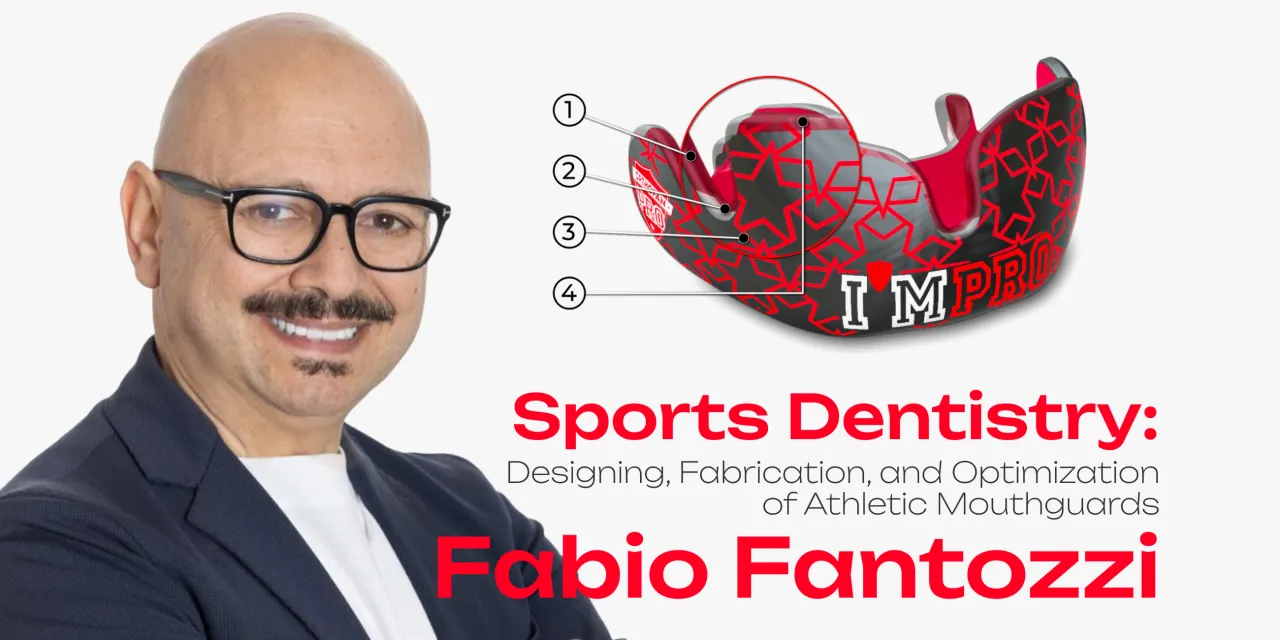
OHI-S Sports Dentistry Designing, Fabrication, and Optimization of Athletic Mouthguards 5 lessons 3h 2min
$30.00
This Product is shared via google drive download link, So please share your correct Gmail id while placing the order .Please note that there are no CME points or certificate associated with this course Samples for Courses Can be found here : Free Samples Here!
EXPRESS DISCOVER PayPal
OHI-S Sports Dentistry Designing, Fabrication, and Optimization of Athletic Mouthguards 5 lessons 3h 2min
Sports Dentistry • Athletic Mouthguards • Dental Trauma Prevention • Digital Dentistry • Dental Technology
5 Lessons | 3 Hours 2 Minutes | English
Develop a comprehensive understanding of modern sports dentistry and athletic mouthguard design with OHI-S Sports Dentistry Designing, Fabrication, and Optimization of Athletic Mouthguards 5 lessons 3h 2min.
Led by Fabio Fantozzi, this structured course integrates clinical dentistry, biomechanics, material science, laboratory technology, digital workflows, and preventive sports medicine to transform the mouthguard from a basic protective appliance into a scientifically engineered, sport-specific protective system.
The program follows mouthguard development from its earliest prototypes through modern custom-fitted appliances, thermoforming systems, 3D design, carbon-fiber reinforcement, smart mouthguards, accelerometers, gyroscopes, and sensor-based technologies.
Clinical and laboratory training is combined to help practitioners assess athlete-specific risk, select appropriate mouthguard designs, obtain accurate impressions and bite registrations, evaluate models, choose materials, perform pressure thermoforming, control occlusion, customize the appliance, and provide appropriate long-term maintenance instructions.
The course is particularly relevant for dental professionals who want to play a greater role within multidisciplinary sports medicine teams and improve prevention of dentoalveolar trauma and sports-related oral injury. OHI-S lists the course as 4 lessons + 1 free lesson, totaling 3 hours 2 minutes and 2.5 CE Credits.
Course Details
- Course: Sports Dentistry: Designing, Fabrication, and Optimization of Athletic Mouthguards
- Provider: OHI-S
- Instructor: Fabio Fantozzi
- Total Lessons: 5
- Official OHI-S Format: 4 Lessons + 1 Free Lesson
- Total Duration: 3 Hours 2 Minutes
- Official OHI-S CE Listing: 2.5 CE Credits
- Language: English
- Primary Field: Sports Dentistry
- Related Fields: General Dentistry, Orthodontics, Prosthodontics, Dental Technology
- Primary Focus: Design, Fabrication, Optimization, and Clinical Application of Athletic Mouthguards
- Major Areas: Mouthguard History, Classification, Biomechanics, Clinical Protocols, Laboratory Fabrication, Thermoforming, Digital Design, Smart Mouthguards, Carbon Fiber
- Primary Audience: Sports Dentists, General Dentists, Orthodontists, Prosthodontists, and Dental Technicians
OHI-S describes the program as combining clinical science and laboratory protocols to support the development of precise, durable, and sport-specific protective appliances.
Who Was the Original Program Designed For?
The program is intended for dental professionals and laboratory technicians who want to expand their role in:
- Athlete oral health
- Sports injury prevention
- Dental trauma prevention
- Sports dentistry
- Protective appliance fabrication
- Mouthguard customization
- Multidisciplinary sports medicine
It is particularly relevant for:
- Sports Dentists
- General Dentists
- Orthodontists
- Prosthodontists
- Dental Technicians
- Dental Laboratory Professionals
- Clinicians treating athletes
- Clinicians managing sports-related dental trauma
- Professionals fabricating custom mouthguards
- Dental professionals working with orthodontic athletes
- Practitioners interested in digital mouthguard workflows
The strongest clinical and technical audience remains:
Sports Dentistry + General Dentistry + Orthodontics + Dental Technology
Learning Objectives
Upon completion of this course, participants should be better able to:
- Evaluate the development of mouthguard technology, including smart and sensor-based systems.
- Apply the classification, biomechanics, and clinical principles of mouthguard design.
- Differentiate between types of mouthguards and their indications, advantages, and limitations.
- Implement clinical sports dentistry protocols for diagnosis, risk assessment, and treatment planning.
- Execute laboratory workflows for accurate mouthguard fabrication and customization.
- Utilize digital and analog impression techniques and perform model analysis.
- Master thermoforming systems, material selection, and fabrication protocols.
- Integrate carbon fiber and advanced reinforcement techniques into protective appliances.
Sports Dentistry
Sports dentistry combines clinical dental care with preventive medicine, biomechanics, materials science, athlete assessment, and protective appliance design.
The course approaches sports dentistry through several interconnected areas:
- Dental injury prevention
- Dentoalveolar trauma
- Athlete-specific risk assessment
- Mouthguard design
- Protective biomechanics
- Laboratory fabrication
- Material selection
- Clinical fitting
- Long-term appliance maintenance
The overall pathway can be summarized as:
Assess Athlete → Identify Risk → Select Design → Capture Records → Fabricate → Fit → Evaluate → Maintain
Evolution of Athletic Mouthguards
The first part of the course traces the historical development of the athletic mouthguard.
The official curriculum includes:
- Early attempts to fabricate mouthguards
- Protection of maxillary incisors in boxing
- Development of custom-fitted appliances
- Early U.S. patents
- Gutta-percha mouthguards
- Historical restrictions on mouthguard use
- Introduction of the term “mouthguard”
- Transparent and anatomical splints
- The “mouth protector” patent
- Mandatory mouthguard regulations
- Adoption of mouthguards in hockey
This historical perspective illustrates how athletic mouthguards evolved from simple barriers toward increasingly sophisticated protective systems.
Mouthguards in Boxing
Early mouthguard development was closely linked to boxing.
Protective appliances were initially intended to reduce injury to the:
- Maxillary incisors
- Lips
- Oral soft tissues
- Supporting dental structures
The course uses these early developments to demonstrate how protection requirements eventually influenced modern mouthguard design.
Custom-Fitted Mouthguards
The development of custom-fitted mouthguards represented a major progression from generic protective appliances.
Customization allows closer adaptation to:
- Dental anatomy
- Occlusion
- Arch form
- Patient comfort
- Sport-specific requirements
This concept becomes increasingly important throughout the later clinical and laboratory lessons.
Smart Mouthguards
The second lesson moves from historical appliances toward smart mouthguard systems.
The official curriculum includes:
- Smart mouthguards
- Digital integration systems
- Inertial sensors
- Accelerometers
- Gyroscopes
- Real-time monitoring
This represents the transition from passive protection toward mouthguards capable of generating data about impacts sustained during sport.
Accelerometers & Gyroscopes
Modern smart mouthguards may incorporate inertial sensing technologies such as:
- Accelerometers
- Gyroscopes
The course examines their integration within advanced mouthguard systems and their potential role in recording impact-related information.
Real-Time Impact Monitoring
The smart-mouthguard curriculum includes real-time monitoring within the wider discussion of head-impact safety and prevention of traumatic neurological injury.
This allows modern sports dentistry to connect:
Dental Protection + Impact Measurement + Athlete Safety
rather than focusing only on tooth protection.
Traumatic Brain Injury & CTE
OHI-S specifically lists discussion of modern mouthguard systems in relation to monitoring and prevention concepts involving:
- Traumatic brain injury
- Chronic traumatic encephalopathy – CTE
within the technology-focused lesson.
The course therefore places mouthguards within a wider athlete-safety framework.
3D Mouthguard Design
Modern mouthguard development increasingly incorporates digital technologies.
The official curriculum includes:
- 3D mouthguard design
- Configurator systems
- Digital integration
- Advanced laboratory customization
These systems can support more standardized and individualized appliance design.
Carbon Fiber Integration
Carbon fiber is one of the advanced reinforcement technologies specifically addressed throughout the course.
The curriculum covers:
- Carbon fiber integration
- Material specifications
- Protective benefits
- Reinforcement mechanisms
- Application within mouthguard design
This illustrates the increasing role of advanced materials in sports dental protection.
Classification of Mouthguards
A major part of Lesson 3 focuses on classifying athletic mouthguards according to design and customization.
The official curriculum compares several mouthguard families, including:
- Stock mouthguards
- Boil-and-bite mouthguards
- Monolayer custom-made mouthguards
- Advanced multilayer custom systems
- Highly customized professional designs
Understanding these differences helps clinicians select protection according to athlete needs and sport-related impact risk.
Stock Mouthguards
Stock mouthguards are non-customized appliances.
The course reviews their:
- Design
- Characteristics
- Advantages
- Limitations
They provide a useful comparison point for understanding why custom fabrication may offer different functional and comfort characteristics.
Boil-and-Bite Mouthguards
Over-the-counter boil-and-bite mouthguards provide limited adaptation using heat.
The program compares their:
- Characteristics
- Advantages
- Limitations
- Degree of customization
with both stock and laboratory-fabricated custom appliances.
Custom-Made Mouthguards
Custom-made mouthguards are fabricated from patient-specific records.
Potential design considerations include:
- Arch anatomy
- Occlusal relationship
- Thickness
- Coverage
- Retention
- Sport
- Impact risk
- Orthodontic status
- Comfort
The course contains a video demonstration of fabrication of a monolayer custom-made mouthguard.
PlaySafe Mouthguard Variants
The official curriculum includes several PlaySafe configurations:
- Light
- Medium
- Light Pro
- Heavy Pro
with discussion of their:
- Structural characteristics
- Protective design
- Appropriate sporting applications
This reinforces the concept that mouthguard construction can be tailored according to sport-related risk.
OrthofanPro
The course covers OrthofanPro, described in the curriculum as a highly customized professional mouthguard system.
Topics include:
- Appliance design
- Fabrication protocol
- Four-layer structure
- Professional customization
Fabio Fantozzi is identified by OHI-S as the creator of the OrthofanPro customized professional mouthguard protocol.
PowerTeeth-Guard
PowerTeeth-Guard is another design included in the official course.
The program reviews its:
- Structural design
- Protective concept
- Relationship to advanced custom mouthguards
within the broader discussion of engineered athletic protection.
Biomechanics of Impact
Understanding how a mouthguard manages impact is central to its design.
The official curriculum addresses:
- Force dissipation
- Force distribution
- Protective biomechanics
- Structural design
The goal is to understand not simply whether an athlete is wearing a mouthguard, but how the appliance responds mechanically during impact.
Impact Testing
The course includes practical approaches to validating protective performance.
Confirmed topics include:
- Pendulum impact testing
- Live impact testing
- Quality-control assessment
This connects mouthguard design with measurable physical performance.
Epidemiology of Dental Trauma
The curriculum reviews epidemiological aspects of sports-related dental injuries.
Topics include:
- Age distribution
- Frequency of injury
- Sport-related injury patterns
- Causes of dentoalveolar trauma
This supports risk-based rather than generic mouthguard selection.
Dentoalveolar Trauma
Sports dentistry aims to reduce injuries involving:
- Teeth
- Periodontal tissues
- Alveolar bone
- Oral soft tissues
The clinical curriculum uses epidemiologic and anatomical risk factors to guide preventive planning.
Sport-Specific Risk Assessment
The official program includes classification of mouthguards according to sport-related impact risk levels.
This allows clinicians to select appliance design based on:
Sport → Impact Risk → Athlete Anatomy → Required Protection
rather than using the same mouthguard for every sport.
Anatomical Risk Factors
The course includes analysis of anatomical features that may increase susceptibility to dentoalveolar trauma.
Recognizing these factors can influence both treatment planning and protective appliance design.
Athletes With Orthodontic Appliances
Mouthguard design may require modification for adolescents undergoing orthodontic treatment.
The official curriculum specifically addresses:
Mouthguard design modifications for adolescent orthodontic patients.
This is particularly relevant for orthodontists and sports dentists caring for young athletes.
Maxillary vs. Mandibular Mouthguards
The clinical lesson reviews criteria for choosing:
- Maxillary designs
- Mandibular designs
according to sport, anatomy, and protective requirements.
Clinical Sports Dentistry Protocol
Lesson 5 provides a structured clinical protocol for custom mouthguard fabrication.
The official curriculum includes:
- Patient history
- Sports history
- Risk assessment
- Photography
- Impressions
- Study models
- Bite registration
- Appliance prescription
- Sport-specific design
- Delivery
- Maintenance
The clinical pathway can be summarized as:
History → Risk Assessment → Documentation → Impression → Bite Registration → Prescription → Fabrication → Delivery
Dental & Sports Anamnesis
A comprehensive history includes both:
Dental Information
- Dentition
- Existing restorations
- Orthodontic treatment
- Occlusion
- Previous dental trauma
Sports Information
- Sport
- Playing position
- Contact level
- Frequency of participation
- Previous injuries
The official course explicitly includes comprehensive dental and sports anamnesis as part of its clinical protocol.
Clinical Documentation
The course recommends documenting the patient using:
- Photography
- Impressions
- Study models
before designing a customized protective appliance.
Analog & Digital Impressions
The laboratory curriculum compares:
- Analog impression workflows
- Digital impression workflows
as part of mouthguard fabrication.
This allows clinicians and technicians to evaluate different routes for obtaining accurate patient-specific records.
Dental Model Analysis
Accurate fabrication begins with careful assessment of dental models.
The course addresses:
- Occlusal view analysis
- Lateral view analysis
- Model quality
- Surface preparation
- Appliance design
Bite Registration
The clinical program includes accurate bite-registration procedures, including wax bite protocols.
The construction bite influences:
- Occlusal relationship
- Final mouthguard position
- Functional comfort
- Protective design
Construction Bite
Lesson 4 examines the clinical significance of the construction bite during fabrication.
This connects clinical registration with subsequent laboratory processing.
Medical Prescription for Mouthguards
The course emphasizes writing a precise medical prescription for custom mouthguards.
This helps ensure that communication between the dentist and dental technician specifies:
- Appliance type
- Material
- Design
- Sport
- Risk category
- Functional requirements
Laboratory Workflow
Lesson 4 provides a detailed laboratory workflow for athletic mouthguard fabrication.
The official curriculum includes:
- Model analysis
- Surface preparation
- Color selection
- Thermoforming
- Cutting
- Finishing
- Border design
- Occlusal adjustment
- Quality control
The laboratory pathway is:
Impression → Model → Design → Material Selection → Thermoforming → Trim → Occlusion → Finish → Quality Control
Vacuum vs. Pressure Thermoforming
The course compares:
- Vacuum thermoforming
- Pressure thermoforming
with particular attention to the advantages of pressure-based systems for athletic mouthguard fabrication.
Thermoforming Machines
The curriculum covers:
- Machine types
- Operation
- Settings
- Model positioning
- Thermoforming workflow
The objective is to produce predictable adaptation of thermoplastic materials around the dental model.
Stainless Steel Granules
OHI-S specifically includes the use of stainless steel granules for precise model positioning during thermoforming.
This is one of several detailed laboratory techniques included in the program.
Material Selection
Material science is central to athletic mouthguard fabrication.
The course reviews:
- Thermoplastic materials
- Biocompatibility
- Layering
- Thickness
- Reinforcement
- Carbon fiber
- Protective performance
The appropriate material must balance protection with comfort and functional usability.
Trimming, Cutting & Finishing
After thermoforming, the mouthguard requires careful:
- Trimming
- Cutting
- Border design
- Finishing
- Polishing
- Quality assessment
The course provides step-by-step instruction in these laboratory stages.
Mouthguard Borders & Extensions
Mouthguard border design affects:
- Retention
- Comfort
- Coverage
- Speech
- Breathing
- Protective effectiveness
The official laboratory curriculum specifically includes designing mouthguard borders and extensions.
Occlusal Control
Following fabrication, occlusion must be evaluated and adjusted.
The course includes:
- Occlusal control
- Articulator adjustment
- Functional assessment
This helps prevent the appliance from being treated as merely a passive sheet of material.
Articulator Use
OHI-S specifically includes adjustment using an articulator during the final laboratory phase.
This connects sports dentistry with broader principles of occlusion and functional dental technology.
Aesthetic Customization
Protective function remains central, but the curriculum also addresses:
- Color selection
- Personalization
- Aesthetic design
- Custom options
Customization may help make the appliance more acceptable to athletes and teams.
Mouthguard Compliance
The clinical course examines why some athletes do not consistently wear mouthguards.
Potential barriers discussed include issues of:
- Comfort
- Fit
- Design
- Compliance
- Athlete acceptance
OHI-S explicitly includes barriers to mouthguard adoption in the clinical lesson.
Comfort & Retention
The course compares custom appliances with over-the-counter mouthguards in relation to:
- Fit
- Comfort
- Retention
- Clinical usability
The goal is to combine effective protection with an appliance athletes are realistically willing to use.
Home Care & Maintenance
The clinical curriculum includes instructions for long-term appliance care.
Topics include:
- Cleaning
- Maintenance
- Odor management
- Biofilm control
- Discoloration
- Disinfection
These steps are important to preserving appliance hygiene and usability.
Biofilm & Odor Control
Sports appliances may accumulate:
- Saliva
- Biofilm
- Odor
- Surface discoloration
The course addresses practical strategies for maintaining mouthguard hygiene.
Disinfection Protocols
The official program includes approved disinfection protocols for dental materials.
This allows maintenance recommendations to be matched to the material used in the appliance.
Biocompatibility
The clinical lesson discusses the biocompatibility of materials used in sports dentistry.
Material selection therefore involves not only mechanical properties but also suitability for prolonged intraoral use.
Sustainability & Appliance Disposal
The final clinical lesson even includes:
- Disposal of used mouthguards
- Recycling considerations
as part of the broader material-science discussion.
Sports-Related Dental Trauma Cases
The laboratory lesson includes clinical cases involving dental trauma in:
- Football
- Basketball
These cases connect appliance fabrication with real-world injury prevention.
Multidisciplinary Sports Medicine
The course emphasizes the dentist and dental technician as part of a broader sports medicine team.
The official curriculum specifically reviews the role of the dental technician within the multidisciplinary sports dentistry team.
Collaboration may involve:
- Dentists
- Dental technicians
- Orthodontists
- Sports physicians
- Coaches
- Athletic trainers
- Other healthcare professionals
FDI Recommendations
Lesson 5 includes FDI World Dental Federation recommendations in sports dentistry as part of the clinical framework.
This places custom mouthguard fabrication within a broader professional sports-dentistry context.
Instructor
Fabio Fantozzi
Fabio Fantozzi is the instructor for all five lessons.
OHI-S identifies him as a Master Dental Technician specializing in analog and digital orthodontic laboratory techniques, with nearly 35 years of professional experience. He is owner and director of the Orthofan laboratory, an international educator, and creator of the OrthofanPro customized professional mouthguard protocol. OHI-S also describes his expertise in sports dentistry, orthodontic technology, custom mouthguard design, and advanced dental laboratory workflows.
Major Topics Covered
- Sports Dentistry
- Athletic Mouthguards
- Custom Mouthguards
- Dental Trauma Prevention
- Dentoalveolar Trauma
- Athlete Risk Assessment
- Mouthguard History
- Mouthguard Classification
- Stock Mouthguards
- Boil-and-Bite Mouthguards
- Custom-Made Mouthguards
- Multilayer Mouthguards
- Smart Mouthguards
- Sensor-Based Mouthguards
- Accelerometers
- Gyroscopes
- Real-Time Impact Monitoring
- Traumatic Brain Injury
- CTE
- 3D Mouthguard Design
- Digital Mouthguard Workflows
- Carbon Fiber Reinforcement
- Mouthguard Biomechanics
- Impact Force Distribution
- Pendulum Impact Testing
- Sports Injury Epidemiology
- Orthodontic Mouthguards
- OrthofanPro
- PowerTeeth-Guard
- PlaySafe Mouthguards
- Sports Dentistry Protocols
- Dental Impressions
- Digital Impressions
- Analog Impressions
- Dental Model Analysis
- Bite Registration
- Construction Bite
- Thermoforming
- Vacuum Thermoforming
- Pressure Thermoforming
- Dental Materials
- Laboratory Fabrication
- Cutting & Finishing
- Occlusal Adjustment
- Articulator
- Custom Appliance Design
- Appliance Maintenance
- Biofilm Control
- Disinfection
- Material Biocompatibility
- Sports Medicine
- Dental Technology
Who Should Take This Course?
OHI-S Sports Dentistry Designing, Fabrication, and Optimization of Athletic Mouthguards 5 lessons 3h 2min is particularly relevant for:
- Sports Dentists
- General Dentists
- Orthodontists
- Prosthodontists
- Dental Technicians
- Dental Laboratory Professionals
- Clinicians treating athletes
- Dentists managing sports-related trauma
- Dental professionals fabricating custom mouthguards
- Clinicians working with adolescent athletes
- Practitioners interested in smart mouthguard technology
- Professionals interested in advanced dental laboratory fabrication
The strongest professional audience remains:
Sports Dentistry + General Dentistry + Orthodontics + Dental Technology
Why This Course Is Useful
This OHI-S course connects clinical sports dentistry with detailed laboratory fabrication in a single structured program.
Historical & Technological Development
- Early mouthguard designs
- Custom appliances
- Smart mouthguards
- Sensor systems
- 3D design
Clinical Sports Dentistry
- Athlete assessment
- Injury risk
- Dentoalveolar trauma
- Sport-specific design
- Orthodontic considerations
Biomechanics
- Impact forces
- Force dissipation
- Protection testing
- Functional design
Laboratory Fabrication
- Impressions
- Model preparation
- Thermoforming
- Cutting
- Finishing
- Occlusal control
Advanced Materials
- Layered appliances
- Carbon fiber
- Biocompatibility
- Reinforcement
Long-Term Care
- Cleaning
- Biofilm management
- Disinfection
- Appliance maintenance
The overall workflow can be summarized as:
Assess Athlete → Analyze Risk → Select Mouthguard Type → Capture Records → Design → Fabricate → Adjust → Deliver → Maintain
Original OHI-S CE Information
The official OHI-S listing identifies the complete course as:
2.5 CE Credits
with individual lesson listings showing:
- Lesson 1 – 0.25 CE Credits
- Lesson 2 – 0.5 CE Credits
- Lesson 3 – 0.75 CE Credits
- Lesson 4 – 0.5 CE Credits
- Lesson 5 – 0.5 CE Credits
These credits apply to eligible participation through the official OHI-S educational platform and fulfillment of its applicable requirements.
An independently distributed MedicalAmboss package should not automatically be represented as providing:
- OHI-S CE Credits
- Official OHI-S Certificate
- Official OHI-S Membership
- Official OHI-S Platform Access
- Provider-Hosted Progress Tracking
unless these features are specifically included with the purchase.
Product Summary
- Product: OHI-S Sports Dentistry Designing, Fabrication, and Optimization of Athletic Mouthguards 5 lessons 3h 2min
- Official Course: Sports Dentistry: Designing, Fabrication, and Optimization of Athletic Mouthguards
- Provider: OHI-S
- Instructor: Fabio Fantozzi
- Lessons: 5
- Official OHI-S Format: 4 Lessons + 1 Free Lesson
- Duration: 3 Hours 2 Minutes
- Language: English
- Official CE Listing: 2.5 CE Credits
- Primary Specialty: Sports Dentistry
- Related Fields: General Dentistry, Orthodontics, Prosthodontics, Dental Technology
- Major Areas: Mouthguard Design, Biomechanics, Sports Injury Prevention, Smart Mouthguards, Thermoforming, Laboratory Fabrication, Carbon Fiber
- Primary Audience: Sports Dentists, General Dentists, Orthodontists, Prosthodontists, and Dental Technicians
Short Description
OHI-S Sports Dentistry Designing, Fabrication, and Optimization of Athletic Mouthguards 5 lessons 3h 2min is a comprehensive sports dentistry course by Fabio Fantozzi covering the history, design, biomechanics, clinical selection, fabrication, and optimization of athletic mouthguards.
The five-lesson program covers custom mouthguards, smart and sensor-based systems, 3D design, dentoalveolar trauma prevention, analog and digital impressions, bite registration, thermoforming, laboratory workflows, articulator adjustment, carbon-fiber reinforcement, orthodontic athlete considerations, appliance maintenance, and sport-specific protective protocols.
Topics
Lesson 1. History and Evolution of Mouthguards: From Early Prototypes to Modern Protective Devices — 19min
- The first attempts to fabricate mouthguards
- Maxillary incisor protectors used in boxing matches
- Custom-fitted mouthguards
- The first US-patented mouthguard in Chicago
- The first reusable mouthguard made from gutta-percha
- Temporary ban on mouthguard use
- First mention of the term “mouthguard” in the literature
- Development of innovative transparent and anatomical splints
- The “mouth protector” patent
- Mandatory mouthguard regulations in the United States
- Introduction of mouthguards in hockey
Lesson 2. Evolution of Mouthguard Technology: From Early Dental Protection to Smart Sports Safety Systems — 32min
- The first attempts to fabricate mouthguards
- Maxillary incisor protectors for boxing matches
- Custom-fitted mouthguards
- The first US-patented mouthguard in Chicago
- The first reusable mouthguard made from gutta-percha
- Temporary ban on mouthguard use
- First mention of “the mouthguard” in literature
- Innovative transparent and anatomical splints
- The “mouth protector” patent
- Mandatory mouthguard regulations in the United States
- Introduction of mouthguards in hockey
- Early experimental and system-based mouthguard designs – BOT, Benji’s mouthguard, Ramon System
- Smart mouthguards and digital integration systems
- Carbon fiber integration in mouthguard design
- 3D mouthguard design and configurator systems
- Advances in laboratory-based customization technologies
- Modern protective technologies and clinical innovations
- Integration of inertial sensors – accelerometers and gyroscopes
- Clinical and safety benefits of modern mouthguard systems
- Real-time monitoring and prevention of traumatic brain injury and CTE
Lesson 3. Sports Dentistry and Mouthguard Design: Classification, Biomechanics, and Clinical Fabrication Protocols — 49min
- Statistics and epidemiological data: age distribution and frequency of dental injuries
- Classification of oral injuries according to sport type
- Differences in protection: classification of five mouthguard families
- Stock mouthguards – design, characteristics, advantages, and limitations
- Over-the-counter boil-and-bite mouthguards – characteristics, advantages, and limitations
- Monolayer custom-made mouthguards – design, characteristics, advantages, and disadvantages
- Video demonstration: fabrication of a monolayer custom-made mouthguard
- Design variations and structural requirements for protective mouthguards
- PlaySafe mouthguard variants and custom options
- Light option – structural features and suitable sports
- Medium option – structural features and suitable sports
- Light Pro option – structural features and suitable sports
- Heavy Pro option – structural features and suitable sports
- OrthofanPro premium ultra-customized professional mouthguards – description and fabrication protocol
- Comprehensive breakdown of the four layers of the OrthofanPro mouthguard
- PowerTeeth-Guard – design overview and structural description
- Biomechanics of impact: dissipation and distribution of forces
- Quality control: pendulum impact testing
- Practical validation: live impact testing
- Personalization and aesthetic design process for custom mouthguards
Lesson 4. Advanced Mouthguard Fabrication: Laboratory Workflow, Materials, and Clinical Precision in Sports Dentistry — 39min
- Are all equipment and techniques the same?
- Vacuum vs. pressure thermoforming: advantages of pressure systems
- Dental impression analysis: analog vs. digital workflows
- Evaluation of plaster models: occlusal and lateral views
- Clinical significance of the construction bite
- Alginate insulation and model surface preparation
- Color selection and aesthetic customization
- Thermoforming machines: types, operation, and settings
- Use of stainless steel granules for precise model positioning
- Step-by-step thermoforming process
- Trimming, cutting, and finishing techniques
- Designing mouthguard borders and extensions
- Occlusal control and adjustment using an articulator
- Final finishing steps and laboratory quality control standards
- Comparative overview of mouthguard types
- Carbon fiber integration in mouthguards: specifications, benefits, and protective mechanisms
- Clinical cases of sports-related dental trauma – football and basketball
Lesson 5. Clinical Sports Dentistry: Diagnosis, Risk Assessment, and Evidence-Based Mouthguard Protocols — 40min
- Definition of sports dentistry and its scope
- FDI World Dental Federation recommendations in sports dentistry
- The role of the dental technician within a multidisciplinary sports dentistry team
- Core aims and objectives of sports dentistry
- Clinical protocol for custom mouthguard fabrication
- Comprehensive dental and sports anamnesis – patient history
- Clinical documentation: photography, impressions, and study models
- Accurate bite registration techniques – wax bite protocols
- Writing a precise medical prescription for custom mouthguards
- Classification of sports mouthguards based on sport-related impact risk levels
- Epidemiological data on the causes of dentoalveolar trauma
- Barriers to mouthguard adoption: reasons athletes avoid compliance
- Anatomical risk factors predisposing to dentoalveolar trauma
- Mouthguard design modifications for adolescent orthodontic patients
- Mandatory design requirements and functional characteristics of sports mouthguards
- Arch selection criteria: maxillary vs. mandibular design considerations
- Protective biomechanics of custom mouthguards
- Clinical and comfort advantages of custom-made vs. over-the-counter mouthguards
- Home care: cleaning and maintenance of oral appliances
- Management of odor formation, biofilm accumulation, and discoloration
- Approved disinfection protocols for dental materials
- Material science: biocompatibility of sports dentistry materials
- Environmental considerations: disposal and recycling of used appliances
Related products



DENTAL

- Anesthesiology & pain medicine
- Books
- Anesthesiology books
- Basic science
- Cardiology books
- Dermatology books
- DENTAL BOOKS
- Endocrine and Nutrition books
- Gastroenterology and Hepatology books
- Hematology / Oncology books
- INTERNAL MEDICINE BOOKS
- Nephrology / urology books
- Neurology / neurosurgery books
- Obstetrics and gynecology books
- ophthalmology / Optometry books
- ORTHOPEDIATRICS BOOKS
- Pathology books
- pediatric books
- plastic surgery books
- Psychiatric books
- PULMONARY BOOKS
- Qbank & Questions
- Radiology books
- Cardiology
- Critical Care – Emergency medicine
- DENTAL
- Dermatology
- Endocrine and Nutrition
- ENT / Otolaryngology
- Family medicine
- General Surgery
- GIT COURSES
- Hematology / Oncology
- Internal Medicine
- Medical Accounts
- Nephrology / Urology
- Neurology / neurosurgery courses
- Obstetrics & Gynecology
- Ophthalmology & Optometry
- Orthopaedic
- Pathology
- Pediatrics
- physiotherapy
- Plastic Surgery
- psychology
- Qbank & Questions
- Radiology
- Respiratory / Pulmonary
- Rheumatology
- Surgery