
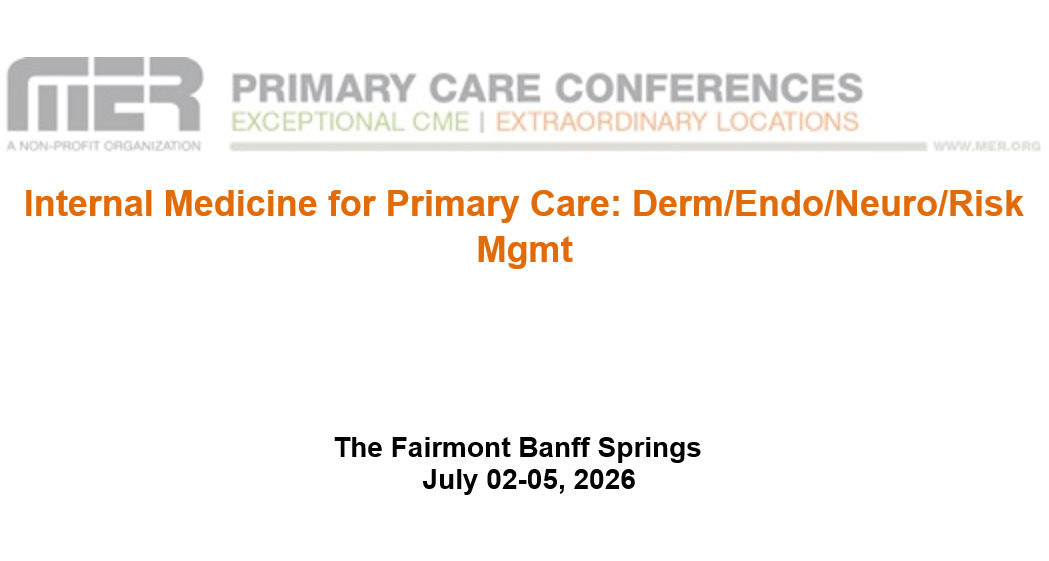
MER Primary Care Conferences Internal Medicine for Primary Care Derm Endo Neuro Risk Mgmt Jul 02-05, 2026

$120.00
This Product is shared via google drive download link, So please share your correct Gmail id while placing the order .Please note that there are no CME points or certificate associated with this course Samples for Courses Can be found here : Free Samples Here!
MER Primary Care Conferences Internal Medicine for Primary Care Derm Endo Neuro Risk Mgmt Jul 02-05, 2026
Dermatology • Endocrinology • Neurology • Medical Risk Management
July 02–05, 2026 | The Fairmont Banff Springs | Banff, Alberta, Canada
Strengthen your clinical decision-making across dermatology, endocrinology, neurology, and medical risk management with MER Primary Care Conferences Internal Medicine for Primary Care Derm Endo Neuro Risk Mgmt Jul 02-05, 2026, a four-day educational program organized by Medical Education Resources (MER).
The Internal Medicine for Primary Care: Derm/Endo/Neuro/Risk Mgmt conference is scheduled for July 02–05, 2026, at The Fairmont Banff Springs in Banff, Alberta, Canada.
Designed for office-based primary care clinicians and other healthcare professionals, the program combines common clinical problems with practical approaches to:
- Diagnosis
- Treatment
- Prevention
- Patient safety
- Clinical documentation
- Communication
- Shared decision-making
- Medicolegal risk reduction
- Artificial intelligence in medicine
Major clinical and professional topics include:
- Type 2 diabetes mellitus
- Prediabetes
- Diabetic emergencies
- Dyslipidemia
- Cardiovascular risk reduction
- Thyroid disease
- Osteoporosis
- Bisphosphonates
- Metabolic dysfunction-associated steatohepatitis (MASH)
- Neurologic weakness
- Alzheimer disease
- Dementia
- Migraine
- Headache disorders
- Cerebrovascular disease
- Transient neurologic symptoms
- Dermatitis
- Atopic dermatitis
- Contact dermatitis
- Nummular dermatitis
- Papulosquamous diseases
- Acne
- Acneiform eruptions
- Cutaneous manifestations of systemic disease
- Malpractice liability
- Informed consent
- Shared decision-making
- Disclosure of adverse outcomes
- Clinical documentation
- Artificial intelligence
- Patient safety
- Medical liability
Course Details
- Course: Internal Medicine for Primary Care: Derm/Endo/Neuro/Risk Mgmt
- Provider: Medical Education Resources – MER
- Year: 2026
- Dates: July 02–05, 2026
- Duration: 4 Days
- Venue: The Fairmont Banff Springs
- Location: Banff, Alberta, Canada
- Primary Focus: Internal Medicine / Primary Care
- Specialties: Dermatology / Endocrinology / Neurology / Medical Risk Management
- Professional Focus: Patient Safety / Documentation / Medicolegal Risk / Artificial Intelligence
- Language: English
Course Overview
Primary care medicine requires clinicians to manage both clinical disease and professional risk.
A single practice may include patients with:
- Diabetes
- Dyslipidemia
- Thyroid abnormalities
- Osteoporosis
- Headache
- Weakness
- Cognitive impairment
- Skin disorders
- Neurologic symptoms
while clinicians must also make decisions involving:
- Informed consent
- Shared decision-making
- Documentation
- Adverse outcomes
- Patient safety
- Medical liability
- Emerging artificial intelligence tools
MER Internal Medicine for Primary Care Derm/Endo/Neuro/Risk Mgmt 2026 combines these areas into a practical multidisciplinary curriculum.
The program can be viewed through four major domains:
Dermatologic Diagnosis → Endocrine Management → Neurologic Assessment → Risk Reduction & Patient Safety
Learning Objectives
Upon completion of the program, participants should be better able to:
Medical Risk Management
- Develop practical strategies for reducing and managing situations that may create malpractice liability in primary care practice.
- Explain how appropriate informed-consent procedures and shared decision-making can reduce risk for healthcare providers.
- Recognize examples of adequate clinical documentation and understand how documentation can reduce liability and improve patient safety.
- Apply strategies for incorporating artificial intelligence tools into clinical practice while considering patient outcomes, operational issues, safety, and liability.
Endocrinology
- Develop individualized treatment plans for patients with type 2 diabetes mellitus, including diagnosis, treatment, screening, prediabetes, and management of diabetic emergencies.
- Apply current approaches to the diagnosis and treatment of dyslipidemia, including individualized management for primary and secondary cardiovascular prevention.
- Recognize the clinical significance and potential risks associated with abnormal thyroid function.
- Evaluate the benefits, risks, and appropriate clinical use of bisphosphonates and other treatment approaches for osteoporosis.
Neurology
- Use the history and physical examination to distinguish true neurologic weakness from nonspecific complaints or symptoms.
- Discuss evidence-based diagnostic and management approaches for Alzheimer disease and other dementias.
- Construct an appropriate differential diagnosis for migraine and other headache disorders and select suitable treatment approaches.
- Apply prevention and treatment strategies for cerebrovascular disorders, including recognition of high-risk presentations and transient neurologic symptoms.
Dermatology
- Differentiate among common forms of dermatitis, including atopic, contact, and nummular dermatitis, based on clinical presentation and causes.
- Apply diagnostic principles and treatment approaches to papulosquamous diseases presenting with red or raised/scaly lesions.
- Use a stepwise diagnostic and therapeutic approach to acne and acneiform eruptions, including selection of topical and systemic treatment according to disease severity.
- Recognize cutaneous manifestations of systemic disease and use skin findings as clues or surrogate markers for underlying internal disorders.
MEDICAL RISK MANAGEMENT
Malpractice Liability in Primary Care
Medical risk management forms a major component of this MER program.
The course reviews practical strategies for identifying and reducing clinical situations that may create malpractice liability.
Key areas include:
- Patient communication
- Decision-making
- Documentation
- Consent
- Clinical follow-up
- Disclosure
- Patient safety
- Risk reduction
INFORMED CONSENT
Reducing Risk Through Better Consent
Appropriate informed consent is an important part of clinical care and risk management.
The program addresses how informed-consent procedures can support:
- Better patient understanding
- More transparent treatment discussions
- Shared decision-making
- Documentation of clinical choices
- Reduction of medicolegal risk
SHARED DECISION-MAKING
Shared decision-making allows clinicians and patients to participate together in important healthcare choices.
The course considers its role in:
- Communicating benefits
- Communicating risks
- Discussing alternatives
- Understanding patient priorities
- Supporting informed treatment decisions
CLINICAL DOCUMENTATION
Documentation & Patient Safety
Clinical documentation serves both medical and risk-management functions.
The program reviews examples of appropriate documentation and how accurate records can:
- Improve continuity of care
- Support patient safety
- Record clinical reasoning
- Document communication
- Reduce medicolegal risk
DISCLOSURE OF ADVERSE OR UNEXPECTED OUTCOMES
Communication following an adverse or unexpected clinical outcome can be difficult.
The risk-management curriculum addresses principles relevant to:
- Disclosure
- Communication
- Documentation
- Patient relationships
- Liability awareness
ARTIFICIAL INTELLIGENCE IN CLINICAL MEDICINE
Practical Use of AI
The conference examines the growing role of artificial intelligence in medicine.
Potential applications discussed include:
- Clinical decision-making
- Medical imaging
- Patient communication
- Documentation
- Administrative workflows
AI, Patient Safety & Medical Liability
The program also addresses emerging concerns associated with AI use, including:
- Patient outcomes
- Safety
- Operational issues
- Clinical oversight
- Documentation
- Medical liability
The practical framework can be summarized as:
AI Opportunity → Clinical Integration → Oversight → Patient Safety → Liability Awareness
ENDOCRINOLOGY
Type 2 Diabetes Mellitus
The endocrinology curriculum reviews individualized management of type 2 diabetes mellitus.
Key areas include:
- Diagnosis
- Screening
- Prediabetes
- Treatment planning
- Individualized management
- Diabetic emergencies
PREDIABETES
The program includes prediabetes within the broader diabetes-management pathway.
Early identification provides an opportunity to address metabolic risk before progression to overt diabetes.
DIABETIC EMERGENCIES
The curriculum reviews management of acute diabetic complications as part of comprehensive diabetes care.
Clinical preparation includes recognizing presentations that require more urgent treatment.
DYSLIPIDEMIA
Lipid Management
The course reviews current approaches to diagnosis and treatment of dyslipidemia.
Management is considered in relation to:
- Individual cardiovascular risk
- Primary prevention
- Secondary prevention
- Treatment selection
CARDIOVASCULAR PREVENTION
Dyslipidemia treatment is discussed within the broader goal of reducing cardiovascular risk.
The curriculum distinguishes between:
- Primary prevention
- Secondary prevention
and emphasizes individualized management.
THYROID DISEASE
Abnormal Thyroid Function
The course includes review of abnormal thyroid-function findings and their clinical significance.
Participants consider:
- Recognition of abnormal thyroid function
- Potential clinical implications
- Treatment considerations
- Associated risks
OSTEOPOROSIS
The endocrinology component also addresses osteoporosis, with emphasis on treatment selection and risk assessment.
BISPHOSPHONATES
Benefits & Risks
Participants review the appropriate clinical use of bisphosphonates and assess:
- Potential benefits
- Potential risks
- Patient selection
- Appropriate treatment use
Other therapeutic approaches to osteoporosis are also considered within the program.
METABOLIC DYSFUNCTION-ASSOCIATED STEATOHEPATITIS – MASH
The Endocrinology curriculum includes metabolic dysfunction-associated steatohepatitis (MASH) within its broader metabolic disease content.
MASH is considered in the context of metabolic dysfunction and related chronic disease management.
NEUROLOGY
Neurologic Weakness
Weakness is a common complaint that may represent a true neurological deficit or a more nonspecific symptom.
The course emphasizes the use of:
- History
- Physical examination
- Focused neurological assessment
to distinguish true weakness from other complaints.
ALZHEIMER DISEASE
The neurology curriculum reviews evidence-based diagnostic and management approaches for Alzheimer disease.
The topic is addressed within a broader discussion of cognitive impairment and dementia.
OTHER DEMENTIAS
The program also includes other forms of dementia.
Participants review the importance of structured diagnosis and management when patients present with cognitive decline.
HEADACHE DISORDERS
Differential Diagnosis
The course addresses construction of an appropriate differential diagnosis for:
- Migraine
- Other headache disorders
A structured approach helps clinicians differentiate common primary headaches from presentations that may require further evaluation.
MIGRAINE
Treatment Selection
Participants review treatment approaches for migraine and other headache syndromes.
The curriculum emphasizes matching treatment to the clinical presentation and underlying diagnosis.
CEREBROVASCULAR DISORDERS
Prevention & Treatment
The program includes strategies for prevention and treatment of cerebrovascular disorders.
Important areas include:
- High-risk presentations
- Transient neurologic symptoms
- Prevention
- Treatment
- Clinical recognition
TRANSIENT NEUROLOGIC SYMPTOMS
Short-lived neurologic symptoms can represent clinically important cerebrovascular disease.
The course highlights recognition of these presentations within primary care.
DERMATOLOGY
Dermatitis
The dermatology curriculum includes differentiation among common forms of dermatitis.
These include:
- Atopic dermatitis
- Contact dermatitis
- Nummular dermatitis
ATOPIC DERMATITIS
Participants review clinical features and causes relevant to atopic dermatitis and distinguish it from other common dermatitis presentations.
CONTACT DERMATITIS
The program addresses contact dermatitis within the broader differential diagnosis of inflammatory skin disorders.
NUMMULAR DERMATITIS
Nummular dermatitis is also included among the conditions clinicians should differentiate based on presentation and cause.
PAPULOSQUAMOUS DISEASES
Red, Raised & Scaly Lesions
The course reviews diagnostic principles and treatment approaches to papulosquamous diseases.
These conditions may present with:
- Red lesions
- Raised lesions
- Scaling
- Mixed inflammatory morphology
ACNE & ACNEIFORM ERUPTIONS
Stepwise Diagnosis & Treatment
The dermatology curriculum emphasizes a structured approach to:
- Diagnosis
- Disease severity assessment
- Topical treatment
- Systemic treatment
- Acneiform eruptions
Treatment selection is considered according to the severity and type of presentation.
CUTANEOUS MANIFESTATIONS OF SYSTEMIC DISEASE
Skin findings can sometimes provide important clues to internal disease.
The course addresses recognition of cutaneous manifestations of systemic disease and the use of skin findings as surrogate markers or clinical clues to underlying disorders.
Cross-Specialty Clinical Focus
Dermatology + Internal Medicine
Cutaneous manifestations may provide evidence of underlying systemic disease, linking dermatologic assessment with broader internal-medicine diagnosis.
Endocrinology + Cardiovascular Prevention
Conditions such as:
- Diabetes
- Dyslipidemia
- Metabolic dysfunction
can contribute to broader cardiovascular risk.
Neurology + Primary Care
Primary care clinicians often provide the first evaluation for:
- Headache
- Weakness
- Cognitive decline
- Transient neurologic symptoms
Risk Management + Clinical Medicine
Risk reduction is closely connected with daily clinical practice through:
- Communication
- Documentation
- Consent
- Follow-up
- Patient safety
- Appropriate decision-making
AI + Medical Risk Management
Artificial intelligence introduces both clinical opportunities and new risk-management considerations.
The course addresses the balance between:
Clinical Efficiency → Better Decision Support → Human Oversight → Patient Safety → Liability Awareness
Major Medical Risk Management Topics
- Malpractice Liability
- Medicolegal Risk Reduction
- Patient Safety
- Informed Consent
- Shared Decision-Making
- Clinical Documentation
- Adverse Outcomes
- Unexpected Outcomes
- Disclosure
- Clinical Communication
- Artificial Intelligence
- AI in Clinical Medicine
- Medical Liability
- Operational Risk
Major Endocrinology Topics
- Type 2 Diabetes Mellitus
- Diabetes Diagnosis
- Diabetes Screening
- Prediabetes
- Diabetes Treatment
- Diabetic Emergencies
- Dyslipidemia
- Cardiovascular Risk
- Primary Prevention
- Secondary Prevention
- Thyroid Disease
- Abnormal Thyroid Function
- Osteoporosis
- Bisphosphonates
- MASH
- Metabolic Disease
Major Neurology Topics
- Neurologic Weakness
- Neurologic Examination
- Alzheimer Disease
- Dementia
- Cognitive Impairment
- Headache Disorders
- Migraine
- Headache Differential Diagnosis
- Cerebrovascular Disorders
- Transient Neurologic Symptoms
- Stroke Prevention
- Neurologic Risk Assessment
Major Dermatology Topics
- Dermatitis
- Atopic Dermatitis
- Contact Dermatitis
- Nummular Dermatitis
- Papulosquamous Diseases
- Red and Scaly Lesions
- Acne
- Acneiform Eruptions
- Topical Acne Therapy
- Systemic Acne Therapy
- Cutaneous Manifestations of Systemic Disease
- Skin Findings in Internal Disease
Who Should Take This Course?
This program is targeted to office-based primary care providers and other health professionals seeking updates in primary care medicine.
It is particularly relevant for:
- Primary Care Physicians
- Internal Medicine Physicians
- Dermatologists
- Endocrinologists
- Neurologists
- Physicians specializing in Medical Risk Management
- Office-Based Clinicians
- Healthcare Professionals involved in patient safety
- Clinicians interested in medical liability reduction
- Physicians incorporating artificial intelligence into clinical workflows
Why This Course Is Useful
MER Primary Care Conferences Internal Medicine for Primary Care Derm Endo Neuro Risk Mgmt Jul 02-05, 2026 combines clinical medicine with medical risk management, providing a broad curriculum relevant to both everyday patient care and professional practice.
The program can help learners review:
- Malpractice risk reduction
- Informed consent
- Shared decision-making
- Clinical documentation
- Disclosure of adverse outcomes
- Artificial intelligence in healthcare
- AI-related patient safety and liability
- Type 2 diabetes
- Prediabetes
- Dyslipidemia
- Thyroid abnormalities
- Osteoporosis
- Bisphosphonates
- MASH
- Neurologic weakness
- Alzheimer disease
- Dementia
- Migraine
- Headache disorders
- Cerebrovascular disease
- Dermatitis
- Papulosquamous disorders
- Acne and acneiform eruptions
- Cutaneous manifestations of systemic disease
The curriculum can be summarized as:
Skin Disease → Metabolic Care → Neurologic Assessment → Patient Safety & Risk Reduction
within a practical Internal Medicine and Primary Care framework.
Product Information
- Product: MER Primary Care Conferences Internal Medicine for Primary Care Derm Endo Neuro Risk Mgmt Jul 02-05, 2026
- Provider: Medical Education Resources – MER
- Dates: July 02–05, 2026
- Duration: 4 Days
- Venue: The Fairmont Banff Springs
- Location: Banff, Alberta, Canada
- Primary Focus: Internal Medicine / Primary Care
- Specialties: Dermatology / Endocrinology / Neurology / Medical Risk Management
- Professional Topics: Patient Safety / Documentation / Liability / Artificial Intelligence
- Available From: MedicalAmboss.com
Short Description
MER Primary Care Conferences Internal Medicine for Primary Care Derm Endo Neuro Risk Mgmt Jul 02-05, 2026 provides practical updates across dermatology, endocrinology, neurology, and medical risk management.
The four-day program covers type 2 diabetes, dyslipidemia, thyroid disease, osteoporosis, MASH, Alzheimer disease, dementia, migraine, cerebrovascular disorders, dermatitis, papulosquamous disease, acne, cutaneous manifestations of systemic disease, malpractice risk, informed consent, documentation, patient safety, and artificial intelligence in medicine.
You will find it on MedicalAmboss.com.
Topics
- Malpractice Liability: Practical approaches to reducing and managing situations that may increase malpractice risk in primary care.
- Informed Consent: Appropriate consent procedures and their role in reducing provider risk.
- Shared Decision-Making: Collaborative clinical decision-making involving clinicians and patients.
- Clinical Documentation: Documentation strategies that support patient safety and reduce liability.
- Adverse Outcome Disclosure: Communication and documentation considerations following unexpected clinical outcomes.
- Artificial Intelligence in Medicine: Practical incorporation of AI into clinical care, documentation, imaging, communication, and workflows.
- AI Safety & Liability: Patient-safety, operational, and medical-liability considerations associated with artificial intelligence.
- Type 2 Diabetes Mellitus: Diagnosis, screening, prediabetes, individualized treatment, and diabetic emergencies.
- Dyslipidemia: Diagnosis and individualized treatment for primary and secondary cardiovascular prevention.
- Abnormal Thyroid Function: Recognition of thyroid abnormalities and associated clinical risks.
- Osteoporosis: Evaluation and treatment of osteoporosis.
- Bisphosphonates: Benefits, risks, and appropriate clinical use in osteoporosis.
- MASH: Metabolic dysfunction-associated steatohepatitis within the broader metabolic disease curriculum.
- Neurologic Weakness: Use of clinical history and physical examination to distinguish true weakness from nonspecific symptoms.
- Alzheimer Disease: Evidence-based diagnosis and management.
- Other Dementias: Clinical assessment and management of non-Alzheimer dementias.
- Migraine: Differential diagnosis and treatment selection for migraine.
- Headache Disorders: Diagnostic approach to common headache presentations.
- Cerebrovascular Disorders: Prevention and treatment strategies for cerebrovascular disease.
- Transient Neurologic Symptoms: Recognition of high-risk transient neurologic presentations.
- Atopic Dermatitis: Differentiation based on clinical appearance and cause.
- Contact Dermatitis: Diagnostic principles for contact-related inflammatory skin disease.
- Nummular Dermatitis: Recognition and differentiation of nummular dermatitis.
- Papulosquamous Diseases: Diagnosis and treatment of red, raised, and scaly skin conditions.
- Acne: Stepwise topical and systemic treatment based on disease severity.
- Acneiform Eruptions: Diagnostic differentiation and treatment of acne-like eruptions.
- Cutaneous Manifestations of Systemic Disease: Recognition of skin findings as clues to underlying internal disorders.
Risk Management
The Anatomy of Medical Malpractice
- Key components required for a malpractice claim in the clinical practice setting.
- Assessment of malpractice exposure in both common and unusual clinical situations.
- Practical risk-management strategies intended to prevent malpractice claims.
Risky Business: Consent and Communication
- Essential components of an effective informed-consent process.
- The role of shared decision-making and its distinction from a mandatory obligation imposed on the healthcare provider.
- Importance of communicating unexpected or unanticipated clinical outcomes at an early stage.
- Practical approaches to discussing, disclosing, and reconciling unexpected events with patients, families, and other healthcare professionals.
Documentation: Effective Strategies and Pitfalls
- Major patient-safety and litigation-risk issues associated with the quality of medical documentation.
- What constitutes adequate documentation during a clinical encounter.
- Situations in which more comprehensive documentation and direct communication with other clinicians can reduce adverse outcomes.
- How appropriate documentation can support shared decision-making and improve patient safety.
AI in Medicine: Promise, Practice, and Pitfalls
- How artificial intelligence is transforming healthcare and medical practice.
- Basic understanding of how AI systems work.
- Clinical applications of AI, including clinical decision support and medical imaging.
- Use of AI for communication, documentation, and administrative workflows.
- Potential improvements in efficiency and patient outcomes.
- Social, operational, legal, and patient-safety challenges associated with AI.
- Emerging implications of AI for medical liability and risk management.
Endocrinology
Type 2 Diabetes Mellitus
- Diagnosis and treatment of type 2 diabetes mellitus.
- Lessons and clinical implications from the Diabetes Control and Complications Trial (DCCT).
- Recognition and management of diabetic emergencies.
- Appropriate screening strategies.
- Identification and management of prediabetes.
Lipid Metabolism and Treatment
- Review of contemporary American Heart Association dietary and lipid-management recommendations.
- Application of current diabetes-related lipid-management recommendations for both primary and secondary cardiovascular prevention.
- Assessment and treatment of elevated triglyceride levels.
- Current evidence regarding fish-oil therapy and cardiovascular outcomes.
Disorders of Thyroid Function
- Epidemiology of thyroid disorders.
- Recognition and diagnosis of hypothyroidism and hyperthyroidism.
- Pathophysiology underlying abnormal thyroid function.
- Current treatment options for thyroid dysfunction.
Osteoporosis and Update on the Diagnosis and Treatment of MASH
- Epidemiology and pathophysiology of osteoporosis.
- Interpretation of DEXA results.
- Use of FRAX for fracture-risk assessment.
- Current evidence-based therapeutic options for osteoporosis.
- Updated approaches to the diagnosis and treatment of metabolic dysfunction-associated steatohepatitis (MASH).
Neurology
Evaluating Weakness
- Use of the history and physical examination to distinguish true muscle or neurologic weakness from nonspecific symptoms.
- Clinical characteristics that help identify neurologic diseases causing weakness.
- Recognition and evaluation of representative disorders of the nervous system that may present with weakness.
Alzheimer’s & Other Dementias
- Definition and epidemiology of dementia.
- Normal neurologic changes associated with aging.
- Pathologic mechanisms and current theories concerning dementia.
- Vascular dementias and their clinical features.
- Appropriate diagnostic investigations.
- Social and functional issues associated with dementia.
- Symptomatic treatment.
- Emerging and investigational therapeutic approaches.
Headaches & Migraines
- Basic mechanisms underlying headache disorders.
- Comprehensive headache history, including headache characteristics and precipitating factors.
- Identification of relevant associated medical conditions.
- Major migraine presentations, including common migraine, classic migraine, complicated migraine, and cluster headache.
- Differential diagnosis involving tension-type headache and other headache syndromes.
- Trigeminal neuralgia.
- Giant cell arteritis.
- Brain tumor as a secondary headache cause.
- Subarachnoid hemorrhage as a potentially life-threatening secondary headache.
- Emergency-department approaches to the evaluation and treatment of severe headache.
Cerebrovascular Disorders
- Epidemiology of cerebrovascular disease.
- Identification of patients at increased cerebrovascular risk.
- Effects and implications of treatment.
- Recognition and evaluation of transient neurologic deficits involving carotid and vertebrobasilar circulation.
- Assessment of nonspecific cerebral symptoms.
- Differentiation of migraine from transient ischemic attack (TIA).
- Available treatment and prevention strategies for cerebrovascular disease.
Dermatology
Dermatitis
- Recognition of common clinical subtypes of dermatitis.
- Diagnostic evaluation of inflammatory skin eruptions.
- Management considerations for common forms of dermatitis.
- Atopic dermatitis.
- Contact dermatitis, including irritant and allergic forms.
- Seborrheic dermatitis.
- Other common dermatitis presentations encountered in primary care.
Papulosquamous Diseases
- Diagnostic principles for skin lesions presenting as red or purple papules and plaques.
- Recognition and differentiation of psoriasis.
- Recognition and differentiation of lichen planus.
- Recognition and differentiation of pityriasis rosea.
- Recognition of cutaneous manifestations of lupus erythematosus.
- Practical methods for distinguishing one scaly eruption from another based on clinical findings.
Acne and Acneiform Eruptions
- Clinical evaluation of acne.
- Recognition of rosacea and differentiation from acne.
- Evaluation of selected follicular disorders.
- Determination of treatment according to the severity or grading of acne.
- Stepwise diagnostic and therapeutic approaches.
- Appropriate use of topical therapy.
- Appropriate use of systemic therapy.
Skin Manifestations of Systemic Disease
- Recognition that cutaneous findings may provide important clues to underlying systemic disease.
- Use of skin manifestations as diagnostic indicators or surrogate markers of internal disease.
- Recognition of dermatologic findings associated with rheumatologic conditions.
- Recognition of cutaneous findings associated with endocrine disorders.
- Recognition of skin manifestations associated with gastrointestinal disease.
- Recognition of dermatologic findings associated with psychologic and psychiatric conditions.
- Identification of skin abnormalities resulting from systemic disease or complications of its treatment.
Related products

Endocrine and Nutrition
Harvard Testosterone Therapy and Sexual Dysfunction February 2023

Internal Medicine

Endocrine and Nutrition
Cardiology

Endocrine and Nutrition
Harvard The Blackburn Course in Obesity Medicine Treating Obesity 2023