
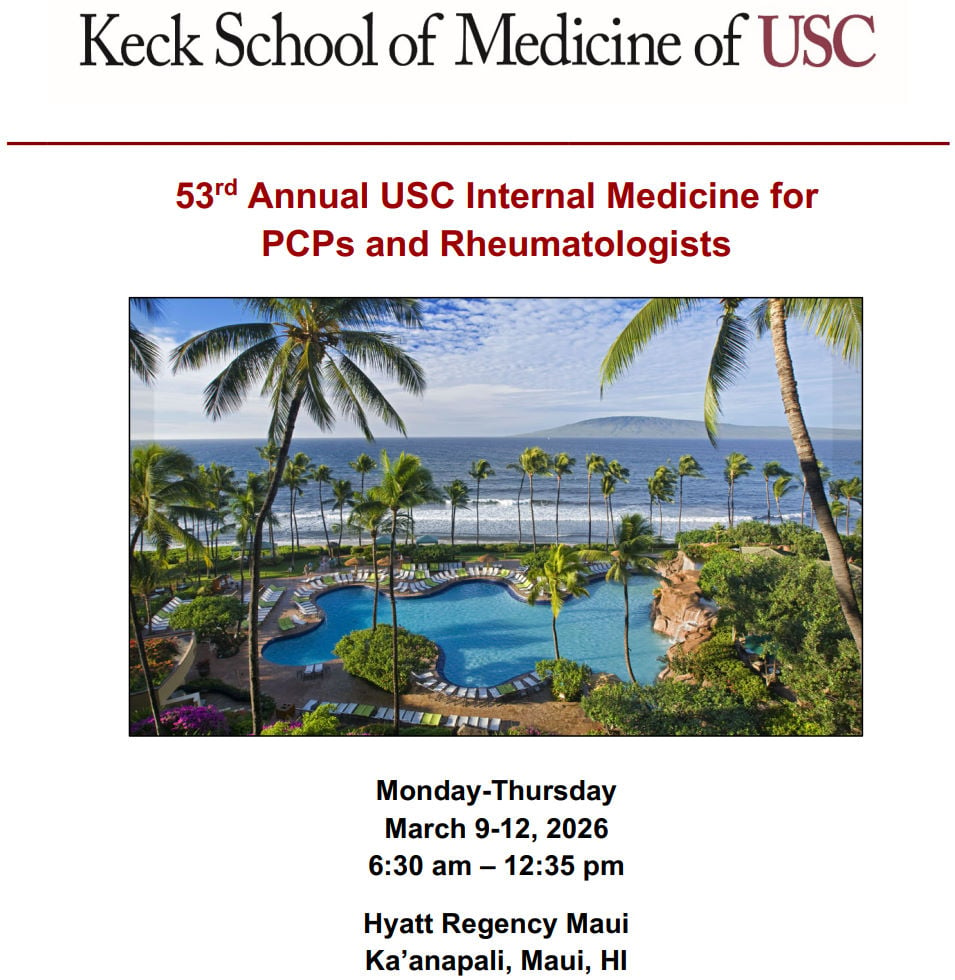
Keck USC 53rd Annual USC Internal Medicine for PCPs and Rheumatologists 2026
$30.00
This Product is shared via google drive download link, So please share your correct Gmail id while placing the order .Please note that there are no CME points or certificate associated with this course Samples for Courses Can be found here : Free Samples Here!
Keck USC 53rd Annual USC Internal Medicine for PCPs and Rheumatologists 2026
Internal Medicine for Primary Care | Rheumatology Update | Cardiometabolic Medicine | Autoimmune Disease | Pulmonary Medicine | Evidence-Based Adult Care
The Keck USC 53rd Annual USC Internal Medicine for PCPs and Rheumatologists 2026 is a multidisciplinary educational course designed for clinicians who care for adults. This four-day program brings together USC and guest faculty experts to address practical questions in internal medicine, primary care, rheumatology, and related subspecialties. Its original format combines interactive lectures with faculty panel discussions, emphasizing knowledge that participants can integrate into clinical practice. Vumedi
The curriculum connects common primary care concerns—such as obesity, menopause, sleep disorders, constipation, and thyroid dysfunction—with cardiovascular interventions, pulmonary disease, gastrointestinal conditions, and complex rheumatologic disorders. It also addresses diagnostic testing, medication management, rehabilitation, and the psychological impact of chronic rheumatologic illness.
For internists, family medicine physicians, rheumatologists, and other adult-care specialists, the course offers a broad framework for reviewing treatment options, evaluating evidence, and strengthening the connection between general medical care and specialty practice.
Course Details
| Detail | Information |
|---|---|
| Presenting Institution | Keck School of Medicine of USC |
| Course Edition | 53rd Annual |
| Program Year | 2026 |
| Original Course Dates | March 9–12, 2026 |
| Original Course Duration | Four days |
| Original Venue | Hyatt Regency Maui, Lahaina, Hawaii |
| Original Educational Format | Interactive faculty lectures and panel discussions |
| Primary Clinical Focus | Internal medicine for primary care practitioners and rheumatologists |
| Clinical Orientation | Evidence-based diagnosis, treatment selection, and practical adult patient care |
The dates, venue, and original educational format are documented in USC’s official course listing. keckusc.cloud-cme.com
Original-event accreditation should not be interpreted as confirmation that separately supplied course materials include CME credit, ABIM MOC credit, or a certificate.
Target Audience
This course is intended for practicing internists, family medicine physicians, subspecialist physicians, and allied health personnel who care for adults and seek to enhance their understanding of internal medicine and available treatment options.
The program is particularly relevant to Internists, Family Medicine Physicians, Rheumatologists, Cardiologists—including Interventional Cardiologists—Pulmonologists, and Gastroenterologists.
Additional professional audiences include Hepatologists, Endocrinologists, Allergists and Immunologists, Dermatologists, Neurologists, Nephrologists, Otolaryngologists, and Physical Medicine and Rehabilitation Specialists (Physiatrists).
Program Overview
The course addresses the intersection of general internal medicine and rheumatology, combining common outpatient concerns with more complex diagnostic and therapeutic decisions.
Primary care topics include the cardiometabolic and cognitive consequences of menopause, obesity pharmacotherapy and counseling, sleep quality, complementary therapies, and constipation. Cardiovascular content examines patient selection and treatment considerations for transcatheter aortic valve replacement, mitral valve repair, left atrial appendage occlusion, chronic anticoagulation, and coronary artery stenting.
The rheumatology component extends from ANA interpretation and systemic autoimmune disease to inflammatory arthritis, connective tissue disorders, crystal arthropathies, steroid withdrawal, pain management, and intensive care considerations. Pulmonary, gastrointestinal, endocrine, allergic, and dermatologic topics provide additional context for the care of adults with overlapping conditions.
Learning Objectives
By the end of the course, participants will be able to:
- Apply up-to-date evidence to: diagnose and manage the cardiometabolic and cognitive consequences of menopause; prescribe obesity medications and provide practical counseling to people with obesity; address sleep quality in people with sleep disorders; discuss complementary therapies and whether they impact health and longevity; manage constipation.
- Apply current evidence and guidelines to: determine in whom to perform a TAVR; choose between a clip vs. surgery for mitral valve repair; discuss the risks and benefits of appendage occlusion vs. chronic anticoagulation in people with atrial fibrillation; support the value of coronary artery stenting.
- Discuss up-to-date evidence to: manage people with drug allergy; manage urticaria; identify and care for people with food allergies; recognize and manage angioedema; identify and manage common dermatologic conditions; treat osteoporosis; manage withdrawal of systemic steroids in rheumatologic illness; screen for and manage thyroid dysfunction; examine the impact of inflammation in diabetes.
- Apply diagnostic and treatment strategies to manage: interstitial lung disease; asthma and COPD; the breathless patient; bronchiectasis; IgG4 pancreatitis; inflammatory bowel disease; metabolic dysfunction-associated steatotic liver disease (MASLD); pain in rheumatologic illness with exercise.
- Apply the latest evidence to: discuss and manage the overlap of neurology and rheumatology; examine the unique considerations of rheumatology care in the intensive care unit; diagnose and manage mixed connective tissue disorder, Ehlers-Danlos Syndrome, crystal arthropathies, rheumatoid arthritis, and the psychological impact of rheumatologic illness.
- Interpret diagnostic tests and determine treatment approaches for rheumatologic problems in primary care and specialty practices: ANA testing; SLE; vasculitis; Sjogren’s.
Program Topics and Clinical Coverage
The following sections organize the topics in the supplied learning objectives. They are not official lecture titles or confirmed daily session assignments.
Primary Care, Menopause, Obesity, and Everyday Clinical Concerns
This component addresses the cardiometabolic and cognitive consequences of menopause, the prescription of obesity medications, and practical counseling for people with obesity. Additional topics include improving sleep quality in patients with sleep disorders, evaluating complementary therapies in relation to health and longevity, and managing constipation.
The emphasis is on issues that arise frequently in adult primary care and require interpretation of evidence alongside individualized clinical judgment.
Cardiovascular Interventions and Atrial Fibrillation
Cardiovascular coverage includes determining which patients should undergo transcatheter aortic valve replacement (TAVR) and comparing clip-based approaches with surgery for mitral valve repair.
The course also addresses the risks and benefits of left atrial appendage occlusion versus chronic anticoagulation in atrial fibrillation, together with the evidence supporting coronary artery stenting.
Allergy, Immunology, and Dermatology
This topic group covers the management of drug allergy, urticaria, food allergies, and angioedema. It also includes the recognition and management of common dermatologic conditions.
These subjects complement the broader internal medicine curriculum by addressing allergic and skin-related presentations encountered in both primary care and specialty practice.
Endocrinology, Bone Health, and Glucocorticoid Management
The endocrine and metabolic content includes osteoporosis treatment, screening for and managing thyroid dysfunction, and examining the impact of inflammation in diabetes.
The rheumatology-related medication component addresses the withdrawal of systemic steroids in patients with rheumatologic illness, preserving the distinction between disease management and the considerations surrounding glucocorticoid discontinuation.
Pulmonary Medicine and the Breathless Patient
Pulmonary topics include interstitial lung disease, asthma, chronic obstructive pulmonary disease (COPD), bronchiectasis, and the evaluation and management of breathlessness.
This coverage connects respiratory symptoms and established pulmonary diagnoses with the broader care of adults seen by primary care practitioners and rheumatologists.
Gastroenterology and Hepatology
The gastrointestinal and liver-related curriculum includes IgG4 pancreatitis, inflammatory bowel disease, and metabolic dysfunction-associated steatotic liver disease (MASLD).
Together with constipation management elsewhere in the program, these topics extend the course’s coverage across common and complex gastrointestinal concerns.
Rheumatologic Disorders and Cross-Specialty Care
Disease-focused rheumatology content includes mixed connective tissue disorder, Ehlers-Danlos Syndrome, crystal arthropathies, and rheumatoid arthritis.
The program also examines the overlap between neurology and rheumatology, as well as the distinctive considerations involved in caring for patients with rheumatologic illness in the intensive care unit.
Rheumatologic Testing and Systemic Autoimmune Disease
This component addresses the interpretation of antinuclear antibody (ANA) testing and the determination of treatment approaches for systemic lupus erythematosus (SLE), vasculitis, and Sjogren’s.
The focus spans both primary care and specialty settings, reflecting the need to connect diagnostic findings with the patient’s clinical presentation and management needs.
Exercise, Pain, and Psychological Wellbeing
The course includes the use of exercise in managing pain associated with rheumatologic illness, alongside the psychological effects of living with these conditions.
This component broadens the curriculum beyond diagnostic tests and medications to include physical function, symptom burden, and emotional wellbeing.
Major Topics Covered
The program’s main clinical themes are evidence-based adult primary care, cardiovascular treatment decisions, endocrine and metabolic disorders, allergy and dermatology, pulmonary disease, gastrointestinal and liver conditions, systemic autoimmune disease, inflammatory arthritis, rheumatologic diagnostics, and the functional and psychological consequences of chronic illness.
Course Directors
| Course Director | Role |
|---|---|
| Ron Ben-Ari, MD | Course Director |
| Daniel G. Arkfeld, MD | Course Director |
Both course directors are identified in the Keck School of Medicine of USC event announcement. Vumedi
Faculty
USC’s official course page lists the following faculty. Names are presented without assigning individual lectures where those assignments could not be verified. keckusc.cloud-cme.com
| Faculty Member | Faculty Member |
|---|---|
| Christine Alexopoulos, PA-C | Ana S. Leal Bramasco, MD |
| Allison Arkfeld, MA | Toby Maher, MD |
| Daniel G. Arkfeld, MD | Yogi S. Matharu, DPT, OCS |
| Braden Barnett, MD | Ray Matthews, MD, FACC |
| Ron Ben-Ari, MD | Asal Naderi, MD |
| Allison Chacon, PharmD | Tracy Nguyen-Oghalai, MD |
| Janet Cho, PharmD | John Oghalai, MD |
| Ashley Crew, MD | Sharon Orrange, MD |
| Martha Delgado, MD | Jeff R. Peterson, MD |
| Glenn R. Ehresmann, MD | Francisco P. Quismorio, MD |
| Valeria Esparza, MD | Baljeet Rai, MD |
| Leanna M. Wise, MD | Russ Yang, MD |
Why This Course Is Relevant
For primary care clinicians, the curriculum brings together common clinical concerns and specialty-level treatment questions. Its breadth makes it relevant to practitioners who manage multiple chronic conditions and regularly coordinate care with subspecialists.
For rheumatologists, the program places autoimmune and musculoskeletal disease within a wider internal medicine framework. Pulmonary disease, gastrointestinal conditions, endocrine disorders, cardiovascular decisions, pain, and psychological wellbeing are considered alongside rheumatologic diagnosis and treatment.
For multidisciplinary adult-care teams, the course offers a shared educational foundation for reviewing evidence, discussing treatment options, and connecting specialty knowledge with everyday patient management. These applications reflect the program’s stated emphasis on practical learning and adult patient care. Vumedi
Related Learning on MedicalAmboss
For additional educational resources, explore MedicalAmboss’s Internal Medicine courses and Rheumatology courses. Both are established categories in the MedicalAmboss catalog. Medical Amboss
Short Description
<div style="border:2px solid #0f766e;border-left:6px solid #0f766e;border-radius:10px;background:#f0fdfa;padding:16px 18px;color:#153e4b;line-height:1.7;">
  <p style="margin:0 0 10px;">
    <strong>Internal medicine and rheumatology updates for adult-care clinicians</strong>
  </p>
  <p style="margin:0;">
    Keck USC 53rd Annual USC Internal Medicine for PCPs and Rheumatologists
    2026 brings together primary care and subspecialty topics across
    cardiology, pulmonary medicine, endocrinology, gastroenterology,
    allergy, dermatology, and rheumatology. Review menopause and obesity
    management, cardiovascular interventions, autoimmune disease,
    rheumatologic testing, steroid withdrawal, pain, and psychological
    wellbeing within a four-day educational program designed for
    internists, family medicine physicians, rheumatologists, and allied
    health professionals caring for adults.
  </p>
</div>
Topics
-
Is Transcatheter Aortic Valve Replacement (TAVR) for Everyone?
-
Is Coronary Stenting Good for Anything Anymore? / Coronary Stenting: Why it is Still a Great Therapy
-
Constipation – Subtypes and Therapeutic Options / Complementary Therapies for Constipation
-
Steatotic Liver Disease – Diagnosis and Treatment Options / Metabolic Dysfunction-Associated Steatotic Liver Disease (MASLD)
-
Biologic Therapy for Asthma and COPD
-
Mitral Regurgitation – Clip vs. Surgery
-
To Bleed or Not to Bleed – Anticoagulation vs. Left Atrial Appendage Occlusion for AFib
-
Menopause & Midlife Health – Cardiometabolic Risks, Cognition, and Care Gaps
-
Thyroid Screening and Evaluation for Primary Care
-
From Peanuts to Prevention – The New Era of Food Allergy Care
-
Ear Fullness / Fluctuating Ear Fullness and Hearing Loss: How Can ENT and Rheumatology Work Together?
-
Rash, Edema, and Foot Drop – A Case of Cutaneous Polyarteritis Nodosa
-
Joint Pain Workup – A Structured Approach to Evaluation and Referral
-
Beyond Benadryl – Modern Management of Hives
-
Scleroderma Renal Crisis – A Life-Threatening Complication of Systemic Sclerosis
-
When Lupus Isn’t Lupus – A Case of Kikuchi-Fujimoto Disease with Autoimmune Features
-
Managing Bronchiectasis – More Than Just Airway Clearance
-
Diabetes and Inflammation – From Pathophysiology to Clinical Care
-
Why Sleep Quality Matters – Sleep Architecture, Health, and the Role of Wearables
-
Assessment of the Breathless Patient
-
Adrenal Suppression by Steroids
-
OA and Knee Rehabilitation / Knee Rehabilitation for Osteoarthritis
-
Somatic Therapy in Rheumatology – Neurobiological Rationale and Clinical Integration
-
Rheum Derm Cases
-
Complementary Therapies for General Health and Longevity – Fact, Fiction, and Future Promise
-
Behcet’s Syndrome
-
Spondyloarthritis – AxSpA 2026
-
Update in Gout – Treat to Target
-
Lupus Nephritis
-
Pain Management in Rheumatoid Arthritis
-
Shoulder Pain / Shoulder Pain Therapy
-
Pearls in the Treatment of Rheumatoid Arthritis
-
IgG4-Related Diseases / IgG4-Related Pancreatitis
-
Inflammatory Bowel Disease – We Can Do Better!
-
Small Fiber Neuropathy and Rheumatic Diseases
-
When Flexibility Hurts – Understanding Ehlers-Danlos Syndrome
-
Sjogren’s Disease – Beyond Sicca / Dry Mouth: Is it Sjogren’s
-
Update on the Diagnosis and Treatment of Interstitial Lung Disease (ILD)
-
Relapsing Polychondritis (RP)
-
Advanced Regimens with Biologic and Targeted Synthetic Agents
-
Obesity Medications – Beyond Weight Loss & Practical Counseling for Patients
-
Osteoporosis
-
Angioedema: Beyond the Swelling – Recognition and Management in Primary Care
-
Drug Allergy in 2026: Evidence-Based Approaches for the Internist
-
Facial Rash – Is it Lupus?
-
Fascinating Fellow Cases
-
Stump the Chump Hawaiian Style
- Syllabus
Related products

Internal Medicine
Internal Medicine

Critical Care - Emergency medicine

Anesthesiology & pain medicine
Internal Medicine

Internal Medicine

Critical Care - Emergency medicine

Medical Accounts