
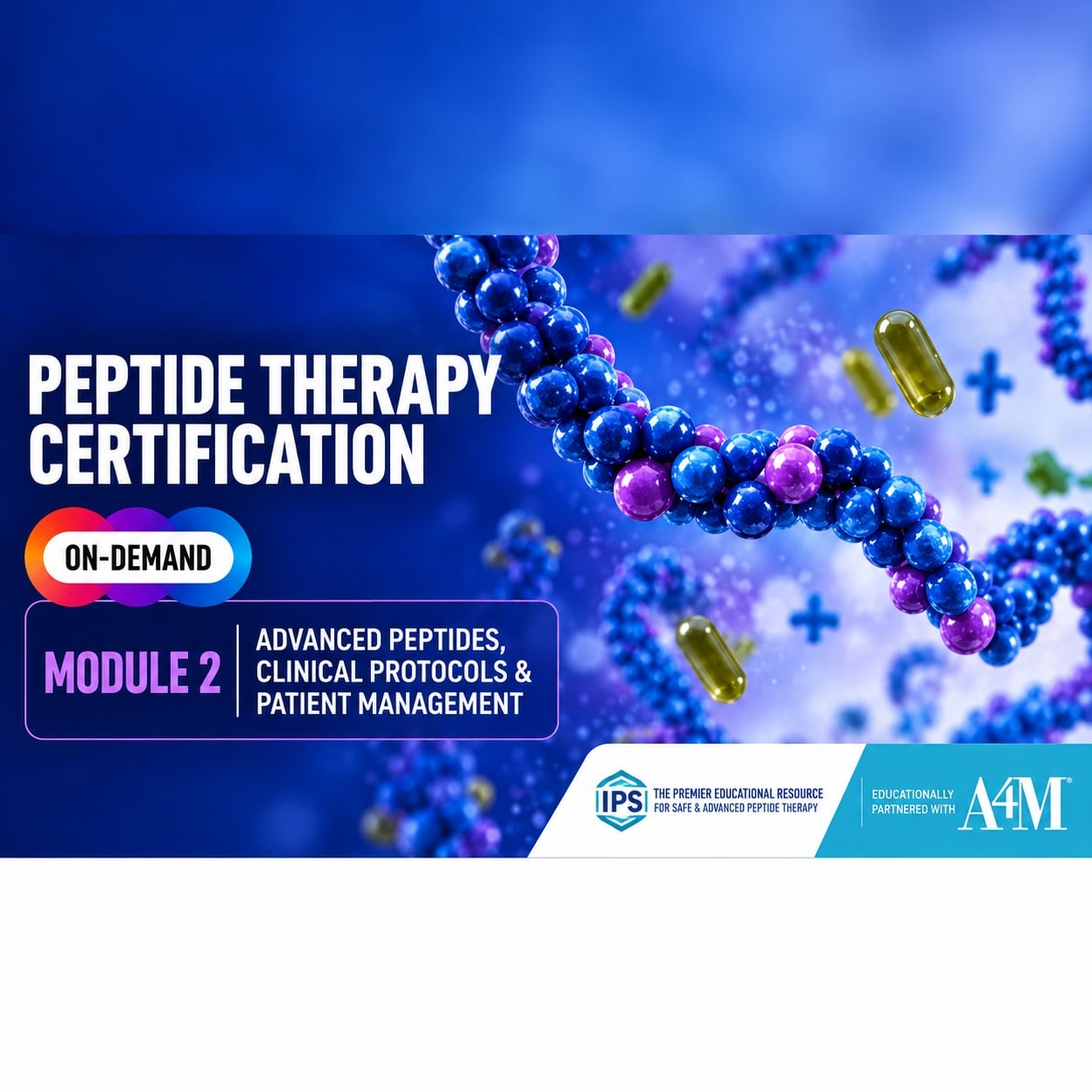
A4M Peptide Therapy Certification – On-Demand – 2026 – Module II: Clinical Peptide Applications by Domain

Original price was: $250.00.$200.00Current price is: $200.00.
This Product is shared via google drive download link, So please share your correct Gmail id while placing the order .Please note that there are no CME points or certificate associated with this course Samples for Courses Can be found here : Free Samples Here!
A4M Peptide Therapy Certification 2026 – Module II: Clinical Peptide Applications by Domain
A4M Peptide Therapy Certification Module II 2026 | Clinical Peptide Applications, Regenerative Medicine, Neurocognitive Health, Longevity, GLP-1, Retatrutide, Cellular Senescence, PRP, Exosomes & Aesthetic Medicine
The A4M Peptide Therapy Certification 2026 – Module II: Clinical Peptide Applications by Domain is an advanced professional education program from the American Academy of Anti-Aging Medicine (A4M) focused on the clinical science, research, safety, and practical considerations of peptide therapies across multiple medical specialties.
Building on the foundations introduced in Module I, this advanced second module explores the expanding role of peptide science in regenerative medicine, neurocognitive health, longevity, metabolic medicine, body composition, aesthetics, immune regulation, mitochondrial function, tissue recovery, and healthy aging.
The program combines expert-led lectures, clinical case discussions, laboratory assessment concepts, biological aging research, peptide bioregulators, neurotherapy, cellular senescence, and emerging regenerative medicine technologies.
Major educational topics include platelet-rich plasma (PRP), exosomes, growth factors, skin and hair restoration, GLP-1 receptor agonists, retatrutide research, and new developments in peptide and small-molecule therapies.
The A4M Peptide Therapy Certification Module II 2026 curriculum examines numerous peptides and related compounds, including ARA-290, BPC-157, TB-500, thymosin alpha-1, CJC-1295, ipamorelin, sermorelin, MOTS-c, Semax, Selank, Humanin, SS-31, FOXO4-DRI, Epitalon, GHK-Cu, PT-141, semaglutide, tirzepatide, and retatrutide.
Throughout the program, participants are encouraged to critically evaluate scientific evidence, recognize differences between established treatments and investigational compounds, and consider regulatory requirements, patient safety, laboratory monitoring, and individualized clinical assessment.
The educational structure combines scientific foundations with domain-specific clinical applications and practice-oriented discussions.
Course Details
- Course: A4M Peptide Therapy Certification 2026 – Module II: Clinical Peptide Applications by Domain
- Official Program: Peptide Therapy Certification – Module II
- Provider: American Academy of Anti-Aging Medicine (A4M)
- Associated Organization: International Peptide Society
- Edition: 2026
- Module: II – Advanced Clinical Peptide Applications
- Original Program Format: On-Demand Educational Training
- Related 2026 Live Activity: September 17–19, 2026
- Original Live Venue: JW Marriott Nashville, Nashville, Tennessee
- Primary Specialty: Regenerative Medicine
- Additional Focus: Anti-Aging Medicine, Longevity, Endocrinology, Metabolic Health, Neurology, Dermatology, Aesthetic Medicine, Immunology and Preventive Medicine
- Language: English
- Published Module II Schedule: 14 Educational Presentations
- Original Live Activity CME: Up to 21.50 AMA PRA Category 1 Credits™
- Educational Methods: Expert Lectures, Clinical Case Reviews, Scientific Evidence Evaluation and Procedure Demonstrations
The CME designation relates to the accredited original live educational activity. It does not establish a separate credit entitlement for files purchased from MedicalAmboss.
Package Includes
- Module II Video Lectures
- Subtitle Files
- Course PDFs
- On-Demand Digital Educational Content
- Downloadable Study Materials
- Offline Study Access
- Digital Delivery
The package description is based on the supplied product information. Exact video, subtitle, and PDF file counts should be verified against the delivered materials.
Target Audience
The program is intended for licensed healthcare practitioners interested in advanced peptide science, regenerative medicine, longevity, metabolic health, and related clinical research.
The target audience includes:
- Internal Medicine Physicians
- Family Medicine Physicians
- Preventive Medicine Physicians
- Endocrinologists
- Functional Medicine Practitioners
- Regenerative Medicine Physicians
- Aesthetic Medicine Physicians
- Dermatologists
- Plastic Surgeons
- Neurologists
- Sports Medicine Physicians
- Rehabilitation Physicians
- Obstetricians and Gynecologists
- Pharmacists
- Physician Assistants
- Nurse Practitioners
- Registered Nurses
- Advanced Practice Providers
- Other Licensed Healthcare Professionals
Official A4M certification requires completion of Modules I and II and active membership in A4M or the International Peptide Society, subject to the provider’s eligibility and assessment requirements.
Program Overview
Peptide science is an expanding area of research involving biological signaling molecules, cellular communication, hormone regulation, immune processes, metabolic pathways, and tissue biology.
Some peptide-based therapies have established medical indications supported by clinical trials and regulatory approval. Others remain experimental, with limited human evidence, uncertain long-term safety, or restrictions affecting their use.
The A4M Peptide Therapy Certification Module II 2026 examines these distinctions while reviewing advanced clinical and scientific applications.
The curriculum covers:
- Clinical Peptide Applications
- Baseline Laboratory Testing
- Hormonal and Metabolic Assessment
- Biological Aging
- Telomeres
- Epigenetics
- Peptide Bioregulators
- Neurocognitive Peptides
- Central Nervous System Applications
- Cellular Senescence
- Senolytic Research
- Mitochondrial Health
- Regenerative Medicine
- PRP
- Exosomes
- Tissue Repair Biology
- Wound Healing Research
- Skin Restoration
- Aesthetic Medicine
- Hair Restoration
- Growth Hormone Axis
- Body Composition
- GLP-1 Receptor Agonists
- Semaglutide
- Tirzepatide
- Retatrutide
- Immune Modulation
- Inflammation
- Cardiometabolic Health
- Sexual and Reproductive Health
- Emerging Peptide Compounds
- Small-Molecule Therapies
- Clinical Safety
- Regulatory Considerations
- Evidence-Based Treatment Evaluation
The program emphasizes the clinical and scientific considerations associated with emerging therapies rather than treating all investigated compounds as established treatments.
Learning Objectives
After completing the original educational program, participants should be better able to:
- Understand the legal and regulatory landscape of peptides and regenerative therapies.
- Discuss biological aging, epigenetics, methylation, telomere biology, and their relevance to research on healthy aging.
- Evaluate nutritional and lifestyle considerations that may influence metabolic health and regenerative medicine outcomes.
- Apply individualized clinical assessment frameworks, including A4M’s TRIAD model, to evaluate patient needs and treatment considerations.
- Interpret baseline laboratory findings relevant to metabolic, hormonal, and physiological assessment.
- Distinguish between FDA-approved peptide medications, off-label applications, compounded products, and investigational compounds.
- Evaluate clinical and preclinical evidence involving neurocognitive peptides and central nervous system research.
- Review current scientific understanding of cellular senescence, mitochondrial biology, and senolytic research.
- Examine the clinical evidence and regulatory considerations associated with PRP, exosomes, peptides, and other regenerative medicine approaches.
- Review established GLP-1 therapies and emerging multi-receptor agonists in metabolic medicine and weight management.
- Discuss peptide-related research in skin biology, aesthetic medicine, hair restoration, and tissue repair.
- Recognize potential adverse effects, contraindications, interactions, and uncertainties associated with peptide-related products.
- Evaluate new peptide and small-molecule therapies using appropriate scientific and clinical evidence.
- Apply principles of patient counseling, informed consent, safety monitoring, and individualized medical decision-making.
Official Module II Course Content
Session I – Laboratory Assessment and Clinical Evaluation
Baseline Lab Testing to Establish Targeted Peptide Therapies
Faculty: Gordon Crozier, DO
Duration: 2 Hours
This presentation examines laboratory assessment and its role in evaluating patients being considered for peptide-related or regenerative interventions.
Important considerations include:
- Baseline Laboratory Assessment
- Metabolic Health Evaluation
- Hormonal Assessment
- Clinical Risk Factors
- Patient History
- Laboratory Interpretation
- Monitoring Strategies
- Individualized Clinical Assessment
- Evidence-Based Test Selection
- Follow-Up Evaluation
The session emphasizes selecting investigations according to clinical indications rather than assuming that every patient requires extensive laboratory testing.
Session II – Biological Aging and Longevity Science
The Impact of Peptides on Telomeres and Other Markers of Biological Age
Faculty: Gordon Crozier, DO
Duration: 1.5 Hours
This presentation examines research into biological age, telomeres, and molecular markers associated with aging.
Important topics include:
- Biological Aging
- Chronological Age
- Telomere Biology
- Cellular Aging
- Aging Biomarkers
- Epigenetic Changes
- Mitochondrial Function
- Longevity Research
- Peptide-Related Biological Hypotheses
- Evidence Limitations
The discussion provides context for evaluating claims about interventions intended to influence biological aging.
Peptide Bioregulators
Faculty: James LaValle, RPh, CCN, MT, CHM, DHPh
Duration: 1.5 Hours
This session introduces peptide bioregulators and their proposed roles in cellular signaling and physiological regulation.
Important concepts include:
- Peptide Bioregulators
- Cellular Communication
- Biological Regulation
- Aging Research
- Tissue-Specific Signaling
- Epitalon
- Peptide Bioregulator Families
- Proposed Longevity Applications
- Mechanistic Research
- Clinical Evidence Limitations
The educational focus includes distinguishing research hypotheses from treatments with demonstrated clinical effectiveness.
Leveling Up the Human Machine: Biohacker Insights on Peptide Therapies
Faculty: Ben Greenfield
Duration: 0.5 Hour
Accreditation: Non-CME Session
This presentation explores perspectives from biohacking, performance optimization, wellness, and longevity.
Relevant considerations include:
- Biohacking
- Performance Health
- Recovery
- Longevity
- Self-Tracking
- Emerging Health Technologies
- Peptide Research
- Evidence Appraisal
- Safety Considerations
This session is designated as non-CME in the published program.
Session III – Neurocognitive Health and CNS Applications
Intro Neurotherapy and Peptides
Faculty: Marisol Duque, MD
Duration: 2 Hours
This session reviews the relationship between peptide signaling, nervous system biology, and emerging neurocognitive research.
Important areas include:
- Neurocognitive Health
- Central Nervous System
- Neuroprotection
- Neuroinflammation
- Neuronal Signaling
- Cognitive Function
- Sleep and Circadian Biology
- Stress-Related Mechanisms
- Neurotherapy Research
- Clinical Evidence Evaluation
Peptides and compounds discussed in the broader curriculum include:
- ARA-290
- Cortexin
- Dihexa
- DSIP
- Humanin
- N-Acetyl Semax
- PE-22-28
- Pinealon
- Selank
- Semax
- VIP
These compounds differ considerably in available evidence, approval status, and safety information.
Session IV – Cellular Senescence and Healthy Aging
Understanding Cellular Senescence and Peptide Therapy with Cases
Faculty: Joseph Cleaver, MD, FAARM, ABAARM
Duration: 0.5 Hour
This session examines cellular senescence and its relevance to aging biology and regenerative research.
Important topics include:
- Cellular Senescence
- Senescent Cells
- Senescence-Associated Secretory Phenotype
- Chronic Inflammation
- Biological Aging
- Tissue Dysfunction
- Senolytic Research
- FOXO4-DRI
- Experimental Peptide Approaches
- Clinical Case Discussion
The session emphasizes the distinction between emerging research and established medical treatments.
Session V – Regenerative Medicine and Tissue Repair
A Comprehensive Approach to Regenerative Medicine Combining the Power of PRP, Exosomes, and Peptides to Enhance Clinical Outcomes
Faculty: Kathleen O’Neil-Smith, MD, FAARM
Duration: 2 Hours
This presentation explores the combination of regenerative medicine approaches and their proposed applications.
Important considerations include:
- Regenerative Medicine
- Platelet-Rich Plasma
- Exosomes
- Cellular Signaling
- Growth Factors
- Tissue Repair
- Wound Healing Biology
- Orthobiologics
- Peptide Research
- Clinical Evidence
- Product Quality
- Safety and Regulatory Considerations
The inclusion of exosomes or investigational peptides in the curriculum does not establish that they are approved or effective for a specific clinical indication.
A Practical Approach/Demo of Procedures
Faculty: Kathleen O’Neil-Smith, MD, FAARM
Duration: 1.5 Hours
This session provides a practical educational perspective on procedures discussed within the regenerative medicine curriculum.
Important areas include:
- Patient Assessment
- Procedure Planning
- Clinical Safety
- Informed Consent
- Aseptic Technique
- Treatment Documentation
- Adverse Event Recognition
- Appropriate Follow-Up
- Professional Scope of Practice
Procedure demonstrations in the original curriculum do not establish that every demonstrated intervention is approved or appropriate for routine use.
Cases
Faculty: James LaValle, RPh, CCN, MT, CHM, DHPh
Duration: 1 Hour
This session reviews clinical cases and decision-making considerations relevant to peptide and regenerative medicine.
The case-based format emphasizes:
- Clinical Assessment
- Interpretation of Patient Findings
- Treatment Selection Considerations
- Laboratory Review
- Risk Assessment
- Evidence Evaluation
- Monitoring
- Individualized Decision-Making
Session VI – Aesthetic Medicine and Facial Rejuvenation
Everything Face and Youth: The Science, The Methods, the Madness with Cases
Faculty: Marisol Duque, MD
Duration: 2 Hours
This presentation reviews facial aging and the scientific concepts underlying aesthetic and regenerative medicine.
Important subjects include:
- Facial Aging
- Skin Biology
- Collagen
- Dermal Structure
- Aesthetic Assessment
- Regenerative Research
- Peptide-Related Aesthetic Applications
- Skin Rejuvenation
- Clinical Cases
- Treatment Safety
Application of PRP, Peptides and Other Compounds for Skin Restoration
Faculty: Marisol Duque, MD
Duration: 1.5 Hours
This session examines approaches to skin restoration involving PRP and other compounds.
Relevant topics include:
- Platelet-Rich Plasma
- Skin Restoration
- Skin Repair
- Collagen Biology
- GHK-Cu
- Aesthetic Medicine
- Tissue Signaling
- Clinical Evidence
- Adverse Effects
- Informed Consent
The scientific and clinical evidence for each intervention must be evaluated separately.
Session VII – Hair Restoration
Peptide and Hair Replacement
Faculty: Gordon Crozier, DO
Duration: 1 Hour
This presentation explores peptide-related research and hair restoration.
Important considerations include:
- Hair Growth Biology
- Hair Follicle Function
- Hair Loss
- Hair Restoration
- Growth Factors
- Peptide Research
- Aesthetic Applications
- Clinical Evaluation
- Treatment Limitations
- Safety
The session provides an educational context for evaluating emerging approaches alongside established treatments for hair loss.
Session VIII – GLP-1 Therapies and Metabolic Health
GLP-1s and the Introduction of Retatrutide
Faculty: James LaValle, RPh, CCN, MT, CHM, DHPh
Duration: 1 Hour
This presentation examines GLP-1 receptor agonists and emerging multi-receptor therapies used or investigated in metabolic medicine.
Important subjects include:
- GLP-1 Receptor Agonists
- Semaglutide
- Tirzepatide
- Retatrutide
- Weight Management
- Obesity
- Type 2 Diabetes
- Metabolic Health
- Incretin Biology
- GIP Signaling
- Glucagon Receptor Signaling
- Body Composition
- Cardiometabolic Risk
- Treatment Safety
- Clinical Evidence
Semaglutide and tirzepatide have established approved indications, whereas retatrutide is discussed here in the context of clinical development and emerging research. Regulatory status must be checked for the relevant indication and jurisdiction before clinical use.
Session IX – Emerging Peptides and Small-Molecule Therapies
The Future of Peptides and Small Molecule Therapies
Faculty: James LaValle, RPh, CCN, MT, CHM, DHPh
Duration: 1 Hour
This concluding scientific presentation examines emerging developments in peptide research and related therapeutic technologies.
Important considerations include:
- Emerging Peptide Compounds
- Small-Molecule Therapies
- Novel Therapeutic Targets
- Mitochondrial Signaling
- Cellular Metabolism
- Tissue Repair Research
- Longevity Research
- Drug Development
- Clinical Trials
- Regulatory Considerations
- Translational Medicine
- Future Research Directions
The session encourages critical interpretation of emerging therapeutic claims and their supporting scientific evidence.
Major Peptides and Compounds Covered
The published A4M Module II curriculum describes several clinical and research domains involving peptides, related biologically active compounds, and non-peptide agents.
Neurocognitive and CNS Research
- ARA-290 / Cibinetide
- Cortexin
- Dihexa
- DSIP
- Humanin
- Met-Lys-Pro
- N-Acetyl Semax
- PE-22-28
- Pinealon
- Rg3 Ginsenoside
- Rb1 Ginsenoside
- Selank
- Semax
- Vasoactive Intestinal Peptide
Growth Hormone and Body Composition
- CJC-1295
- GHRP-2
- GHRP-6
- IGF-1
- Ipamorelin
- Sermorelin
- GnRH
- SARMs
Metabolic and Mitochondrial Research
- Semaglutide
- Tirzepatide
- Retatrutide
- MOTS-c
- LRP
- LQP
- IRW
- Glutathione
- SS-31
- FOXO4-DRI
Regenerative Medicine and Tissue Repair
- BPC-157
- TB-500
- Thymosin Beta-4
- TB4 Fragment 1-4
- Arginate
- VEGF
- PDGF
- TGF
- RKH
- Taxorest
- Bronchogen
- Vilon
Immune and Inflammatory Research
- ARA-290
- Thymosin Alpha-1
- Thymagen
- Thymalin
- Thymulin
- KPV
- VIP
- TB-500
Longevity and Biological Aging
- Epitalon
- Humanin
- FOXO4-DRI
- L-Carnosine
- SS-31
- Peptide Bioregulators
Aesthetic and Dermatologic Research
- GHK-Cu
- Matrixyl
- Palmitoyl Pentapeptide
- SNAP-8
- Growth Factors
- BPC-157
- TB-500
Sexual and Reproductive Health
- PT-141 / Bremelanotide
- GnRH
- IGF-1
- Growth Hormone Axis Peptides
Vascular and Cardiometabolic Research
- Vesugen
- Met-Lys-Pro
- SS-31
- MOTS-c
- TB4 Fragment 1-4
- LRP / LQP / IRW
These are research and educational categories, not a list of validated clinical indications. Several compounds are investigational, while some listed substances are not peptides.
Neurocognitive Peptides and CNS Health
Neurocognitive peptide research investigates biological pathways relevant to nervous system signaling, cellular protection, inflammation, stress responses, and cognitive function.
The curriculum explores compounds investigated for possible neurological applications.
Important research themes include:
- Neuronal Signaling
- Neuroprotection
- Neuroinflammation
- Cognitive Function
- Sleep Regulation
- Mood-Related Mechanisms
- Mitochondrial Biology
- Neurological Research
Human clinical evidence remains limited for several compounds in this category, and proposed effects should not be interpreted as established therapeutic benefits.
Regenerative Medicine and Tissue Repair
Regenerative medicine investigates biological approaches intended to influence tissue recovery and cellular function.
The Module II curriculum examines the relationship between peptides, growth factors, PRP, and extracellular vesicle research.
Relevant areas include:
- Tissue Repair Biology
- Wound Healing
- Cellular Communication
- Platelet-Rich Plasma
- Growth Factors
- Collagen Production
- Skin Restoration
- Musculoskeletal Research
- Clinical Safety
The program emphasizes evaluating the evidence for each intervention and recognizing the regulatory status of specific products.
Cellular Senescence and Longevity Medicine
Cellular senescence is a biological process in which cells enter a state of persistent growth arrest while remaining metabolically active.
Senescence-related pathways are an important area of aging research.
The course reviews:
- Cellular Senescence
- Aging Biomarkers
- Telomeres
- Biological Age
- Epigenetic Changes
- Cellular Metabolism
- Senolytic Research
- Peptide Bioregulators
- Healthy Aging
Research into these mechanisms does not establish that a particular peptide can safely reverse human aging.
Metabolic Health and GLP-1 Therapies
Metabolic medicine is a major focus of the Module II curriculum.
The program reviews both established incretin-based therapies and emerging metabolic research.
Important areas include:
- Obesity
- Weight Management
- Type 2 Diabetes
- GLP-1 Receptor Agonists
- Dual Incretin Agonists
- Triple Receptor Agonist Research
- Body Composition
- Metabolic Risk
- Treatment Safety
- Individualized Patient Assessment
The curriculum distinguishes approved medications from investigational agents whose effectiveness and long-term safety are still being evaluated.
Aesthetic Medicine and Skin Restoration
Peptide-related research has generated interest in skin biology, collagen signaling, hair restoration, and regenerative aesthetics.
The program examines:
- Skin Aging
- Facial Rejuvenation
- Collagen Biology
- GHK-Cu
- Growth Factors
- PRP
- Hair Restoration
- Regenerative Aesthetic Research
- Patient Safety
Clinical decisions should be based on the evidence and approval status of the particular treatment rather than broad claims about peptide or regenerative medicine.
Clinical Safety and Regulatory Considerations
The legal status, safety, manufacturing quality, and evidence base of peptide-related products vary substantially.
Important considerations include:
- FDA Approval Status
- Investigational Compounds
- Off-Label Medication Use
- Compounded Products
- Product Quality
- Sterility
- Adverse Effects
- Drug Interactions
- Clinical Monitoring
- Patient Selection
- Informed Consent
- Documentation
- Regulatory Compliance
The presence of a compound in an educational course does not imply that it is approved, effective, or appropriate for clinical administration.
Official Faculty
The published Module II faculty includes:
- Joseph Cleaver, MD, FAARM, ABAARM
- Gordon Crozier, DO
- Marisol Duque, MD
- James LaValle, RPh, CCN, MT, DHM, DHPh
- Kathleen O’Neil-Smith, MD, FAARM
Additional Non-CME Presenter:
- Ben Greenfield
The program combines perspectives from clinicians, pharmacists, and professionals involved in peptide medicine, regenerative therapies, metabolic health, and longevity research.
Continuing Medical Education and Certification
A4M’s Peptide Therapy Certification program consists of two educational modules.
The official 2026 live Module II activity offered through The George Washington University School of Medicine and Health Sciences listed:
- 21.50 AMA PRA Category 1 Credits™
- 21.50 Completion Credits
- Original Activity Dates: September 17–19, 2026
- Credit Activity Expiration: September 19, 2029
The credit designation applies to the specific original accredited activity and eligible participants completing its requirements.
Official A4M Certification Requirements
The A4M Peptide Therapy Certification program requires:
- Active A4M or International Peptide Society Membership
- Completion of Peptide Therapy Module I
- Completion of Peptide Therapy Module II
- Satisfaction of Applicable Provider Assessment Requirements
Important CME and Certification Notice
Purchasing separately distributed educational files from MedicalAmboss does not itself provide:
- Official A4M Certification
- A4M Course Registration
- AMA CME Credits
- Official Completion Certificates
- International Peptide Society Membership
- Official Examinations or Assessment Submission
- A4M Learning Platform Access
- Publisher Accounts
- Publisher-Hosted Educational Benefits
Why This Course Is Relevant
The A4M Peptide Therapy Certification 2026 – Module II: Clinical Peptide Applications by Domain provides an advanced educational overview of peptide science and its relationship to several rapidly developing areas of medicine.
The program covers:
- Neurocognitive Research
- Regenerative Medicine
- Biological Aging
- Longevity
- Cellular Senescence
- Metabolic Health
- Body Composition
- Mitochondrial Biology
- PRP and Exosomes
- Skin Restoration
- Hair Restoration
- Immune Regulation
- Emerging Peptide and Small-Molecule Therapies
Its combination of scientific research, laboratory assessment, clinical case discussion, and regenerative medicine education makes it relevant to physicians, pharmacists, and other licensed healthcare professionals interested in advanced peptide research.
The curriculum also provides context for evaluating the strength of evidence, treatment safety, regulatory considerations, and the distinction between established and investigational therapeutic approaches.
Official Program Reference and MedicalAmboss Purchase Scope
Official A4M Peptide Therapy Certification 2026:
https://www.a4m.com/peptide-therapy-certification-on-demand-2026.html
Official A4M Certification Information:
https://learn.a4m.com/pages/peptide-therapy-certification
2026 Module II Continuing Education Accreditation:
https://cme.smhs.gwu.edu/a4m-mmi-/content/module-ii-peptide-therapy-certification-8
The original program references describe the published educational curriculum, faculty, accreditation, and certification requirements.
They do not establish the exact contents of files available through a separately distributed MedicalAmboss product.
MedicalAmboss File Scope: This listing describes the educational subject matter for reference. Provider registration, live attendance, streaming-platform access, CME or other credit, certificates, memberships, apps, accounts, and publisher-hosted extras are not included unless explicitly listed as store files.
Short Description
A4M Peptide Therapy Certification 2026 – Module II: Clinical Peptide Applications by Domain provides advanced professional education in peptide science, regenerative medicine, longevity, metabolic health, neurocognitive applications, biological aging, and aesthetic medicine.
The Module II curriculum covers laboratory assessment, telomeres, peptide bioregulators, cellular senescence, neurotherapy, PRP, exosomes, skin restoration, hair restoration, GLP-1 medications, retatrutide research, and emerging peptide and small-molecule therapies.
Module II Course Content
| Lecture | Duration |
|---|---|
| Baseline Lab Testing for Targeted Peptide Therapies | 2 hrs |
| Peptides, Telomeres & Markers of Biological Age | 1.5 hrs |
| Peptide Bioregulators | 1.5 hrs |
| Biohacker Insights on Peptide Therapies | 0.5 hr |
| Neurotherapy & Peptides | 2 hrs |
| Cellular Senescence & Peptide Therapy | 0.5 hr |
| PRP, Exosomes & Peptides in Regenerative Medicine | 2 hrs |
| Practical Approach & Procedure Demonstration | 1.5 hrs |
| Clinical Cases | 1 hr |
| Everything Face & Youth | 2 hrs |
| PRP, Peptides & Compounds for Skin Restoration | 1.5 hrs |
| Peptides & Hair Replacement | 1 hr |
| GLP-1s & Introduction of Retatrutide | 1 hr |
| Future of Peptides & Small-Molecule Therapies | 1 hr |
Who Is This Course For?
Designed for licensed healthcare practitioners interested in advanced peptide therapy, longevity and anti-aging medicine, regenerative medicine, functional medicine, metabolic health, aesthetics, neurotherapy, and clinical optimization.
Related products
Endocrine and Nutrition

Cardiology

Endocrine and Nutrition
Nephrology / Urology

Endocrine and Nutrition
The Brigham Board Review and Comprehensive Update in Endocrinology 2023
Endocrine and Nutrition
Harvard The Blackburn Course in Obesity Medicine Treating Obesity 2023