
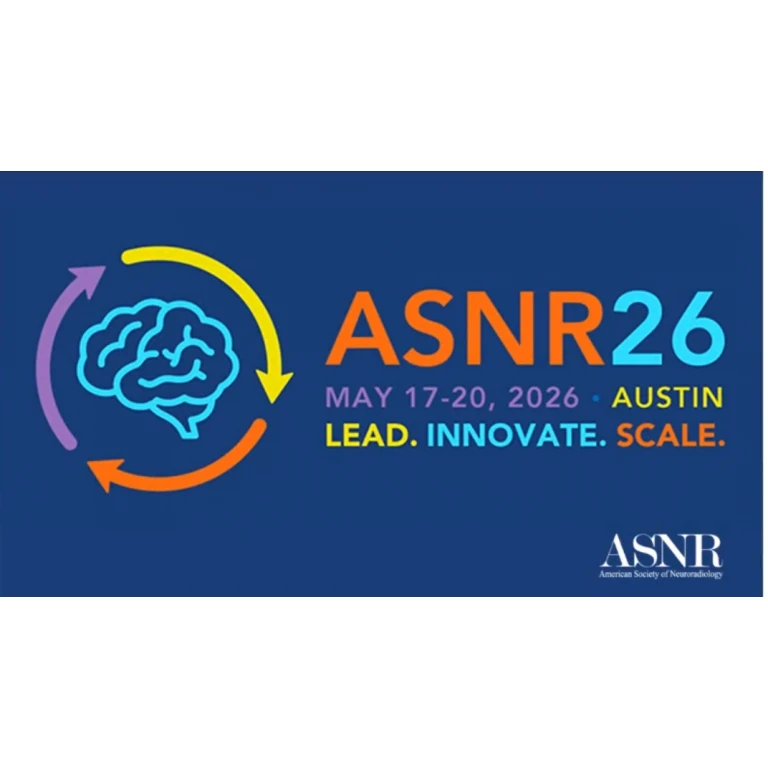
ASNR 2026 Annual Meeting On-Demand
Original price was: $1,500.00.$111.75Current price is: $111.75.
ASNR 2026 Annual Meeting On-Demand offers recorded neuroradiology study material, with listed HD videos and SRT subtitles for offline review.
Delivery Information: This Product is shared via google drive download link. Please use your correct Gmail address at checkout.
Please note: there are no CME points or certificate associated with this course.
Samples for Courses Can be found here: Free Samples Here!
ASNR 2026 Annual Meeting On-Demand
American Society of Neuroradiology Annual Meeting 2026
HD Videos + SRT Subtitles | Advanced Neuroradiology | Offline Access
Explore contemporary neuroradiology through the ASNR 2026 Annual Meeting On-Demand, featuring recorded scientific and educational content from the American Society of Neuroradiology 2026 Annual Meeting.
The original ASNR26 meeting was held May 17–20, 2026, at the JW Marriott Austin in Austin, Texas, under the theme:
Lead. Innovate. Scale.
The original meeting program covered the subjects below. This overview describes the educational themes; it is not a verified file-by-file inventory of this package.
- Adult Brain Imaging
- Spine Imaging
- Head & Neck Imaging
- Pediatric Neuroradiology
- Functional & Advanced Neuroimaging
- Neurointerventional Imaging
- Stroke & Cerebrovascular Imaging
- Neuro-Oncology
- Artificial Intelligence & Informatics
- Molecular Imaging
- Dementia & Neurodegenerative Imaging
- Precision Neuroradiology
- Quantitative Imaging
The MedicalAmboss package provides HD recorded sessions with SRT subtitle files, allowing the educational material to be downloaded for offline review.
Course Details
- Course: ASNR 2026 Annual Meeting On-Demand
- Full Name: American Society of Neuroradiology 2026 Annual Meeting
- Provider: American Society of Neuroradiology – ASNR
- Year: 2026
- Original Meeting Dates: May 17–20, 2026
- Duration: 4 Days
- Venue: JW Marriott Austin
- Location: Austin, Texas, USA
- Official Meeting Theme: Lead. Innovate. Scale.
- Official On-Demand Availability: ASNR announced recording links by June 1, 2026
- Primary Specialty: Neuroradiology / Radiology
- Format of MedicalAmboss Package: HD Videos + SRT Subtitles
- Delivery: Google Drive
- Offline Access: Yes
Program Overview
Modern neuroradiology has expanded far beyond conventional interpretation of CT and MRI.
Today’s neuroradiologist increasingly integrates:
- Advanced MRI
- Functional imaging
- Molecular imaging
- PET
- Quantitative biomarkers
- Artificial intelligence
- Neurovascular imaging
- Image-guided interventions
- Precision diagnostics
The ASNR 2026 Annual Meeting reflects this evolution through a broad program spanning basic imaging interpretation, complex case discussions, cutting-edge scientific research, artificial intelligence, and emerging neuroimaging technology.
A practical framework is:
Clinical Question → Imaging Acquisition → Advanced Analysis → Differential Diagnosis → Imaging Biomarkers → Treatment Planning → Follow-Up
Official ASNR26 Scientific Tracks
The American Society of Neuroradiology organized scientific programming across major categories including:
- Adult Brain
- Spine
- Head and Neck
- Pediatrics
- Functional / Advanced Imaging
- Interventional Neuroradiology
- Health Policy
- AI / Informatics
These tracks provide broad coverage of modern diagnostic and interventional neuroradiology.
ADULT BRAIN IMAGING
Adult brain imaging remains one of the central components of ASNR education.
The 2026 program addresses areas including:
- Brain tumors
- Stroke
- Cerebrovascular disease
- Neurotrauma
- Neuroinflammatory disease
- Multiple sclerosis
- Neurodegenerative disease
- CSF disorders
- Advanced MRI
- Imaging biomarkers
Neurotrauma Imaging
Neurotrauma requires rapid identification of potentially important abnormalities involving:
- Brain
- Skull
- Blood vessels
- Skull base
- Cervical structures
Modern trauma imaging increasingly relies on optimized CT and MRI protocols along with careful recognition of subtle injury patterns.
Emergency Neuroimaging
Emergency neuroradiology requires efficient interpretation of:
- Acute stroke
- Hemorrhage
- Trauma
- Infection
- Hydrocephalus
- Vascular emergencies
- Acute spinal disease
The emphasis is on findings that directly affect urgent management.
STROKE & NEUROVASCULAR IMAGING
Stroke and cerebrovascular imaging form a major part of ASNR26.
Educational areas include:
- Acute stroke imaging
- Treatment selection
- Neurovascular imaging
- Perfusion imaging
- Vessel wall imaging
- Aneurysms
- Arteriovenous malformations
- Cerebral hemorrhage
- Complex vascular cases
Imaging for Stroke Treatment
Modern stroke treatment depends heavily on imaging.
Imaging can help answer:
- Is there intracranial hemorrhage?
- Is a large-vessel occlusion present?
- What is the infarct burden?
- Is salvageable tissue present?
- Is endovascular treatment appropriate?
- Are alternative diagnoses present?
Acute Stroke Intervention
Case-based sessions examine difficult decisions in acute stroke intervention.
These cases help connect:
CT / CTA / Perfusion / MRI → Patient Selection → Intervention
Advanced Neurovascular Imaging
Contemporary neurovascular imaging includes techniques designed to evaluate:
- Vessel anatomy
- Vessel walls
- Flow
- Perfusion
- Collateral circulation
- Hemodynamic consequences
Vessel Wall Imaging
Vessel wall MRI can provide information beyond the vascular lumen.
Potential applications include selected evaluation of:
- Vasculitis
- Intracranial atherosclerosis
- Dissection
- Other vascular disorders
Cerebral Aneurysms
ASNR26 includes complex aneurysm imaging and treatment discussions.
Imaging plays an essential role in:
- Detection
- Morphologic assessment
- Procedural planning
- Follow-up
Arteriovenous Malformations
AVM evaluation may involve:
- CT
- CTA
- MRI
- MRA
- Catheter angiography
Multimodality assessment helps define architecture and treatment considerations.
NEURO-ONCOLOGY
The 2026 program includes extensive neuro-oncology education.
Major themes include:
- Adult gliomas
- Pediatric brain tumors
- Molecular imaging
- PET
- Treatment-response assessment
- Imaging biomarkers
- Theranostics
- Post-treatment imaging
- Precision oncology
Adult Glioma Imaging
Modern glioma imaging increasingly integrates:
- Conventional MRI
- Diffusion
- Perfusion
- Spectroscopy
- Molecular classification
- Quantitative biomarkers
The goal is increasingly to move from:
“Where is the tumor?”
toward:
“What is its biology, treatment response, and likely behavior?”
Imaging Biomarkers
Imaging biomarkers may provide quantitative or semi-quantitative information relevant to:
- Tumor characterization
- Treatment response
- Prognosis
- Disease progression
Treated Brain Tumors
Post-treatment brain-tumor imaging can be challenging because treatment effects may mimic tumor progression.
Potential considerations include:
- Radiation effect
- Pseudoprogression
- Treatment-related inflammation
- Recurrent tumor
Advanced imaging can contribute to differentiation.
Molecular Imaging
Molecular imaging extends neuroradiology beyond conventional anatomy.
The course includes discussion of:
- PET-based neuro-oncology
- Molecular targets
- Tumor-specific imaging
- Theranostic strategies
PET-Guided Neuro-Oncology
ASNR26 includes dedicated PET-oriented education involving brain and skull-base tumors.
Applications include selected use of:
- Amino-acid PET
- SSTR-targeted imaging
- PET/MRI
for diagnosis and management.
Theranostics
Theranostics combines:
Targeted Diagnosis + Targeted Therapy
using disease-specific biological targets.
This is an emerging area connecting:
- Nuclear medicine
- Molecular imaging
- Oncology
- Neuroradiology
ALZHEIMER’S DISEASE & DEMENTIA IMAGING
Neurodegenerative imaging is particularly important in 2026 because of the emergence of disease-modifying therapies.
Topics include:
- Alzheimer’s disease
- Dementia
- Amyloid imaging
- Neurodegenerative disease
- Imaging biomarkers
- Cerebrovascular contributions
- Treatment monitoring
- ARIA
Beyond Amyloid & ARIA
The program explores neurodegenerative imaging beyond conventional amyloid assessment.
Modern dementia imaging increasingly considers:
- Amyloid
- Tau
- Vascular disease
- Neurodegeneration
- Treatment-associated abnormalities
- Additional biomarkers
Anti-Amyloid Therapy Imaging
Imaging has become important in monitoring selected patients receiving anti-amyloid therapies.
Radiologists need familiarity with treatment-associated imaging findings and appropriate reporting considerations.
Cerebrovascular Imaging in Dementia
Cognitive impairment can involve both:
Neurodegeneration
and:
Cerebrovascular Disease
The course explores how vascular imaging findings contribute to dementia assessment.
ARTIFICIAL INTELLIGENCE & INFORMATICS
Artificial intelligence is one of the strongest themes of ASNR26.
The program explores applications across:
- Brain MRI
- Neurovascular imaging
- Spine imaging
- Neuro-oncology
- Quantitative imaging
- Workflow
- Decision support
AI in Neurovascular Imaging
Artificial intelligence may assist with:
- Detection
- Segmentation
- Triage
- Quantification
- Workflow prioritization
especially in time-sensitive neurovascular imaging.
Generative AI
ASNR26 explores emerging applications of:
Generative Artificial Intelligence
in neuroimaging.
Potential areas include:
- Reporting assistance
- Decision support
- Data synthesis
- Education
- Research workflows
Vision-Language Models
Vision-language models seek to combine:
Medical Images + Natural Language
to support tasks involving:
- Image understanding
- Report generation
- Search
- Clinical decision support
This remains a rapidly developing area.
Synthetic Imaging
AI-based synthetic imaging techniques aim to derive or reconstruct imaging information using computational methods.
Applications may include:
- Sequence synthesis
- Accelerated imaging
- Image enhancement
- Protocol optimization
AI-Enhanced Brain MRI
AI may contribute to brain MRI through:
- Reconstruction
- Segmentation
- Lesion detection
- Quantification
- Workflow optimization
Clinical integration should still include appropriate radiologist oversight and validation.
AI in Spine Imaging
The ASNR26 program also explores AI applications in:
- Spine MRI
- Degenerative disease
- Segmentation
- Quantitative assessment
- Workflow
AI in Neuro-Oncology
AI research in neuro-oncology increasingly explores:
- Tumor segmentation
- Molecular prediction
- Treatment-response assessment
- Imaging biomarkers
- Prognostic modeling
The key issue remains distinguishing clinically validated applications from technological hype.
PEDIATRIC NEURORADIOLOGY
Pediatric neuroradiology is another official ASNR scientific category.
Major areas include:
- Developmental brain imaging
- Brain malformations
- Pediatric tumors
- Pediatric trauma
- Pediatric neurologic emergencies
Developing Brain
Imaging of the developing brain requires understanding of:
- Normal maturation
- Myelination
- Age-dependent anatomy
- Developmental variants
These factors influence interpretation of pediatric MRI.
Pediatric Neuro-Oncology
Pediatric brain tumors differ from adult tumors in:
- Biology
- Location
- Molecular classification
- Treatment
- Imaging patterns
ASNR26 includes dedicated pediatric neuro-oncology content.
Pediatric Trauma
Pediatric trauma imaging requires careful evaluation of:
- Brain injury
- Skull injury
- Spine injury
- Developmental anatomy
while minimizing unnecessary radiation exposure.
HEAD & NECK IMAGING
ASNR includes extensive head and neck neuroradiology.
Topics include:
- Head & Neck Cancer
- Cancer Staging
- Head & Neck Emergencies
- Skull Base
- Cervical Lymph Nodes
- Deep Neck Spaces
Head & Neck Cancer Staging
Accurate imaging contributes to:
- Primary tumor assessment
- Nodal staging
- Treatment planning
- Surveillance
Know Your Nodes
Cervical lymph-node interpretation requires understanding of:
- Nodal levels
- Morphology
- Distribution
- Primary tumor drainage patterns
Head & Neck Emergencies
Imaging may be required urgently for:
- Infection
- Airway-threatening conditions
- Hemorrhage
- Trauma
- Acute inflammatory disease
Skull Base Imaging
The skull base is anatomically complex and requires integration of:
- CT
- MRI
- Neuroanatomy
- Cranial nerve pathways
SPINE IMAGING
The ASNR26 spine curriculum addresses:
- Degenerative spinal disease
- Spinal CSF leaks
- Image-guided procedures
- AI
- Advanced MRI
- Complex spinal disorders
Spinal CSF Leaks
Spinal CSF leakage can be diagnostically challenging.
Imaging may involve:
- MRI
- CT myelography
- Specialized dynamic techniques
depending on clinical context.
Image-Guided Spine Interventions
The program includes fundamentals relevant to selected image-guided spine procedures.
Recorded education should be used for learning and review rather than as a substitute for supervised procedural training.
FUNCTIONAL & ADVANCED NEUROIMAGING
ASNR26 highlights emerging imaging techniques including:
- Functional MRI
- Advanced MRI
- Quantitative Imaging
- Photon-Counting CT
- Higher-Field MRI
- Molecular Imaging
- Fast Imaging
Functional MRI – fMRI
Functional MRI can provide information about:
- Brain activation
- Functional organization
- Language networks
- Motor pathways
with selected applications in research and clinical planning.
Photon-Counting CT
Photon-counting CT represents an emerging generation of CT technology with potential advantages involving:
- Spatial resolution
- Spectral information
- Dose efficiency
Its role in neuroradiology continues to evolve.
Beyond 3T MRI
Higher-field MRI can offer improved signal and resolution but also introduces:
- Technical challenges
- Artifact considerations
- Safety issues
The program explores emerging high-field imaging applications.
Fast Imaging Techniques
Accelerated imaging aims to improve:
- Patient throughput
- Motion resistance
- Patient comfort
- MRI efficiency
while maintaining diagnostically useful image quality.
Neuroinflammation Imaging
Advanced MRI and molecular imaging may provide increasingly detailed assessment of inflammatory neurological disease.
QUANTITATIVE & PRECISION NEURORADIOLOGY
A major direction in modern neuroradiology is the transition from:
Qualitative Pattern Recognition
toward:
Quantitative Imaging + Biomarkers + Integrated Clinical Data
Potential applications include:
- Tumor assessment
- Dementia
- Stroke
- Neurodegeneration
- Treatment monitoring
Scientific Abstract Power Pitches
ASNR26 includes Scientific Abstract Power Pitch Sessions designed to present new research in a concise format.
Research categories include:
- Adult Brain
- Spine
- Head & Neck
- Pediatrics
- Advanced Imaging
- Interventional
- AI / Informatics
Luminary Speaker Sessions
Luminary presentations provide broader perspectives from leading experts on evolving issues in neuroradiology and imaging science.
Interactive Case Discussions
Case-based learning allows participants to work through:
Clinical History → Imaging Pattern → Differential Diagnosis → Additional Imaging → Final Diagnosis
This approach reflects daily radiology practice more closely than isolated didactic teaching.
Expert Panel Discussions
Panel sessions address situations where:
- Evidence is evolving
- Multiple treatment options exist
- Imaging findings are ambiguous
- Practice patterns differ
These sessions are particularly valuable in rapidly evolving areas such as:
- Stroke
- AI
- Neuro-oncology
- Dementia treatment
Professional Development
ASNR26 also addresses nontechnical professional issues relevant to modern radiologists.
Topics include:
- Leadership
- Mentorship
- Career development
- Health policy
- International collaboration
- Professional growth
Who Should Watch?
The ASNR 2026 Annual Meeting On-Demand is particularly relevant for:
- Neuroradiologists
- Diagnostic Radiologists
- Interventional Neuroradiologists
- Neurointerventionalists
- Neurologists
- Neurosurgeons
- Neuro-Oncologists
- Stroke Specialists
- Head & Neck Radiologists
- Pediatric Radiologists
- Nuclear Medicine Physicians interested in neuroimaging
- Radiology Residents
- Neuroradiology Fellows
- Medical Imaging Professionals
- Researchers in Neuroimaging
- Clinicians interested in AI-enabled neuroimaging
Official Platform and CME Information
ASNR provides its own on-demand platform for registered users. This MedicalAmboss listing is for downloadable study files, not ASNR registration or an ASNR account.
No CME points or certificate are included with this package. Official ASNR accreditation and credit-claiming requirements apply only to the separate official activity.
MedicalAmboss Package Includes
- HD video sessions and SRT subtitle files, as listed for this package.
- Google Drive delivery of downloadable study files.
- Offline review after downloading with a compatible video player.
Access Note
Download and retain your study files. File delivery does not include an official ASNR platform account or a guarantee of permanent Google Drive availability.
Product Summary
- Product: ASNR 2026 Annual Meeting On-Demand
- Provider: American Society of Neuroradiology – ASNR
- Original Meeting: May 17–20, 2026
- Venue: JW Marriott Austin
- Location: Austin, Texas
- Duration: 4 Days
- MedicalAmboss Format: HD Videos + SRT Subtitles
- Delivery: Google Drive
- Offline Playback: Yes
- Primary Specialty: Radiology / Neuroradiology
- CME and Certificate: Not included with the MedicalAmboss package
Related products
Cardiology
Critical Care - Emergency medicine
ECHO-Guided Life Support Using ultrasound to categorise shock and guide initial management

Anesthesiology & pain medicine

Internal Medicine

Cardiology
Anesthesiology & pain medicine
GULFCOAST Introduction to Ultrasound-Guided Regional Anesthesia 2019