
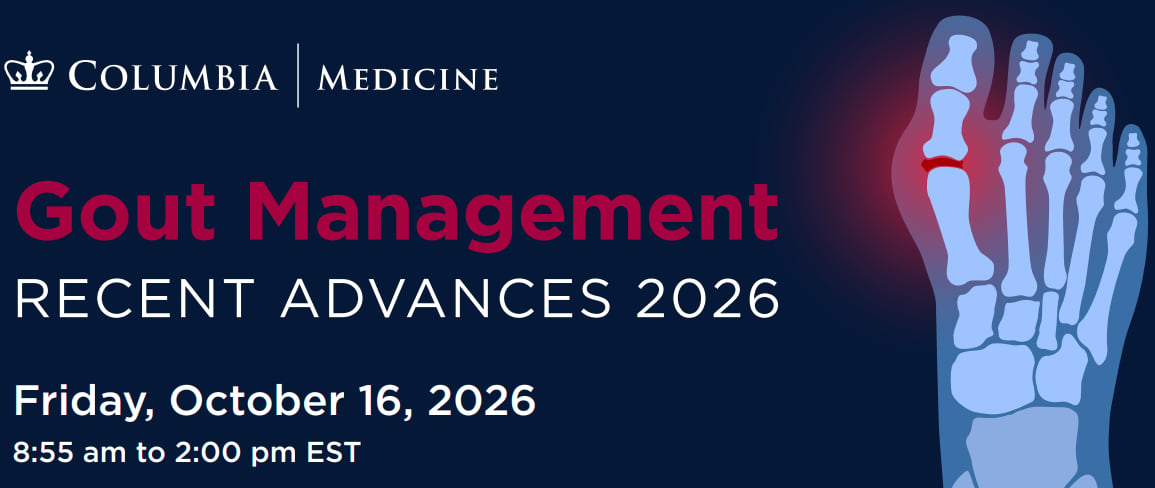
Columbia University Gout Management Recent Advances 2026

$30.00
This Product is shared via google drive download link, So please share your correct Gmail id while placing the order .Please note that there are no CME points or certificate associated with this course Samples for Courses Can be found here : Free Samples Here!
Columbia University Gout Management Recent Advances 2026
Columbia University Gout Management 2026 | Rheumatology, Hyperuricemia, Urate-Lowering Therapy, Refractory Gout, Pegloticase, DECT Imaging, Chronic Kidney Disease & Emerging Treatments
The Columbia University Gout Management Recent Advances 2026 program provides a comprehensive, evidence-based educational update on the diagnosis, assessment, and management of gout, hyperuricemia, and complex crystal-associated inflammatory arthritis.
Organized by Columbia University and Amedco LLC, this virtual continuing medical education symposium brings together experts in rheumatology, nephrology, clinical nutrition, imaging, and related medical disciplines to examine important advances in gout care.
Held on October 16, 2026, the conference addresses the growing clinical complexity of gout, particularly among patients with chronic kidney disease, cardiovascular disease, metabolic disorders, and treatment-resistant hyperuricemia.
The Gout Management 2026: Recent Advances curriculum emphasizes practical diagnostic strategies, modern urate-lowering therapies, clinical risk assessment, ultrasound and dual-energy computed tomography (DECT), nutritional considerations, and emerging treatment approaches.
Special attention is given to refractory gout, uricase-based therapies, biologic treatment mechanisms, immunomodulation, co-therapy, medication safety, and individualized management in patients with advanced chronic kidney disease.
The program also explores differences between current clinical recommendations and real-world treatment practices, including when to initiate urate-lowering therapy, how to establish serum urate targets, and how to manage persistent disease despite conventional treatment.
Through expert-led clinical education and case-based discussions, the symposium aims to improve patient-centered decision-making and support more effective long-term management of gout.
Course Details
- Course: Columbia University Gout Management Recent Advances 2026
- Official Program: Gout Management 2026: Recent Advances
- Organizer: Columbia University and Amedco LLC
- Academic Institution: Columbia University Irving Medical Center
- Department: Rheumatology and Clinical Immunology
- Date: Friday, October 16, 2026
- Official Event Time: 8:55 AM – 2:00 PM Eastern Time
- Location: Online / Virtual Conference
- Original Format: Live Virtual Continuing Medical Education
- Primary Specialty: Rheumatology
- Additional Focus: Nephrology, Internal Medicine, Primary Care, Cardiology, Endocrinology, Clinical Nutrition and Musculoskeletal Imaging
- Language: English
- Official AMA CME: Up to 4.5 AMA PRA Category 1 Credits™
- Nurse Practitioner Credit: Up to 4.5 AANP Continuing Education Credits
- Physician Assistant CME: Up to 4.5 AMA PRA Category 1 Credits™ accepted under applicable NCCPA requirements
- Educational Approach: Expert Lectures, Evidence-Based Reviews and Interactive Clinical Cases
Course Directors:
- Jason E. Liebowitz, MD
- Adam Mor, MD, PhD
- Christine Parsons, MD
- Jai Radhakrishnan, MD, MS
The original conference offered registered participants access to lecture recordings for one month after the event, subject to the provider’s access conditions.
Official registration, accreditation, and publisher-hosted recordings are separate from educational materials sold through MedicalAmboss.
Target Audience
The symposium is intended for physicians, advanced practice providers, and healthcare professionals involved in the assessment and management of patients with gout or related metabolic and inflammatory conditions.
The target audience includes:
- Rheumatologists
- Nephrologists
- Internal Medicine Physicians
- Primary Care Physicians
- Family Medicine Physicians
- Cardiologists
- Endocrinologists
- Medical Nutrition Specialists
- Physician Nutrition Specialists
- Musculoskeletal Radiologists
- General Radiologists
- Hospitalists
- Clinical Pharmacists
- Physician Assistants
- Nurse Practitioners
- Medical Residents
- Rheumatology Fellows
- Nephrology Fellows
- Other Healthcare Professionals Involved in Gout Care
The program is particularly relevant to clinicians seeking updated strategies for treating hyperuricemia, preventing recurrent gout attacks, managing advanced disease, and selecting appropriate therapies for patients with renal or cardiovascular comorbidities.
Program Overview
Gout is a common inflammatory arthritis caused by the deposition of monosodium urate crystals in joints and other tissues.
Its clinical manifestations range from intermittent acute inflammatory attacks to chronic tophaceous disease associated with persistent hyperuricemia, joint damage, and functional impairment.
The management of gout becomes more challenging in patients with renal dysfunction, cardiovascular disease, metabolic conditions, or incomplete response to standard urate-lowering treatment.
The Columbia University Gout Management 2026 program addresses these challenges through a multidisciplinary educational framework.
Major topics include:
- Gout Epidemiology
- Global Disease Trends
- Hyperuricemia
- Monosodium Urate Crystal Deposition
- Acute Gout Attacks
- Chronic Gout
- Tophaceous Gout
- Gout Diagnosis
- Synovial Fluid Analysis
- Musculoskeletal Ultrasound
- Dual-Energy CT
- Nutritional Factors
- Cardiometabolic Risk
- Chronic Kidney Disease
- Serum Urate Targets
- Treat-to-Target Strategies
- Urate-Lowering Therapy
- Allopurinol
- Febuxostat
- Uricosuric Therapy
- Uricase-Based Treatments
- Pegloticase
- Refractory Gout
- Treatment Resistance
- Biologic Therapies
- Immunomodulation
- Co-Therapy
- Advanced CKD Management
- Medication Safety
- Patient Monitoring
- Clinical Case Discussion
The program emphasizes individualized approaches to diagnosis and treatment based on disease severity, comorbidities, therapeutic response, and patient-specific considerations.
Learning Objectives
After attending the original educational program, participants should be better able to:
- Describe current and emerging epidemiologic trends in gout, including factors contributing to increasing disease complexity and comorbidity burden.
- Evaluate contemporary urate-lowering strategies, including treatment targets, optimal timing of therapy, and common gaps between clinical guidelines.
- Explain the mechanisms of action, indications, and safety considerations of biologic therapies used in refractory gout, including appropriate monitoring strategies.
- Apply expert-recommended approaches to complex gout cases, integrating clinical experience with evidence-based treatment guidelines.
- Assess the role of co-therapy and immunomodulation in difficult-to-treat gout, including strategies to optimize treatment efficacy while minimizing adverse effects.
- Integrate gout management principles into the care of patients with advanced chronic kidney disease, balancing therapeutic benefits and risks.
- Analyze treatment-resistant gout cases through interactive clinical discussions to develop practical, patient-centered management plans.
Comprehensive Educational Topics
The following sections expand the confirmed educational themes of the symposium. They are organized for reference and SEO readability; they are not represented as independently verified lecture titles or a chronological session agenda.
Session I – Gout Epidemiology and Disease Burden
Current and Emerging Epidemiologic Trends in Gout
This educational area examines the changing epidemiology of gout and its increasing importance in global clinical practice.
Gout is associated with multiple clinical and metabolic risk factors, and its overall burden can be influenced by population aging, obesity, chronic kidney disease, and other comorbid conditions.
Important considerations include:
- Global Gout Epidemiology
- Gout Prevalence
- Disease Burden
- Hyperuricemia
- Age-Related Trends
- Metabolic Risk Factors
- Obesity
- Chronic Kidney Disease
- Cardiovascular Comorbidities
- Disease Complexity
- Long-Term Health Outcomes
Understanding these factors supports improved risk assessment and identification of patients who may require earlier evaluation or more intensive long-term management.
Session II – Diagnosis and Advanced Imaging
Contemporary Diagnostic Evaluation of Gout
Accurate diagnosis is important because several inflammatory and infectious joint disorders may resemble gout.
The diagnostic discussion is relevant to:
- Acute Monoarthritis
- Recurrent Joint Inflammation
- Crystal-Induced Arthritis
- Synovial Fluid Analysis
- Monosodium Urate Crystals
- Differential Diagnosis
- Clinical Assessment
- Laboratory Testing
- Imaging
- Disease Monitoring
Crystal identification in synovial fluid remains an important diagnostic method when it is feasible and clinically appropriate.
Dual-Energy Computed Tomography (DECT) in Gout
Dual-energy computed tomography is an imaging technique capable of identifying and mapping certain urate crystal deposits.
Its potential clinical uses include:
- Detection of Urate Deposits
- Evaluation of Tophaceous Disease
- Assessment of Crystal Burden
- Support for Difficult Diagnoses
- Imaging Interpretation
- Recognition of Technical Limitations
DECT should be interpreted within the clinical context and does not replace every other diagnostic approach.
Musculoskeletal Ultrasound in Gout
Ultrasound provides a noninvasive method for evaluating joints and periarticular tissues.
Relevant findings and concepts include:
- Double Contour Sign
- Tophi
- Crystal Aggregates
- Joint Effusion
- Synovial Inflammation
- Ultrasound-Guided Assessment
- Disease Monitoring
- Diagnostic Limitations
The inclusion of advanced imaging in the course reflects its importance in contemporary gout diagnosis and management.
Session III – Nutritional Factors and Metabolic Health
Nutrition and Lifestyle in Gout Management
Dietary factors may influence serum urate concentrations and the long-term management of gout.
This educational area considers:
- Dietary Purine Intake
- Alcohol Consumption
- Fructose-Containing Beverages
- Weight Management
- Hydration
- Dietary Patterns
- Metabolic Health
- Obesity
- Patient Counseling
- Individualized Lifestyle Recommendations
Dietary interventions can contribute to overall health and gout management but are not necessarily substitutes for indicated urate-lowering pharmacotherapy.
Gout and Cardiometabolic Comorbidities
Gout frequently occurs alongside conditions that complicate treatment selection.
Important associated conditions include:
- Hypertension
- Obesity
- Type 2 Diabetes
- Chronic Kidney Disease
- Cardiovascular Disease
- Dyslipidemia
- Metabolic Syndrome
The clinical emphasis is on evaluating overall patient risk rather than treating serum urate in isolation.
Session IV – Contemporary Urate-Lowering Therapy
Urate-Lowering Treatment Strategies
Long-term reduction of serum urate is central to preventing crystal accumulation and recurrent gout attacks in patients who require urate-lowering therapy.
Important considerations include:
- Indications for Urate-Lowering Therapy
- Allopurinol
- Febuxostat
- Uricosuric Agents
- Serum Urate Monitoring
- Treatment Initiation
- Dose Adjustment
- Patient Adherence
- Flare Prevention
- Drug Interactions
- Safety Monitoring
Treatment decisions should reflect current recommendations, contraindications, kidney function, and individual patient circumstances.
Treat-to-Target Urate Management
Treat-to-target management involves adjusting therapy according to serum urate measurements and clinical response.
Important topics include:
- Serum Urate Targets
- Long-Term Disease Control
- Tophus Reduction
- Prevention of Recurrent Flares
- Treatment Titration
- Monitoring Intervals
- Adherence
- Clinical Outcomes
The program reviews areas where guideline recommendations and actual clinical practice may differ.
Beyond the ACR Guidelines
The curriculum examines clinical questions that may extend beyond standard interpretations of American College of Rheumatology treatment recommendations.
Relevant considerations include:
- Timing of Urate-Lowering Therapy
- Difficult-to-Treat Gout
- Advanced Chronic Kidney Disease
- Persistent Hyperuricemia
- Treatment Failure
- Individualized Therapeutic Decisions
- Complex Comorbidities
- Expert Clinical Perspectives
These discussions are intended to complement evidence-based guidance, not replace current clinical standards.
Session V – Refractory Gout and Advanced Therapies
Management of Refractory Gout
Refractory gout may involve persistent symptoms, ongoing urate crystal burden, or inadequate response to conventional treatment.
Clinical considerations include:
- Recurrent Gout Flares
- Persistent Hyperuricemia
- Chronic Tophaceous Gout
- Functional Impairment
- Inadequate Treatment Response
- Medication Intolerance
- Adherence Assessment
- Advanced Therapy Selection
- Specialist Management
The program emphasizes structured evaluation of the reasons for inadequate disease control.
Uricase-Based Therapy and Pegloticase
Pegloticase is a uricase-based therapy used in selected patients with severe, uncontrolled gout under appropriate prescribing and monitoring conditions.
Relevant topics include:
- Uricase Enzyme Mechanisms
- Pegloticase
- Conversion of Uric Acid
- Treatment Selection
- Severe Gout
- Serum Urate Response
- Infusion Reactions
- Immunogenicity
- Safety Monitoring
- Clinical Outcomes
The educational discussion examines advanced therapy options for patients with difficult-to-treat disease.
Emerging Biologic Treatments
The treatment of refractory gout continues to evolve as researchers explore additional therapeutic targets and approaches.
Important considerations include:
- Biologic Therapy
- Uricase-Based Treatments
- Anti-Inflammatory Pathways
- Emerging Therapeutic Agents
- Clinical Trial Evidence
- Treatment Safety
- Monitoring
- Patient Selection
Not all emerging treatments have established regulatory approval or demonstrated clinical benefit.
Session VI – Co-Therapy and Immunomodulation
Immunomodulation in Difficult-to-Treat Gout
Immunogenicity may influence the effectiveness and tolerability of certain advanced gout therapies.
Co-therapy approaches are being evaluated or used under specific clinical indications to improve treatment response.
Important topics include:
- Immunomodulation
- Co-Therapy
- Methotrexate Co-Treatment
- Pegloticase Immunogenicity
- Antidrug Antibodies
- Treatment Response
- Safety Monitoring
- Infection Risk
- Contraindications
- Patient Selection
The curriculum considers how combination treatment may affect outcomes in selected patients with uncontrolled gout.
Optimizing Efficacy While Minimizing Adverse Effects
Combination therapy requires consideration of possible benefits and treatment-associated risks.
Important clinical responsibilities include:
- Clinical Risk Assessment
- Medication Review
- Laboratory Monitoring
- Adverse Event Recognition
- Drug Interaction Assessment
- Response Evaluation
- Appropriate Follow-Up
- Shared Decision-Making
Treatment strategies must be individualized according to clinical evidence and patient-specific factors.
Session VII – Gout in Advanced Chronic Kidney Disease
Integrating Gout Management and Nephrology
Gout is particularly challenging in patients with advanced chronic kidney disease because reduced kidney function can affect medication selection, clearance, and safety.
Important considerations include:
- Gout and CKD
- Advanced Kidney Disease
- Renal Function Assessment
- Serum Urate Management
- Medication Selection
- Treatment Safety
- Allopurinol Titration
- Febuxostat Considerations
- Anti-Inflammatory Treatment
- Drug Interactions
- Clinical Monitoring
- Nephrology Collaboration
The educational emphasis is on balancing gout control with kidney function, comorbidities, and medication risks.
Treatment Considerations in Advanced CKD
Relevant clinical questions include:
- Which therapies are appropriate for different levels of kidney impairment?
- How should treatment initiation and dose adjustment be considered?
- How can recurrent gout flares be prevented safely?
- What factors influence treatment selection?
- When is specialist co-management indicated?
The program supports integration of rheumatology and nephrology perspectives.
Session VIII – Interactive Clinical Cases
Treatment-Resistant Gout: Case-Based Discussion
The original program includes interactive clinical discussion relevant to difficult-to-treat gout.
Case-based reasoning may involve:
- Persistent Gout Flares
- Uncontrolled Serum Urate
- Tophaceous Disease
- Treatment Intolerance
- Medication Adherence
- Advanced Chronic Kidney Disease
- Cardiovascular Comorbidities
- Biologic Therapy
- Co-Therapy
- Treatment Monitoring
- Individualized Care Planning
The educational approach emphasizes practical clinical decisions informed by evidence and multidisciplinary expertise.
Major Topics Covered
- Columbia University Gout Management 2026
- Gout Management Recent Advances
- Rheumatology
- Gout Epidemiology
- Hyperuricemia
- Monosodium Urate Crystals
- Crystal Arthritis
- Acute Gout
- Chronic Gout
- Tophaceous Gout
- Gout Diagnosis
- Synovial Fluid Analysis
- Musculoskeletal Ultrasound
- Dual-Energy CT
- DECT Imaging
- Nutritional Factors in Gout
- Cardiometabolic Health
- Chronic Kidney Disease
- Advanced CKD
- Serum Urate Targets
- Urate-Lowering Therapy
- Allopurinol
- Febuxostat
- Uricosuric Therapy
- Pegloticase
- Uricase-Based Treatments
- Refractory Gout
- Treatment-Resistant Gout
- Biologic Therapy
- Immunomodulation
- Methotrexate Co-Therapy
- Adverse Effect Monitoring
- Gout Guidelines
- ACR Gout Guidelines
- Gout Flare Prevention
- Patient-Centered Management
- Rheumatology-Nephrology Collaboration
- Case-Based Gout Management
Gout Epidemiology and Global Health
The burden of gout continues to be influenced by demographic changes, metabolic health, and comorbid disease.
Recognizing epidemiologic trends helps clinicians understand the broader public health implications of gout and identify populations who may experience increased disease complexity.
The symposium addresses the relationship between gout, chronic kidney disease, cardiovascular risk, and metabolic conditions.
Diagnostic Advances in Gout
Advances in imaging and laboratory assessment have expanded the diagnostic approaches available for gout.
Ultrasound and dual-energy CT may support evaluation in selected clinical situations.
Accurate diagnosis remains important because gout can resemble other inflammatory or infectious joint disorders.
The curriculum emphasizes appropriate test selection and interpretation.
Urate-Lowering Therapy and Long-Term Disease Control
Long-term gout management frequently requires sustained reduction of serum urate.
The program reviews contemporary treatment strategies, appropriate targets, treatment initiation, titration, and monitoring.
Clinical decision-making must also consider disease severity, treatment response, patient preferences, and associated medical conditions.
Pegloticase and Advanced Gout Treatment
Patients with uncontrolled gout may require advanced therapies when conventional management is ineffective or unsuitable.
The curriculum reviews emerging and established advanced treatment approaches, including uricase-based therapy and related co-treatment strategies.
These discussions support understanding of mechanisms, indications, limitations, safety, and monitoring.
Gout and Chronic Kidney Disease
Patients with advanced kidney disease present important therapeutic challenges.
Medication selection requires careful consideration of kidney function, treatment effectiveness, potential adverse effects, and associated comorbidities.
The symposium emphasizes collaboration between rheumatology and nephrology when managing complex patients.
Case-Based and Patient-Centered Gout Care
The management of treatment-resistant gout may require integration of multiple clinical factors.
These include serum urate concentration, flare frequency, tophus burden, kidney function, medication tolerance, treatment adherence, and individual patient priorities.
Case-based discussion helps clinicians apply evidence-based recommendations to challenging clinical situations.
Course Leadership
Jason E. Liebowitz, MD
Course Director — Rheumatology, Columbia University
Adam Mor, MD, PhD
Course Director — Rheumatology, Columbia University
Christine Parsons, MD
Course Director — Rheumatology, Columbia University
Jai Radhakrishnan, MD, MS
Course Director — Nephrology, Columbia University
The course leadership reflects a multidisciplinary emphasis on the relationship between inflammatory arthritis and kidney disease.
Official Faculty
The original event also lists the following speakers:
- Caroline Atlas, MD — Rheumatology, Columbia University
- Gregory Challener, MD — Rheumatology, Columbia University
- Michael H. Pillinger, MD — New York University
- Naomi Schlesinger, MD — University of Utah
- David S. Seres, MD, PhD — Columbia University Medical Center
- Vesh Srivatana, MD — Nephrology, Columbia University
Speaker-specific lecture assignments are not reproduced here because the detailed schedule could not be independently verified.
Continuing Medical Education
The original Columbia University and Amedco LLC virtual educational activity was designated for a maximum of:
- 4.5 AMA PRA Category 1 Credits™
- 4.5 AANP Continuing Education Credits, subject to applicable recognition requirements
- 4.5 AMA PRA Category 1 Credits™ accepted for eligible Physician Assistant continuing education requirements
Amedco LLC is jointly accredited by ACCME, ACPE, and ANCC to provide continuing education for the healthcare team.
Important CME Notice
The credit amounts described above apply to eligible participation in the original Columbia University educational activity.
Purchasing separately distributed educational files through MedicalAmboss does not provide:
- Columbia University CME Credits
- Official Completion Certificates
- Amedco Credit Claims
- Official Virtual Conference Registration
- Live Conference Access
- Publisher Account Access
- Official Post-Conference Recording Access
- Publisher-Hosted Educational Benefits
Why This Course Is Relevant
The Columbia University Gout Management Recent Advances 2026 program addresses important developments in the diagnosis and management of gout.
Its educational scope extends beyond the treatment of acute gout attacks to include long-term urate control, advanced imaging, complex comorbidities, refractory disease, emerging therapies, and individualized clinical decisions.
The program is particularly relevant to rheumatologists, nephrologists, internists, primary care physicians, and other healthcare professionals managing patients with gout.
Important clinical challenges reviewed include:
- Accurate Diagnosis
- Persistent Hyperuricemia
- Recurrent Gout Flares
- Chronic Tophaceous Gout
- Treatment Resistance
- Cardiometabolic Comorbidities
- Advanced Kidney Disease
- Urate-Lowering Therapy
- Pegloticase
- Immunomodulation
- Patient Safety
- Multidisciplinary Care
By integrating scientific developments, treatment guidelines, and case-based discussion, the course provides a relevant educational reference for contemporary gout management.
Official Program Reference and MedicalAmboss Purchase Scope
Official Columbia University Conference:
https://www.eventleaf.com/Attendee/Attendee/EventPage?eId=LTHbTsfYAo2Um1m9AswNVg%3D%3D
Columbia Rheumatology Continuing Medical Education:
https://www.rheumatologyatcolumbia.org/education/continuing-medical-education-cme
These references describe the original educational activity, including its objectives, course directors, faculty, accreditation, and event details.
They do not establish the exact inventory of digital files available through a separately distributed MedicalAmboss listing.
MedicalAmboss File Scope: This listing describes the educational subject matter for reference. Provider registration, live attendance, streaming-platform access, CME or other credit, certificates, memberships, apps, accounts, and publisher-hosted extras are not included unless explicitly listed as store files.
Short Description
Columbia University Gout Management Recent Advances 2026 provides an evidence-based educational review of gout diagnosis, hyperuricemia, urate-lowering therapy, treatment-resistant gout, advanced imaging, and management in patients with chronic kidney disease.
Held October 16, 2026, this virtual symposium examines current gout treatment recommendations, contemporary urate targets, biologic therapies, pegloticase, immunomodulation, nutritional considerations, and multidisciplinary clinical management.
Topics
Friday, October 16, 2026 (8:55 am to 2:00 pm EST)
-
8:55 am | Welcome
-
Course Directors: Jason Liebowitz, MD; Adam Mor, MD, PhD; Christine Parsons, MD; Jai Radhakrishnan, MD, MS
-
-
9:00 am | Gout in 2026: A Global Perspective
-
Caroline Atlas, MD, Assistant Professor of Medicine, Columbia
-
-
9:30 am | DECT & Ultrasound Imaging in the Diagnosis of Gout
-
Christine Parsons, MD, Assistant Professor of Medicine, Rheumatology, Columbia
-
-
10:00 am | Diet in Gout: How Much Does It Matter?
-
David S. Seres, MD, PhD, Professor of Medicine, Institute of Human Nutrition, Columbia
-
-
10:30 am | Q&A
-
10:45 am | Gout & Cardio-Metabolic Disease
-
Naomi Schlesinger, MD, Professor of Medicine, Rheumatology, University of Utah
-
-
11:15 am | Gout Treatment in 2026: Beyond the ACR Guidelines
-
Michael Pillinger, MD, Professor of Medicine, Biochemistry & Molecular Pharmacology, NYU
-
-
11:45 am | Gout Management in Advanced CKD
-
Vesh Srivatana, MD, Assistant Professor of Medicine, Nephrology, Columbia
-
-
12:15 pm | Novel Agents in the Treatment of Gout
-
Gregory Challener, MD, Assistant Professor of Medicine, Rheumatology, Columbia
-
-
12:45 pm | Interactive Case-Based Panel Discussion
-
Moderators: Adam Mor, MD, PhD; Christine Parsons, MD
-
Panelists: Naomi Schlesinger, MD; Michael Pillinger, MD; Vesh Srivatana, MD
-
-
1:15 pm | Q&A
-
1:30 pm | Non-CME Industry Theatre: KRYSTEXXA: Changing the Course of Uncontrolled Gout
-
Jeff R. Peterson, MD, FACR, Clinical Professor of Medicine, Rheumatology, U. of Washington
-
-
2:00 pm | Adjourn
Related products

Cardiology

Hematology / Oncology
Nephrology / Urology
2021 Epilepsy Board Review And Best Practice Course ( VIDEOS)

Internal Medicine
Nephrology Board Review Course 2018 (ThePassMachine) (Videos + PDFs)
Nephrology / Urology
Nephrology / Urology
AIUM practice parameter for the performance of ultrasound examination in the practice of urology

Critical Care - Emergency medicine
ASN Critical Care Nephrology – 2022 Update (On-Demand and Livestream)

Nephrology / Urology
USCAP Pearls and Pitfalls (Plain or Splashy) in Daily Urologic Pathology Practice 2023