
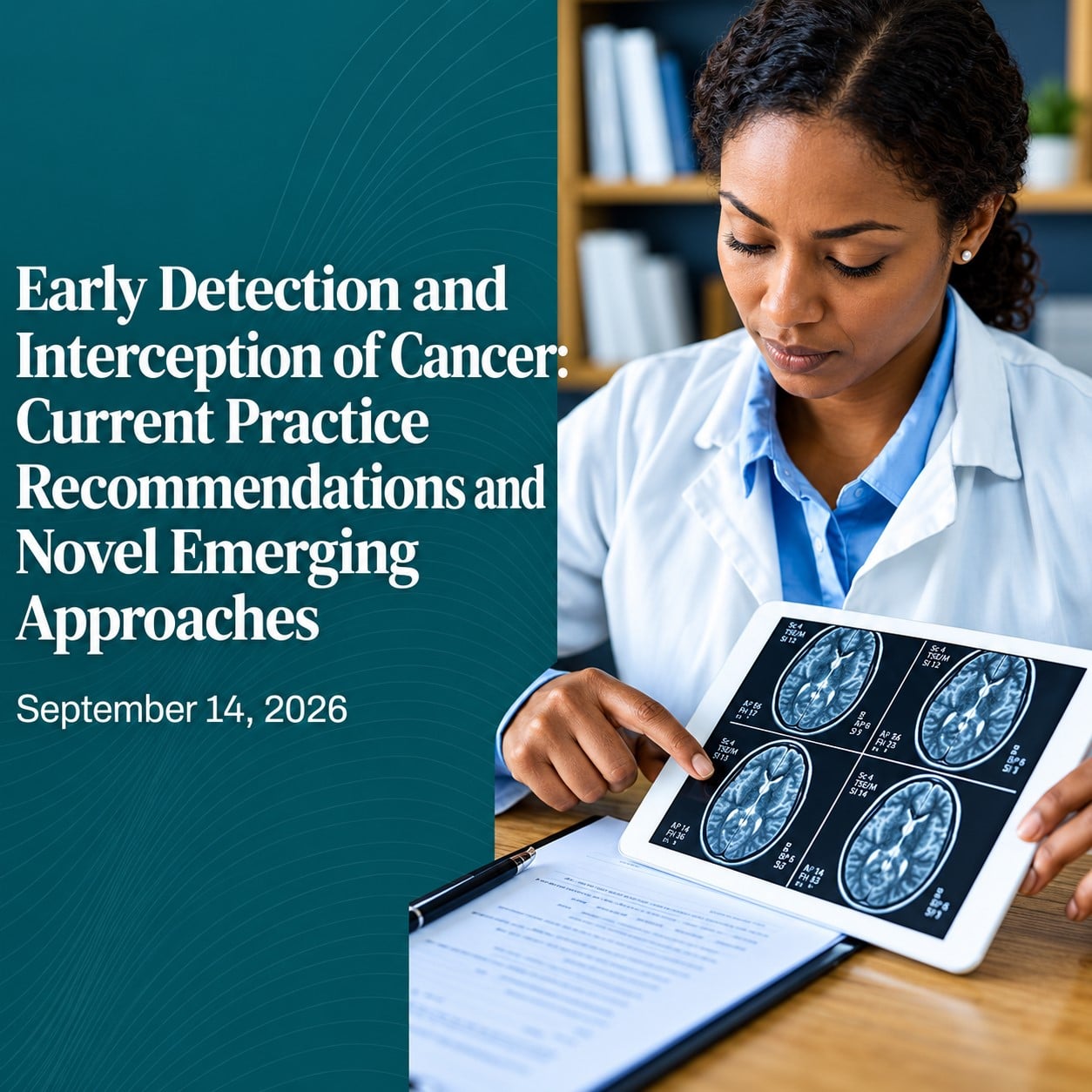
Harvard Early Detection and Interception of Cancer Current Practice Recommendations and Novel Emerging Approaches 2026
$50.00
A multidisciplinary review of cancer screening, inherited risk, precursor lesions, and emerging early-detection technologies. The Harvard/Dana-Farber 2026 program includes organ-specific sessions, genetic risk assessment, community screening, multi-cancer tests, and whole-body imaging. The complete supplied Topics list is retained, together with the original learning objectives and named faculty.
Delivery Information: This Product is shared via google drive download link. Please use your correct Gmail address at checkout.
Please note: there are no CME points or certificate associated with this course.
Samples for Courses Can be found here: Free Samples Here!
This Harvard course examines how clinicians can identify cancer risk, recognize precursor conditions, and select appropriate screening and referral pathways. The September 14, 2026 program, offered by Dana-Farber Cancer Institute, brings together primary care, genetics, oncology, and organ-specific perspectives. Sessions address hereditary predisposition, breast and gastrointestinal precursors, hematologic conditions, and screening across several cancer types. The later presentations consider community implementation, multi-cancer early detection tests, and the promises and limitations of whole-body imaging. Directed by Sapna Syngal and Elizabeth (Betsy) O’Donnell, the course is relevant to clinicians balancing established screening recommendations with emerging approaches to cancer interception.
Learning Objectives
After completing the original educational program, participants should be better able to:
- Identify and implement current cancer screening guidelines, with emphasis on early detection and intervention for individuals at increased cancer risk, and formulate appropriate management recommendations.
- Identify premalignant conditions requiring specialized care and establish appropriate referral pathways for patients needing advanced evaluation, surveillance, or intervention.
- Evaluate emerging cancer detection technologies and consider their potential clinical applications, benefits, limitations, and implications for early diagnosis.
Topics
- Welcome and Kick Off
- Advancing Early Detection and Interception from the Perspective of the Primary Care Physician
- Q&A: Perspective of the Primary Care Physician
- Genetics 101: Genetic Testing for Inherited Cancer Predisposition in Your Practice
- Management of Hereditary Cancer Predisposition in Your Practice
- The PREMM plus Model / An Easy Way to Identify At Risk Individuals in Your Practice
- Management of DCIS (Ductal Carcinoma in Situ) and Other Breast Cancer Precursors
- Screening and Early Detection of Gynecologic Malignancies
- Q&A: Genetics, Breast Precursors, and Gynecologic Malignancies
- Screening and Early Detection of Dermatologic Malignancies
- Unexplained Cytopenia – When to Consider Clonal Hematopoiesis and Myelodysplastic Syndrome (MDS)
- Intercepting Monoclonal Gammopathy of Undetermined Significance (MGUS) and Smoldering Myeloma
- Q&A: Cytopenia, MDS, MGUS, and Dermatologic Malignancies
- Screening and Early Detection of Prostate Cancer
- Approach to the Management of Gastrointestinal Precursor Cancer Lesions
- Screening and Early Detection of Lung Cancer
- Screening and Early Detection of Genitourinary Cancers
- Q&A: GI Precursor Lesions, Lung Cancer, and Genitourinary Cancers
- Implementation of Cervical Cancer Screening and Early Detection in the Community
- Multi-Cancer Early Detection Tests – Ready for Prime Time?
- Whole Body Imaging for Screening and Early Detection of Cancer – Promises and Pitfalls
- Panel Discussion: Looking to the Future of Early Detection and Interception
- Networking Reception
Faculty
- Sapna Syngal, MD, MPH
- Elizabeth (Betsy) O’Donnell, MD
- Elizabeth Housman, MD
- Karina Franca, LGC
- Huma Rana, MD, MPH
- Emily Gatof, MD
- Colleen Feltmate, MD
- Vinod Nambudiri, MD, MBA
- Lachelle Weeks, MD, PhD
- Irene Ghobrial, MD
- Michael Serzan, MD
- Nicolette J Rodriguez, MD, MPH
- Anuradha Ramaswamy, MD
- Bicky Thapa, MD, MS, FACP
- Kayoll Gyan, PhD, RN
- Michael Rosenthal, MD, PhD
Program scope: The supplied Topics list describes the original program. Breaks, workshops, discussions, and other agenda entries do not establish that every scheduled activity is included in the recordings.
File scope: This purchase covers the educational files offered by MedicalAmboss. Event attendance, publisher-platform access, accounts, memberships, apps, and publisher-hosted extras are not included.
Related products
Critical Care - Emergency medicine
40th ISICEM International Symposium on Intensive Care & Emergency Medicine 2021
Critical Care - Emergency medicine

Internal Medicine

Critical Care - Emergency medicine
Internal Medicine
Family medicine