
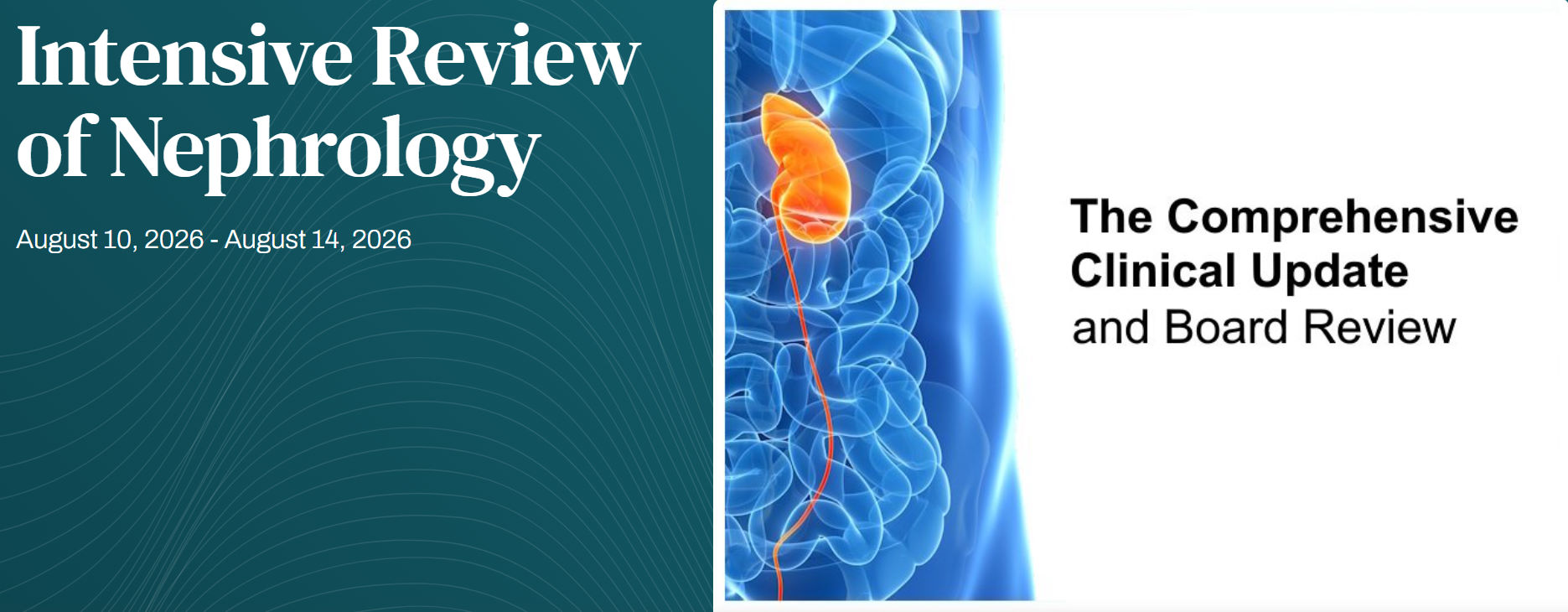
Harvard Intensive Review of Nephrology 2026
$130.00
Harvard Intensive Review of Nephrology 2026 covers CKD, AKI, dialysis, transplantation, glomerular disease, renal POCUS and board-relevant concepts.
Delivery Information: This Product is shared via google drive download link. Please use your correct Gmail address at checkout.
Please note: there are no CME points or certificate associated with this course.
Samples for Courses Can be found here: Free Samples Here!
MedicalAmboss File Scope: This listing summarizes the official educational program for reference. Provider registration, live participation, streaming access, CME or MOC credit, certificates, apps, accounts, and post-course access are not represented as included unless they are explicitly present in the listed store files. MedicalAmboss.
Harvard Intensive Review of Nephrology 2026
The Comprehensive Clinical Update & ABIM Nephrology Board Review
The Harvard Intensive Review of Nephrology 2026 is a comprehensive clinical update and board review designed for nephrologists, physicians, fellows, and other healthcare professionals seeking an intensive review of modern kidney medicine.
Developed and offered by Harvard Medical School, this advanced nephrology program combines 70+ interactive lectures, clinical case discussions, board-preparation sessions, faculty Q&A, and supplementary educational lectures covering the full spectrum of contemporary nephrology.
The original 2026 program was presented live online from August 10–14, 2026, using live streaming, electronic interaction, and remote-learning technologies.
The course serves two major educational goals:
Comprehensive Clinical Update
For clinicians who want to remain current across all major areas of nephrology.
ABIM Nephrology Board Preparation
For physicians preparing for initial certification or recertification in nephrology.
Course Details
Provider: Harvard Medical School
Course: Intensive Review of Nephrology
Year: 2026
Original Program Dates: August 10–14, 2026
Format: Live Online / Recorded Educational Sessions
Educational Content: 70+ lectures, case discussions, board-review sessions, faculty Q&A and supplementary presentations
Primary Specialty: Nephrology
Secondary Specialty: Internal Medicine
Board Review: Nephrology ABIM Certification & Recertification
Language: English
Who Should Participate?
The program is designed for medical professionals seeking a comprehensive update in contemporary nephrology.
Best suited for:
- Nephrologists
- Nephrology Fellows
- Physicians preparing for the ABIM Nephrology Board Examination
- Internal Medicine Physicians
- Primary Care Physicians
- Residents
- Nurse Practitioners
- Physician Assistants
- Clinical Academics
- Other healthcare professionals interested in kidney disease and renal medicine
Comprehensive Nephrology Education
The Harvard Intensive Review of Nephrology 2026 spans the major clinical and scientific domains of renal medicine.
Core areas include:
- Electrolytes and Acid-Base Disorders
- Glomerulonephritis
- Acute Kidney Injury
- Chronic Kidney Disease
- Genetic Kidney Disease
- Renal Pathology
- Vascular Disease
- Hypertension
- End-Stage Kidney Disease
- Hemodialysis
- Hemodiafiltration
- Peritoneal Dialysis
- Kidney Transplantation
- Onconephrology
- Cancer and the Kidney
- Pregnancy and Renal Disease
- Diabetic Kidney Disease
- Cardiorenal Syndrome
- Kidney Stones
- Pediatric Nephrology
- Geriatric Nephrology
- Point-of-Care Renal Ultrasound
- Conservative Kidney Management
- Artificial Intelligence in Nephrology
2026 Program Highlights
Genetic Testing in Kidney Disease
Review the rapidly expanding role of genetic testing in nephrology for:
- Improved diagnosis
- Disease classification
- Prognostic assessment
- Identification of hereditary kidney disease
- Therapy selection
- Integration of genetics into clinical practice
The program examines how genomic information is increasingly influencing diagnostic and therapeutic decision-making in kidney disease.
Point-of-Care Ultrasound in Nephrology
The 2026 program includes an introduction to Point-of-Care Ultrasound (POCUS) for nephrologists.
Topics include:
- Ultrasound fundamentals
- Image acquisition
- Image optimization
- Interpretation
- Bedside application
- Integration with physical examination
- Clinical renal ultrasound
This section is designed to improve understanding of how bedside ultrasound can complement traditional nephrologic assessment.
Dialysis Vascular Access
Review the physical examination and clinical assessment of dialysis access.
Topics include:
- Inspection
- Palpation
- Access function
- Recognition of complications
- Clinical assessment of fistulas and grafts
- When additional evaluation may be required
Hemodiafiltration vs Hemodialysis
The program reviews current evidence comparing:
High-Dose Hemodiafiltration
versus
High-Flux Hemodialysis
for patients with end-stage kidney disease.
Clinical considerations include:
- Dialysis adequacy
- Patient outcomes
- Treatment selection
- Emerging evidence
- Practical implementation
Chronic Kidney Disease
Review modern approaches to CKD including:
- CKD diagnosis
- Disease staging
- Risk stratification
- Monitoring progression
- Cardiovascular risk
- Albuminuria
- Kidney-protective treatment
- Contemporary pharmacotherapy
SGLT2 Inhibitors
A major component of contemporary nephrology is the expanding role of SGLT2 inhibitors.
The course reviews their use in:
- Diabetic kidney disease
- Non-diabetic chronic kidney disease
- Kidney protection
- Cardiovascular risk reduction
- Heart failure
- Contemporary CKD management
GLP-1 Receptor Agonists
Review the evolving role of GLP-1 receptor agonists in patients with metabolic and kidney disease.
Clinical applications include:
- Type 2 diabetes
- Obesity
- Cardiovascular risk
- Diabetic kidney disease
- Kidney outcomes
- Integration with other cardiorenal therapies
Finerenone
The program reviews the role of finerenone and nonsteroidal mineralocorticoid receptor antagonism in kidney disease.
Topics include:
- Diabetic kidney disease
- Albuminuria
- Kidney protection
- Cardiovascular outcomes
- Appropriate patient selection
- Combination with contemporary CKD therapies
Glomerulonephritis
The course provides extensive coverage of major glomerular diseases.
Topics include:
- IgA nephropathy
- Lupus nephritis
- Membranous nephropathy
- FSGS
- Rapidly progressive glomerulonephritis
- Immunologic kidney disease
- Renal pathology
- Recent clinical trials
- New therapeutic approaches
Novel Immunosuppressive Therapies
The 2026 program reviews emerging immunosuppressive agents and targeted therapies for glomerular diseases.
Important areas include:
- Contemporary immunosuppression
- Targeted immune therapies
- New therapeutic agents
- Patient selection
- Disease-specific treatment strategies
- Emerging clinical evidence
CAR-T Therapy in Nephrology
One of the most advanced topics in the 2026 program is the evolving potential role of:
Chimeric Antigen Receptor T-Cell Therapy (CAR-T)
in selected immune-mediated kidney diseases.
The course explores how advanced cellular therapies may influence future treatment of difficult or refractory autoimmune renal disorders.
Renal Pathology
Review contemporary renal pathology and clinicopathologic correlation.
Topics include:
- Glomerular pathology
- Immune-mediated kidney disease
- Renal biopsy interpretation
- Histopathologic patterns
- Contemporary diagnostic approaches
- Integration of pathology with clinical findings
Acute Kidney Injury
Review the diagnosis, pathophysiology, and treatment of AKI.
Coverage includes:
- Pathophysiology of acute kidney injury
- AKI syndromes
- Diagnostic assessment
- ICU nephrology
- Continuous renal replacement therapy
- Cancer-associated AKI
- Drug-associated kidney injury
- Immune checkpoint inhibitor-associated AKI
ICU Nephrology & CRRT
Review the management of critically ill patients with kidney dysfunction.
Topics include:
- Acute renal replacement therapy
- Continuous renal replacement therapy
- Fluid management
- Electrolytes
- Acid-base disturbances
- Hemodynamic considerations
- Critically ill kidney patients
Onconephrology: Cancer and the Kidney
The rapidly growing field of onconephrology is an important component of the course.
Topics include:
- Cancer-associated AKI
- Nephrotoxicity
- Paraprotein-associated kidney injury
- Immune checkpoint inhibitors
- Kidney complications of cancer therapy
- Kidney disease in oncology patients
- Transplantation considerations in patients receiving cancer therapies
Kidney Transplantation
The transplant curriculum provides comprehensive coverage of:
- Transplant immunology
- Donor evaluation
- Recipient evaluation
- Immunosuppression
- Early post-transplant management
- Late graft dysfunction
- Transplant infections
- Post-transplant medical complications
- Monitoring transplant recipients
- Board-review transplant cases
Xenotransplantation
The 2026 curriculum includes an introduction to xenotransplantation, one of the most rapidly evolving areas of transplantation medicine.
Topics include:
- Principles of xenotransplantation
- Potential application to kidney transplantation
- Immunological challenges
- Emerging clinical developments
- Organ availability
- Future directions in transplantation medicine
Hypertension & Kidney Disease
Review evidence-based management of hypertension in patients with kidney disease.
Topics include:
- Hypertension in CKD
- Blood pressure targets
- Intensive versus standard treatment strategies
- Resistant hypertension
- Primary aldosteronism
- Renovascular disease
- Cardiovascular risk reduction
Cardiorenal Syndrome
Explore the interaction between the cardiovascular and renal systems.
Topics include:
- Cardiorenal physiology
- Heart failure and kidney dysfunction
- Hemodynamic abnormalities
- Volume assessment
- Diuretic strategies
- Clinical management
Diabetic Kidney Disease
Review modern treatment of diabetic kidney disease including:
- Pathophysiology
- Risk assessment
- Albuminuria
- Disease progression
- SGLT2 inhibitors
- GLP-1 receptor agonists
- Finerenone
- Cardiovascular protection
- Kidney-protective strategies
Electrolyte & Acid-Base Disorders
A major board-review component of the program covers:
- Anion-gap metabolic acidosis
- Non-gap metabolic acidosis
- Metabolic alkalosis
- Hyponatremia
- Hypernatremia
- Hypokalemia
- Hyperkalemia
Dedicated question-and-answer sessions reinforce high-yield material relevant to clinical practice and the ABIM examination.
Genetic Kidney Disease
Review genetic and hereditary kidney disorders including:
- Genetic nephropathies
- Polycystic kidney disease
- APOL1-associated kidney disease
- Genetic diagnostic testing
- Clinical interpretation
- Integration of genetic testing into nephrology practice
Kidney Stones
Review modern metabolic evaluation and prevention of nephrolithiasis.
Topics include:
- Stone composition
- Metabolic evaluation
- Risk-factor assessment
- Dietary prevention
- Pharmacologic prevention
- Recurrent kidney stones
Pregnancy & Renal Disease
Review important nephrology considerations during pregnancy including:
- Chronic kidney disease
- Hypertension
- Maternal renal function
- Risk assessment
- Medication considerations
- Kidney disease during pregnancy
Pediatric Nephrology
The program provides focused education on important pediatric kidney conditions and diagnostic considerations relevant to nephrologists.
Geriatric Nephrology
Review kidney care in older patients with attention to:
- CKD
- Frailty
- Comorbid conditions
- Treatment goals
- Dialysis decision-making
- Patient-centered care
- Conservative kidney management
KidneyPal & Conservative Kidney Management
An important 2026 program highlight is the role of renal-dedicated palliative care through KidneyPal.
Topics include:
- Kidney supportive care
- Shared decision-making
- Goals-of-care discussions
- Symptom management
- Quality of life
- Conservative kidney management
- Palliative nephrology
AI in Nephrology
The 2026 program includes dedicated education on Artificial Intelligence in Nephrology.
Topics include:
- Clinical applications of AI
- Risk prediction
- Clinical decision support
- Data interpretation
- Potential workflow integration
- Emerging uses of AI in kidney medicine
Hemodialysis
Review contemporary hemodialysis practice including:
- Dialysis dosing
- Hemodiafiltration
- High-flux hemodialysis
- Dialysis adequacy
- Vascular access
- Complications
- Patient-centered dialysis care
Peritoneal Dialysis
Review:
- Patient selection
- Principles of peritoneal dialysis
- Clinical management
- Peritoneal dialysis complications
- Troubleshooting
- Long-term management
Mineral & Bone Disease
Review CKD-related mineral and bone disorders including:
- Calcium
- Phosphate
- Parathyroid hormone
- Bone metabolism
- CKD-mineral and bone disorder
- Treatment principles
ABIM Nephrology Board Review
A major objective of the Harvard Intensive Review of Nephrology 2026 is preparation for physicians planning to certify or recertify through the Nephrology ABIM Board Examination.
Board-focused components include:
- Daily board-review questions
- Dedicated board-review sessions
- High-yield clinical lectures
- Case-based discussions
- Electrolyte and acid-base Q&A
- Transplant board review
- Renal physiology for the boards
- Evidence-based clinical updates
- Sessions designed to support efficient study
- Comprehensive syllabus and home-study material
Learning Objectives
Upon completion of the program, learners should be better prepared to:
- Apply current evidence-based nephrology practices to patient care.
- Select contemporary diagnostic strategies for common and complex kidney disorders.
- Integrate new therapies into treatment plans when clinically appropriate.
- Manage acute and chronic kidney disease.
- Diagnose and treat electrolyte and acid-base abnormalities.
- Apply contemporary approaches to glomerular diseases.
- Integrate genetic testing into selected renal evaluations.
- Manage hypertension in patients with kidney disease.
- Evaluate and manage patients with end-stage kidney disease.
- Apply evidence-based principles to hemodialysis and peritoneal dialysis.
- Review kidney transplantation and transplant immunosuppression.
- Understand emerging developments in xenotransplantation.
- Apply contemporary treatments to diabetic and non-diabetic kidney disease.
- Understand expanding roles for SGLT2 inhibitors, GLP-1 receptor agonists, and finerenone.
- Review emerging immunologic treatments for glomerulonephritis.
- Understand the evolving role of CAR-T therapy in nephrology.
- Apply point-of-care ultrasound principles relevant to nephrology.
- Recognize important onconephrology complications.
- Incorporate conservative kidney management and supportive care principles.
- Understand emerging clinical applications of artificial intelligence in nephrology.
- Strengthen preparation for the ABIM Nephrology certification or recertification examination.
Why This Course Is Valuable
The Harvard Intensive Review of Nephrology 2026 combines comprehensive clinical nephrology education with dedicated board-examination preparation.
Its curriculum progresses from foundational renal science to highly advanced areas of modern nephrology:
Renal Physiology → Electrolytes → Glomerular Disease → AKI → CKD → Dialysis → Transplantation → Onconephrology → Genetics → POCUS → CAR-T → Xenotransplantation → AI
The 2026 edition is particularly notable for its coverage of rapidly evolving topics including:
SGLT2 inhibitors, GLP-1 receptor agonists, finerenone, genetic testing, CAR-T therapy, xenotransplantation, renal POCUS, KidneyPal, and artificial intelligence.
This makes the course particularly valuable both for nephrologists seeking an intensive clinical update and physicians preparing for ABIM nephrology certification or recertification.
4. Short Description
The Harvard Intensive Review of Nephrology 2026 is a comprehensive clinical update and ABIM Nephrology Board Review featuring 70+ educational sessions covering CKD, AKI, glomerulonephritis, electrolyte disorders, dialysis, transplantation, hypertension, onconephrology, genetic kidney disease, renal POCUS, SGLT2 inhibitors, GLP-1 therapies, finerenone, CAR-T, xenotransplantation, KidneyPal and AI in nephrology.
+ Topics:
Day 1: Monday, August 10, 2026
-
8:45-8:50 am: Welcome Remarks/Announcements – Course Directors
-
8:50-9:35 am: Renal Physiology for the Boards – Dr. Melanie Hoenig
-
9:35-10:05 am: Basic Concepts of Immunology in Autoimmune Kidney Disease – Dr. Ramon Bonegio
-
10:05-10:10 am: Faculty Q&A – Drs. Melanie Hoenig and Ramon Bonegio
-
10:10-10:20 am: Break
-
10:20-11:05 am: Renal Pathology in 2026: Part 1 – Dr. Helmut Rennke
-
11:05-11:50 am: Renal Pathology in 2026: Part 2 – Dr. Astrid Weins
-
11:50 am-12:20 pm: Current Approaches to Urine Sediment Analysis – Dr. Martina McGrath
-
12:20-12:25 pm: Faculty Q&A – Drs. Astrid Weins, Martina McGrath, and Helmut Rennke
-
12:25-1:55 pm: Break
-
1:55-2:40 pm: IgA Nephropathy – Dr. Gerald Appel
-
2:40-3:10 pm: Metabolic Management of Kidney Stones – Dr. Gary Curhan
-
3:10-3:55 pm: AI in Nephrology: Clinical Applications – Dr. Navdeep Tangri
-
3:55-4:00 pm: Faculty Q&A – Drs. Gerald Appel, Gary Curhan, and Navdeep Tangri
-
4:00-4:15 pm: Break
-
4:15-5:00 pm: Update on Lupus Nephritis – Dr. Gerald Appel
-
5:00-5:30 pm: Membranous Nephropathy – Dr. Laurence Beck
-
5:30-6:15 pm: Anemia Management: Update and Best Practices – Dr. Brona Moloney
-
6:15-6:25 pm: Faculty Q&A – Drs. Gerald Appel and Laurence Beck
-
6:25 pm: Adjourn Day 1 Live Program
Self-Paced Study (Pre-recorded sessions):
-
Glomerulonephritis: Questions & Answers Session – Dr. Gerald Appel
-
Must-Know Clinical Images in Nephrology – Dr. Annie Liu
-
Must-Know Board Zebras – Dr. Emily Robinson
-
Nephrology Board Review Practice 1 – Dr. Finnian Mc Causland
-
Nephrology Board Review Practice 2 – Dr. Gearoid McMahon
Day 2: Tuesday, August 11, 2026
-
8:45-8:50 am: Day 2 Announcements – Course Directors
-
8:50-9:35 am: Acid-Base Disorders I: Anion Gap Metabolic Acidosis – Dr. Alan Yu
-
9:35-10:35 am: Acid-Base Disorders II: Non-Gap Acidosis and Metabolic Alkalosis – Dr. Alan Yu
-
10:35-10:45 am: Break
-
10:45-11:30 am: Hyponatremia and Hypernatremia – Dr. David Mount
-
11:30 am-12:20 pm: Hypokalemia and Hyperkalemia – Dr. David Mount
-
12:20-1:50 pm: Break
-
1:50-2:35 pm: Important New Trials in GN – Dr. David Mount
-
2:35-3:20 pm: Genetics and Kidney Disease – Dr. Friedhelm Hildebrandt
-
3:20-4:05 pm: Update on Polycystic Kidney Disease – Dr. Fouad Chebib
-
4:05-4:10 pm: Faculty Q&A – Drs. David Mount, Friedhelm Hildebrandt, and Fouad Chebib
-
4:10-4:20 pm: Break
-
4:20-5:05 pm: Pediatric Nephrology – Dr. Alexis Gomez
-
5:05-5:50 pm: Genetics: How to Integrate into Practice – Dr. Ana Onuchic-Whitford
-
5:50-6:20 pm: Rapidly Progressive Glomerulonephritis – Dr. John Niles
-
6:20-6:35 pm: Faculty Q&A – Drs. Alexis Gomez, Ana Onuchic-Whitford, and John Niles
-
6:35 pm: Adjourn Day 2 Live Program
Self-Paced Study (Pre-recorded sessions):
-
Electrolyte and Acid Base Disorders: Questions & Answers Session – Part 1 – Dr. Alan Yu
-
Electrolyte and Acid Base Disorders: Questions & Answers Session – Part 2 – Dr. Alan Yu
-
Chronic Kidney Disease in the Community: Meeting Them Where They Are – Dr. Li-Li Hsiao
-
COVID-19 Vaccine in Immunocompromised Patients – Dr. Ann Woolley
-
Update on Renovascular Disease – Dr. Joseph Garasic
Day 3: Wednesday, August 12, 2026
-
8:45-8:50 am: Day 3 Announcements – Course Directors
-
8:50-9:35 am: Why Do We Reject a Transplant? – Dr. Jamil Azzi
-
9:35-10:20 am: Transplant Immunosuppression for the Boards – Dr. Kaitlyn Lei
-
10:20-10:25 am: Faculty Q&A – Drs. Jamil Azzi and Kaitlyn Lei
-
10:25-10:35 am: Break
-
10:35-11:20 am: Immunological Assessment Pre- and Post-Transplant – Drs. Melissa Yeung and Indira Guleria
-
11:20 am-12:05 pm: Early Post-Transplant Management – Dr. Anil Chandraker
-
12:05-12:10 pm: Faculty Q&A – Drs. Melissa Yeung and Indira Guleria
-
12:10-1:40 pm: Break
-
1:40-2:10 pm: Donor Evaluation – Dr. Martina McGrath
-
2:10-2:40 pm: Late Loss of the Kidney Transplant – Dr. Rania El Fekih
-
2:40-3:10 pm: Infections in Transplant Recipients – Dr. Barbra Blair
-
3:10-3:40 pm: Monitoring Kidney Transplant Patients: Beyond Creatinine – Dr. Jamil Azzi
-
3:40-4:10 pm: Pre-Transplant Evaluation of Recipients – Dr. Rania El Fekih
-
4:10-4:15 pm: Faculty Q&A – Drs. Martina McGrath, Jamil Azzi, Rania El Fekih, and Barbra Blair
-
4:15-4:25 pm: Break
-
4:25-4:55 pm: Thrombotic Microangiopathies – Dr. Jean Francis
-
4:55-5:25 pm: Late Post-Transplant Medical Complications – Dr. Leonardo Riella
-
5:25-5:55 pm: KEYNOTE: Xenotransplantation – Dr. Leonardo Riella
-
5:55-6:25 pm: Geriatric Nephrology – Dr. Ernest Mandel
-
6:25-6:35 pm: Faculty Q&A – Drs. Jean Francis, Ernest Mandel, and Leonardo Riella
-
6:35 pm: Adjourn Day 3 Live Program
Self-Paced Study (Pre-recorded sessions):
-
Pre-Transplant Surgical Evaluation of Recipients – Dr. Sayeed Malek
-
Immunologic Basis of Kidney Disease – Dr. Vivek Kasinath
-
Use of Checkpoint Inhibitors in Kidney Transplant Recipients – Dr. Naoka Murakami
-
Transplant Cases: Board Review – Drs. Melissa Yeung and Edgar Milford
-
Transplant Board Review – Dr. Anil Chandraker
-
Poisonings and Intoxications: What a Nephrologist Needs to Know – Dr. Charlotte Goldfine
Day 4: Thursday, August 13, 2026
-
8:45-8:50 am: Day 4 Announcements – Course Directors
-
8:50-9:35 am: Cardiorenal Syndrome – Dr. Finnian Mc Causland
-
9:35-10:20 am: Management of Hypertension in CKD-Intensive or Standard Regimens – Dr. Richard Glassock
-
10:20-10:25 am: Faculty Q&A – Drs. Richard Glassock and Finnian Mc Causland
-
10:25-10:35 pm (am): Break (Lưu ý: Thời gian này có thể là am thay vì pm)
-
10:35-11:20 am: Primary Aldosteronism – Dr. Anand Vaidya
-
11:20-11:50 am: Therapy of FSGS Lesions in 2026 – Dr. Richard Glassock
-
11:50 am-12:20 pm: Liver and the Kidney – Dr. Andrew Allegretti
-
12:20-12:25 pm: Faculty Q&A – Drs. Anand Vaidya, Andrew Allegretti, and Richard Glassock
-
12:25-1:55 pm: Break
-
1:55-2:25 pm: Pathophysiology of Acute Kidney Injury – Dr. Joseph Bonventre
-
2:25-2:55 pm: Acute Kidney Injury Syndromes – Dr. Alice Sheridan
-
2:55-3:25 pm: ICU Nephrology and Continuous Renal Replacement Therapies – Dr. Andrew Allegretti
-
3:25-3:30 pm: Faculty Q&A – Drs. Joseph Bonventre, Alice Sheridan, and Andrew Allegretti
-
3:30-3:40 pm: Break
-
3:40-4:25 pm: Cancer and Acute Kidney Injury – Dr. Abdullah Jalal
-
4:25-4:55 pm: Paraprotein-Induced Kidney Injury – Dr. Raad Chowdhury
-
4:55-5:25 pm: KEYNOTE: Kidney PAL Program – Dr. Samantha Gelfand
-
5:25-5:55 pm: Pathophysiology and Treatment of Diabetic Kidney Disease – Dr. Gearoid McMahon
-
5:55-6:40 pm: APOL1 and Kidney Disease – Dr. Opeyemi Olabisi
-
6:40-6:50 pm: Faculty Q&A – Drs. Samantha Gelfand, Opeyemi Olabisi, Raad Chowdhury, and Gearoid McMahon
-
6:50 pm: Adjourn Day 4 Live Program
Self-Paced Study (Pre-recorded sessions):
-
Interstitial Nephritis – Dr. Julie Paik
-
Ethics – Dr. Kathleen McFadden
-
Pregnancy and Renal Disease – Dr. Jessica Tangren
Day 5: Friday, August 14, 2026
-
8:45-8:50 am: Day 5 Announcements – Course Directors
-
8:50-9:20 am: Patient Perspective: Dialysis Dosing – Dr. John Kevin Tucker
-
9:20-9:50 am: Hemodiafiltration – Dr. John Kevin Tucker
-
9:50-10:35 am: Mineral and Bone Disease – Dr. David Bushinsky
-
10:35-10:40 am: Faculty Q&A – Drs. David Bushinsky and John Kevin Tucker
-
10:40-10:50 am: Break
-
10:50-11:35 am: Dialysis: A Case-Based Clinical Review and Update – Dr. John Kevin Tucker
-
11:35 am-12:20 pm: Pearls in Mineral and Bone Disease – Dr. David Bushinsky
-
12:20-12:50 pm: Chronic Kidney Disease Epidemiology: A 2026 Update – Dr. Gearoid McMahon
-
12:50-12:55 pm: Faculty Q&A – Drs. Gearoid McMahon, David Bushinsky and John Kevin Tucker
-
12:55-2:25 pm: Break
-
2:25-3:10 pm: Peritoneal Dialysis – Dr. Joanne Bargman
-
3:10-3:55 pm: Peritoneal Dialysis Complications – Dr. Joanne Bargman
-
3:55-4:25 pm: Acute Kidney Injury Related to Immune Checkpoint Inhibitors – Dr. Shruti Gupta
-
4:25-4:30 pm: Faculty Q&A – Drs. Joanne Bargman and Shruti Gupta
-
4:30-4:40 pm: Break
-
4:40-5:10 pm: Mesoamerican Nephropathy – Dr. David Friedman
-
5:10-5:40 pm: Ultrasound for the Clinical Nephrologist – Dr. Adina Voiculescu
-
5:40-6:25 pm: Dialysis Vascular Access: Assessment and Complications – Dr. Dirk Hentschel
-
6:25-6:35 pm: Faculty Q&A – Drs. Adina Voiculescu, Dirk Hentschel, and David Friedman
-
6:35-6:40 pm: Closing Remarks
Related products

Anesthesiology & pain medicine

Critical Care - Emergency medicine

Critical Care - Emergency medicine
ASN Critical Care Nephrology – 2022 Update (On-Demand and Livestream)
Internal Medicine

Critical Care - Emergency medicine
Cardiology
Internal Medicine
Internal Medicine