
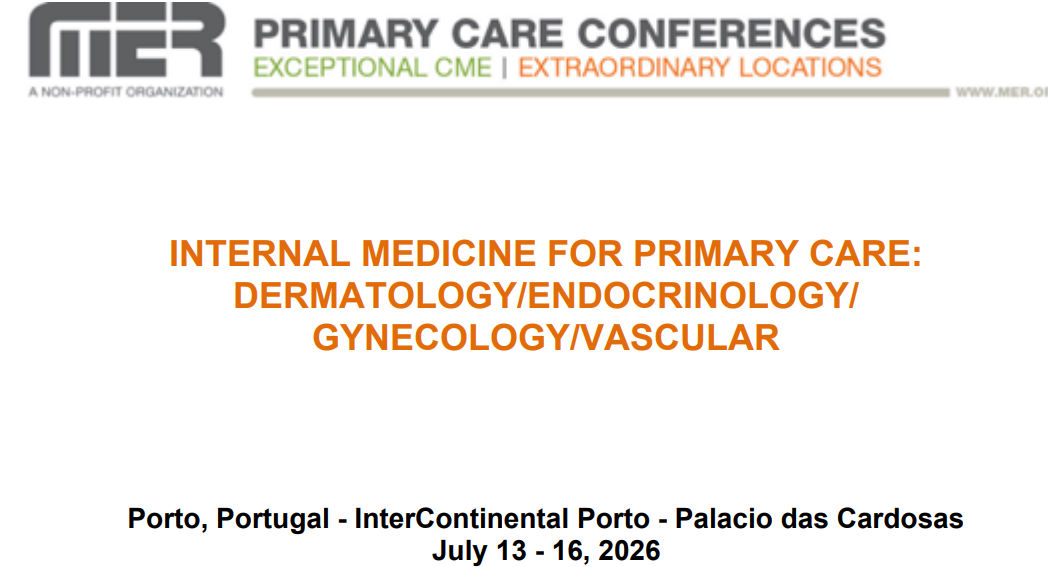
MER Primary Care Conferences Internal Medicine for Primary Care Derm Endo Gyn Vasc Jul 12-16, 2026


$140.00
A 2026 primary care update integrating dermatology, endocrinology, women’s health and vascular medicine for practical outpatient care.
Delivery Information: This Product is shared via google drive download link.
Please note: there are no CME points or certificate associated with this course.
For assistance, contact us on Telegram: https://t.me/medicalamboss1
EXPRESS DISCOVER PayPal
MedicalAmboss File Scope: This listing provides only the downloadable files described on this page. Provider registration, live or streaming access, platform features, CME or other credit, certificates, and related subscription benefits are not included unless explicitly stated in the product files section. MedicalAmboss.
MER Internal Medicine for Primary Care: Derm/Endo/Gyn/Vasc 2026
Dermatology • Endocrinology • Gynecology • Vascular Medicine
July 13–16, 2026 | Porto, Portugal
Build practical knowledge across four important areas of adult medicine with MER Internal Medicine for Primary Care: Derm/Endo/Gyn/Vasc 2026, organized by Medical Education Resources (MER).
The original conference was held July 13–16, 2026, at the InterContinental Porto – Palacio das Cardosas in Porto, Portugal.
This multidisciplinary primary care program delivers clinically relevant updates across:
- Dermatology
- Endocrinology
- Gynecology / Women’s Health
- Vascular Medicine
- Internal Medicine
- Primary Care
Major topics include:
- Atopic, contact, irritant, nummular, seborrheic and exfoliative dermatitis
- Papulosquamous diseases
- Psoriasis
- Lichen planus
- Pityriasis rosea
- Cutaneous manifestations of systemic disease
- Actinic keratosis
- Bowen’s disease
- Squamous cell carcinoma
- Basal cell carcinoma
- Melanoma
- Abnormal uterine bleeding
- Abnormal Pap smears
- High-risk HPV
- Cervical cancer screening
- HPV vaccination
- Menopause
- Hormone replacement therapy
- Breast cancer screening
- BRCA-related cancer risk assessment
- Hypothyroidism
- Hyperthyroidism
- Thyroid nodules
- Thyroid cancer
- Osteoporosis
- DEXA
- FRAX
- Bisphosphonate therapy
- Pituitary disease
- Peripheral vascular disease
- Atherosclerosis
- Lipid-lowering therapy
- Antiplatelet therapy
- Embolic stroke
- Aortic and peripheral aneurysms
- Venous thrombosis
Course Details
- Course: Internal Medicine for Primary Care: Derm/Endo/Gyn/Vasc
- Provider: Medical Education Resources – MER
- Year: 2026
- Official Dates: July 13–16, 2026
- Duration: 4 Days
- Venue: InterContinental Porto – Palacio das Cardosas
- Location: Porto, Portugal
- Primary Focus: Internal Medicine / Primary Care
- Specialties: Dermatology / Endocrinology / Gynecology / Vascular Medicine
- Original MER Activity: 16 Credit Hours
- MedicalAmboss Delivery: Google Drive
- CME Points with MedicalAmboss: Not Included
- Certificate with MedicalAmboss: Not Included
- Language: English
Course Overview
Primary care clinicians frequently encounter patients whose problems cross traditional specialty boundaries.
A single clinic day may include patients with:
- A new rash
- Psoriasis
- A suspicious pigmented lesion
- Thyroid dysfunction
- A thyroid nodule
- Osteoporosis
- Abnormal uterine bleeding
- Abnormal cervical screening
- Menopausal symptoms
- Peripheral arterial disease
- Suspected thrombosis
- Stroke risk
The MER Derm/Endo/Gyn/Vasc program brings these areas together in a practical primary care format.
A useful clinical pathway is:
Recognize the Presentation → Build the Differential → Select Appropriate Testing → Treat → Counsel → Follow Up / Refer
Learning Objectives
Upon completion of the original educational activity, participants should be better able to:
- Differentiate common forms of dermatitis.
- Distinguish atopic, irritant contact, allergic contact and nummular dermatitis.
- Recognize major papulosquamous disorders.
- Differentiate psoriasis, lichen planus, pityriasis rosea and related scaly eruptions.
- Identify cutaneous findings that may reflect systemic disease.
- Recognize premalignant and malignant skin lesions.
- Review office-based biopsy principles.
- Evaluate abnormal uterine bleeding.
- Review current approaches to abnormal Pap results and high-risk HPV.
- Apply cervical cancer screening recommendations.
- Counsel patients about HPV testing and vaccination.
- Review menopausal symptoms and available treatment options.
- Discuss benefits and risks of hormone therapy.
- Review current breast cancer screening recommendations.
- Understand BRCA-related cancer risk assessment and genetic counseling considerations.
- Recognize abnormal thyroid function.
- Review hypothyroidism and hyperthyroidism.
- Evaluate thyroid nodules using ultrasound and cytologic principles.
- Review thyroid cancer assessment.
- Interpret DEXA and FRAX in osteoporosis evaluation.
- Review benefits and risks of bisphosphonate therapy.
- Diagnose and manage common pituitary disorders.
- Recognize the spectrum of peripheral vascular disease.
- Review atherosclerosis and medical vascular therapy.
- Understand the presentation and management of embolic stroke.
- Review medical, surgical and interventional stroke-treatment concepts.
- Evaluate aortic and peripheral aneurysms.
- Review diagnosis and treatment of venous thrombosis.
DERMATOLOGY
Dermatitis
The dermatology curriculum reviews common inflammatory skin disorders including:
- Atopic dermatitis
- Allergic contact dermatitis
- Irritant contact dermatitis
- Nummular dermatitis
- Seborrheic dermatitis
- Exfoliative dermatitis
The course also addresses common manifestations such as:
- Blistering
- Oozing
- Crusting
- Flaking
Differentiating Common Dermatitis Patterns
A practical dermatologic approach considers:
Morphology + Distribution + Exposure History + Symptoms + Chronicity
rather than relying on appearance alone.
Atopic Dermatitis
Relevant clinical features can include:
- Pruritus
- Chronic or recurrent inflammation
- Characteristic distribution
- Associated atopic disease
- Skin-barrier dysfunction
Treatment should be individualized according to severity and clinical pattern.
Contact Dermatitis
Contact dermatitis may be:
Irritant Contact Dermatitis
Caused by direct injury to the skin barrier.
Allergic Contact Dermatitis
Produced by delayed hypersensitivity to a specific allergen.
A detailed exposure history is therefore particularly valuable.
Papulosquamous Diseases
The course provides a focused review of red, raised and scaly dermatologic conditions.
Major disorders include:
- Psoriasis
- Lichen planus
- Pityriasis rosea
- Lupus erythematosus-related eruptions
Psoriasis
Psoriasis is an important chronic inflammatory disorder that may involve:
- Skin
- Nails
- Joints
Primary care clinicians should recognize characteristic morphology and understand when systemic disease or specialist referral should be considered.
Lichen Planus
Lichen planus can involve:
- Skin
- Mucous membranes
- Nails
and may enter the differential of several papulosquamous eruptions.
Pityriasis Rosea
Recognition of classic morphology and distribution can help distinguish pityriasis rosea from other generalized scaly eruptions.
Skin Manifestations of Systemic Disease
Skin findings can provide important clues to disorders involving other organ systems.
The curriculum reviews cutaneous findings associated with:
- Rheumatologic disease
- Endocrine disease
- Gastrointestinal disease
- Psychological / systemic conditions
The skin can therefore function as a visible marker of internal disease.
Premalignant & Malignant Skin Tumors
The program reviews recognition of:
- Actinic keratosis
- Bowen’s disease
- Squamous cell carcinoma
- Basal cell carcinoma
- Melanoma
- Other selected skin tumors
Actinic Keratosis
Actinic keratosis is associated with chronic ultraviolet exposure and is important because of its relationship to squamous malignancy.
Bowen’s Disease
Bowen’s disease represents squamous cell carcinoma in situ and requires appropriate recognition and treatment.
Basal Cell Carcinoma
Primary care clinicians should be able to identify lesions suspicious for basal cell carcinoma and arrange appropriate biopsy or referral.
Squamous Cell Carcinoma
Risk assessment can depend on:
- Site
- Size
- Clinical appearance
- Patient characteristics
- Immune status
- Histopathologic findings
Melanoma
Early melanoma detection remains critical.
Suspicious changing or atypical pigmented lesions require appropriate evaluation rather than empiric treatment.
Skin Biopsy
The curriculum reviews procedures including:
- Punch biopsy
- Excisional biopsy
with emphasis on matching the procedure to the suspected diagnosis.
Skin Cancer Risk Reduction
Primary care clinicians can contribute through:
- Sun-protection counseling
- High-risk patient recognition
- Evaluation of changing lesions
- Timely referral
GYNECOLOGY / WOMEN’S HEALTH
Abnormal Uterine Bleeding
The course reviews:
- Normal menstrual physiology
- Abnormal menstrual patterns
- Ovulatory bleeding
- Anovulatory bleeding
- Other menstrual disturbances
- Diagnostic evaluation
- Treatment options
AUB Clinical Approach
A useful framework is:
Age → Pregnancy Status → Bleeding Pattern → Medication History → Structural vs. Nonstructural Causes → Appropriate Testing
Treatment should be directed toward the underlying cause whenever possible.
Abnormal Pap Smears & High-Risk HPV
The curriculum reviews management of cervical cytologic abnormalities including:
- ASC-US
- LSIL
- HSIL
- Atypical glandular cells
within the context of contemporary cervical screening and HPV-based management.
HPV Testing
The course discusses appropriate incorporation of HPV testing into clinical practice.
The clinical objective is to identify patients at increased risk for cervical precancer while avoiding unnecessary intervention in low-risk patients.
HPV Vaccination
The program also reviews:
- HPV vaccine use
- Missed-dose considerations
- Administration
- Storage considerations
within a practical primary care setting.
Cervical Cancer Screening
Screening decisions should account for:
- Age
- Previous screening results
- HPV status
- Prior cervical disease
- Guideline recommendations
Menopause Transition
The curriculum reviews common symptoms such as:
- Hot flashes
- Night sweats
- Genitourinary / vaginal atrophy
as well as longer-term health considerations.
Menopause & Health Risks
Clinical discussions include:
- Osteoporosis
- Breast cancer
- Cardiovascular disease
- Colon cancer
- Quality of life
Hormone Replacement Therapy
The course reviews:
- Hormone therapy
- Estrogen-based approaches
- Alternatives to hormone therapy
- SERMs
- Individualized risk-benefit counseling
Individualizing Menopausal Treatment
Treatment should consider:
- Age
- Time since menopause
- Symptom severity
- VTE risk
- Breast cancer history
- Cardiovascular disease
- Bone health
- Patient preferences
Breast Cancer Screening
The program compares recommendations from major organizations including:
- USPSTF
- ACOG
- American Cancer Society
- NCCN
with attention to:
- Age at initiation
- Screening interval
- Benefits
- Potential harms
BRCA-Related Cancer Risk Assessment
The curriculum also addresses:
- Family history
- Personal history
- Risk-assessment tools
- Genetic counseling
- Genetic testing
for patients potentially at increased risk of hereditary breast and ovarian cancer.
ENDOCRINOLOGY
Disorders of Thyroid Function
The endocrine curriculum reviews:
- Hypothyroidism
- Hyperthyroidism
- Prevalence
- Diagnosis
- Treatment
Hypothyroidism
Clinical evaluation may incorporate:
- Symptoms
- TSH
- Thyroid hormone testing
- Medication history
- Underlying thyroid disease
Hyperthyroidism
Potential presentations can include:
- Palpitations
- Weight loss
- Tremor
- Heat intolerance
- Anxiety
- Atrial arrhythmias
Accurate diagnosis is important because causes and treatment strategies differ.
Thyroid Nodules & Cancer
The course reviews:
- Nodule evaluation
- Ultrasound
- Cytology
- Risk assessment
- Thyroid malignancy
Thyroid Ultrasound
Ultrasound can provide information about:
- Composition
- Echogenicity
- Margins
- Shape
- Calcifications
- Size
- Lymph nodes
These features help guide decisions about further evaluation.
Thyroid Cytology
Fine-needle aspiration and cytologic interpretation can play an important role when a thyroid nodule meets criteria for sampling.
The goal is to determine:
Which Nodules Need Further Evaluation and Which Can Be Monitored?
Osteoporosis
The course includes an evidence-based review of:
- Epidemiology
- Pathophysiology
- DEXA
- FRAX
- Fracture risk
- Treatment
DEXA
Bone mineral density should be interpreted within the patient’s broader clinical context.
Relevant factors include:
- Age
- Previous fracture
- Family history
- Medication exposure
- Other osteoporosis risk factors
FRAX
FRAX helps estimate fracture probability using clinical risk factors.
The central question should not be only:
What Is the T-score?
but:
What Is This Patient’s Overall Fracture Risk?
Bisphosphonate Therapy
The course reviews both the benefits and risks of bisphosphonate treatment.
Treatment decisions may consider:
- Fracture risk
- Renal function
- Treatment duration
- Adherence
- Adverse effects
- Need for reassessment
Pituitary Disease
The endocrine curriculum also includes:
Evaluation and Management of Pituitary Disease
with emphasis on diagnosis and treatment of common pituitary disorders.
Pituitary Evaluation
Assessment can involve:
- Clinical symptoms
- Hormonal testing
- Imaging
- Evaluation of mass effect
- Referral when appropriate
Pituitary disease can affect multiple endocrine axes, so systematic assessment is important.
VASCULAR MEDICINE
Peripheral Vascular Disease & Medical Therapy
The program reviews the spectrum of disorders grouped under peripheral vascular disease.
Important topics include:
- Atherosclerosis
- Peripheral arterial disease
- Medical risk reduction
- Lipid-lowering agents
- Antiplatelet therapy
Peripheral Arterial Disease
Clinical manifestations can include:
- Claudication
- Reduced pulses
- Ischemic symptoms
- Nonhealing wounds
- Critical limb ischemia in advanced disease
Primary care plays an important role in both diagnosis and systemic cardiovascular risk reduction.
Atherosclerosis
Peripheral vascular disease should not be considered only a localized limb disorder.
Atherosclerosis may indicate broader cardiovascular risk involving:
- Coronary arteries
- Cerebrovascular circulation
- Peripheral arteries
Medical Therapy for PVD
Treatment can involve:
- Smoking cessation
- Exercise
- Lipid management
- Blood pressure management
- Diabetes management
- Antiplatelet therapy when indicated
Stroke: From Initial Presentation to Treatment
The course reviews embolic stroke from:
Recognition → Diagnosis → Medical Treatment → Surgical / Interventional Therapy
Stroke Recognition
Rapid recognition matters because treatment options can be time-sensitive.
Symptoms can include:
- Weakness
- Facial asymmetry
- Speech disturbance
- Visual symptoms
- Coordination problems
- Other focal neurologic deficits
Stroke Imaging & Intervention
Modern stroke management can require coordination among:
- Emergency medicine
- Neurology
- Radiology
- Neurointerventional teams
- Vascular specialists
Aortic & Peripheral Aneurysms
The vascular curriculum provides a primary-care-focused review of:
- Diagnosis
- Surveillance
- Medical management
- Therapeutic options
Aneurysm Management
Treatment planning depends on factors such as:
- Location
- Size
- Growth
- Symptoms
- Patient risk
- Anatomy
Not every aneurysm requires immediate procedural treatment.
Venous Thrombosis
The program concludes its vascular content with evaluation and treatment of venous thrombotic disorders.
Deep Vein Thrombosis
Clinical assessment may consider:
- Symptoms
- Risk factors
- Pretest probability
- Imaging
- Anticoagulation decisions
Venous Thromboembolism
Venous thrombosis can include conditions such as:
- Deep vein thrombosis
- Other venous thrombotic disorders
- Associated embolic complications
Treatment should be individualized according to diagnosis and clinical risk.
Cross-Specialty Connections
One of the strengths of this MER program is the overlap among its four major specialties.
Dermatology + Endocrinology
Endocrine disorders may produce cutaneous manifestations that provide clues to internal disease.
Endocrinology + Gynecology
Bone health, menopause and hormonal disorders overlap substantially through:
- Osteoporosis
- Hormone therapy
- Endocrine evaluation
Gynecology + Vascular Medicine
Women’s health decisions can require attention to:
- Venous thrombosis
- Cardiovascular risk
- Hormone therapy
- Contraceptive or menopausal treatment decisions
Endocrinology + Vascular Medicine
Thyroid disease, metabolic risk and vascular disease can coexist in adult primary care patients.
Dermatology + Systemic Disease
Skin manifestations can sometimes provide early evidence of:
- Autoimmune disease
- Endocrine disease
- Gastrointestinal disease
- Other systemic disorders
Major Dermatology Topics
- Atopic Dermatitis
- Contact Dermatitis
- Irritant Dermatitis
- Nummular Dermatitis
- Seborrheic Dermatitis
- Exfoliative Dermatitis
- Psoriasis
- Lichen Planus
- Pityriasis Rosea
- Lupus Skin Findings
- Systemic Disease Skin Manifestations
- Actinic Keratosis
- Bowen’s Disease
- Squamous Cell Carcinoma
- Basal Cell Carcinoma
- Melanoma
- Punch Biopsy
- Excisional Biopsy
Major Gynecology Topics
- Abnormal Uterine Bleeding
- Ovulatory Bleeding
- Anovulatory Bleeding
- Abnormal Pap Smears
- HPV
- High-Risk HPV
- Cervical Cancer Screening
- HPV Vaccination
- Menopause
- Hormone Replacement Therapy
- SERMs
- Breast Cancer Screening
- BRCA Risk Assessment
- Genetic Counseling
Major Endocrinology Topics
- Hypothyroidism
- Hyperthyroidism
- Thyroid Function
- Thyroid Nodules
- Thyroid Ultrasound
- Thyroid Cytology
- Thyroid Cancer
- Osteoporosis
- DEXA
- FRAX
- Bisphosphonates
- Pituitary Disease
Major Vascular Medicine Topics
- Peripheral Vascular Disease
- Peripheral Arterial Disease
- Atherosclerosis
- Lipid-Lowering Therapy
- Antiplatelet Therapy
- Stroke
- Embolic Stroke
- Interventional Stroke Treatment
- Aortic Aneurysm
- Peripheral Aneurysm
- Venous Thrombosis
- DVT
- Vascular Risk Reduction
Who Should Take This Course?
The original MER activity was designed for office-based primary care providers and other health professionals seeking clinically practical updates.
It is particularly relevant for:
- Primary Care Physicians
- Internists
- Family Medicine Physicians
- Dermatologists
- Endocrinologists
- Gynecologists
- Obstetrician-Gynecologists
- Vascular Medicine Specialists
- General Practitioners
- Hospitalists
- Residents
- Fellows
- Nurse Practitioners
- Physician Assistants / Associates
Why This Course Is Useful
MER Internal Medicine for Primary Care: Derm/Endo/Gyn/Vasc 2026 brings together four specialties that frequently intersect in outpatient adult medicine.
Learners can review:
- Common dermatitis patterns
- Papulosquamous disorders
- Systemic-disease skin manifestations
- Skin cancer recognition
- Abnormal uterine bleeding
- Pap smear and HPV management
- Menopause
- Breast cancer screening
- BRCA risk assessment
- Thyroid dysfunction
- Thyroid nodules
- Osteoporosis
- DEXA and FRAX
- Pituitary disorders
- Peripheral vascular disease
- Stroke
- Aneurysms
- Venous thrombosis
The curriculum can be summarized as:
Skin Disease → Women’s Health → Endocrine Disease → Vascular Medicine
within a practical primary-care framework.
Original MER Accreditation
The original MER conference was listed as:
Internal Medicine for Primary Care: Derm/Endo/Gyn/Vasc – 16 Credit Hours
Important MedicalAmboss CME Notice
The MedicalAmboss product page states that:
CME points and certificate are not included.
Therefore, do not advertise the MedicalAmboss product as:
- 16 CME Credits Included
- Official MER CME Included
- MER Certificate Included
unless official MER registration and credit eligibility are actually included.
Use:
Original MER Activity: 16 Credit Hours
and separately:
MedicalAmboss Product: CME / Certificate Not Included
Product / Delivery Information
- Product: MER Internal Medicine for Primary Care: Derm/Endo/Gyn/Vasc 2026
- Provider: Medical Education Resources – MER
- Official Dates: July 13–16, 2026
- Venue: InterContinental Porto – Palacio das Cardosas
- Location: Porto, Portugal
- Specialties: Dermatology / Endocrinology / Gynecology / Vascular Medicine
- Original Activity: 16 Credit Hours
- Delivery: Google Drive
- CME Points: Not Included
- Certificate: Not Included
4. Short Description
MER Internal Medicine for Primary Care: Derm/Endo/Gyn/Vasc 2026 provides a multidisciplinary update across dermatology, endocrinology, gynecology, and vascular medicine.
Topics include dermatitis, psoriasis, lichen planus, skin manifestations of systemic disease, actinic keratosis, BCC, SCC, melanoma, abnormal uterine bleeding, abnormal Pap/HPV, menopause, breast cancer screening, hypothyroidism, hyperthyroidism, thyroid nodules, osteoporosis, DEXA/FRAX, pituitary disease, peripheral vascular disease, stroke, aneurysms, and venous thrombosis.
Topics
-
Dermatitis: Overview of the causes and forms of skin irritants; Contact, atopic, irritant, nummular, seborrheic and exfoliative; Treatment of blistering, oozing, crusting and flaking; Dagnostic principles and management strategies.
-
Papulosquamous Diseases: Diagnositic principles of skin lesions consisting of red or purple papules; Psoriasis, lichen planus, pityriasis rosea, lupus erythematosus; Discussion of how to tell one scaly rash from another.
-
Skin Manifestations of Systemic Disease: Skin will often reflect signs of systemic diseases, be useful for diagnosis, or suffer from a complication of disease or its treatment; Diagnosis of rheumatalogic, endocrine, gastrointestinal, and psychologic conditions based on cutaneous findings.
-
Abnormal Uterine Bleeding: Overview of normal/abnormal menstrual physiology/profile; Menstrual disturbances; Ovulatory and anovulatory uterine bleeding; Other menstrual abnormalities; Diagnosis and appropriate treatment options.
-
Abnormal Pap Smears and High Risk HPV: Current recommendations for cervical cancer screening; Incorporating the ASCCP consensus guidelines for management of cytologic cervical abnormalities (including ASCUS, LGSIL, HGSIL and atypical glandular cells) into your practice; Algorithm for the appropriate use of HPV testing; History of HPV and effectiveness of its use; Recommendations for missed doses; Storage and administration of HPV vaccines.
-
Menopause Transition and Hormone Replacement Therapy: Symptoms of menopause, including hot flashes, night sweats, and atrophy; Menopause syndromes, including osteoporosis, breast cancer, cardiac disease, and colon cancer; Estrogen analogs; Counseling patients in options and alternatives to hormone therapy; Designer estrogens; SERMS; HRTs; Discussion of risks and benefits, especially in breast cancer and CHD.
-
Breast Cancer Screening: Comparison of recent breast cancer screening recommendations from U.S. Preventive Services Task Force, ACOG/ACS/NCCN, including a discussion of risks and benefits of screening at various ages; Review of the new USPSTF guideline on BRCA-related cancer: risk assessment, genetic counseling, and genetic testing, including risk assessment tools for women with a personal or family history of breast, ovarian and related cancers.
-
Premalignant and Malignant Skin Tumors: Recognition of precursors of malignancies; Excisional and punch biopsies; Actinic keratosis, Bowen’s disease, squamous cell carcinoma, basal cell carcinoma, melanoma and other selected tumors; Risk reduction education.
-
Disorders of Thyroid Function: Prevalence, diagnosis and treatment options of hypothyroidism and hyperthyroidism.
-
Thyroid Nodules and Cancer: Diagnosis and treatment.
-
Osteoporosis: Review the epidemiology and pathophysiology of osteoporosis along with interpretation of DEXA scans and FRAX risk assessment; up-to-date therapeutic options.
-
Evaluation and Management of Pituitary Disease: Diagnosis and treatment of pituitary disorders.
-
Peripheral Vascular Disease and Medical Therapy: Defining the spectrum of maladies under the umbrella of Peripheral Vascular Disease including the pathophysiology of atherosclerosis and treatments highlighting lipid lowering agents and antiplatelet therapy.
-
Stroke: Initial Presentation to Medical and Surgical Treatment: An overview of embolic stroke including diagnosis and medical, surgical, and interventional therapy.
-
Aortic and Peripheral Aneurysms: A guide for primary care outlining diagnosis, management, and therapeutic options.
-
Management of Venous Thrombosis: A discussion focusing on the variety of venous thrombotic diagnoses and the multiple available treatment options.
Related Medical Resources
Explore these related medical resources for additional study and clinical reference:
| Select | Full course Videos+Qbank, Only Videos, Only Qbank |
|---|
Related products

Endocrine and Nutrition

Endocrine and Nutrition

Endocrine and Nutrition

Endocrine and Nutrition
Harvard Fifty-Ninth Annual Update Obstetrics and Gynecology 2023

Endocrine and Nutrition
Cardiology

Endocrine and Nutrition
Harvard The Blackburn Course in Obesity Medicine Treating Obesity 2023

Endocrine and Nutrition
Master Course Carotid and Vertebral Arteries (ABC Vascular) (Videos, Slides & Quizzes)