
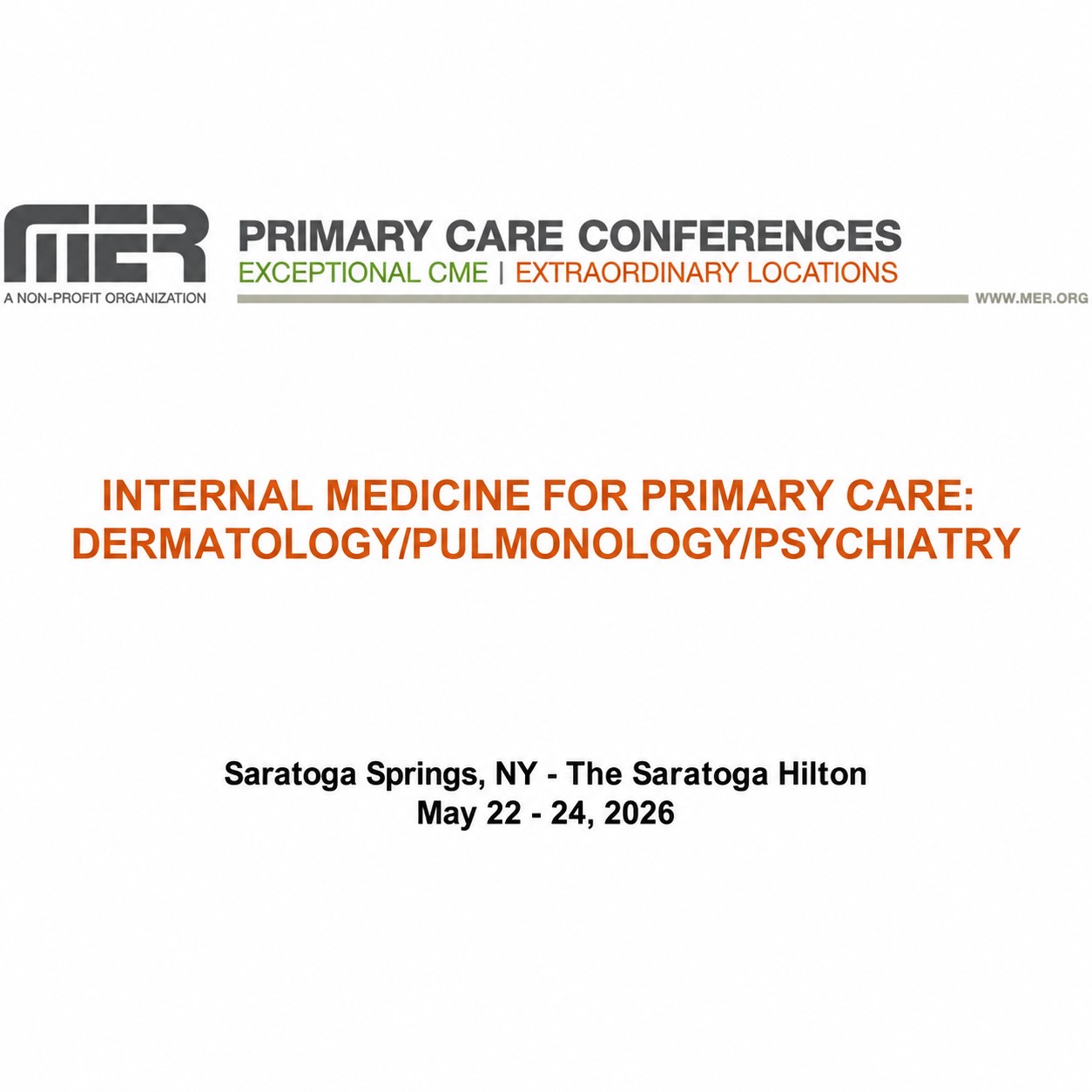
MER Primary Care Conferences May Internal Medicine for Primary Care Derm Pulm Psych May 22-24, 2026
$100.00
This Product is shared via google drive download link, So please share your correct Gmail id while placing the order .Please note that there are no CME points or certificate associated with this course Samples for Courses Can be found here : Free Samples Here!
MER Primary Care Conferences Internal Medicine for Primary Care: Dermatology, Pulmonology & Psychiatry 2026 (Videos)
Comprehensive Primary Care CME | Dermatology, Pulmonology, Psychiatry, Asthma, COPD, Skin Cancer & Mental Health
Stay current across multiple core disciplines of outpatient medicine with MER Primary Care Conferences – Internal Medicine for Primary Care: Dermatology, Pulmonology & Psychiatry 2026, a comprehensive continuing medical education (CME) program designed to provide primary care clinicians with practical, evidence-based updates in dermatology, respiratory medicine, and behavioral health.
Organized by Medical Education Resources (MER), this conference was held May 22–24, 2026, at The Saratoga Hilton, Saratoga Springs, New York. Through expert-led lectures and case-based discussions, participants gain practical strategies for diagnosing and managing common outpatient conditions while improving patient outcomes through guideline-directed care.
Product Details
- Course: Internal Medicine for Primary Care: Dermatology, Pulmonology & Psychiatry 2026
- Provider: Medical Education Resources (MER)
- Conference Dates: May 22–24, 2026
- Location: Saratoga Springs, New York, USA
- Format: Videos
- Language: English
- Educational Level: Intermediate to Advanced
- Learning Format: Expert Lectures, Case-Based Discussions, Evidence-Based Clinical Updates
Course Overview
Primary care physicians frequently encounter patients with dermatologic disorders, respiratory diseases, and mental health conditions that require timely diagnosis and evidence-based management. Maintaining competency across these diverse specialties is essential for delivering high-quality outpatient care and recognizing patients who require specialty referral.
Internal Medicine for Primary Care: Dermatology, Pulmonology & Psychiatry 2026 provides an integrated review of common and high-impact conditions encountered in office practice. Participants explore practical approaches to skin diseases, asthma, COPD, respiratory infections, lung cancer screening, ADHD, bipolar disorder, substance use disorders, and suicide risk assessment through clinically focused, guideline-based education.
What You’ll Learn
After completing this course, participants will be able to:
- Recognize dermatologic manifestations of systemic disease.
- Differentiate benign and malignant skin lesions.
- Diagnose and manage asthma and chronic obstructive pulmonary disease (COPD).
- Apply evidence-based treatment strategies for common respiratory infections.
- Evaluate lung nodules and implement appropriate lung cancer screening strategies.
- Select pharmacologic treatment options for ADHD and bipolar disorder.
- Identify substance use disorders and implement appropriate interventions.
- Assess suicide risk and facilitate timely referral for psychiatric care.
Comprehensive Topics Covered
Dermatology
Improve office-based skin disease management.
Topics include:
- Cutaneous manifestations of systemic disease
- Fungal skin infections
- Onychomycosis
- Benign skin lesions
- Malignant skin tumors
- Skin cancer screening
- Office dermatology procedures
Skin Cancer
Strengthen early diagnosis and treatment.
Topics include:
- Precancerous lesions
- Basal cell carcinoma
- Squamous cell carcinoma
- Melanoma recognition
- Skin biopsy
- Office procedures
- Referral guidelines
Pulmonology
Enhance respiratory disease management.
Topics include:
- Asthma
- COPD
- Chronic cough
- Respiratory infections
- Evidence-based treatment
- Pulmonary evaluation
- Outpatient respiratory care
Lung Nodules & Lung Cancer
Improve early detection.
Topics include:
- Pulmonary nodules
- Lung cancer screening
- Diagnostic evaluation
- Risk assessment
- Imaging strategies
- Referral decisions
- Evidence-based management
Psychiatry
Strengthen behavioral health care.
Topics include:
- ADHD
- Bipolar disorder
- Mood disorders
- Psychiatric pharmacology
- Psychosocial therapy
- Mental health assessment
- Office psychiatry
Substance Use Disorders
Provide evidence-based addiction care.
Topics include:
- Substance use screening
- Addiction medicine
- Identification strategies
- Treatment options
- Behavioral interventions
- Referral pathways
- Recovery support
Suicide Risk Assessment
Recognize psychiatric emergencies.
Topics include:
- Suicide risk
- Violence assessment
- Crisis intervention
- Mental health emergencies
- Safety planning
- Referral strategies
- Patient protection
Learning Objectives
Upon completion of this educational activity, participants will be able to:
- Identify cutaneous findings that may indicate underlying systemic disease.
- Compare evidence-based treatment options for fungal skin and nail infections.
- Differentiate benign from malignant skin tumors and perform appropriate office-based procedures.
- Detect precancerous and malignant skin lesions requiring treatment or referral.
- Diagnose and manage patients with asthma using current guideline-based therapies.
- Implement evidence-based treatment strategies for common respiratory tract infections.
- Describe current pharmacologic and non-pharmacologic management approaches for COPD.
- Evaluate lung nodules and implement appropriate lung cancer screening and treatment pathways.
- Compare the efficacy and adverse effect profiles of pharmacologic therapies for ADHD.
- Apply psychosocial and pharmacologic treatment strategies for bipolar disorder and common psychiatric comorbidities.
- Identify and manage substance use disorders using evidence-based clinical approaches.
- Assess patients at risk for suicide or violence and facilitate timely intervention and specialty referral.
Educational Highlights
- Primary Care
- Internal Medicine
- Dermatology
- Skin Cancer
- Fungal Infections
- Onychomycosis
- Pulmonology
- Asthma
- COPD
- Respiratory Infections
- Lung Nodules
- Lung Cancer
- Psychiatry
- ADHD
- Bipolar Disorder
- Substance Use Disorders
- Suicide Prevention
- Mental Health
- Evidence-Based Medicine
- Continuing Medical Education (CME)
Why This Course Stands Out
MER Internal Medicine for Primary Care: Dermatology, Pulmonology & Psychiatry 2026 brings together three high-impact specialties frequently encountered in outpatient practice. Through practical, evidence-based instruction and clinically relevant case discussions, the course helps clinicians improve diagnostic confidence, optimize treatment decisions, and recognize conditions requiring timely specialty referral.
Target Audience
This educational activity is ideal for:
- Internal Medicine Physicians
- Primary Care Physicians
- Family Medicine Physicians
- Dermatologists
- Pulmonologists
- Psychiatrists
- Nurse Practitioners
- Physician Assistants
- Residents
- Fellows
- Healthcare Professionals seeking multidisciplinary primary care updates
Why Choose This Course?
Whether you’re evaluating a suspicious skin lesion, managing chronic respiratory disease, or addressing complex mental health conditions in the outpatient setting, MER Primary Care Conferences – Internal Medicine for Primary Care: Dermatology, Pulmonology & Psychiatry 2026 provides practical, evidence-based education that can be immediately applied in clinical practice. Expert-led lectures and case-based learning equip clinicians with the knowledge and confidence to deliver comprehensive, patient-centered care.
4. Topics
Friday, May 22, 2026
-
Dermatology – Skin Manifestations of Systemic Disease: Skin will often reflect signs of systemic diseases, be useful for diagnosis, or suffer from a complication of disease or its treatment; Diagnosis of rheumatologic, endocrine, gastrointestinal, and psychologic conditions based on cutaneous findings.
-
Dermatology – Fungal Infections of the Skin: Dermatophytes, tinea versicolor, candidiasis; Selected deep fungal infections; Onycholysis; Drug induced nail changes; paronychia, koilonychia, nail discolorations, tumors of the nail; Fungal infections diagnosis and management; Overview and comparison of antifungal treatment options.
-
Dermatology – Benign Skin Tumors: Proper diagnosis and treatment of common benign tumors; Biopsies and histopathologic examination; Nevi, seborrheic keratosis keloids, hemangiomas and miscellaneous tumors; When to refer.
-
Pulmonology – Asthma: The medical impact of asthma; fundamental role of inflammation, with possible scarring and irreversible loss of lung function; practical points of diagnosis; goal setting management based on levels of severity; risk factors for mortality and treatment in the acute setting; management options for the difficult to control asthmatic patient.
-
Pulmonology – Controversies in the Treatment of Common Respiratory Infections: Acute and chronic bronchitis; pneumonia (community versus hospital-acquired); role of the Pneumonia Severity Index score in determining indication for hospitalization; cost-effective use of antibiotics; clinical significance of drug resistance; guidelines for management.
Saturday, May 23, 2026
-
Pulmonology – COPD: Definition; pathophysiology; early detection and intervention; risk reduction; management update including new modalities (including lung volume reduction surgery) and the role of inhaled corticosteroids and domiciliary oxygen.
-
Pulmonology – Lung Cancer Screening & Pulmonary Nodules: Appropriate use of the new lung cancer screening recommendations; Fleischner Society guidelines and American College of Chest Physician Lung Cancer guidelines; approach to definitive evaluation and management strategies.
-
Dermatology – Premalignant and Malignant Skin Tumors: Recognition of precursors of malignancies; Excisional and punch biopsies; Actinic keratosis, Bowen’s disease, squamous cell carcinoma, basal cell carcinoma, melanoma and other selected tumors; Risk reduction education.
-
Psychiatry – The Complexity of Adult ADHD: ADHD in adults with an emphasis on symptom identification; Co-occurring conditions; Psychiatric and medical differential diagnosis; evidence-based and FDA approved pharmacological treatments.
-
Psychiatry – Bipolar Spectrum Disorders: Bipolar spectrum disorders in adults as compared to youth; Comprehensive history-taking; Differential diagnosis; Co-occurring psychiatric and medical conditions; Phase specific treatment considerations and interventions.
Sunday, May 24, 2026
-
Psychiatry – Substance Use Disorders: Substance abuse history-taking to encourage patient honesty; Accurate diagnosis; Use of screening tools; Brief intervention; Recovery and treatment options; Motivational interviewing; Family symptoms and codependency.
-
Psychiatry – Suicide and Violence: Risk assessment for suicide and violence; the relationship between psychotropic medications and suicide or violent behavior; management of the suicidal and violent patient.
Related products

Internal Medicine

Internal Medicine
Critical Care - Emergency medicine
International Symposium on Intensive Care & Emergency Medicine ( ISICEM ) 2020

Medical Accounts
Critical Care - Emergency medicine
Critical Care - Emergency medicine
2022 UPDATES IN THERAPEUTICS: CRITICAL CARE PHARMACY PREPARATORY REVIEW AND RECERTIFICATION COURSE

Internal Medicine