
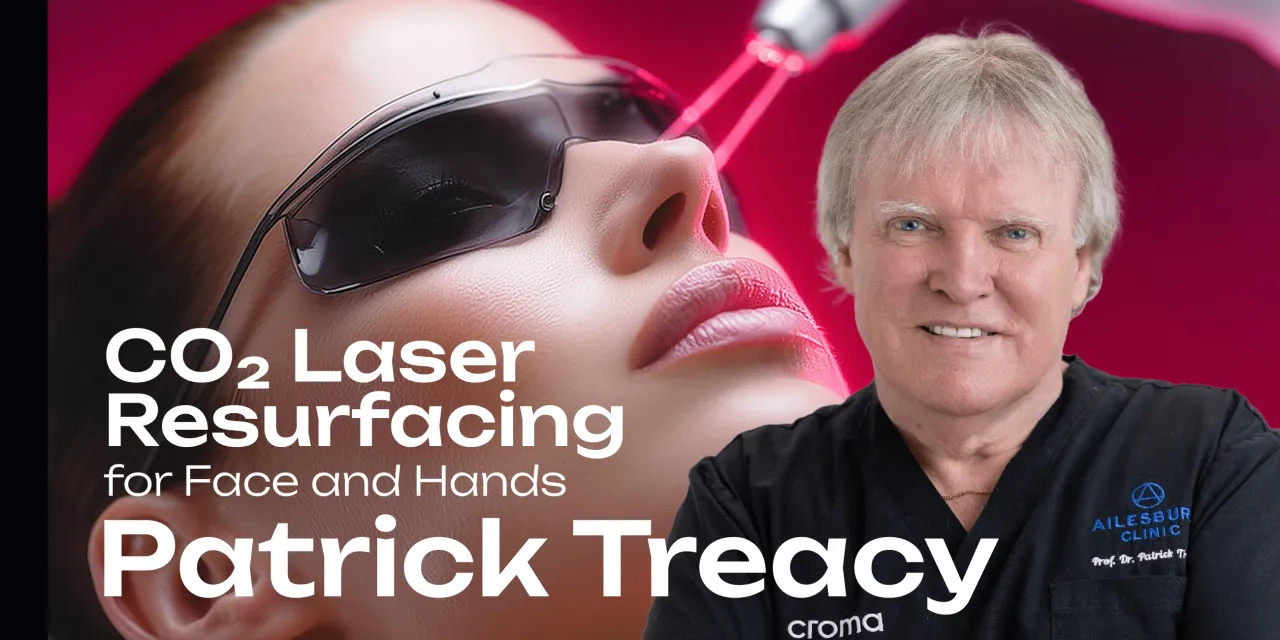
OHI-S CO₂ Laser Resurfacing for Face and Hands 3 lessons 33min

$10.00
Review CO₂ laser resurfacing with Patrick Treacy through three lessons on the face, periorbital region, and hands. The course covers preparation, ablative and fractional approaches, depth and pass control, anatomical adaptation, and ocular safety, with a listed overall duration of 33 minutes.
Delivery Information: This Product is shared via google drive download link. Please use your correct Gmail address at checkout.
Please note: there are no CME points or certificate associated with this course.
Samples for Courses Can be found here: Free Samples Here!
Patrick Treacy reviews CO₂ laser resurfacing across the face, periorbital region, and hands in this three-lesson OHI-S course. The program connects clinical preparation and patient assessment with ablative and fractional approaches, treatment depth, pass strategy, and anatomical differences between regions. The facial lesson includes ActiveFX concepts, while the periorbital presentation emphasizes thin tissue and ocular protection. The hand-resurfacing lesson considers coverage and adaptation to local skin characteristics. Listed at 33 minutes overall, this concise course is intended for appropriately trained aesthetic clinicians, dermatologists, and plastic surgeons reviewing anatomy-specific laser workflows and safety considerations.
The source lists lesson durations of 14, 8, and 10 minutes alongside a 33-minute course total. Language: English. The original topic wording is retained below.
Recorded demonstrations do not replace device-specific training, supervised clinical instruction, or laser-safety competency. Anesthetic formulations and treatment parameters named in the curriculum are lecture topics, not universal prescribing or operating instructions.
Topics
Lesson 1. CO₂ Laser Resurfacing: Clinical Preparation and Step-by-Step Application
-
Aesthetic preparation for ActiveFX (CO₂ laser resurfacing)
-
Application of topical anesthetics
-
Application of 23% lidocaine with 3.5% tetracaine
-
Protocols for regional anesthesia:
-
Infraorbital nerve block
-
Frontal nerve block
-
-
Setup of the CO₂ laser machine for skin resurfacing:
-
Energy settings and depth control
-
Fractional vs. fully ablative approaches
-
-
Step-by-step video demonstration of CO₂ laser resurfacing application
Lesson 2. CO₂ Laser for the Periorbital Area: Skin Tightening and Resurfacing
-
Topical anesthetics
-
Regional nerve blocks (if indicated)
-
Ocular protection measures
-
Energy parameters and density selection
-
Fractional vs. ablative approach
-
Depth control in thin periorbital skin
-
Layering technique and passes
Lesson 3. Ablative CO₂ Laser Resurfacing for Hands
-
Skin type evaluation
-
Differences between facial and hand skin anatomy
-
Energy settings and depth control for hands
-
Fractional vs fully ablative approaches
-
Adjusting parameters for thin, sensitive skin
-
Step-by-Step Treatment Technique:
-
Layering technique and passes
-
Coverage strategy for dorsal and lateral hand surfaces
-
Avoiding overlap and minimizing risk of burns
-
Related products

Dermatology
Dermatology
Dermatology
Dermatology
Dermatology

Critical Care - Emergency medicine
Introduction to Adult EM Bootcamp + The Practice of Emergency Medicine (Hippo) 2020