
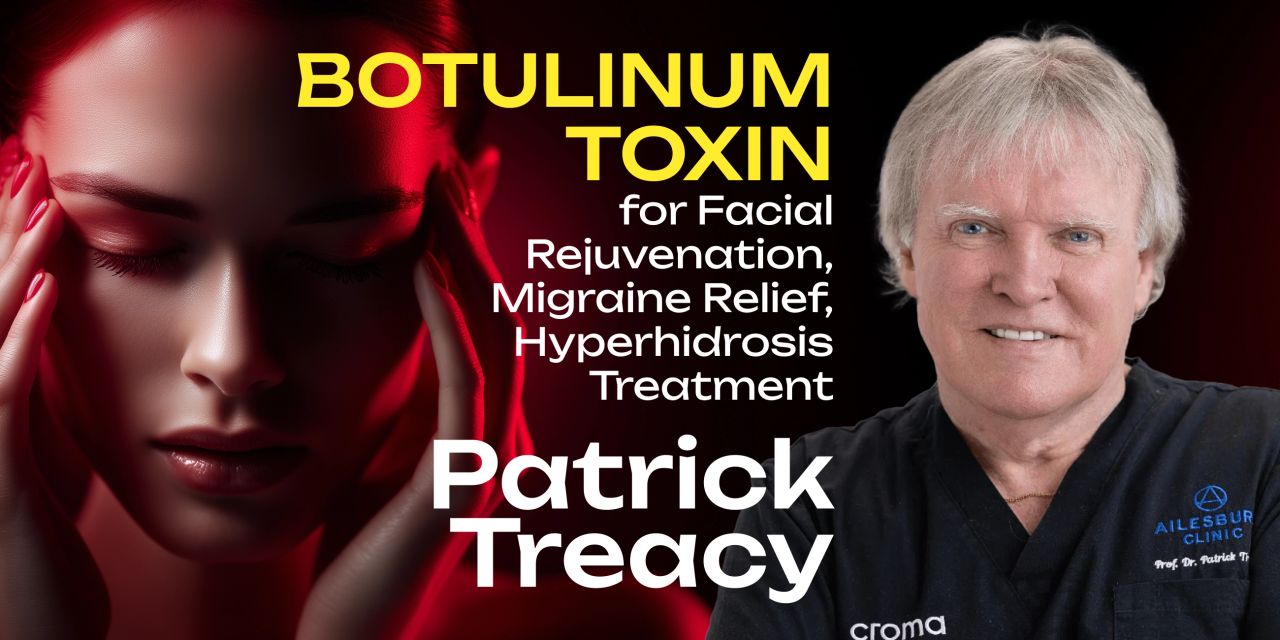
OHI-S Botulinum Toxin for Facial Rejuvenation, Migraine Relief, Hyperhidrosis Treatment 4 lessons 1h 7min

$15.00
This Product is shared via google drive download link, So please share your correct Gmail id while placing the order .Please note that there are no CME points or certificate associated with this course Samples for Courses Can be found here : Free Samples Here!
OHI-S Botulinum Toxin for Facial Rejuvenation, Migraine Relief & Hyperhidrosis Treatment
Patrick Treacy
3 Lessons + 1 Free Clinical Demonstration | 1 Hour 7 Minutes
Explore the science, clinical assessment, safety principles, aesthetic applications, and selected therapeutic uses of Botulinum Toxin Type A (BTX-A) with OHI-S Botulinum Toxin for Facial Rejuvenation, Migraine Relief, Hyperhidrosis Treatment.
Presented by Patrick Treacy, Professor in aesthetic and regenerative medicine, this focused educational program connects foundational botulinum toxin pharmacology with three major clinical areas:
- Facial Aesthetics
- Chronic Migraine
- Hyperhidrosis
The program combines:
- Botulinum toxin history
- Mechanism of action
- BTX-A pharmacology
- Neuromuscular transmission
- Reconstitution and dilution concepts
- Patient assessment
- Indications and contraindications
- Facial injection demonstrations
- Chronic migraine diagnosis
- PREEMPT protocol principles
- Hyperhidrosis diagnosis
- Sweat-gland physiology
- Nerve-block concepts
- Alternative hyperhidrosis treatments
- Injection safety
- Complication recognition
- Follow-up and patient expectations
The overall clinical framework is:
Diagnose → Confirm Indication → Assess Anatomy & Risk → Select Evidence-Based Protocol → Treat Appropriately → Monitor → Follow Up
Course Details
- Course: Botulinum Toxin for Facial Rejuvenation, Migraine Relief, Hyperhidrosis Treatment
- Provider: OHI-S
- Instructor: Patrick Treacy
- Official Structure: 3 Lessons + 1 Free
- Total Presentations: 4
- Official Duration: 1 Hour 7 Minutes
- Language: English
- Primary Field: Aesthetic Medicine
- Additional Fields: Dermatology / Neurology
- Main Topic: Botulinum Toxin Type A
- Clinical Areas: Facial Aesthetics, Chronic Migraine & Hyperhidrosis
Course Overview
Botulinum toxin has applications across both aesthetic and therapeutic medicine.
Its clinical use requires understanding of:
- Pharmacology
- Neuroanatomy
- Muscular anatomy
- Patient selection
- Indication-specific protocols
- Dose and dilution concepts
- Product-specific labeling
- Adverse effects
- Contraindications
- Follow-up
This program moves from basic science into clinical application through:
Mechanism → Assessment → Protocol → Injection → Safety → Follow-Up
What Is Botulinum Toxin Type A?
Botulinum toxin acts at cholinergic nerve terminals.
In skeletal muscle, BTX-A reduces acetylcholine-mediated neuromuscular transmission, producing a temporary reduction in targeted muscle activity.
In selected therapeutic applications involving sweating, botulinum toxin also inhibits acetylcholine-mediated stimulation of eccrine sweat glands.
Understanding this mechanism helps explain why the same pharmacologic class can have applications in:
- Facial neuromodulation
- Chronic migraine
- Hyperhidrosis
despite very different clinical goals.
Botulinum Toxin Products Are Not Interchangeable
Clinicians should distinguish between:
- OnabotulinumtoxinA
- AbobotulinumtoxinA
- IncobotulinumtoxinA
- Other approved or jurisdiction-specific botulinum toxin formulations
Units, labeling, approved indications, and dosing should not be assumed to be interchangeable between products.
Treatment should follow the labeling and training applicable to the specific product being used.
LESSON 1
The Art and Science of Botulinum Toxin
Instructor: Patrick Treacy
Duration: 25 Minutes
The first lesson establishes the scientific and clinical foundations of BTX-A.
Topics include:
- Discovery of Clostridium botulinum
- Evolution of aesthetic medicine
- Mechanism of action of BTX-A
- Botulinum toxin serotypes
- Acetylcholine blockade
- Neuromuscular junction
- Pharmacology of Botulinum Toxin Type A
- Reconstitution concepts
- Dilution protocols
- Diffusion concepts
- Relevant anatomy
- FDA-approved indications
- Absolute contraindications
- Complication management
- Botulism symptoms
Mechanism of Action
A simplified pathway is:
Motor Nerve → Acetylcholine Release → Neuromuscular Junction → Muscle Contraction
BTX-A interferes with acetylcholine release at targeted cholinergic nerve terminals.
The intended clinical effect depends on:
- Treatment site
- Product
- Dose
- Anatomy
- Injection technique
- Clinical indication
Neuromuscular Junction
Understanding the neuromuscular junction is fundamental to safe botulinum toxin use.
The desired effect is localized modulation of targeted neuromuscular activity.
Unintended spread can affect adjacent muscles and produce unwanted weakness.
Serotypes
Botulinum neurotoxins exist in different serotypes.
Clinical products use specific formulations, and these products differ in characteristics including:
- Formulation
- Units
- Regulatory labeling
The course introduces these distinctions rather than treating all botulinum toxins as identical.
Reconstitution & Dilution
Lesson 1 discusses reconstitution and dilution concepts commonly encountered in clinical practice.
These concepts influence:
- Injection volume
- Concentration
- Treatment planning
- Technique
Exact preparation should always follow the approved labeling for the specific product and appropriate clinical training.
Diffusion & Treatment Precision
Treatment outcome depends not only on where the needle enters but also on:
- Anatomy
- Dose
- Volume
- Target muscle
- Injection placement
- Product characteristics
Understanding these factors is important for achieving localized treatment while reducing unwanted effects.
Facial Aesthetic Applications
Botulinum toxin is widely used in aesthetic medicine to modulate selected facial muscles.
Aesthetic treatment planning should incorporate:
- Facial anatomy
- Muscle function
- Symmetry
- Baseline movement
- Patient goals
- Product-specific indications
The aim is individualized neuromodulation rather than simply injecting standardized points in every patient.
Patient Assessment
Before treatment, clinicians should evaluate:
- Medical history
- Previous botulinum toxin exposure
- Neuromuscular disorders
- Current medications
- Previous complications
- Facial asymmetry
- Muscle activity
- Patient expectations
Contraindications & Precautions
The course reviews contraindications and safety considerations.
Product labeling and individual patient factors should be reviewed before injection.
Particular caution is required because botulinum toxin products carry clinically important warnings, including the possibility of toxin effects extending beyond the treated area.
Complication Recognition
Potential complications vary according to:
- Anatomical site
- Product
- Indication
- Technique
- Dose
Clinicians should understand both prevention and recognition of adverse effects.
Botulism Symptoms
Lesson 1 also introduces symptoms associated with systemic botulinum toxin effects.
This is an important safety component because botulinum toxin is a potent biologic drug and adverse systemic symptoms require appropriate clinical evaluation.
LESSON 2
Botulinum Toxin for Migraine Management: Clinical Protocols and Therapeutic Applications
Instructor: Patrick Treacy
Duration: 11 Minutes
This lesson focuses specifically on chronic migraine.
Topics include:
- Chronic migraine pathophysiology
- Mechanism of BTX-A in migraine
- Patient selection
- Chronic migraine diagnostic criteria
- FDA-approved indication
- PREEMPT protocol overview
- Anatomical landmarks
- Dosage and dilution concepts
- Injection technique
- Safety
- Expectations
- Contraindications
- Precautions
- Adverse-effect management
- Follow-up intervals
- Clinical evidence
Chronic Migraine
The FDA-approved BOTOX indication specifically concerns adults with chronic migraine, rather than occasional or episodic headaches.
Chronic migraine requires an appropriate clinical diagnosis.
This distinction is important because:
Chronic Migraine ≠ Episodic Migraine ≠ Any Recurrent Headache
FDA-Approved Chronic Migraine Indication
In the United States, onabotulinumtoxinA (BOTOX) is indicated for prophylaxis of headaches in adults with chronic migraine meeting the applicable diagnostic frequency criteria.
The indication does not establish effectiveness for episodic migraine.
Therefore, MedicalAmboss SEO should use:
Botulinum Toxin for Chronic Migraine
rather than the overly broad phrase:
Botox for All Migraines
PREEMPT Protocol
The course reviews the PREEMPT injection protocol used in chronic migraine management.
Core educational areas include:
- Anatomical landmarks
- Injection-site distribution
- Dose concepts
- Safety
- Follow-up
PREEMPT should be treated as a disease-specific therapeutic protocol rather than an aesthetic injection pattern.
Migraine Patient Selection
Appropriate evaluation includes confirming that the patient actually meets criteria for chronic migraine and assessing:
- Headache history
- Frequency
- Duration
- Previous treatment
- Contraindications
- Relevant comorbidities
Therapeutic vs. Aesthetic Injection
The objectives are fundamentally different.
Aesthetic BTX-A
Primarily targets selected facial muscle activity for aesthetic change.
Chronic Migraine Treatment
Uses a structured therapeutic injection paradigm intended for migraine prophylaxis in appropriately selected patients.
The two should not be presented as interchangeable injection techniques.
Follow-Up
The migraine lesson includes:
- Treatment intervals
- Response assessment
- Patient expectations
- Side-effect monitoring
Therapeutic success should be assessed clinically rather than based solely on the immediate injection procedure.
LESSON 3
Botulinum Toxin in Hyperhidrosis: Mechanisms, Diagnosis & Clinical Management
Instructor: Patrick Treacy
Duration: 21 Minutes
Format: Clinical Video
The third lesson provides a broader clinical review of excessive sweating.
Topics include:
- History of hyperhidrosis treatment
- Early botulinum toxin use
- Hyperhidrosis diagnosis
- Pathophysiology
- Pathogenesis
- Sweat physiology
- Acetylcholine blockade
- Patient assessment
- Ulnar nerve block
- Foot nerve block
- Topical treatment
- Systemic therapy
- Oral oxybutynin
- Botulinum toxin treatment
Understanding Hyperhidrosis
Hyperhidrosis is excessive sweating beyond what is physiologically required for normal thermoregulation.
Clinical evaluation should differentiate:
- Primary focal hyperhidrosis
- Secondary hyperhidrosis
before focusing only on symptom reduction.
Primary vs. Secondary Hyperhidrosis
Possible secondary causes should be considered when clinically appropriate.
The diagnostic pathway may involve:
History → Distribution → Trigger Pattern → Medication Review → Medical Causes → Treatment Selection
The underlying disorder should not be overlooked simply because sweat reduction is technically possible.
Sweat Glands & Acetylcholine
Eccrine sweat glands receive cholinergic sympathetic innervation.
Acetylcholine therefore has a central role in sweat production.
Botulinum toxin can reduce sweating by inhibiting acetylcholine release at these nerve terminals.
FDA Status: Important Distinction
In the United States, BOTOX is specifically approved for:
Severe Primary Axillary Hyperhidrosis inadequately managed with topical agents.
This refers to excessive sweating of the axillae.
The course also discusses other anatomical sites and techniques, including:
- Ulnar nerve block
- Foot nerve block
- Broader hyperhidrosis management
These should not automatically be described as FDA-approved BOTOX indications.
Palmar Hyperhidrosis
Treatment of excessive hand sweating may be encountered in specialist practice.
However, when discussing onabotulinumtoxinA in the United States, clinicians should recognize that the FDA-approved hyperhidrosis indication is specifically primary axillary hyperhidrosis.
Other treatment locations require their own evidence, risk assessment, regulatory considerations, and appropriate clinical judgment.
Plantar Hyperhidrosis
The course also introduces foot-related anesthesia and hyperhidrosis concepts.
Plantar treatment can be painful and anatomically demanding.
Recorded education about nerve blocks and injections should not substitute for formal training in regional anesthesia or procedural competency.
Alternative Hyperhidrosis Treatments
An important strength of Lesson 3 is that treatment is not presented as botulinum toxin alone.
The curriculum also includes:
- Topical treatments
- Systemic treatment
- Oral oxybutynin
This supports a broader management framework rather than a procedure-first approach.
Oxybutynin
Oxybutynin may be used clinically in selected hyperhidrosis management settings.
As with other systemic therapy, treatment decisions require consideration of:
- Benefits
- Adverse effects
- Contraindications
- Patient-specific factors
LESSON 4
Botulinum Toxin: Clinical Demonstrations by Patrick Treacy
Instructor: Patrick Treacy
Duration: 8 Minutes
Status: Free Lesson within the course
This final presentation focuses on clinical demonstration.
Topics include:
- Live botulinum toxin injection demonstration
- Facial injection techniques
- Patient assessment
- Patient preparation
- Indications
- Contraindications
- Hyperhidrosis treatment overview
- Injection techniques
- Nerve blocks
- Safety protocols
- Complication management
- Patient satisfaction
Clinical Facial Injection Demonstration
The demonstration connects the scientific principles from Lesson 1 with practical facial treatment.
Key concepts include:
- Assessment before injection
- Anatomical targeting
- Patient preparation
- Technique
- Safety
Hyperhidrosis Injection Demonstration
The clinical demonstration also reviews procedural aspects of hyperhidrosis treatment.
The important educational distinction is:
Demonstrating a technique does not establish that every anatomical application is an FDA-approved indication.
Nerve Blocks
Regional nerve-block techniques are mentioned in the hyperhidrosis curriculum.
These are medical procedures that require:
- Detailed anatomical knowledge
- Contraindication assessment
- Training
- Emergency preparedness
A short video demonstration should be treated as educational exposure rather than independent procedural credentialing.
FACIAL REJUVENATION
The aesthetic section of the program connects:
Facial Anatomy + Dynamic Muscle Assessment + BTX-A Pharmacology + Injection Strategy
Treatment should be individualized according to the patient rather than based solely on a universal injection map.
CHRONIC MIGRAINE
The neurologic component focuses on:
- Correct diagnosis
- Patient selection
- PREEMPT principles
- Anatomical landmarks
- Follow-up
This makes the course relevant to clinicians already appropriately trained in therapeutic botulinum toxin use.
HYPERHIDROSIS
The dermatologic component includes:
- Diagnosis
- Pathophysiology
- Sweat-gland physiology
- Topical therapy
- Systemic therapy
- Botulinum toxin
- Procedural considerations
This makes the course broader than a simple “underarm Botox injection” demonstration.
AESTHETIC vs. THERAPEUTIC BOTULINUM TOXIN
A major educational strength is the contrast between different clinical objectives.
Aesthetic
Target:
Muscle Activity → Facial Appearance
Migraine
Target:
Chronic Migraine Prevention
Hyperhidrosis
Target:
Cholinergic Stimulation of Sweat Glands
The drug class may be related, but:
- Diagnosis
- Anatomy
- Treatment goals
- Injection patterns
- Labeling
- Follow-up
can be very different.
Product-Specific FDA Approval
The phrase “Botox” is often used conversationally for several neurotoxin products, but medically it is a specific trademarked formulation.
For accurate MedicalAmboss content:
Use:
Botulinum Toxin Type A / BTX-A
when discussing the broader pharmacologic category.
Use:
BOTOX (onabotulinumtoxinA)
when discussing that specific product and its FDA-approved indications.
FDA-Approved vs. Off-Label Use
A high-quality clinical product description should distinguish between:
FDA-Approved Indications
Specific uses included in the approved labeling of a particular botulinum toxin product.
Off-Label Clinical Use
Use outside that exact approved indication.
Off-label use does not automatically mean inappropriate use, but it should not be marketed as FDA-approved.
Safety & Complications
Botulinum toxin treatment requires awareness of:
- Injection-site reactions
- Unwanted weakness
- Anatomical complications
- Product-specific warnings
- Potential systemic effects
FDA-approved botulinum toxin products carry important warnings concerning the possibility of effects extending beyond the injection area.
Unapproved Botulinum Toxin Products
Clinicians should use legitimately sourced and appropriately regulated products.
FDA has recently warned about illegal sales of unapproved and misbranded botulinum toxin products associated with serious safety risks.
Product authenticity and sourcing are therefore essential components of patient safety.
Major Topics Covered
- Botulinum Toxin
- Botulinum Toxin Type A
- BTX-A
- BOTOX
- OnabotulinumtoxinA
- Facial Rejuvenation
- Facial Neuromodulation
- Aesthetic Medicine
- Cosmetic Dermatology
- Botulinum Toxin Pharmacology
- Neuromuscular Junction
- Acetylcholine
- Injection Anatomy
- Chronic Migraine
- Migraine Prevention
- PREEMPT Protocol
- Hyperhidrosis
- Axillary Hyperhidrosis
- Palmar Hyperhidrosis
- Plantar Hyperhidrosis
- Excessive Sweating
- Ulnar Nerve Block
- Foot Nerve Block
- Oxybutynin
- Botulinum Toxin Complications
- Botulinum Toxin Safety
- Injection Techniques
Who Should Take This Course?
The program is particularly relevant to appropriately licensed and trained clinicians working in:
- Aesthetic Medicine
- Dermatology
- Cosmetic Dermatology
- Neurology
- Headache Medicine
- Plastic Surgery
- Facial Plastic Surgery
- Therapeutic Botulinum Toxin Practice
The strongest audience includes:
- Aesthetic Medicine Physicians
- Dermatologists
- Neurologists
- Plastic Surgeons
Additional healthcare professionals should participate only where botulinum toxin treatment falls within their professional training and legal scope of practice.
Why This Course Is Useful
The strongest feature of the course is its integration of three areas frequently taught separately.
Foundational Science
- Pharmacology
- Mechanism
- Serotypes
- Neuromuscular signaling
Aesthetic Medicine
- Facial assessment
- Injection concepts
- Clinical demonstration
Neurology
- Chronic migraine
- PREEMPT
- Patient selection
Dermatology
- Hyperhidrosis
- Sweat physiology
- Topical and systemic therapy
- Botulinum toxin
The complete pathway is:
Science → Diagnosis → Patient Selection → Technique → Safety → Follow-Up
Important Medical Training Notice
Botulinum toxin is a prescription biological drug.
Recorded educational material does not replace:
- Formal medical training
- Product-specific training
- Supervised injection experience
- Detailed anatomical education
- Emergency preparedness
- Appropriate licensure
- Local regulatory requirements
Similarly, watching nerve-block or injection demonstrations does not independently establish procedural competency.
Product Summary
- Product: Botulinum Toxin for Facial Rejuvenation, Migraine Relief, Hyperhidrosis Treatment
- Provider: OHI-S
- Instructor: Patrick Treacy
- Official Structure: 3 Lessons + 1 Free
- Total Presentations: 4
- Official Duration: 1h 7min
- Language: English
- Primary Field: Aesthetic Medicine
- Additional Areas: Dermatology & Neurology
- Core Topic: Botulinum Toxin Type A
4. Short Description
OHI-S Botulinum Toxin for Facial Rejuvenation, Migraine Relief & Hyperhidrosis Treatment is a focused 1h 7min course presented by Patrick Treacy, structured as 3 lessons + 1 free clinical demonstration.
The program covers BTX-A pharmacology, acetylcholine blockade, reconstitution and dilution concepts, facial aesthetic applications, contraindications and complications, chronic migraine diagnosis and PREEMPT principles, hyperhidrosis diagnosis and physiology, topical and systemic treatment options, nerve-block concepts, and live botulinum toxin injection demonstrations.
Topics
Lesson 1. The Art and Science of Botulinum Toxin
-
The discovery of Clostridium botulinum
-
Aesthetic medicine as a new specialty
-
Mechanism of action of BTX-A
-
Specificity of different serotypes
-
Acetylcholine blockade at the neuromuscular junction
-
Pharmacology of Botulinum Toxin Type A
-
Reconstitution steps of BTX-A and diffusion protocols
-
Dilution protocols commonly used in clinical practice
-
Anatomy and FDA-approved indications
-
Absolute contraindications for BTX-A
-
Management of complications
-
Symptoms of botulism
Lesson 2. Botulinum Toxin for Migraine Management: Clinical Protocols and Therapeutic Applications
-
Pathophysiology of chronic migraine
-
Mechanism of action of Botulinum Toxin Type A in migraine
-
Patient selection criteria
-
Diagnostic criteria for chronic migraine
-
FDA-approved indications for migraine treatment
-
PREEMPT injection protocol overview
-
Anatomical landmarks for migraine injections
-
Dosage calculation and dilution strategies
-
Injection technique and safety considerations
-
Managing patient expectations
-
Contraindications and precautions
-
Side effects and complication management
-
Treatment intervals and follow-up protocols
-
Clinical outcomes and evidence-based results
Lesson 3. Botulinum Toxin in Hyperhidrosis: Mechanisms, Diagnosis, and Clinical Management
-
Early adoption of Botulinum Toxin in hyperhidrosis treatment
-
History of hyperhidrosis
-
Diagnosis of hyperhidrosis
-
Pathophysiology, pathogenesis, and mechanisms of onset
-
Sweat control and acetylcholine release blockade
-
Patient assessment
-
Ulnar nerve block
-
Foot nerve block
-
Topical treatments for hyperhidrosis
-
Systemic treatment options
-
Use of oral oxybutynin
-
Application of Botulinum Toxin for hyperhidrosis management
Lesson 4. Botulinum Toxin: Clinical Demonstrations by Patrick Treacy
-
Live Botox injection demonstration
-
Step-by-step facial injection techniques
-
Patient assessment and preparation
-
Indications and contraindications for Botox
-
Hyperhidrosis treatment overview
-
Injection techniques for hyperhidrosis
-
Nerve blocks for targeted sweat control
-
Safety protocols and complication management
-
Optimizing results and patient satisfaction
Related products



Dermatology


Dermatology