
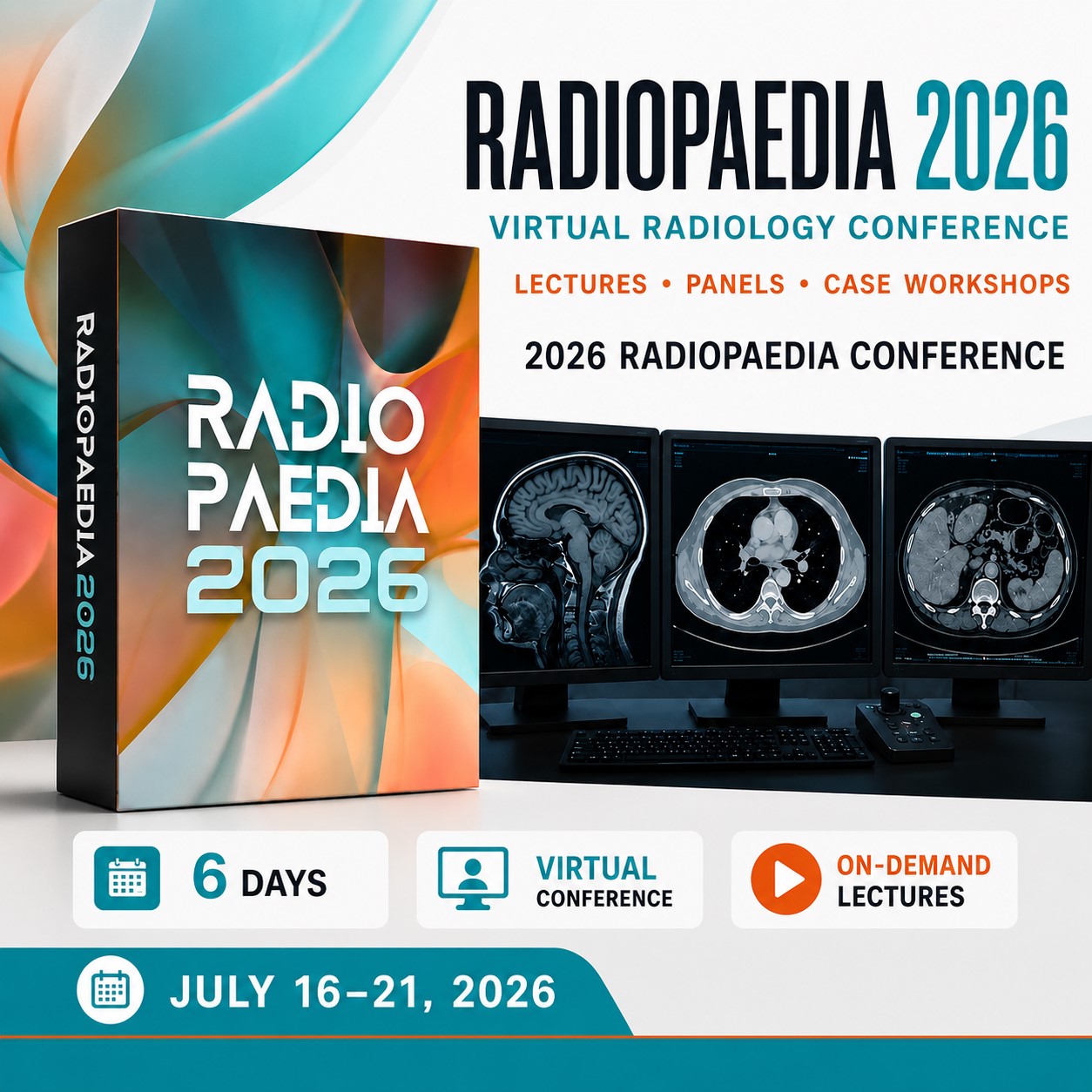
Radiopaedia 2026 Virtual Conference
$100.00
This Product is shared via google drive download link, So please share your correct Gmail id while placing the order .Please note that there are no CME points or certificate associated with this course Samples for Courses Can be found here : Free Samples Here!
Radiopaedia 2026 Virtual Conference | Comprehensive Radiology Conference 2026
Course Introduction
Radiopaedia 2026 Virtual Conference is the latest annual virtual conference from Radiopaedia in the field of radiology and medical imaging. The six-day conference took place from July 16–21, 2026. Its program combines specialized lectures, case workshops, scientific panels, and interactive sessions. Following the event, the conference content was made available as On-Demand material on the official platform.
Radiopaedia 2026 covers a broad range of radiology subspecialties, from Neuroradiology, Head & Neck Imaging, Chest Imaging, and Cardiac Imaging to abdominal imaging, trauma, musculoskeletal imaging, pediatric imaging, gynecologic imaging, breast imaging, and oncology. This makes the collection suitable for comprehensive radiology review and updating knowledge across multiple imaging specialties.
About Radiopaedia
Radiopaedia.org is a specialized radiology educational platform providing extensive resources, including articles, imaging cases, online courses, case workshops, and educational programs for radiologists and medical imaging learners.
The annual Radiopaedia Virtual Conference is one of the platform’s major educational programs. In the 2026 edition, education was provided through Live and On-Demand content, including lectures, case workshops, and panel discussions.
Radiopaedia 2026 Virtual Conference – Comprehensive Radiology Education
Radiopaedia 2026 Comprehensive Radiology Conference with Specialized Lectures and Case Workshops
Structure of Radiopaedia 2026
The program was designed as a six-day educational event and included:
- Specialized Lectures
- Interactive Case Workshops
- Case-Based Discussions
- Panel Discussions
- Question-and-answer sessions
- Review of real-world images and cases
- Multidisciplinary sessions
- Educational sessions related to radiology safety
- Live content
- On-Demand access to conference content
The official program for Day 6 also included a dedicated section focused on Radiology Safety.
Neuroradiology
One of the major components of Radiopaedia 2026 is Neuroradiology.
This section reviews brain and spinal imaging and neurological diseases through lectures and case workshops. The official program includes topics such as Multiple Sclerosis and review of gyral anatomy alongside a neuroradiology case workshop.
The educational focus of this section may include:
- Brain and spinal MRI
- Demyelinating diseases
- Stroke and cerebrovascular imaging
- Tumors of the nervous system
- Infections and inflammatory conditions
- Brain trauma
- Differential diagnosis of lesions
- Applied anatomy review
- Analysis of challenging cases
Head & Neck Imaging
Head & Neck Imaging is also included in the official Radiopaedia 2026 program.
Topics in this area may include the assessment of:
- Skull Base
- Temporal Bone
- Nasal cavity and paranasal sinuses
- Orbit
- Salivary glands
- Pharynx and larynx
- Deep spaces of the neck
- Cervical lymph nodes
- Head and neck tumors
- Patterns of disease spread
Chest Imaging
Chest Imaging is another major component of the program, with a dedicated Case Workshop also included in the official schedule.
Key topics include:
- Chest X-Ray Interpretation
- Chest CT
- Interstitial lung diseases
- Pulmonary infections
- Pulmonary nodules
- Lung cancer
- Pleural diseases
- Mediastinal diseases
- Thoracic vascular diseases
- Challenging Chest Imaging cases
Cardiac Imaging
Cardiac Imaging is also one of the announced areas covered by Radiopaedia 2026.
This section focuses on imaging of cardiovascular diseases using modalities such as CT and MRI, introducing learners to diagnostic approaches for cardiovascular conditions.
Related topics may include:
- Cardiac CT
- Cardiac MRI
- Coronary Imaging
- Myocardial diseases
- Valvular diseases
- Aortic diseases
- Cardiac masses
- Congenital abnormalities
- Differential diagnosis of cardiac findings
Abdominal Imaging
Another broad component of the program is Abdominal Imaging.
This section focuses on imaging of the abdominal and pelvic organs and the use of CT, MRI, and ultrasound in disease diagnosis.
Practical topics include:
- Liver Imaging
- Pancreatic Imaging
- Biliary Imaging
- Gastrointestinal Imaging
- Renal Imaging
- Adrenal Imaging
- Pelvic Imaging
- Abdominal masses
- Inflammatory diseases
- Incidental findings
- Differential diagnostic algorithms
Radiopaedia 2026 Virtual Conference – Comprehensive Radiology Education
Radiopaedia 2026 Comprehensive Radiology Conference with Specialized Lectures and Case Workshops
Trauma & Emergency Imaging
The official Radiopaedia 2026 program also includes dedicated sessions on Trauma Imaging.
This section focuses on rapid and systematic interpretation of imaging in trauma patients and acute clinical settings:
- Head Trauma
- Spine Trauma
- Chest Trauma
- Abdominal Trauma
- Pelvic Trauma
- Vascular Injury
- Major fractures
- CT in polytrauma patients
- Life-threatening findings
- Imaging pitfalls in emergency radiology
Musculoskeletal Imaging
MSK Imaging is another major area of the conference.
Important topics include:
- Joint MRI
- Sports injuries
- Shoulder Imaging
- Knee Imaging
- Hip Imaging
- Foot & Ankle Imaging
- Bone Tumors
- Soft Tissue Tumors
- Bone and joint infections
- Degenerative diseases
- Musculoskeletal trauma
- Differential diagnosis of bone lesions
Pediatric Imaging
Pediatric Imaging is also included in the Radiopaedia 2026 program.
This section addresses the specific characteristics of pediatric imaging and differences in disease patterns in children.
Important areas may include:
- Pediatric Chest Imaging
- Pediatric Abdominal Imaging
- Pediatric Neuroimaging
- Congenital abnormalities
- Trauma
- Skeletal diseases
- Pediatric tumors
- Appropriate selection of imaging modalities
Women’s Imaging
Gynecology Imaging is also listed among the official areas covered by the conference.
This section focuses on evaluating diseases of the uterus, ovaries, and pelvis using Ultrasound and MRI.
Related topics include:
- Ovarian lesions
- Adnexal masses
- Uterine diseases
- Endometriosis
- Fibroids
- Gynecologic malignancies
- Pelvic imaging
- Differential diagnosis of lesions
Breast Imaging
Radiopaedia 2026 also includes Breast Imaging as one of its educational areas.
Important topics include:
- Mammography
- Breast Ultrasound
- Breast MRI
- Assessment of breast masses
- Screening
- Benign and malignant findings
- Pattern Recognition
- Differential diagnosis of lesions
- Imaging-based decision-making
Additional courses in this field are available in the Breast Imaging category.
Oncology Imaging
Oncology Imaging is another component of the scientific program.
This section addresses the role of imaging in:
- Tumor detection
- Staging
- Treatment response assessment
- Follow-up
- Detection of recurrence
- Differentiating treatment-related changes from active disease
- Selection of appropriate imaging modalities
- Analysis of oncology cases
Case-Based Learning
One of the strengths of Radiopaedia 2026 is its Case-Based Learning structure. Alongside traditional lectures, interactive Case Workshops form an important part of the program.
During these sessions, real-world images are used to practice skills such as:
- Identifying key findings
- Developing a Differential Diagnosis
- Selecting the most likely diagnosis
- Recognizing imaging pitfalls
- Identifying subtle findings
- Correlating imaging findings with clinical information
- Determining the need for further investigation
Who Is This Course For?
Radiopaedia designs its annual conference for a broad range of radiology learners, from those in the early stages of training to experienced physicians.
The primary audience includes:
- Radiologists
- Radiology residents
- Imaging fellows
- Physicians working in Diagnostic Imaging
- Neuroradiologists
- MSK Imaging specialists
- Body imaging specialists
- Thoracic radiologists
- Breast imaging specialists
- Physicians working in Emergency Radiology
- Physicians interested in comprehensive radiology review
- Candidates preparing for specialty and fellowship examinations
Radiopaedia 2026 Virtual Conference – Comprehensive Radiology Education
Radiopaedia 2026 Comprehensive Radiology Conference with Specialized Lectures and Case Workshops
Educational Benefits of Radiopaedia 2026
Key educational benefits include:
- The latest annual Radiopaedia conference
- Held in 2026
- Six days of specialized educational content
- Coverage of multiple major radiology subspecialties
- Specialized lectures
- Interactive Case Workshops
- Scientific panel discussions
- Education based on real-world imaging
- Coverage of Neuroradiology
- Chest & Cardiac Imaging
- Abdominal Imaging
- Trauma Imaging
- Musculoskeletal Imaging
- Pediatric Imaging
- Gynecology Imaging
- Breast Imaging
- Oncology Imaging
- Radiology Safety
- Suitable for broad radiology review and knowledge updating
Important Product Information
- Official Name: Radiopaedia 2026 Virtual Conference
- Year: 2026
- Event Dates: July 16–21, 2026
- Event Duration: 6 days
- Event Type: Virtual Conference
- Structure: Lectures + Case Workshops + Panel Discussions
- Current Official Status: On-Demand
- Language: English
- Subject: Comprehensive Diagnostic Radiology
- Exact Number of Files in the Simabaan Version: To be recorded based on the final product archive
- Exact Duration of the Simabaan Files: To be recorded after reviewing the files
- Product Size: To be recorded after reviewing the archive
Conclusion
Radiopaedia 2026 Virtual Conference is a comprehensive educational collection for reviewing and updating radiology knowledge in 2026, delivered through six days of lectures, case workshops, and specialized panel discussions.
Its simultaneous coverage of Neuroradiology, Head & Neck, Chest, Cardiac, Abdominal, Trauma, MSK, Pediatric, Gynecology, Breast, and Oncology Imaging makes it a valuable educational resource for radiologists and residents seeking a broad, multispecialty, case-based review of diagnostic imaging.
Related products
Critical Care - Emergency medicine
ECHO-Guided Life Support Using ultrasound to categorise shock and guide initial management

Hematology / Oncology


Internal Medicine
Anesthesiology & pain medicine
Critical Care - Emergency medicine
Gulfcoast Ultrasound-Guided Upper Extremity Nerve Blocks for Emergency Medicine

Hematology / Oncology
2023 Psychopharmacology in Cancer Care: An Update for Clinicians of All Disciplines
Anesthesiology & pain medicine
Gulfcoast Ultrasound-Guided Regional Anesthesia : Upper Extremities