
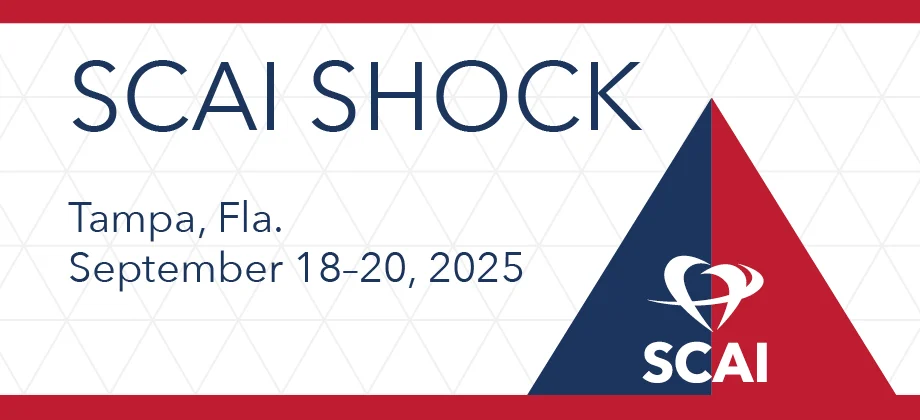
Society for Cardiovascular Angiography & Interventions SHOCK 2025

Original price was: $500.00.$25.00Current price is: $25.00.
Review cardiogenic shock care from recognition and stabilization to mechanical support, team coordination and survivorship. SCAI SHOCK 2025 includes case-based discussions, shock-network development and multidisciplinary practice topics. The complete supplied session list and program leadership are retained, with a distinction between the conference agenda and recording coverage.
Delivery Information: This Product is shared via google drive download link. Please use your correct Gmail address at checkout.
Please note: there are no CME points or certificate associated with this course.
Samples for Courses Can be found here: Free Samples Here!
SCAI SHOCK 2025 examines cardiogenic shock care as a coordinated pathway, from early recognition and transport to intensive care, catheterization laboratory decisions and recovery after discharge. The program combines hemodynamics, mechanical circulatory support, high-risk PCI and case discussions with the practical work of building shock teams and regional networks. Held September 18–20, 2025, at Tampa Marriott Water Street, the meeting was organized around the theme “Home of the Shock Team.” It is relevant to interventional and critical care cardiologists, heart-failure specialists, surgeons, nurses, advanced practitioners, EMS professionals and hospital leaders involved in shock services.
Learning Objectives
- Integrate scientific updates and the latest evidence-based best practices for treating cardiogenic shock and cardiac arrest.
- Implement optimal shock management strategies by utilizing EMS, transportation, and the ED in early recognition and nuanced patient care.
- Apply Shock ICU essentials, including hemodynamic monitoring, vasoactive medications, and determining the role of dedicated versus mixed ICUs.
- Optimize antiplatelet therapy and implement optimal pharmacodynamic strategies for high-risk patients.
- Navigate complexities in the cath lab by identifying unseen threats, understanding right heart hemodynamics, and practicing effective communication.
- Optimize team setup, tracking quality improvement metrics, and utilizing tools to bridge the gap between shock clinicians and hospital administration (the C-suite).
- Perform Cardiac ICU problem-solving, including interpreting cardiac indices, troubleshooting MCS devices, and managing weaning strategies.
- Manage post-danger care by deliberating the harms and benefits of inotropes, utilizing IABP in the community, and expanding perspectives to include HF-shock.
- Navigate the complexities of resource allocation and coordination for High-risk PCI.
- Explore future directions in shock management, including novel support devices, leveraging machine learning for risk stratification, and the role of AI in decision-making.
Program Leadership
- Allison G. Dupont, MD, FSCAI – Chair
- Sandeep Nathan, MD, MSc, FSCAI – Associate Chair
- Behnam Tehrani, MD – Assistant Chair
- Ruth Fisher, MBA – Co-Chair, Hospital Leadership
- Jason Grady, FSCAI, NRP – Co-Chair, EMS Coordinator
- Amy E. Hackmann, MD – Co-Chair, Surgery
- Vika Kagan, ARNP, MSN – Co-Chair, Nurse Practitioner
- Jason N. Katz, MD, MHS – Co-Chair, Heart Failure
- Debbie Rinde-Hoffman, MD – Co-Chair, Heart Failure
- Robert O. Roswell, MD – Co-Chair, Critical Care
Topics
Breakfast Session: Mapping the Maze of Cardiogenic Shock – Shock Phenotypes, Stages, and Hemodynamics
-
SCAI DLC Initiative Definition, Hypothesis and Call to Action
-
One Shock Doesn’t Fit All – Cardiogenic Shock Phenotypes
-
IABP Inflated Hopes or Deflated Use SCAI Staging and Cardiogenic Shock Controversies in Clinical Trials
-
Shocking Developments Hemodynamics & Treatment in CS
Breakfast Satellite: Complex PCI – Nothing Is Simple in Shock Patients!
-
Introductory Remarks
-
CTO’s in AMI-Shock – When and How to Treat
-
What is Complex and High Risk – Patient Population and Tools/Skillsets Needed to Treat
-
Getting In and Out Safely – Vascular Access and Closure in AMI-CS
-
Keeping Your Eyes Open – Role of Intravascular Imaging in Complex PCI
-
To Support or Not to Support – MCS in AMI-Shock
-
Chipping Away – Calcium Modification in Complex PCI
Lunch Satellite: Management of Shock in Patients With Pulmonary Embolism (CME)
-
Introductory Remarks
-
Mechanical Circulatory Support in Pulmonary Embolism
-
Normotensive Does Not Mean Low Risk Insights from the FLASH Registry
-
Questions Remaining Unanswered in Published Thrombectomy Trials, Where Do We Go from Here
-
What Role does a Surgeon Have on the PERT Team
-
Choosing the Right Treatment for the Right PE Patient
Lunch Program: Optimizing Antiplatelet Therapy in Cardiogenic Shock
-
Introductory Remarks and Polling Questions
-
Pharmacodynamics of Antiplatelet Therapies With and Without CS
-
Optimal Antiplatelet Strategies in High-risk Patients
-
Data for use of Cangrelor in AMI-CS and High-Risk PCI
-
Case Presentation and Initial Clinical Course
-
Case Continuation and Conclusion
-
Concluding Remarks and Polling Questions
Dinner Program: ECMO Workshop – When and How to Use a Powerful Tool
-
Introductory Remarks
-
Tips for Safe Cannulation
-
Venoarterial ECMO Indications
Systems of Care in Cardiogenic Shock Teams, Networks and Post Discharge Management
-
Shock Survivorship The Role of Cardiogenic Shock Clinics Post-Hospital Discharge
-
When to Call the Shock Team Protocol Dissemination in the Community
-
Time is Tissue EMS and ED Protocols for the Shock Patient
-
CS Management in 2025 Optimizing CICU Staffing Models
-
From Shock Teams to Shock Networks The Hub and Spoke Model
Managing Cardiogenic Shock in Patients with Valvular Heart Disease
-
At the Intersection of Valvular Disease and Cardiogenic Shock – Common Clinical Scenarios and Contemporary Outcomes
-
CASE 1 Critical AS and Cardiogenic Shock
-
CASE 2 Emergent M-TEER for Severe MR and Cardiogenic Shock
Top & Challenging Shock Cases
-
Regurgitation, Reperfusion, Rescue ECMO in the Setting of Aortic Valve Catastrophe
-
Cardiac Arrest During Acute MI Revascularization Mobile VA-ECMO and Progressive Mechanical Support Enable Survival
-
VA-ECMO as a Bridge to Transplant Following Apical Wall Rupture
-
Escalation and De-escalation CASE HF-CS
-
Escalation and De-escalation CASE AMI Shock with Escalation to Impella 5.5
Breakout Session – The People’s Ventricle: Right Ventricular Cardiogenic Shock
-
CICU Management of RV-Predominant Cardiogenic Shock
-
Epidemiology and Initial Medical Management of RV Shock
-
RV Shock Due to CTEPH BPA vs. Surgery
-
MCS for Treatment of RV-Predominant Cardiogenic Shock
Breakout Session – The Shock Coordinator Playbook: Practical Strategies for Optimal Care
-
Shock Tracking Harnessing the Right Tools for Better Outcomes
-
Shock Coordinators 101 Navigating the Frontlines of Cardiogenic Shock Care
-
Shock Case Review Turning Data into Impactful Care
-
Building a Shock Network Connecting Care Inside and Out
Breakout Session – This Job is Stressful! Maintaining Your Own Wellbeing
-
Dealing with Complications and Unexpected Outcomes
-
The Second Victim Syndrome
-
Don’t Suffer in Silence Finding a Support Network
-
Can I Prevent Moral Injury and Compassion Fatigue
Breakout Session – The Advanced Practitioner’s Role in the Critical Care Unit
-
Investing in APPs in the ICU
-
Benefits of Having APPs in the ICU From a Surgeon/HF Attending Perspective
-
Discussion
-
Expanding Into an MCS APP Team
-
How to Utilize APPs in an ICU
Getting Your Hospital Administrators on Your Team
-
Physician Compensation Models RVUs and Shock Call
-
Optimizing Hub and Spoke Model The Financial Benefits of a Shock Program
-
How to get Support From the C-Suite
-
Finances of ECMO
The supplied contents include breakfast, lunch, dinner and breakout sessions. Their inclusion in the agenda does not establish complete recording coverage. The source lists 8.25 AMA credits and ABIM MOC points for the original live activity, up to 3.5 additional credits/points through eligible satellites, and up to 8.25 nursing/radiology-technologist contact hours. These provider benefits, SCAI registration, conference app and official library access are not included with this purchase.
Related products

Internal Medicine
Internal Medicine

Medical Accounts
Critical Care - Emergency medicine

Critical Care - Emergency medicine
Cardiology
Anesthesiology & pain medicine
Medical Accounts