
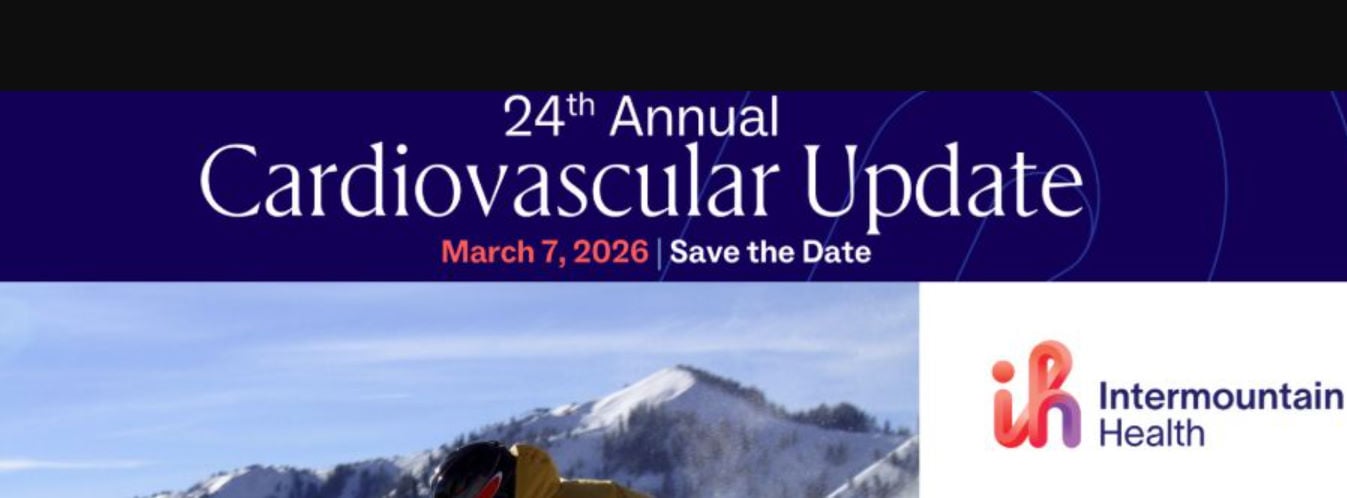
Intermountain Health 24th Annual Cardiovascular Update 2026

$25.00
Intermountain Cardiovascular Update 2026 reviews prevention, imaging, heart failure and structural heart disease.
Delivery Information: This Product is shared via google drive download link. Please use your correct Gmail address at checkout.
Please note: there are no CME points or certificate associated with this course.
Samples for Courses Can be found here: Free Samples Here!
MedicalAmboss File Scope: This listing describes the educational subject matter for reference. Provider registration, live attendance, streaming-platform access, CME or other credit, certificates, memberships, apps, accounts, and publisher-hosted extras are not included unless they are explicitly listed as store files. MedicalAmboss.
Intermountain Cardiovascular Update 2026
Intermountain Health Cardiovascular Update 2026 | Cardiology CME | Heart Failure | LDL Cholesterol | Lp(a) | Coronary Calcium | Cardiac Amyloidosis | Structural Heart Disease | Pulmonary Hypertension | CT Coronary Angiography
Information
Intermountain Health 24th Annual Cardiovascular Update 2026 is a comprehensive cardiovascular education program designed for physicians, advanced practice providers, nurses, and other healthcare professionals who care for patients with, or at risk for, cardiovascular disease.
The 2026 conference reviews important advances across preventive cardiology, heart failure, lipid management, cardiometabolic disease, pulmonary arterial hypertension, coronary imaging, structural heart disease, aortic disease, cardiac amyloidosis, women’s cardiovascular health, and cardiovascular risk reduction.
Presented by faculty from Intermountain Health together with invited national experts, the program emphasizes practical, evidence-based updates that can be applied to contemporary cardiovascular care.
Course Details
- Course: 24th Annual Cardiovascular Update
- Provider: Intermountain Health
- Date: March 7, 2026
- Time: 7:00 AM – 5:30 PM MT
- Location: Park City Hospital, Park City, Utah
- Specialty: Cardiovascular Medicine
- CME: Up to 8 AMA PRA Category 1 Credits™
- Nursing Credit: Up to 8 ANCC Contact Hours
- ABIM MOC: Up to 8 MOC Part 2 Points
- Language: English
The official event was held at Park City Hospital in Park City, Utah and was designed as a full-day cardiovascular update.
Target Audience
This annual cardiovascular update is intended for physicians, advanced practice providers, nurses, and other healthcare professionals caring for patients with or at risk for cardiovascular disease.
Relevant specialties include:
- Cardiology
- Preventive Cardiology
- Cardiothoracic Surgery
- Vascular Surgery
- Electrophysiology
- Heart Failure
- Endocrinology
- Internal Medicine
- Nephrology
- Pulmonology
- Preventive Medicine
- Primary Care
- Women’s Health
- Cardiovascular Imaging
- Cardiovascular Nursing
- Pharmacy
- Rehabilitation
It is particularly relevant for:
- Cardiologists
- Preventive Cardiologists
- Cardiothoracic Surgeons
- Vascular Surgeons
- Clinical Cardiac Electrophysiologists
- Heart Failure Specialists
- Pulmonologists
- Nephrologists
- Endocrinologists
- Obstetricians and Gynecologists involved in maternal cardiovascular care
- Cardiovascular Radiologists
- Primary Care Physicians
Program Overview
The program focuses on important changes in cardiovascular medicine that influence real-world clinical decision-making.
Major areas include:
- Lipid management
- LDL cholesterol testing
- Lipoprotein(a)
- Cardiometabolic disease
- Cardiovascular-kidney-liver metabolic health
- Pulmonary arterial hypertension
- Coronary artery calcium scoring
- Aortic disease
- ECG interpretation
- Heart failure
- Ejection fraction-based treatment
- Cardiac amyloidosis
- Hypertension in pregnancy
- Structural heart disease
- Smoking cessation
- Coronary CT angiography
- Functional FFR imaging
Learning Objectives
- Review new and important information regarding cardiovascular disease.
- Discuss latest advances in the management of cardiovascular disease.
- Facilitate nurses to self-report one change that they will make to their practice or performance as a result of this education.
- Facilitate nurses to self-report that their knowledge increased regarding the care of patients with cardiovascular disease as a result of this education.
Official Program Topics
Keynote: The Critical Importance of Testing for LDL Cholesterol
Nihar R. Desai, MD, MPH
This keynote addresses the central role of LDL cholesterol measurement in cardiovascular risk assessment and treatment.
Important considerations include:
- LDL cholesterol as a major atherosclerotic risk factor
- Risk stratification
- Treatment thresholds
- Residual risk
- Lipid-lowering therapy
- Preventive cardiology
- Clinical monitoring
The session emphasizes the importance of identifying and treating elevated LDL cholesterol as part of comprehensive cardiovascular prevention.
Lp(a): A New Risk Factor Coming Out of the Shadows and Into the Main Arena
Jeffrey L. Anderson, MD
This session reviews lipoprotein(a), or Lp(a), as an increasingly important cardiovascular risk marker.
Topics include:
- Lp(a) biology
- Hereditary cardiovascular risk
- Atherosclerotic cardiovascular disease
- Risk stratification
- Clinical testing
- Emerging therapeutic implications
Lp(a) has gained increasing attention in preventive cardiology because elevated levels can contribute to cardiovascular risk even when traditional risk factors are well controlled.
Fatty Heart Disease: Cardiovascular Kidney (Liver) Metabolic Health (CKLMH) – Adiposopathy and Patient-Centric Care
Viet Le, DHSc
This session examines the interaction between:
- Cardiovascular disease
- Kidney disease
- Metabolic dysfunction
- Liver disease
- Obesity
- Adiposopathy
The presentation emphasizes patient-centered approaches to cardiometabolic disease and the increasingly recognized overlap between cardiovascular, renal, hepatic, and metabolic conditions.
Pulmonary Arterial Hypertension: Update on Diagnosis and New Treatments
Kirk U. Knowlton, MD
This session reviews recent advances in pulmonary arterial hypertension (PAH).
Major areas include:
- Diagnosis
- Hemodynamic assessment
- Risk stratification
- Pulmonary vascular disease
- Contemporary treatment
- Emerging therapies
- Long-term management
The session is particularly relevant for cardiologists and pulmonologists caring for patients with pulmonary vascular disease.
How to Best Utilize the Results of a Coronary Artery Calcium Scan
J. Brent Muhlestein, MD
Coronary artery calcium scoring is increasingly used to refine cardiovascular risk assessment.
This presentation reviews how clinicians can use CAC results to support decisions involving:
- Primary prevention
- Statin treatment
- Risk reclassification
- Preventive therapy
- Patient counseling
- Long-term cardiovascular risk management
Advances in Treating Diseases of the Aorta
Billy Oslund, MD
This session reviews evolving approaches to aortic disease.
Important areas may include:
- Aortic aneurysm
- Aortic dissection
- Aortic imaging
- Surgical management
- Endovascular strategies
- Surveillance
- Patient selection
ECG Pearls
Frank G. Yanowitz, MD
This practical session focuses on clinically useful insights in electrocardiography.
Potential areas include:
- Rhythm interpretation
- Conduction abnormalities
- Ischemic changes
- Arrhythmia recognition
- ECG patterns
- Diagnostic pitfalls
Heart Failure and Cardiomyopathy
Keynote: Recent Advances in the Diagnosis and Treatment of Heart Failure
Biykem Bozkurt, MD, PhD, FAHA
This keynote reviews contemporary developments in heart failure diagnosis and treatment.
Major areas include:
- Heart failure classification
- Contemporary guideline-directed therapy
- Ejection fraction
- Disease progression
- Comorbidities
- New pharmacologic strategies
- Device and multidisciplinary care
Heart Failure Medications Across the Ejection Fraction Continuum
Kismet Rasmusson, DNP
Heart failure treatment is increasingly understood across the full spectrum of ejection fraction.
This session reviews medication strategies for patients with:
- Reduced ejection fraction
- Mildly reduced ejection fraction
- Preserved ejection fraction
The focus is on applying contemporary heart failure therapy according to phenotype and clinical context.
Identifying, Diagnosing, and Treating Cardiac Amyloidosis
Miguel A. Chavez Cavazos, MD
Cardiac amyloidosis has become an increasingly recognized cause of cardiomyopathy and heart failure.
This session examines:
- Clinical suspicion
- Diagnostic testing
- Imaging
- Amyloid subtypes
- Treatment
- Follow-up
- Multidisciplinary management
Earlier recognition is increasingly important as disease-specific therapies become available.
Pregnancy-Associated Hypertension: A New More Effective Treatment Pathway
Kirstin Hesterberg, DO
This session examines cardiovascular management of hypertension associated with pregnancy.
Topics include:
- Pregnancy-related hypertension
- Maternal cardiovascular risk
- Treatment pathways
- Postpartum risk
- Long-term cardiovascular implications
- Coordination between cardiology and women’s health
Structural Heart and Cardiovascular Imaging
Update on the Diagnosis and Treatment of Structural Heart Disease
Benjamin E. Peterson, MD
Structural heart disease continues to evolve rapidly with advances in imaging, catheter-based intervention, and multidisciplinary heart teams.
Relevant areas include:
- Valvular heart disease
- Structural abnormalities
- Imaging
- Patient selection
- Transcatheter intervention
- Surgical versus catheter-based strategies
Optimizing Smoking Cessation Education: What Are the Best Methods?
Kent G. Meredith, MD
Smoking remains a major modifiable cardiovascular risk factor.
This session reviews strategies to improve smoking cessation education and increase the effectiveness of counseling.
Key considerations include:
- Behavioral intervention
- Patient education
- Motivation
- Pharmacotherapy
- Follow-up
- Risk communication
- Cardiovascular prevention
CT Coronary Angiography with Functional FFR: Is It Ready for Routine Use?
Shane Ruckel, MD
This session examines the evolving use of coronary CT angiography combined with functional fractional flow reserve assessment.
Topics include:
- Coronary anatomy
- CT angiography
- Functional assessment
- Ischemia
- FFR
- Clinical decision-making
- Potential role in routine coronary evaluation
Major Topics Covered
Preventive Cardiology
The conference places strong emphasis on preventing cardiovascular disease through improved risk assessment and targeted intervention.
Important themes include:
- LDL cholesterol
- Lp(a)
- Smoking cessation
- Coronary calcium
- Obesity
- Cardiometabolic disease
- Risk stratification
Lipid Management
Modern cardiovascular prevention increasingly integrates traditional lipid measurements with emerging risk factors such as Lp(a).
Cardiometabolic Health
The program highlights the close relationship between:
- Cardiovascular disease
- Obesity
- Diabetes
- Kidney disease
- Liver disease
- Metabolic dysfunction
Heart Failure
Heart failure is a major focus of the conference, including contemporary diagnosis, medical therapy, phenotype-based treatment, and associated cardiomyopathies.
Cardiac Amyloidosis
Cardiac amyloidosis is addressed as an increasingly recognized and treatable cause of heart failure.
Pulmonary Hypertension
Pulmonary arterial hypertension requires specialized diagnosis and treatment and is addressed as a dedicated cardiovascular topic.
Structural Heart Disease
The program reviews current approaches to diagnosis and treatment of structural and valvular cardiovascular disease.
Coronary Imaging
Coronary calcium scoring and CT coronary angiography with functional FFR are both included as major imaging topics.
Aortic Disease
Contemporary treatment of aortic disease is addressed from both diagnostic and interventional perspectives.
Women’s Cardiovascular Health
Pregnancy-associated hypertension is highlighted as an important cardiovascular issue with implications both during pregnancy and later in life.
Smoking Cessation
Tobacco cessation remains one of the most important interventions for reducing cardiovascular risk.
Multidisciplinary Cardiovascular Care
The program reflects the increasingly multidisciplinary nature of cardiovascular medicine.
Cardiology
Provides risk assessment, diagnosis, medical therapy, and long-term cardiovascular management.
Preventive Cardiology
Focuses on lipid disorders, smoking cessation, cardiometabolic disease, and early risk identification.
Cardiothoracic and Vascular Surgery
Contribute to management of complex aortic, structural, and vascular disease.
Electrophysiology
Supports diagnosis and management of arrhythmias and ECG abnormalities.
Heart Failure
Provides specialized care for patients across the ejection fraction spectrum and with cardiomyopathies.
Pulmonology
Collaborates in the diagnosis and treatment of pulmonary hypertension.
Nephrology
Supports management of cardiorenal disease and overlapping metabolic risk.
Endocrinology
Contributes to diabetes, obesity, metabolic disease, and endocrine contributors to cardiovascular risk.
Women’s Health
Addresses pregnancy-associated cardiovascular disease and long-term maternal cardiovascular risk.
Cardiovascular Imaging
Supports coronary, structural, and aortic evaluation using advanced imaging.
Course Director
J. Brent Muhlestein, MD
Intermountain Health
Dr. J. Brent Muhlestein served as Course Director and Faculty for the 24th Annual Cardiovascular Update and also presented the session How to Best Utilize the Results of a Coronary Artery Calcium Scan.
Selected Faculty
The official faculty included:
- Biykem Bozkurt, MD, PhD, FAHA
- Miguel A. Chavez Cavazos, MD
- Nihar R. Desai, MD, MPH
- Kirstin Hesterberg, DO
- Stephen H. McKellar, MD
- Kent G. Meredith, MD
- Billy Oslund, MD
- Benjamin E. Peterson, MD
- Shane Ruckel, MD
- Frank G. Yanowitz, MD
- Kismet Rasmusson, DNP
- Jeffrey L. Anderson, MD
- Kirk U. Knowlton, MD
- Viet Le, DHSc
The official Intermountain Health conference page lists these speakers and their roles in the 2026 activity.
Why This Course Is Relevant
Cardiovascular medicine continues to change rapidly as new therapies, biomarkers, imaging strategies, and preventive approaches emerge.
The Intermountain Health 24th Annual Cardiovascular Update 2026 is especially relevant because it integrates:
- Preventive cardiology
- Lipid management
- Lp(a)
- Cardiometabolic risk
- Coronary calcium
- Heart failure
- Cardiac amyloidosis
- Pulmonary hypertension
- Aortic disease
- Structural heart disease
- Pregnancy-associated hypertension
- Smoking cessation
- Advanced coronary imaging
The program provides a broad, clinically oriented update suitable for specialists and generalists caring for patients with cardiovascular disease.
CME Information
Intermountain Health is accredited by the Accreditation Council for Continuing Medical Education (ACCME) to provide continuing medical education for physicians.
The original live activity was designated for:
- Up to 8 AMA PRA Category 1 Credits™
- Up to 8 ANCC Contact Hours
- Up to 8 ABIM MOC Part 2 Points
Credit applies only to eligible participation in the original accredited Intermountain Health activity and should not be assumed to accompany independently distributed educational recordings or files.
Short Description
Intermountain Health 24th Annual Cardiovascular Update 2026 provides a comprehensive cardiovascular medicine update covering LDL cholesterol, Lp(a), cardiometabolic disease, pulmonary hypertension, coronary calcium, aortic disease, heart failure, cardiac amyloidosis, pregnancy-associated hypertension, structural heart disease, smoking cessation, and coronary CT angiography with FFR.
Topics
-
Registration and Breakfast; Non-Accredited AstraZeneca Presentation
-
Welcome and Housekeeping
-
Keynote: The Critical Importance of Testing for LDL Cholesterol (Nihar R Desai, MD, MPH)
-
Lp(a): A New Risk Factor Coming Out of the Shadows and Into the Main Arena (Jeffrey L. Anderson, MD)
-
Fatty Heart Disease: Cardiovascular Kidney (Liver) Metabolic Health (CKLMH) – Adiposopathy and Patient-Centric Care (Viet Le, DHSc)
-
Pulmonary Arterial Hypertension: Update on Diagnosis and New Treatments (Kirk U. Knowlton, MD)
-
Panel Discussion (Morning Session 1)
-
Break with Vendors
-
How to Best Utilize the Results of a Coronary Artery Calcium Scan (J. Brent Muhlestein, MD)
-
Advances in Treating Diseases of the Aorta (Billy Oslund, MD)
-
ECG Pearls (Frank G. Yanowitz, MD)
-
Panel Discussion (Morning Session 2)
-
Lunch; Non Accredited Regeneron Presentation
-
Keynote: Recent Advances in the Diagnosis and Treatment of Heart Failure (Biykem Bozkurt, MD, PhD, FAHA)
-
Heart Failure Medications Across the Ejection Fraction Continuum (Kismet Rasmusson, DNP)
-
Identifying, Diagnosing, and Treating Cardiac Amyloidosis (Miguel A Chavez Cavazos, MD)
-
Pregnancy-Associated Hypertension: A New More Effective Treatment Pathway (Kirstin Hesterberg, DO)
-
Panel Discussion (Afternoon Session 1)
-
Break with Vendors
-
Update on the Diagnosis and Treatment of Structural Heart Disease (Benjamin E. Peterson, MD)
-
Optimizing Smoking Cessation Education: What are the Best Methods? (Kent G. Meredith, MD)
-
CT Coronary Angiography with Functional FFR: Is it Ready for Routine Use? (Shane Ruckel, MD)
-
Conference Summation
Related products
Medical Accounts

Critical Care - Emergency medicine
ASN Critical Care Nephrology – 2022 Update (On-Demand and Livestream)
Internal Medicine

Medical Accounts

Critical Care - Emergency medicine
Internal Medicine

Anesthesiology & pain medicine