
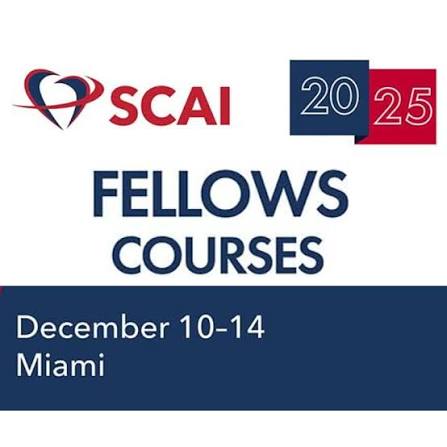
Society for Cardiovascular Angiography & Interventions Fellows Courses 2025
$60.00
This Product is shared via google drive download link, So please share your correct Gmail id while placing the order .Please note that there are no CME points or certificate associated with this course Samples for Courses Can be found here : Free Samples Here!
Society for Cardiovascular Angiography & Interventions Fellows Courses 2025
Interventional Cardiology • Congenital Heart Disease • Peripheral Vascular • Structural Heart Disease
December 10–14, 2025 | Hyatt Regency Miami | Miami, Florida
Develop the clinical knowledge, procedural judgment, technical skills, and professional competencies required for post-fellowship practice with the Society for Cardiovascular Angiography & Interventions Fellows Courses 2025.
Organized by the Society for Cardiovascular Angiography & Interventions (SCAI), the 2025 Fellows Courses were held December 10–14, 2025, in Miami, Florida, bringing together more than 300 fellows across four specialized interventional cardiovascular training tracks.
The program was designed to prepare the next generation of interventional cardiologists for independent practice through a combination of:
- Case-based education
- Didactic teaching
- Hands-on workshops
- Simulation
- Small-group learning
- Complication management
- Procedural planning
- Professional development
- Career mentorship
- Networking with internationally recognized faculty
The four official 2025 courses were:
- Interventional Cardiology Course
- Congenital Heart Disease Interventional Cardiology Course
- Advanced Peripheral Vascular Interventional Cardiology Course
- Advanced Structural Heart Disease Interventional Cardiology Course
Each course was designed around specialty-specific milestones while reinforcing core competencies in patient care, medical knowledge, professionalism, communication, practice improvement, and systems-based practice.
Course Details
- Program: SCAI 2025 Fellows Courses
- Organization: Society for Cardiovascular Angiography & Interventions – SCAI
- Year: 2025
- Overall Dates: December 10–14, 2025
- Venue: Hyatt Regency Miami
- Location: Miami, Florida
- Number of Courses: 4
- Attendance: 300+ Fellows
- Primary Specialty: Interventional Cardiology
- Major Tracks: Coronary Interventions, Congenital Heart Disease, Peripheral Vascular Interventions, Structural Heart Disease
- Educational Formats: Case-Based Sessions, Hands-On Workshops, Simulation, Small-Group Teaching, Didactic Education
- Primary Focus: Preparation for Post-Fellowship Interventional Cardiovascular Practice
- Primary Audience: Fellows-in-Training and Selected Early-Career Interventionalists
SCAI describes Fellows Courses as an annual program specifically designed to help interventional trainees develop the key abilities required to become independent practicing physicians.
Who Was the Original Program Designed For?
The Fellows Courses are primarily intended for:
- Interventional Cardiology Fellows
- Pediatric Cardiology Fellows interested in congenital interventions
- Structural Heart Disease Fellows
- Peripheral Vascular Fellows
- Vascular Surgery Fellows
- Vascular Medicine Fellows
- Interventional Radiology Fellows
- Selected early-career peripheral intervention specialists
- Physicians preparing for independent interventional practice
The strongest audience includes:
- Interventional Cardiologists
- Pediatric Cardiologists
- Vascular Surgeons
- Structural Heart Disease Specialists
Eligibility differed by track. The congenital course targeted third- or fourth-year pediatric cardiology fellows with an interest in catheterization, while the advanced peripheral course also accepted eligible early-career specialists within five years of fellowship.
Core Learning Objectives
Each course was designed to help fellows-in-training reach specialty-specific milestones in:
- Patient care and procedural skills
- Medical knowledge
- Professionalism
- Interpersonal and communication skills
- Practice-based learning and improvement
- Systems-based practice
These competencies form the educational framework across all four SCAI Fellows Courses.
INTERVENTIONAL CARDIOLOGY COURSE
December 10–14, 2025
The SCAI Interventional Cardiology Course focused on the full spectrum of contemporary coronary intervention, with state-of-the-art procedural techniques, emerging technologies, and current evidence presented largely through a case-based format.
The curriculum was designed to strengthen both technical skills and clinical decision-making across:
- Complex PCI
- High-risk PCI
- Coronary physiology
- Intravascular imaging
- Calcified lesions
- Left main disease
- CTO
- Cardiogenic shock
- Large-bore access
- PCI complications
- Drug-coated balloons
- Professional development
SCAI describes the coronary course as combining didactic sessions, hands-on workshops, case discussions, and procedural education across complex coronary disease.
Complex PCI
A central objective of the Interventional Cardiology track was to develop proficiency in complex percutaneous coronary intervention.
The program addressed:
- Lesion assessment
- Procedural planning
- Device selection
- Challenging coronary anatomy
- High-risk revascularization
- Complication management
The overall PCI pathway can be summarized as:
Assess Lesion → Plan Procedure → Select Imaging/Physiology → Modify Lesion → Perform PCI → Optimize Result
Left Main & Complex Coronary Disease
SCAI specifically identifies challenging lesions including:
- Left main coronary disease
- Chronic total occlusion – CTO
- Calcified coronary lesions
within the course overview.
These lesions require more advanced planning and procedural skill than routine PCI.
Intravascular Imaging
The course includes extensive use of:
- IVUS
- OCT
for PCI planning and optimization.
Intravascular imaging can help evaluate:
- Lesion morphology
- Vessel size
- Calcium
- Stent expansion
- Stent apposition
- Procedural complications
The program emphasizes integrating imaging into procedural decision-making rather than using angiography alone.
Coronary Physiology
SCAI also includes physiologic coronary assessment using:
- FFR
- iFR
- AngioFFR
- FFR CT
to improve lesion assessment and PCI selection.
This supports a more evidence-based approach to determining whether a coronary stenosis is functionally significant.
Calcified Coronary Lesions
The curriculum addresses treatment of calcified lesions using techniques including:
- Atherectomy
- Intravascular lithotripsy
These approaches are particularly relevant when severe calcification may limit balloon expansion or stent optimization.
Drug-Coated Balloons
The coronary track includes the application of drug-coated balloons in interventional cardiology.
This expands fellows’ familiarity with non-stent treatment strategies for selected coronary lesions.
Large-Bore Access
Large-bore arterial access is specifically addressed for high-risk PCI.
The course aims to develop proficiency in access planning and procedural technique in complex interventions.
Cardiogenic Shock in the Cath Lab
The Interventional Cardiology Course includes recognition and management of cardiogenic shock in the catheterization laboratory.
This connects:
Hemodynamic Instability → Coronary Assessment → Revascularization → Mechanical Support Decisions → Complication Management
PCI Complications
A core learning objective is to identify and manage complications associated with PCI procedures.
The broader course philosophy emphasizes preparedness for difficult procedural scenarios rather than teaching only routine cases.
Contemporary Evidence & Guidelines
Participants review clinical guidelines and contemporary evidence relevant to coronary interventions.
This helps integrate:
- Procedural skill
- Evidence-based practice
- Patient selection
- Outcomes
into a more complete interventional strategy.
Practice Building & Career Development
The Interventional Cardiology course also includes non-procedural topics such as:
- Practice building
- Jobs
- Contracts
- Career planning
- Occupational hazards
These sessions are intended to prepare fellows for the practical transition from fellowship into independent interventional practice.
CONGENITAL HEART DISEASE INTERVENTIONAL CARDIOLOGY COURSE
December 11–14, 2025
The Congenital Heart Disease Interventional Cardiology Course provided a four-day educational experience combining:
- Case-based learning
- Small-group discussions
- Hands-on workshops
- Procedural teaching
- Career mentorship
The curriculum focused on congenital interventions from neonatal care through adult congenital heart disease.
ASD Closure
The course includes techniques for:
Atrial Septal Defect – ASD Closure
with attention to:
- Device selection
- Procedural challenges
- Interventional technique
VSD Closure
Ventricular Septal Defect – VSD closure is another confirmed major procedural topic.
Participants review technical considerations and device selection within congenital interventions.
PDA Closure
The curriculum also includes:
Patent Ductus Arteriosus – PDA Closure
as part of the congenital defect-closure program.
Congenital Defect Closure
The combined defect-closure framework includes:
ASD + VSD + PDA
with emphasis on:
- Anatomy
- Device selection
- Technical approach
- Procedural complications
Urgent & Emergent CHD Interventions
A major learning objective is to recognize and manage:
Urgent and emergent complications during congenital heart interventions.
This is especially important because congenital catheterization frequently involves complex anatomy and vulnerable patients.
Neonatal Interventions
The course program includes neonatal interventions among its major educational areas.
Neonatal catheterization requires particularly careful consideration of:
- Patient size
- Vascular access
- Anatomy
- Hemodynamics
- Device selection
Single Ventricle Heart Disease
The curriculum addresses intervention throughout all stages of palliation in single ventricle heart disease.
This requires understanding of changing anatomy and physiology throughout staged congenital treatment.
Pulmonary Valve Interventions
Participants review pulmonary valve treatments ranging from:
- Valvuloplasty
- Transcatheter valve implantation
The objective is to understand both procedural options and patient selection.
Pulmonary Artery Interventions
The course includes rehabilitation and management of:
Complex pulmonary artery lesions.
This may involve advanced catheter-based strategies in complex congenital anatomy.
Adult Congenital Heart Disease
The congenital course extends beyond pediatric intervention to adults with congenital heart disease.
Confirmed areas include:
- Stent implantation
- Coronary intervention
- Complex adult congenital anatomy
Hands-On Congenital Workshops
SCAI emphasizes interactive and hands-on teaching throughout the course.
Participants receive procedural instruction with guidance from experienced congenital interventional cardiologists and industry experts.
ADVANCED PERIPHERAL VASCULAR INTERVENTIONAL CARDIOLOGY COURSE
December 11–14, 2025
The Advanced Peripheral Vascular Interventional Cardiology Course focused on advanced endovascular practice and step-by-step procedural instruction.
The program included:
- Ultrasound-guided access
- Cadaveric dissection
- 3D anatomical models
- Iliac vein stenting
- Thrombectomy
- Atherectomy
- Lower-extremity reconstruction
- PE and DVT intervention
- Revascularization planning
- Wound care
- Amputation decisions
Case Selection for Complex Endovascular Therapy
The course emphasizes appropriate progression in case complexity according to:
- Operator clinical experience
- Technical experience
- Disease complexity
- Patient risk
This recognizes that safe endovascular practice depends not only on knowing a technique but also on selecting the right patient and case.
Procedural Complication Management
Participants apply procedural techniques through clinical case vignettes that include complication management.
Atheromatous Plaque Therapy
The course compares multiple approaches to treatment of atheromatous plaque.
This includes evaluation of lesion-specific options rather than relying on one device or strategy for all peripheral disease.
Vascular Access & Closure
SCAI specifically includes:
- Access sites
- Closure techniques
- FDA-indicated closure devices
The program also incorporates ultrasound-guided access simulation.
Pulmonary Embolism
Interventional treatment of pulmonary embolism – PE is included within the peripheral vascular track.
Deep Vein Thrombosis
The course also covers procedural therapies for deep vein thrombosis – DVT.
Venous interventions are reinforced through simulation, including iliac vein stenting and thrombectomy.
Iliac Vein Stenting
Participants receive simulation-based training in iliac vein stenting.
Thrombectomy
The peripheral course includes hands-on simulation involving thrombectomy techniques.
Atherectomy
Atherectomy is another major procedural training area.
Participants compare plaque-modification strategies and gain hands-on experience with device-based treatment.
Complex Lower-Extremity PAD
The curriculum includes treatment strategies for:
Complex lower-extremity peripheral artery disease.
Aortoiliac Occlusive Disease
Aortoiliac occlusive disease is included among the complex peripheral vascular pathologies addressed in the course.
Long Femoropopliteal Lesions
The course also covers procedural therapies for:
Long femoropopliteal lesions.
Revascularization Strategy
A major objective is selecting the most appropriate revascularization method according to:
- Patient-specific factors
- Lesion characteristics
- Anatomy
- Clinical context
The curriculum also considers hybrid revascularization strategies.
Preprocedural Imaging
Participants review noninvasive imaging for:
- Procedural planning
- Access selection
- Disease mapping
This reinforces the importance of planning before entering the interventional suite.
Lower-Extremity Reconstruction
SCAI specifically emphasizes longitudinal management following lower-extremity reconstruction.
The program extends beyond the procedure itself to:
- Medical optimization
- Follow-up
- Team-based care
Wound Care
Appropriate wound care is a confirmed learning objective within the peripheral course.
This reflects the overlap between peripheral vascular intervention, limb preservation, and chronic wound management.
Amputation Indications
The curriculum reviews indications for:
- Limited amputation
- Major amputation
This helps place revascularization within the wider context of limb salvage and realistic clinical outcomes.
Cadaveric & 3D Model Training
The program includes anatomical dissection and procedural education using:
- Cadaveric models
- 3D models
This hands-on component is intended to strengthen understanding of anatomy, access, and procedural technique.
ADVANCED STRUCTURAL HEART DISEASE INTERVENTIONAL CARDIOLOGY COURSE
December 11–14, 2025
The Advanced Structural Heart Disease Interventional Cardiology Course focused on contemporary catheter-based structural interventions with extensive hands-on simulation and small-group education.
Major areas include:
- Intracardiac echocardiography
- Fusion imaging
- Transseptal puncture
- PFO closure
- ASD closure
- LAA occlusion
- TAVR
- Mitral intervention
- Tricuspid intervention
- Valve-in-valve
- BASILICA
- Valve fracturing
- Coronary protection
- CT planning
Intracardiac Echocardiography – ICE
The course provides hands-on training in intracardiac echocardiography.
Participants learn to:
- Manipulate the ICE catheter
- Obtain standard views
- Identify normal anatomy
- Identify abnormal anatomy
4D ICE
The 2025 program highlights contemporary 4D ICE guidance for structural procedures.
This reflects the growing role of intracardiac imaging during complex structural interventions.
Fusion Imaging
Participants review:
- Standard imaging views
- Fusion imaging
- Atrial septal anatomy
- Morphologic variants
Imaging is integrated directly into procedural planning and device placement.
PFO Closure
Treatment modalities include:
Patent Foramen Ovale – PFO Closure.
ASD Closure
The structural course also includes:
Atrial Septal Defect – ASD Closure.
Left Atrial Appendage Occlusion – LAAO
Left atrial appendage occlusion is another major structural intervention included in the official curriculum.
Transseptal Puncture
The course provides procedural training in percutaneous transseptal puncture using:
- Sheaths
- Wires
- Needles
- Radiofrequency-enabled access devices
This is a foundational technical skill for many left-sided structural procedures.
TAVR
The program includes Transcatheter Aortic Valve Replacement – TAVR across:
- Imaging
- Procedural planning
- Simulation
- CT analysis
- Advanced rescue and prevention techniques
CT Planning for TAVR
Participants review post-processing CT analysis for TAVR planning.
This reinforces the close relationship between advanced imaging and structural intervention.
Valve Fracturing
The curriculum includes:
Valve fracturing
as an advanced technique associated with transcatheter valve therapy.
BASILICA
The program also addresses:
Bioprosthetic or Native Aortic Scallop Intentional Laceration to Prevent Iatrogenic Coronary Artery Obstruction – BASILICA.
Coronary Protection
Coronary protection strategies are reviewed in association with high-risk structural valve procedures.
Mitral Valve Intervention
Structural training includes:
- Transcatheter mitral valve repair
- Transcatheter mitral valve replacement
- Mitral transcatheter edge-to-edge repair
Tricuspid Intervention
The 2025 course also includes contemporary tricuspid transcatheter edge-to-edge repair.
Valve-in-Valve Therapy
Valve-in-valve therapy is another confirmed structural treatment modality.
Structural Procedure Simulation
Hands-on simulators are used for:
- ICE
- Transseptal puncture
- TAVR
- TMVR
- Mitral TEER
- Tricuspid TEER
The course is intentionally designed to move beyond lecture-based learning toward procedural practice.
Professional Development
Across Fellows Courses, SCAI also emphasizes preparation for post-training practice.
Areas include:
- Career development
- Building professional networks
- Practice development
- Transition to independent practice
- Real-world procedural decision-making
The structural and peripheral tracks both explicitly include practice and professional development among their objectives.
International Faculty & Mentorship
All four courses are taught by internationally recognized faculty in an engaging, collegial environment.
Faculty interaction is a major component of the Fellows Courses model, allowing participants to:
- Discuss difficult cases
- Ask procedural questions
- Receive mentorship
- Build professional relationships
- Learn different operator approaches
Program Leadership
Confirmed 2025 program leadership includes:
Interventional Cardiology
Suzanne J. Baron, MD, MSc, FSCAI – Program Chair.
Congenital Heart Disease
Nathaniel W. Taggart, MD, FSCAI – Program Chair.
Advanced Peripheral Vascular
Matthew C. Bunte, MD, MS, FSCAI – Program Track Director.
Advanced Structural Heart Disease
Firas Zahr, MD, FSCAI – Program Track Director, with Jamie McCabe, MD serving as co-chair in the course overview.
Major Topics Covered
- Interventional Cardiology
- Coronary Intervention
- PCI
- Complex PCI
- High-Risk PCI
- Left Main PCI
- CTO
- IVUS
- OCT
- FFR
- iFR
- Coronary Physiology
- Calcified Coronary Lesions
- Atherectomy
- Intravascular Lithotripsy
- Drug-Coated Balloons
- Large-Bore Access
- Cardiogenic Shock
- PCI Complications
- Congenital Heart Disease
- ASD Closure
- VSD Closure
- PDA Closure
- Neonatal Intervention
- Single Ventricle Disease
- Pulmonary Valve Intervention
- Pulmonary Artery Intervention
- Adult Congenital Heart Disease
- Peripheral Vascular Disease
- Peripheral Artery Disease
- Pulmonary Embolism
- Deep Vein Thrombosis
- Iliac Vein Stenting
- Thrombectomy
- Atherectomy
- Aortoiliac Occlusive Disease
- Femoropopliteal Disease
- Lower-Extremity Reconstruction
- Hybrid Revascularization
- Wound Care
- Limb Salvage
- Amputation
- Structural Heart Disease
- ICE
- 4D ICE
- Fusion Imaging
- Transseptal Puncture
- PFO Closure
- LAA Occlusion
- TAVR
- Mitral Valve Repair
- TMVR
- Mitral TEER
- Tricuspid TEER
- Valve-in-Valve
- BASILICA
- Valve Fracturing
- CT Planning
- Coronary Protection
- Procedural Simulation
- Career Development
- Practice Building
- Contracts
- Professional Development
Who Should Take This Course?
Society for Cardiovascular Angiography & Interventions Fellows Courses 2025 is particularly relevant for:
- Interventional Cardiology Fellows
- Interventional Cardiologists
- Pediatric Cardiology Fellows
- Pediatric Cardiologists
- Congenital Interventional Cardiologists
- Structural Heart Disease Fellows
- Structural Heart Specialists
- Peripheral Vascular Intervention Fellows
- Vascular Surgeons
- Vascular Medicine Specialists
- Interventional Radiologists
- Early-Career Endovascular Specialists
- Physicians transitioning from fellowship to independent practice
The strongest clinical audience remains:
Interventional Cardiology
with four focused tracks in:
Coronary + Congenital + Peripheral Vascular + Structural Heart Disease
Why This Course Is Useful
The SCAI 2025 Fellows Courses provide a concentrated transition from fellowship-based learning toward independent interventional practice.
Coronary Interventions
- Complex PCI
- IVUS/OCT
- Coronary physiology
- Calcified lesions
- Cardiogenic shock
- PCI complications
Congenital Intervention
- ASD/VSD/PDA closure
- Neonatal intervention
- Single ventricle disease
- Pulmonary valve and artery intervention
- Adult CHD
Peripheral Vascular Intervention
- PAD
- PE
- DVT
- Atherectomy
- Thrombectomy
- Revascularization
- Limb preservation
Structural Heart Disease
- ICE
- Transseptal access
- TAVR
- LAAO
- Mitral intervention
- Tricuspid intervention
- BASILICA
- Valve-in-valve
Career Preparation
- Professional development
- Mentorship
- Practice building
- Contracts
- Networking
The overall professional-development pathway can be summarized as:
Knowledge → Case Selection → Procedural Planning → Technical Execution → Complication Management → Independent Practice
Product Summary
- Product: Society for Cardiovascular Angiography & Interventions Fellows Courses 2025
- Organization: Society for Cardiovascular Angiography & Interventions – SCAI
- Year: 2025
- Dates: December 10–14, 2025
- Venue: Hyatt Regency Miami
- Location: Miami, Florida
- Number of Fellows Courses: 4
- Attendance: 300+ Fellows
- Primary Specialty: Interventional Cardiology
- Course 1: Interventional Cardiology
- Course 2: Congenital Heart Disease Interventional Cardiology
- Course 3: Advanced Peripheral Vascular Interventional Cardiology
- Course 4: Advanced Structural Heart Disease Interventional Cardiology
- Educational Formats: Case-Based Education, Hands-On Workshops, Simulation, Small Groups, Didactics
- Primary Audience: Fellows-in-Training and Selected Early-Career Interventional Specialists
- Primary Focus: Skills and Knowledge for Post-Fellowship Practice
Short Description
Society for Cardiovascular Angiography & Interventions Fellows Courses 2025 is a comprehensive interventional cardiovascular training program held December 10–14, 2025, in Miami, Florida, designed to prepare fellows for post-fellowship practice.
The four-course program covers complex PCI, IVUS/OCT, coronary physiology, cardiogenic shock, congenital defect closure, neonatal and adult congenital interventions, peripheral artery and venous interventions, atherectomy, thrombectomy, TAVR, ICE, transseptal access, mitral and tricuspid interventions, BASILICA, valve-in-valve therapy, procedural complications, and professional development.
Topics
Interventional Cardiology Course — December 10–14, 2025
Confirmed major curriculum areas include:
- Complex PCI Techniques
- Lesion Assessment and Procedural Planning
- Left Main PCI
- Chronic Total Occlusion – CTO
- Intravascular Ultrasound – IVUS
- Optical Coherence Tomography – OCT
- FFR, iFR, AngioFFR and FFR CT
- Calcified Coronary Lesion Management
- Atherectomy
- Intravascular Lithotripsy
- Drug-Coated Balloons
- Large-Bore Access
- High-Risk PCI
- Cardiogenic Shock in the Catheterization Laboratory
- PCI Complication Management
- Contemporary PCI Guidelines and Evidence
- Peripheral and Structural Topics for Coronary Interventionalists
- Practice Building
- Jobs and Contracts
- Occupational Hazards
Congenital Heart Disease Interventional Cardiology Course — December 11–14, 2025
Confirmed major curriculum areas include:
- ASD Closure
- VSD Closure
- PDA Closure
- Device Selection
- Urgent and Emergent Congenital Interventions
- Neonatal Interventions
- Single Ventricle Heart Disease
- All Stages of Single Ventricle Palliation
- Pulmonary Valvuloplasty
- Transcatheter Pulmonary Valve Implantation
- Complex Pulmonary Artery Lesions
- Pulmonary Artery Rehabilitation
- Adult Congenital Heart Disease
- Stent Implantation
- Coronary Intervention in Adult CHD
- Complication Management
- Hands-On Procedural Workshops
- Career Mentorship and Networking
Advanced Peripheral Vascular Interventional Cardiology Course — December 11–14, 2025
Confirmed major curriculum areas include:
- Complex Endovascular Case Selection
- Complication Management
- Atheromatous Plaque Therapies
- Vascular Access
- Closure Techniques
- Ultrasound-Guided Access Simulation
- Pulmonary Embolism
- Deep Vein Thrombosis
- Iliac Vein Stenting
- Thrombectomy
- Atherectomy
- Complex Lower-Extremity PAD
- Aortoiliac Occlusive Disease
- Long Femoropopliteal Lesions
- Patient-Specific Revascularization
- Hybrid Revascularization
- Noninvasive Imaging for Procedural Planning
- Lower-Extremity Reconstruction
- Longitudinal Medical Optimization
- Team-Based Vascular Care
- Wound Care
- Limited and Major Amputation Indications
- Cadaveric Leg Workshop
- 3D Anatomical Models
- Practice and Professional Development
Advanced Structural Heart Disease Interventional Cardiology Course — December 11–14, 2025
Confirmed major curriculum areas include:
- Intracardiac Echocardiography – ICE
- 4D ICE
- Normal and Abnormal Intracardiac Anatomy
- Fusion Imaging
- Atrial Septal Imaging
- PFO Closure
- ASD Closure
- Left Atrial Appendage Occlusion – LAAO
- Transseptal Puncture
- TAVR
- TAVR CT Planning
- Transcatheter Mitral Valve Repair
- Transcatheter Mitral Valve Replacement
- Mitral TEER
- Tricuspid TEER
- Valve-in-Valve Therapy
- Valve Fracturing
- BASILICA
- Coronary Protection
- Structural Heart Simulation
- Case-Based Procedural Training
- Practice and Professional Development
Interventional Cardiology
-
Optimizing Antiplatelet Therapy in High-Risk PCI Cangrelor in AMI & Cardiogenic Shock.
-
Complex Lesions How To Treat Left Main, CTO Lesions and Bypass Graft Disease Approach to CTO.
-
Optimizing Antiplatelet Therapy in High-Risk PCI Case Presentation, Part 1.
-
Drug Coated Balloon for the Treatment of ISR Modern PCI for DCB.
-
Drug Coated Balloon for the Treatment of ISR The Role of Imaging in ISR and Mechanism of Action of DCB.
-
Navigating Calcified Lesions Clinical-Decision Making for Lesion Access and Vessel Prep. Accessing and Preparing Calcified Lesions.
-
Complex Lesions How To Treat Left Main, CTO Lesions and Bypass Graft Disease Approach to Calcified Lesions.
-
Optimizing Antiplatelet Therapy in High-Risk PCI Case Part 2 – Recap and Decision-Making.
-
Drug Coated Balloon for the Treatment of ISR Case Study DCB in ISR.
-
Hemodynamics PV Loops & Beyond Interactive HARVI simulated session.
-
Gearing Up Tools, Strategies, and Drugs for Optimal Intervention Must Know Strategies for PCI – Tips and Tricks for Optimal Intervascular Imaging.
-
Gearing Up Tools, Strategies, and Drugs for Optimal Intervention Must Know Strategies for PCI – Tips and Tricks for Optimal Device Delivery.
-
Gearing Up Tools, Strategies, and Drugs for Optimal Intervention Clinical Dilemmas in FFR, iFR, AngioFFR Interpretation A Case-Based Discussion.
-
Innovative Therapies in Coronary and PE Thrombus Management Computer Assisted Vacuum Thrombectomy Technology Overview.
-
PE in Practice Data, Decisions, and Program Building for the Young Interventional Cardiologist PE Risk Stratification & Clinical Data Overview.
-
Gearing Up Tools, Strategies, and Drugs for Optimal Intervention Must Know Strategies for PCI – Tips and Tricks for Optimal Interventional Access.
-
Complex Lesions How To Treat Left Main, CTO Lesions and Bypass Graft Disease Approach to Left Main PCI.
-
Drug Coated Balloon for the Treatment of ISR Case Conclusion.
-
Gearing Up Tools, Strategies, and Drugs for Optimal Intervention Welcoming Remarks.
-
Complex Lesions How To Treat Left Main, CTO Lesions and Bypass Graft Disease Approach to SVG PCI.
-
Gearing Up Tools, Strategies, and Drugs for Optimal Intervention Presidential Remarks.
-
Managing STEMI as a New Attending Interventional Management of Spontaneous Coronary Artery Dissection (SCAD).
-
SCAI Women in Innovations (WIN) Dessert Reception Thriving as Women Interventionalists – Integrating Home, Heart and Leadership Stepping Into Leadership Roles.
-
Do What Is Right Right Device • Right Patient • Right Time • Right Reasons Bridging the Gap in Acute Cardiac Support.
-
SCAI Women in Innovations (WIN) Dessert Reception Thriving as Women Interventionalists – Integrating Home, Heart and Leadership Taking Wellness to Heart.
-
The Future of Calcium Modification Innovation and Insights Beyond Fellowship Best Practices for Calcium Modification.
-
Targeting Inflammation in Atherosclerotic Disease A Case-Based Discussion Case Presentation.
-
Clinical Overview and Case Presentation of Renal Denervation using Radio Frequency Ablation SymplicityTM Procedural Overview.
-
Targeting Inflammation in Atherosclerotic Disease A Case-Based Discussion Novel Therapies for Targeting Inflammation in ASCVD.
-
Cardiogenic Shock Troubleshooting and Managing MCS Devices After Leaving the Cath Lab.
-
Targeting Inflammation in Atherosclerotic Disease A Case-Based Discussion What are Currently Available Strategies to Reduce Inflammatory Risk.
-
Clinical Overview and Case Presentation of Renal Denervation using Radio Frequency Ablation Case Studies.
-
Techniques to Deal With Challenging Lesions Coronary Artery Aneurysms When and How to Treat.
-
Techniques to Deal With Challenging Lesions Coronary Perforations Coils, Glues, and Microspheres When Covered Stents are Not Enough.
-
Role of FFRct and CT-Based Interactive Plaque Assessment in Guiding PCI What Is CT-Guided PCI Key Messages From the SCAISCCT Scientific Roundtable.
-
Techniques to Deal With Challenging Lesions In-stent Restenosis How to Perform DCB vs Brachytherapy.
-
A Career in Interventional Cardiology How To Succeed From a Professional Standpoint RVUs and CPT Codes How to Get Paid For What You Do.
-
Techniques to Deal With Challenging Lesions Retained Device When and How to Use Snares.
-
A Career in Interventional Cardiology How To Succeed From a Professional Standpoint Jobs and Contracts What You Need To Know Before You Sign.
-
Role of FFRct and CT-Based Interactive Plaque Assessment in Guiding PCI CT-Guided Bifurcation PCI and Myocardial Mass.
-
A Career in Interventional Cardiology How To Succeed From a Professional Standpoint Fostering a Culture of Continuous Learning How to Leverage Proctors, Your Societies (SCAI) and Industry.
-
Case Reviews With the Experts What Would You Do (Group A) Case Presentation 1 Conclusion.
-
A Career in Interventional Cardiology How To Succeed From a Personal Standpoint Looking After Yourself Outside the Cath Lab Finding Work-Life Balance.
-
Role of FFRct and CT-Based Interactive Plaque Assessment in Guiding PCI CT-Based Physiology and PCI Planning From FFRCT 1.0 for Diagnosis to FFRct 2.0 for PCI Plan.
-
SCAI Women in Innovations (WIN) Dessert Reception Thriving as Women Interventionalists – Integrating Home, Heart and Leadership Childcare in a Busy Home, how to Make it all Work.
-
Do What Is Right Right Device • Right Patient • Right Time • Right Reasons Case-Based Discussions.
-
Peripheral and Structural – What you Absolutely MUST Know! PFO for the Early Interventionalist.
-
The Future of Calcium Modification Innovation and Insights Beyond Fellowship Lessons Beyond Fellowship Insights from Faculty.
-
Cardiogenic Shock An Algorithmic Approach to MCS Escalation in the Cath Lab.
-
Managing STEMI as a New Attending Managing No Reflow and Limiting Infarct Size.
-
Use of Cardiac PET Imaging and Non-invasive Physiology in the Management of CAD patients in the catheterization lab-Case Based Studies Changing the Paradigm and Role of Non-invasive Physiology.
-
Managing STEMI as a New Attending Performing STEMI Interventions as a New Attending.
-
The Closure Lab Real Techniques, Real Cases, Real Practice Panel Presentation & Discussion.
-
Managing STEMI as a New Attending The Achilles’ Heal of STEMI Managing Large Thrombus and Refractory No Reflow.
-
The Closure Lab Real Techniques, Real Cases, Real Practice Breakfast Service.
-
Managing STEMI as a New Attending Unique Features of Managing STEMI with Cardiogenic Shock.
-
Cardiogenic Shock Shock Case Conclusion.
-
New Perspective in Coronary Physiology with FFRangio Intro and CW Overview.
-
Nightmares! (Complications) Abrupt Closure and Iatrogenic Dissection.
-
Use of Cardiac PET Imaging and Non-invasive Physiology in the Management of CAD patients in the catheterization lab-Case Based Studies Cardiac PET as Gatekeeper to the Cath Lab.
-
Nightmares! (Complications) Dislodged Hardware Wire, Stent or Catheter Tip.
-
New Perspective in Coronary Physiology with FFRangio Case review.
-
Nightmares! (Complications) My Worst STEMI Nightmares and What I Learned From Them.
-
Do What Is Right Right Device • Right Patient • Right Time • Right Reasons Past the Headlines The Fine Print Matters.
-
Nightmares! (Complications) Perforations Control, Seal, or Coil.
-
Nightmares! (Complications) Pericardiocentesis Done Right.
-
The Future of Calcium Modification Innovation and Insights Beyond Fellowship The Science Behind IVL’s Mechanism of Action.
-
Peripheral and Structural – What you Absolutely MUST Know! Addressing Coronary Artery Disease Post-TAVR.
-
Do What Is Right Right Device • Right Patient • Right Time • Right Reasons Panel Discussion and Audience Q&A.
-
Peripheral and Structural – What you Absolutely MUST Know! Balloon Aortic Valvuloplasty for the Interventional Cardiologist.
-
Cardiogenic Shock Shock Case Intro.
-
Peripheral and Structural – What you Absolutely MUST Know! Endovascular Skills To Address Vascular Complications.
-
Do What Is Right Right Device • Right Patient • Right Time • Right Reasons IABP at a Glance Numbers, Timing & FAQ.
-
Peripheral and Structural – What you Absolutely MUST Know! Endovascular Skills to Facilitate Large Bore Access.
-
Nightmares! (Complications) Managing Cardiac Arrest in the Cath Lab.
-
Optimizing Antiplatelet Therapy in High-Risk PCI Pharmacodynamics of Antiplatelet Therapies.
-
Optimizing Antiplatelet Therapy in High-Risk PCI Optimal Antiplatelet Strategies in High-Risk Patients.
-
Case Reviews With the Experts What Would You Do (Group A) Case Presentation 2 Introduction.
-
Optimizing Antiplatelet Therapy in High-Risk PCI Introductory Remarks & Pre-Test Questions.
-
Optimizing Antiplatelet Therapy in High-Risk PCI Conclusion & Post-Test Question.
-
Innovative Therapies in Coronary and PE Thrombus Management Coronary Mechanical Thrombectomy Overview & Data.
-
Role of FFRct and CT-Based Interactive Plaque Assessment in Guiding PCI CT-Based Interactive Plaque Assessment Towards CT-Guided Lesion Preparation.
-
Case Reviews With the Experts What Would You Do (Group A) Case Presentation 1 Introduction.
-
Optimizing Antiplatelet Therapy in High-Risk PCI Poll Which Factors Most Influence Your Antiplatelet Selection for STEMI Patients.
-
A Career in Interventional Cardiology How To Succeed From a Personal Standpoint Looking After Yourself in the Cath Lab Occupational Physical Hazards and How To Avoid Them.
-
Optimizing Antiplatelet Therapy in High-Risk PCI Poll What Is the Primary Clinical Advantage of Cangrelor.
-
Case Reviews With the Experts What Would You Do (Group A) Case Presentation 2 Conclusion.
Congenital Heart Disease
-
Decision-Making in the Management of RVOT Dysfunction Choosing a Patient-Centric Approach Harmony TPV Screening Report A Tool for Decision-Making.
-
Decision-Making in the Management of RVOT Dysfunction Choosing a Patient-Centric Approach Harmony TPV Product Overview and Current Clinical Data.
-
Decision-Making in the Management of RVOT Dysfunction Choosing a Patient-Centric Approach Harmony Loading and Deploying Video and Breakout Instructions.
-
Advancing CHD Outcomes Lifetime Management Considerations for Patients with Dysfunctional RVOT Valve Forward Navigating the SAPIEN 3 valve and Alterra adaptiv.
-
Advancing CHD Outcomes Lifetime Management Considerations for Patients with Dysfunctional RVOT SAPIEN Pulmonic Valve Procedural and Lifetime Considerations.
-
Pulmonary Vascular Interventions Rehabilitating Complex Pulmonary Arteries Case Based Presentation.
-
Pulmonary Vascular Interventions Pulmonary Vein Interventions.
-
Pulmonary Vascular Interventions Managing PA Complications.
-
Decision-Making in the Management of RVOT Dysfunction Choosing a Patient-Centric Approach Just Because You Can Implant, Should You Dive Into Decision-Making.
-
Decision-Making in the Management of RVOT Dysfunction Choosing a Patient-Centric Approach Melody TPV Product Overview and Current Clinical Data.
-
Pulmonary Vascular Interventions Approach to Distal Branch PA Interventions.
-
I Blew It! Case Presentation (2).
-
I Blew It! Case Presentation (1).
-
Flip Classroom Case Review Sinus Venosus ASD Case Presentation 2 Intro.
-
Flip Classroom Case Review ACHD Case Presentation Followed by Group Discussion.
-
Closing Defects ASD, VSD, and PDA Closure VSDs Technical Considerations and Available Devices.
-
Closing Defects ASD, VSD, and PDA Closure PDA Device and Delivery System Selection.
-
I Blew It! Case Presentation.
-
SCAI Women in Innovations (WIN) Dessert Reception Thriving as Women Interventionalists – Integrating Home, Heart and Leadership Childcare in a Busy Home, how to Make it all Work.
-
Advancing CHD Outcomes Lifetime Management Considerations for Patients with Dysfunctional RVOT Explore the Evidence A look at the Edwards SAPIEN 3 Pulmonic Valve.
-
Interventions in the Neonate and Infant Pulmonary Atresia With Intact Ventricular Septum.
-
Interventions in the Neonate and Infant PDA Stenting for Pulmonary Atresia.
-
Interventions in the Neonate and Infant Palliative RVOT Interventions in Infants With Tetralogy of Fallot.
-
Interventions in the Neonate and Infant Opening the Atrial Septum (Neonatal Management).
-
Interventions in the Neonate and Infant Balloon Pulmonary Valvuloplasty.
-
Interventions in the Neonate and Infant Aortic Valvuloplasty.
-
SCAI Women in Innovations (WIN) Dessert Reception Thriving as Women Interventionalists – Integrating Home, Heart and Leadership Stepping Into Leadership Roles.
-
The Adult With Congenital Heart Disease Approach to a Patient with Adult Congenital Heart Disease.
-
Single Ventricle Management Stenting in the Cavopulmonary Connection.
-
Single Ventricle Management Post-Stage 1 Interventions in Single Ventricle.
-
Single Ventricle Management Hybrid Norwoods.
-
Single Ventricle Management Fontan Fenestration Management.
-
SCAI Women in Innovations (WIN) Dessert Reception Thriving as Women Interventionalists – Integrating Home, Heart and Leadership Taking Wellness to Heart.
-
The Adult With Congenital Heart Disease Coronary Interventions in the Adult Congenital Patient.
-
Urgency and Emergencies Systemic Venous Obstructions.
-
Urgency and Emergencies Pericardiocentesis.
-
Urgency and Emergencies Lost and Found Retrieval of Embolized Devices, Catheters, & Fragments.
-
The Adult With Congenital Heart Disease Vasculopathy in ACHD Interventions How To Avoid Complications With Access and Interventions.
-
The Adult With Congenital Heart Disease Stent Implantation Coarctation.
-
The Adult With Congenital Heart Disease Knowing Left From Right Examples of Interventions in Senning and Mustard Adults.
-
Urgency and Emergencies Diagnosing and Dealing With Potentially Lethal Complications.
-
Closing Defects ASD, VSD, and PDA Closure Choosing the Right Device for Challenging ASD Closure.
Advanced Peripheral Vascular
-
Innovations in Carotid Stenting Clinical Insights and Practical Applications Carotid Symposium.
-
SCAI Women in Innovations (WIN) Dessert Reception Thriving as Women Interventionalists – Integrating Home, Heart and Leadership Childcare in a Busy Home, how to Make it all Work.
-
SCAI Women in Innovations (WIN) Dessert Reception Thriving as Women Interventionalists – Integrating Home, Heart and Leadership Stepping Into Leadership Roles.
-
Disaster Management Perforations Tips and Tricks.
-
SCAI Women in Innovations (WIN) Dessert Reception Thriving as Women Interventionalists – Integrating Home, Heart and Leadership Taking Wellness to Heart.
-
Disaster Management My Worst Cases EVER!.
-
Beyond Intervention Whole-Person CLTI Care Welcome and Overview.
-
Beyond Intervention Whole-Person CLTI Care Patient Perceptions of CLTI Care – Findings From the Beyond Intervention Campaign.
-
Flip Classroom Case Presentations Case Conclusion (1).
-
Flip Classroom Case Presentations Case Conclusion.
-
Flip Classroom Case Presentations Complex CLTI Case Intro.
-
Endovascular Access Complications Bailout Strategies.
-
Flip Classroom Case Presentations Deep Venous Case Intro.
-
Flip Classroom Case Presentations Group Discussion (1).
-
Infrainguinal Interventions Approach to the Patient With an SFA CTO Tools, Techniques, and Tips.
-
Infrainguinal Interventions Infrapopliteal Lesions Evidence-Based Techniques.
-
Infrainguinal Interventions Options for the No-Stent Zone.
-
Infrainguinal Interventions Panel Discussion.
-
Beyond Intervention Whole-Person CLTI Care A Model for Comprehensive, Team-Based CLTI Care.
-
Beyond Intervention Whole-Person CLTI Care Addressing Malnutrition in CLTI Care.
-
Beyond Intervention Whole-Person CLTI Care Evidence-based Endovascular Care and Outcomes.
-
Beyond Intervention Whole-Person CLTI Care Leveraging Continuous Glucose Monitoring for the CLTI Patient.
-
Endovascular Access Access Primer How to Get There and Best Practices.
-
Disaster Management I Can’t Get This Vessel Open Thrombus, Embolization, and the Like.
-
Advanced Peripheral Vascular Disease Complex Cases Complex Case Presentation Femoral Pseudo-aneurysm.
-
Advanced Peripheral Vascular Disease Complex Cases Complex Case Presentation Iliac Perforation.
-
Advanced Peripheral Vascular Disease Complex Cases Complex Case Presentation Stent Embolization.
-
Aortoiliac Interventions Aortic Aneurysm.
-
Aortoiliac Interventions Iliac Device Selection To Cover or Not Cover.
-
Aortoiliac Interventions Panel Discussion.
-
Disaster Management My Best CLI Cases of the Year.
-
Aortoiliac Interventions Tips and Tricks for Complex Aortoiliac Disease.
-
Atherectomy Academy Atherectomy Devices What Is Each Device Best At.
-
Business Essentials for the Endovascular Specialist Practice Models, ASCs, and Financial Fundamentals Preserving Physician Value in the Evolving Business of Healthcare.
-
Business Essentials for the Endovascular Specialist Practice Models, ASCs, and Financial Fundamentals REVAMPING My Career One Physician’s Journey to Indepedence.
-
Deep Venous Interventions (Deep Vein Compression, DVT, PE) Nuts and Bolts of PE Interventions.
-
Deep Venous Interventions (Deep Vein Compression, DVT, PE) Panel Discussion.
-
Deep Venous Interventions (Deep Vein Compression, DVT, PE) State-of-the-Art DVT Management.
-
Dinner Program Mastering PE Thrombectomy Strategies for Procedural Efficiency and Clinical Success Hands-on Workshop.
-
Dinner Program Renal Denervation for Uncontrolled Hypertension Clinical Evidence of Using the ReCor Paradise System.
-
Dinner Program Renal Denervation for Uncontrolled Hypertension Clinical Evidence Using the Medtronic Spyral System.
-
Dinner Program Renal Denervation for Uncontrolled Hypertension Costs, Coverage, and SCAI Policy on Renal Denervation.
-
Dinner Program Renal Denervation for Uncontrolled Hypertension Evolution of RDN Technology.
-
Dinner Program Renal Denervation for Uncontrolled Hypertension Introductory Remarks.
-
Dinner Program Renal Denervation for Uncontrolled Hypertension Rapid Fire Cases – Medtronic (1).
-
Dinner Program Renal Denervation for Uncontrolled Hypertension Rapid Fire Cases – Medtronic.
-
Dinner Program Renal Denervation for Uncontrolled Hypertension Rapid Fire Cases – ReCor.
-
Dinner Program Renal Denervation for Uncontrolled Hypertension Staring a Renal Denervation Program.
-
Disaster Management Discussion.
-
Business Essentials for the Endovascular Specialist Practice Models, ASCs, and Financial Fundamentals Practice Models Opportunities and Tradeoffs.
-
Business Essentials for the Endovascular Specialist Practice Models, ASCs, and Financial Fundamentals Panel Discussion.
-
Becoming an Endovascular Specialist Coalition Building and Team-based Vascular Care.
-
Becoming an Endovascular Specialist Discussion (1).
-
Becoming an Endovascular Specialist Discussion.
-
Becoming an Endovascular Specialist Mentors, Mentees, and Mastery.
-
Becoming an Endovascular Specialist Navigating Your Career Options.
-
Becoming an Endovascular Specialist Noninvasive Imaging – Getting the Most out of Your Vascular Lab.
-
Becoming an Endovascular Specialist Research, Consulting, and Industry Relations.
-
Becoming an Endovascular Specialist Training for Endovascular Practice.
-
Becoming an Endovascular Specialist Welcoming Remarks.
-
Below the KneeCLTI Billing, Compensation, and Financial Literacy 101.
-
Below the KneeCLTI Evolving Therapies.
-
Below the KneeCLTI New Technologies What’s Coming.
-
Below the KneeCLTI Wire Options How To Cross.
-
Breakfast Program The Utility of Covered Stents in the Treatment of Complex PAD Treatment AIOD Case Review & Discussion Covered Stent.
-
Breakfast Program The Utility of Covered Stents in the Treatment of Complex PAD Treatment Introductory Remarks.
-
Business Essentials for the Endovascular Specialist Practice Models, ASCs, and Financial Fundamentals Ambulatory Surgical Centers in Early Career.
Advanced Structural Heart Disease
-
Advanced Structural Course Debrief Debrief Discussion.
-
Breakfast Program Advancing AFib Patient Care Left Atrial Appendage Closure & Stroke Risk Reduction A Peek into the Future of LAAC.
-
Breakfast Program Advancing AFib Patient Care Left Atrial Appendage Closure & Stroke Risk Reduction Optimizing Left Atrial Appendage Closure Tools and Techniques for an Ideal Implant.
-
Breakfast Program Advancing AFib Patient Care Left Atrial Appendage Closure & Stroke Risk Reduction The Latest in WATCHMAN Clinical Data.
-
Breakfast Program Contemporary TAVI The VISION for Optimizing Procedural Outcomes Introduction.
-
Breakfast Program Contemporary TAVI The VISION for Optimizing Procedural Outcomes Recorded Navitor Case Discussion and Q&A.
-
Breakfast Program Contemporary TAVI The VISION for Optimizing Procedural Outcomes Techniques to Optimize Procedural Outcomes.
-
Breakfast Program Contemporary TAVI The VISION for Optimizing Procedural Outcomes The FlexNav Delivery System and Navitor Valve Design.
-
Breakfast Program Contemporary TAVI The VISION for Optimizing Procedural Outcomes Valve Performance.
-
Breakfast Program Innovations in TAVR TAVR for Aortic Regurgitation with a Dedicated System Transcatheter Intervention for Aortic Regurgitation Emerging Technologies and Clinical Trial Data.
-
Mitral and Tricuspid, Part 1 – Imaging Update on Tricuspid Repair.
-
Mitral and Tricuspid, Part 2 Updates in Mitral Replacement.
-
Mitral and Tricuspid, Part 2 Updates in Tricupsid Replacement.
-
Off-Label Procedures PVL Closure How To.
-
Panel Discussion Transitioning From Fellowship to Practice How Do You Integrate Yourself Into a Program.
-
Panel Discussion Transitioning From Fellowship to Practice How To Build a Structural Heart Program.
-
Panel Discussion Transitioning From Fellowship to Practice How to Choose the Job for You.
-
Patent Foramen Ovale (PFO) and Atrial Septal Defect (ASD) Discussion.
-
Patent Foramen Ovale (PFO) and Atrial Septal Defect (ASD) Fundamentals of PFO Closure.
-
SCAI Women in Innovations (WIN) Dessert Reception Thriving as Women Interventionalists Childcare in a Busy Home, how to Make it all Work.
-
SCAI Women in Innovations (WIN) Dessert Reception Thriving as Women Interventionalists Stepping Into Leadership Roles.
-
SCAI Women in Innovations (WIN) Dessert Reception Thriving as Women Interventionalists Taking Wellness to Heart.
-
TAVR, Part 2 TAVR Cases with Access Challenges.
-
Transcatheter Aortic Valve Replacement (TAVR), Part 1 How to Pick a Valve in These Challenging Anatomies.
-
Transcatheter Aortic Valve Replacement (TAVR), Part 1 Lifetime Management How Would you Handle these Cases.
-
Mitral and Tricuspid, Part 1 – Imaging Update on Mitral Repair.
-
Mitral and Tricuspid, Part 1 – Imaging ECHO Imaging for Mitral and Tricuspid.
-
Breakfast Program Innovations in TAVR TAVR for Aortic Regurgitation with a Dedicated System TRILOGY SIMULATOR HANDS-ON DEMONSTRATION.
-
Complications in Structural Heart Small Group Case Review Case Conclusion (1).
-
Complications in Structural Heart Small Group Case Review Case Conclusion.
-
Complications in Structural Heart Small Group Case Review Case Introduction (1).
-
Complications in Structural Heart Small Group Case Review Case Introduction.
-
ICE Workshop ICE Guidance in T-TEER Why and How.
-
ICE Workshop ICE Guided LAAO Why and How.
-
Breakfast Program Innovations in TAVR TAVR for Aortic Regurgitation with a Dedicated System Current State of the Art and Unmet Clinical Needs for Treatment of Aortic Regurgitation.
-
Lunch Program How Clinical Evidence Can Help Drive Decision-Making Bicuspid Aortic Valve TAVR.
-
Lunch Program How Clinical Evidence Can Help Drive Decision-Making Small Annulus TAVR.
-
Lunch Program Optimizing Stroke Prevention Enhancing Patient Outcomes in LAAO with Amulet Discussion.
-
Lunch Program Optimizing Stroke Prevention Enhancing Patient Outcomes in LAAO with Amulet Optimizing Stroke Prevention Enhancing Patient Outcomes in LAAO with Amulet.
-
Lunch Program Optimizing Stroke Prevention Enhancing Patient Outcomes in LAAO with Amulet Presentation 2.
-
Mitral and Tricuspid, Part 1 – Imaging CT Imaging for Mitral and Tricuspid.
-
Mitral and Tricuspid, Part 1 – Imaging Discussion.
-
ICE Workshop Introduction ICE use in Streamlining Structural Heart Procedures.
-
Transcatheter Aortic Valve Replacement (TAVR), Part 1 Presidential Remarks.
Related products
Cardiology
Anesthesiology & pain medicine
Internal Medicine

Internal Medicine
Critical Care - Emergency medicine
Critical Care - Emergency medicine
ASN Critical Care Nephrology – 2022 Update (On-Demand and Livestream)

Critical Care - Emergency medicine
Critical Care - Emergency medicine