

American Academy of Otolaryngic Allergy Basic Course in Allergy & Immunology 2026

$200.00
Structured otolaryngic allergy education covering testing, immunology, immunotherapy, asthma, airway disease, treatment planning and patient safety.
Delivery Information: This Product is shared via google drive download link. Please use your correct Gmail address at checkout.
Please note: there are no CME points or certificate associated with this course.
Samples for Courses Can be found here: Free Samples Here!
AAOA Basic Course in Allergy & Immunology 2026
American Academy of Otolaryngic Allergy
Allergy Testing • SCIT • SLIT • Immunology • Unified Airway • Asthma
Build a practical foundation in allergy diagnosis and treatment with the American Academy of Otolaryngic Allergy (AAOA) Basic Course in Allergy & Immunology 2026.
Designed specifically around allergy and inflammatory diseases affecting the airways and head and neck, this comprehensive hybrid program helps otolaryngologists and other ENT healthcare professionals integrate allergy evaluation and management into everyday clinical practice.
The 2026 educational cycle included:
- Pre-Work Launch: June 9, 2026
- Live In-Person & Live Streaming: July 9–11, 2026
- Location: The Diplomat, Hollywood, Florida
- Post-Course Recorded Content Access: Through September 14, 2026
- Platform: Whova App
- Format: Hybrid – In-Person + Virtual + On-Demand Content
The curriculum moves systematically from fundamental allergy and immunology concepts through diagnostic testing and finally to practical treatment with pharmacotherapy, SCIT, SLIT, dose calculations, vial preparation, and management of related airway disease.
Course Details
- Course: Basic Course in Allergy & Immunology
- Provider: American Academy of Otolaryngic Allergy – AAOA
- Year: 2026
- Pre-Work Launch: June 9, 2026
- Live Course: July 9–11, 2026
- Official Access Window: Through September 14, 2026
- Venue: The Diplomat
- Location: Hollywood, Florida
- Original Format: Hybrid
- Primary Specialty: ENT / Otolaryngology
- Clinical Focus: Otolaryngic Allergy & Immunology
- Official CME Activity: Up to 26.25 AMA PRA Category 1 Credits™
- ABOHNS Recognition: 26.25 CC Part II Hours
- Language: English
Course Purpose
The AAOA Basic Course presents basic concepts and practical techniques applicable to the clinical care of allergic patients.
The program is particularly designed for clinicians who want to integrate allergy assessment and management into an otolaryngology practice.
The educational pathway can be summarized as:
Understand Allergy → Identify the Patient → Test Appropriately → Interpret Results → Control Exposure → Use Pharmacotherapy → Consider Immunotherapy → Monitor Safely
Major Areas of Study
The official AAOA curriculum focuses on:
- Introduction to Allergy
- Basic Immunology
- Allergy Epidemiology
- Genetics of Allergy
- Clinical Manifestations of Allergic Disease
- Allergy and Head & Neck Disease
- Unified Airway
- Allergy Testing
- Skin Prick Testing
- Intradermal Testing
- Modified Quantitative Testing
- Specific IgE / In Vitro Testing
- Allergen Characteristics
- Allergen Standardization
- Allergen Classes
- Environmental Control
- Allergy Pharmacotherapy
- Subcutaneous Immunotherapy – SCIT
- Sublingual Immunotherapy – SLIT
- Immunotherapy Dose Calculations
- Vial Preparation
- Asthma
- Food Allergy
- Biologics
- Allergy Practice Integration
INTRODUCTION TO ALLERGY
Overview of Allergies & Head and Neck Disease
Allergic disease frequently overlaps with conditions encountered in otolaryngology.
Symptoms may include:
- Nasal obstruction
- Rhinorrhea
- Sneezing
- Nasal itching
- Postnasal drainage
- Sinus symptoms
- Ear complaints
- Cough
- Airway symptoms
Understanding allergic mechanisms can help clinicians distinguish allergic disease from other inflammatory or structural ENT conditions.
Immunology of Allergy
The course introduces the immunologic basis of allergic disease.
Important concepts include:
- Immune recognition
- IgE-mediated hypersensitivity
- Mast cells
- Basophils
- Cytokines
- Allergic inflammation
- Sensitization
- Clinical allergic response
This foundation is important before moving into diagnostic testing or immunotherapy.
Epidemiology of Allergy
Allergic diseases are extremely common and frequently coexist.
The program reviews the epidemiology of allergic conditions and how prevalence influences clinical practice.
Genetics of Allergy
Genetic susceptibility contributes to the development of atopic disease.
The clinical phenotype ultimately reflects interaction among:
Genetics + Environment + Exposure + Immune Response
Clinical Manifestations of Allergic Disease
Allergy can involve multiple organ systems.
Common presentations may affect:
- Nose
- Sinuses
- Lower airway
- Skin
- Eyes
- Gastrointestinal system
The AAOA course emphasizes presentations particularly relevant to ENT and upper-airway practice.
Unified Airway
One of the important advanced concepts introduced in the course is:
Unified Airway Disease
The upper and lower respiratory tracts should not always be viewed as unrelated systems.
Conditions such as:
- Allergic rhinitis
- Chronic rhinosinusitis
- Asthma
can share inflammatory mechanisms and influence one another.
ALLERGY TESTING
Accurate allergy treatment starts with appropriate diagnosis.
The course provides structured education in major diagnostic approaches including:
- Skin prick testing
- Intradermal testing
- Modified quantitative testing
- In vitro specific IgE testing
Skin Testing I
Testing Board, Controls, Indications & Contraindications
Before performing skin testing, clinicians need to understand:
- Appropriate indications
- Contraindications
- Positive and negative controls
- Medication effects
- Test preparation
- Patient safety
A technically performed test is only useful when the patient is appropriately selected.
Skin Prick Testing
Skin prick testing is an important tool for identifying IgE-mediated sensitization.
Interpretation requires attention to:
- Proper controls
- Wheal response
- Allergen selection
- Clinical history
- Test quality
A positive test alone does not necessarily establish clinically relevant allergy.
The result should be interpreted in context.
Intradermal Testing
Intradermal testing introduces allergen beneath the skin and can provide additional information in selected clinical situations.
Because it differs in sensitivity and risk from prick testing, appropriate technique and patient selection are important.
Modified Quantitative Testing
The Basic Course includes Modified Quantitative Testing – MQT as part of the skin-testing curriculum.
This reflects AAOA’s practical focus on allergy testing within otolaryngology practices.
Specific IgE Testing
The program also covers:
Specific IgE / In Vitro Testing
Blood-based testing can be useful when skin testing is:
- Not practical
- Contraindicated
- Difficult to interpret
- Affected by medications or skin conditions
Test selection should be based on the clinical question rather than ordering unnecessarily broad panels.
Choosing an Allergen Panel
The 2026 agenda includes discussion of:
Which and How Many Antigens Should You Test For?
Appropriate allergen selection depends on:
- Geographic region
- Exposure history
- Symptoms
- Seasonal pattern
- Indoor vs. outdoor exposure
- Clinical relevance
Testing every possible allergen is not necessarily better testing.
Challenges in Skin Testing
The course includes panel discussion of real-world problems encountered during testing.
Examples may involve:
- Poor control response
- Medication interference
- Dermatographism
- Borderline reactions
- Discordant history and testing
- Selecting additional testing
Skin Testing Practicum
A hands-on component of the original AAOA activity demonstrates testing technique.
This is important because allergy testing involves both:
Knowledge + Procedural Technique
ALLERGEN CHARACTERISTICS & STANDARDIZATION
Different allergen extracts vary in:
- Potency
- Composition
- Standardization
- Stability
Understanding allergen characteristics is particularly important when clinicians progress from diagnostic testing to immunotherapy formulation.
Allergen Classes
Relevant allergens can include:
- Pollens
- Grasses
- Trees
- Weeds
- Molds
- Dust mites
- Animal allergens
- Other clinically relevant exposures
Test selection should reflect individual patient exposure.
TREATMENT OF ALLERGY
Treatment is not limited to a single medication.
A comprehensive approach may involve:
Environmental Control + Pharmacotherapy + Immunotherapy
depending on disease severity and patient characteristics.
Environmental Control
Reducing clinically important exposure may complement medical treatment.
Strategies should be based on:
- Confirmed relevant sensitization
- Realistic exposure reduction
- Patient-specific environment
Avoidance recommendations should be practical rather than excessively burdensome.
Allergy Pharmacotherapy
Pharmacologic treatment can include therapies selected according to:
- Symptoms
- Severity
- Comorbid disease
- Previous response
- Patient preference
The objective is effective control with appropriate safety and adherence.
SUBCUTANEOUS IMMUNOTHERAPY – SCIT
SCIT is one of the central treatment areas of the AAOA Basic Course.
The course reviews concepts involving:
- Patient selection
- Allergen selection
- Extract preparation
- Dose calculations
- Escalation
- Maintenance
- Safety
- Monitoring
How Immunotherapy Works
Allergen immunotherapy aims to modify the patient’s immune response rather than simply suppress symptoms.
This makes immunotherapy fundamentally different from purely symptomatic pharmacotherapy.
SCIT Patient Selection
Not every allergic patient requires injection immunotherapy.
Clinical factors may include:
- Confirmed allergic sensitization
- Symptom severity
- Exposure
- Response to conventional treatment
- Patient preference
- Safety considerations
Dose Calculations
One of the practical skills emphasized by AAOA is:
Immunotherapy Dose Calculation
Accurate calculations are critical for:
- Vial preparation
- Escalation schedules
- Maintenance therapy
- Patient safety
This is an area where theoretical understanding must be combined with supervised practical competency.
Vial Preparation
The Basic Course includes preparation of allergen immunotherapy vials.
Important concepts can include:
- Extract selection
- Concentration
- Dilution
- Labeling
- Documentation
- Storage
- Safety procedures
SUBLINGUAL IMMUNOTHERAPY – SLIT
The 2026 course places greater emphasis on integrating SLIT into treatment discussions.
This is one of the specific updates highlighted by AAOA.
SCIT vs. SLIT
The course helps clinicians understand different immunotherapy approaches.
Decision-making may involve:
- Indication
- Allergen
- Evidence
- Administration route
- Adherence
- Safety considerations
- Patient preference
SLIT in Otolaryngic Allergy
SLIT is particularly relevant to clinicians interested in expanding therapeutic options for selected allergic patients.
The course integrates SLIT throughout treatment discussions rather than treating it as an isolated advanced topic.
IMMUNOLOGY OF BIOLOGICS
The 2026 live agenda includes:
Immunology of Biologics
This introduces clinicians to the mechanisms underlying contemporary biologic therapies used in selected allergic and inflammatory diseases.
Biologic Therapies
Biologic therapy increasingly intersects with management of disorders such as:
- Severe asthma
- Chronic inflammatory airway disease
- Selected allergic disorders
Understanding the immunologic target can help clinicians understand why a biologic may be useful in a specific disease phenotype.
ASTHMA
Asthma is included among the advanced clinical topics in the Basic Course.
It is especially important because of the close relationship between:
Upper Airway Allergy ↔ Lower Airway Disease
Allergy & Asthma
Patients with allergic rhinitis may also have asthma.
Clinical assessment may therefore include questions regarding:
- Wheezing
- Cough
- Dyspnea
- Exercise symptoms
- Nocturnal symptoms
- Trigger exposure
Recognition of lower-airway involvement is important when managing allergic patients in ENT practice.
FOOD ALLERGY
The Basic Course introduces the principles of food allergy.
Key concepts include distinguishing:
True Immune-Mediated Food Allergy
from:
Food Intolerance or Other Adverse Food Reactions
Food Allergy Evaluation
Diagnosis requires careful integration of:
- History
- Timing
- Reproducibility
- Symptoms
- Testing where appropriate
Testing should not substitute for clinical assessment.
ALLERGY & HEAD AND NECK DISEASE
The AAOA program is distinctive because it teaches allergy through an otolaryngology-head and neck perspective.
Rather than offering a general immunology curriculum alone, it emphasizes allergic and inflammatory disorders relevant to:
- Nose
- Sinuses
- Upper airway
- ENT practice
Adding Allergy to an ENT Practice
The 2026 agenda includes a dedicated panel on:
Adding Allergy to Your Practice
This addresses the practical transition from knowledge acquisition to clinical implementation.
Practice Integration
Adding allergy services requires consideration of:
- Patient selection
- Staff training
- Testing workflow
- Equipment
- Documentation
- Immunotherapy procedures
- Emergency preparedness
- Quality assurance
Allergy Practice Workflow
A practical pathway might be:
ENT Evaluation → Allergy History → Appropriate Testing → Interpretation → Environmental / Medical Treatment → Immunotherapy When Indicated → Monitoring
Clinical Competency Goals
AAOA states that the course is intended to improve competence in:
- Evaluation of allergic patients
- Management of allergic patients
- Appropriate allergy-testing techniques
- Environmental control
- Allergy pharmacotherapy
- Safe immunotherapy delivery
These represent the central outcomes of the program.
Hands-On Training Notice
The original AAOA hybrid course included face-to-face hands-on practica designed to demonstrate clinical techniques.
A recorded or independently distributed version of the course should not be described as providing actual hands-on procedural training.
Recorded educational material can demonstrate:
- Testing technique
- Immunotherapy workflow
- Vial preparation concepts
but it does not replace supervised practical training.
Major Topics Covered
- Allergy & Immunology
- Otolaryngic Allergy
- Allergic Rhinitis
- Head and Neck Allergy
- Allergy Epidemiology
- Allergy Genetics
- IgE-Mediated Allergy
- Unified Airway
- Skin Prick Testing
- Intradermal Testing
- Modified Quantitative Testing
- MQT
- Specific IgE Testing
- In Vitro Allergy Testing
- Allergen Standardization
- Allergen Classes
- Environmental Control
- Allergy Pharmacotherapy
- Immunotherapy
- SCIT
- SLIT
- Dose Calculations
- Vial Preparation
- Biologics
- Asthma
- Food Allergy
- Allergy Practice Integration
Who Should Take This Course?
The official AAOA audience includes:
- Otolaryngologists
- ENT Physicians
- AAOA Members Providing Allergy Care
- Otolaryngology Residents
- Physician Assistants working in ENT
- Nurse Practitioners working in ENT
- Allied Health Staff supporting allergy care
The course is especially relevant for clinicians who want to:
- Add allergy evaluation to ENT practice
- Improve allergy-testing knowledge
- Better understand immunotherapy
- Incorporate SCIT and SLIT
- Strengthen management of allergic airway disease
Why This Course Is Useful
The AAOA Basic Course in Allergy & Immunology 2026 offers a structured pathway from basic science to clinical implementation.
Learners can review:
- Immunology
- Epidemiology
- Allergy manifestations
- Unified airway
- Skin testing
- Specific IgE
- Test interpretation
- Environmental management
- Pharmacotherapy
- SCIT
- SLIT
- Dose calculations
- Vial preparation
- Asthma
- Food allergy
- Biologics
- Practice integration
The course can be summarized as:
Allergy Fundamentals → Diagnostic Testing → Treatment → Immunotherapy → ENT Practice Integration
Original AAOA Accreditation
The original AAOA activity is accredited for a maximum of:
26.25 AMA PRA Category 1 Credits™
and:
26.25 ABOHNS Continuing Certification Part II Hours
for eligible participants completing the official AAOA activity requirements.
Only physicians may receive AMA PRA Category 1 Credit™.
Non-physician participants can receive documentation of participation according to the official AAOA accreditation framework.
Important CME Distinction
The 26.25 credits apply to eligible participation in the official AAOA CME activity.
This MedicalAmboss product does not include:
- 26.25 CME Credits
- ABOHNS CC Credit
- Official AAOA Certificate
These benefits require eligible participation in the official AAOA activity and are separate from this downloadable product.
Official Course Timeline
- June 9, 2026: Pre-Work Launched
- July 9–11, 2026: Live In-Person + Live Stream
- August 8, 2026: Official Registration Deadline
- September 14, 2026: Official Recorded Content Access Deadline
Course Summary
AAOA Basic Course in Allergy & Immunology 2026 provides foundational and practical training in otolaryngic allergy, immunology, diagnostic testing, pharmacotherapy, and allergen immunotherapy.
Topics include allergy immunology, epidemiology, unified airway disease, skin prick and intradermal testing, modified quantitative testing, specific IgE testing, allergen standardization, environmental control, SCIT, SLIT, immunotherapy dose calculations, vial preparation, biologics, asthma, food allergy, and integration of allergy services into ENT practice.
+ Topics:
Original AAOA program: pre-work began June 9, 2026; live sessions ran July 9–11, 2026; official recorded-content access ended September 14, 2026. These historical dates do not establish access to Whova, live participation, or the complete provider library with this file purchase.
12:00AM – 11:59PM
12:00AM – 11:59PM
2:00PM – 2:10PM
Christopher D. Brook, MD, FAAOA
Farrah N. Siddiqui, MD, FAAOA
2:10PM – 2:35PM
Peter Filip Jr., MD, FAAOA
2:35PM – 3:00PM
Scott Hardison, MD, FAAOA
3:00PM – 3:15PM
Meha G Fox, MD, FAAOA
3:15PM – 3:30PM
Christopher D. Brook, MD, FAAOA
4:05PM – 4:30PM
Christopher D. Brook, MD, FAAOA
Robert Stachler, MD, FAAOA
4:30PM – 4:55PM
Rebecca J Kamil, MD, FAAOA
David Scott Fortune, MD, FAAOA (Moderator)
Glen T. Porter, MD, FAAOA
Monica O Patadia, MD, FAAOA
8:00AM – 8:30AM
Meha G Fox, MD, FAAOA
8:30AM – 9:00AM
Scott Hardison, MD, FAAOA
9:35AM – 9:55AM
Bryan Leatherman, MD, FAAOA
9:55AM – 10:25AM
David Scott Fortune, MD, FAAOA
Meha G Fox, MD, FAAOA
Monica O Patadia, MD, FAAOA (Moderator)
Scott Hardison, MD, FAAOA
Farrah N. Siddiqui, MD, FAAOA
10:45AM – 11:15AM
Rebecca J Kamil, MD, FAAOA
Bryan Leatherman, MD, FAAOA
Glen T. Porter, MD, FAAOA (Moderator)
Monica O Patadia, MD, FAAOA
Christopher D. Brook, MD, FAAOA
11:50AM – 12:20PM
Christopher D. Brook, MD, FAAOA
Farrah N. Siddiqui, MD, FAAOA
Craig Folsom, MD, FAAOA
1:20PM – 1:50PM
Bryan Leatherman, MD, FAAOA
Glen T. Porter, MD, FAAOA
Monica O Patadia, MD, FAAOA
Farrah N. Siddiqui, MD, FAAOA (Moderator)
1:50PM – 2:20PM
Bryan Leatherman, MD, FAAOA (Moderator)
2:40PM – 3:10PM
Rebecca J Kamil, MD, FAAOA (Moderator)
Bryan Leatherman, MD, FAAOA
Glen T. Porter, MD, FAAOA
Monica O Patadia, MD, FAAOA
3:45PM – 4:05PM
Peter Filip Jr., MD, FAAOA
8:00AM – 8:45AM
David Scott Fortune, MD, FAAOA
8:45AM – 9:05AM
Scott Hardison, MD, FAAOA
9:40AM – 10:40AM
Christopher D. Brook, MD, FAAOA
Farrah N. Siddiqui, MD, FAAOA
9:40AM – 10:40AM
Farrah N. Siddiqui, MD, FAAOA
11:00AM – 11:30AM
Glen T. Porter, MD, FAAOA (Moderator)
12:05PM – 12:25PM
Christopher D. Brook, MD, FAAOA (Moderator)
12:25PM – 12:55PM
Bryan Leatherman, MD, FAAOA (Moderator)
1:30PM – 2:00PM
Christopher D. Brook, MD, FAAOA (Moderator)
2:00PM – 2:40PM
Rebecca J Kamil, MD, FAAOA
Bryan Leatherman, MD, FAAOA (Moderator)
Glen T. Porter, MD, FAAOA
Scott Hardison, MD, FAAOA
Robert Stachler, MD, FAAOA
Related products
Plastic Surgery
ENT / Otolaryngology
ENT / Otolaryngology
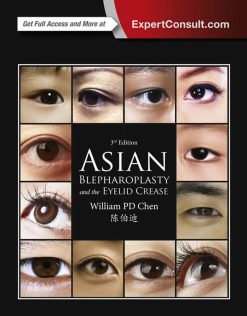
Asian Blepharoplasty and the Eyelid Crease 3rd Edition (PDF+Videos)
ENT / Otolaryngology
ENT / Otolaryngology
ENT / Otolaryngology
ENT / Otolaryngology