
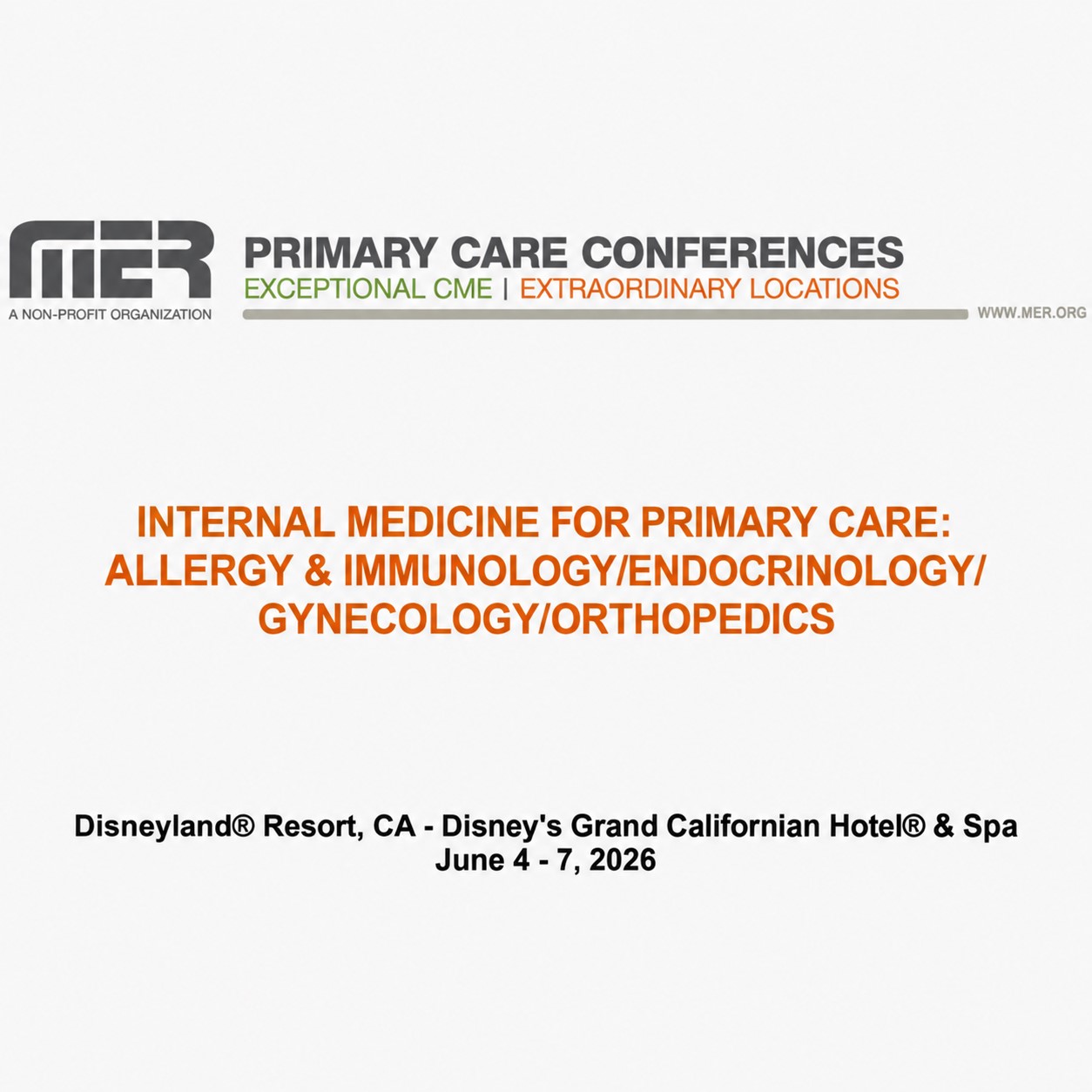
MER Primary Care Conferences Internal Medicine for Primary Care Allergy & Immuno Endo Gyn Ortho Jun 04-07, 2026
$120.00
This Product is shared via google drive download link, So please share your correct Gmail id while placing the order .Please note that there are no CME points or certificate associated with this course Samples for Courses Can be found here : Free Samples Here!
MER Internal Medicine for Primary Care: Allergy & Immunology, Endocrinology, Gynecology & Orthopedics 2026 (Videos)
Comprehensive Primary Care CME | Allergy & Immunology, Endocrinology, Gynecology & Orthopedics
Stay current with practical, evidence-based approaches to common conditions in allergy and immunology, endocrinology, gynecology, and orthopedics with the MER Primary Care Conference: Internal Medicine for Primary Care – Allergy & Immunology/Endocrinology/Gynecology/Orthopedics 2026.
Organized by Medical Education Resources (MER), this continuing medical education program provides clinically relevant updates designed specifically for office-based primary care providers and healthcare professionals.
The conference was held June 4–7, 2026, at the Disneyland® Resort – Disney’s Grand Californian Hotel® & Spa in California.
Product Details
- Course: Internal Medicine for Primary Care: Allergy & Immunology/Endocrinology/Gynecology/Orthopedics
- Provider: Medical Education Resources (MER)
- Conference Dates: June 4–7, 2026
- Location: Disneyland® Resort, California
- Venue: Disney’s Grand Californian Hotel® & Spa
- Format: Videos
- Language: English
- Educational Focus: Primary Care & Internal Medicine
- Learning Format: Expert Lectures, Clinical Discussion & Case-Based Learning
Course Overview
Primary care clinicians regularly manage patients with endocrine disorders, allergic and immunologic conditions, women’s health concerns, and musculoskeletal complaints.
This comprehensive MER program brings these areas together in a practical educational format, helping clinicians strengthen their ability to diagnose common conditions, develop individualized treatment plans, recognize complications, and determine when specialist referral or advanced evaluation is appropriate.
The curriculum includes diabetes, osteoporosis, thyroid and pituitary disorders, urticaria, angioedema, asthma, rhinitis, sinusitis, anaphylaxis, immunotherapy, women’s health, abnormal uterine bleeding, contraception, menopause, and orthopedic conditions.
What You’ll Learn
Participants will strengthen their knowledge in:
- Type 1 and type 2 diabetes
- Osteoporosis and bisphosphonate therapy
- Thyroid disorders
- Abnormal thyroid function
- Pituitary disorders
- Acute urticaria
- Angioedema
- Asthma
- Rhinitis
- Sinusitis
- Anaphylaxis
- Immunotherapy
- Annual women’s health assessment
- Abnormal uterine bleeding
- Contraceptive counseling
- Menopausal transition
- Menopause treatment options
- Knee anatomy and function
- Hip, thigh, knee, and shoulder disorders
- Shoulder injuries
- Wrist, hand, and finger injuries
Comprehensive Topics Covered
Endocrinology
Review practical approaches to common endocrine conditions encountered in primary care.
Topics include:
- Type 1 diabetes
- Type 2 diabetes
- Individualized diabetes treatment
- Diabetes treatment strategies
- Osteoporosis
- Bisphosphonate therapy
- Risks and benefits of bisphosphonates
- Abnormal thyroid function
- Thyroid-related risks
- Pituitary disorders
- Treatment options for pituitary disease
Diabetes Management
The program addresses the diagnosis and treatment of both major forms of diabetes.
Clinicians will review approaches to:
- Diagnose type 1 diabetes
- Diagnose type 2 diabetes
- Tailor treatment strategies
- Develop patient-specific management plans
- Apply evidence-based diabetes treatment approaches
Osteoporosis
Strengthen understanding of pharmacologic management of osteoporosis.
Topics include:
- Bisphosphonate therapy
- Potential treatment benefits
- Treatment-related risks
- Clinical considerations when selecting osteoporosis therapy
Allergy & Immunology
Develop practical approaches to common allergic and immunologic presentations.
Topics include:
- Acute urticaria
- Angioedema
- Asthma
- Rhinitis
- Sinusitis
- Anaphylaxis
- Immunotherapy
- Allergic disease management
- Cost-effective management strategies
Urticaria & Angioedema
Learn how to approach patients presenting with acute allergic skin and mucosal manifestations.
The program addresses:
- Initial evaluation
- Acute urticaria
- Angioedema
- Treatment planning
- Recognition of clinically important presentations
Asthma, Rhinitis & Sinusitis
Review practical and cost-effective approaches to common respiratory allergic conditions.
Topics include:
- Asthma management
- Rhinitis
- Sinusitis
- Efficient clinical management
- Cost-effective treatment approaches
- Differentiating common allergic and upper-airway presentations
Anaphylaxis & Immunotherapy
Strengthen recognition and management of serious allergic reactions.
The course covers:
- Management of anaphylactic reactions
- Recognition of anaphylaxis
- Indications for immunotherapy
- Clinical considerations for allergy treatment
Gynecology & Women’s Health
The program provides an evidence-based framework for addressing common women’s health concerns in primary care.
Topics include:
- Annual women’s health visits
- Preventive women’s healthcare
- Abnormal uterine bleeding
- Contraceptive counseling
- Complex contraceptive decisions
- Menopausal transition
- Menopause treatment options
- Risks and benefits of treatment
Annual Women’s Health Visit
Learn how to incorporate essential elements of a comprehensive annual women’s health assessment.
The program emphasizes:
- Evidence-based assessment tools
- Preventive care
- Comprehensive women’s health evaluation
- Best-practice approaches
Abnormal Uterine Bleeding
Develop a structured approach to patients presenting with abnormal uterine bleeding.
Topics include:
- Clinical assessment
- Evaluation strategies
- Management approaches
- Identification of appropriate treatment options
Contraceptive Counseling
Review approaches to helping patients make informed and individualized contraceptive decisions.
The program focuses on:
- Counseling strategies
- Complex contraceptive decisions
- Patient-centered discussions
- Evidence-based contraceptive planning
Menopausal Transition
Explore the clinical management of women during the menopausal transition.
Topics include:
- Menopausal transition
- Treatment options
- Risks and benefits
- Patient counseling
- Individualized management considerations
Orthopedics
Strengthen practical skills for evaluating common musculoskeletal conditions encountered in primary care.
Topics include:
- Knee anatomy
- Knee joint function
- Hip disorders
- Thigh disorders
- Knee disorders
- Shoulder disorders
- Shoulder injuries
- Wrist injuries
- Hand injuries
- Finger injuries
Knee, Hip & Shoulder Conditions
Develop an approach to diagnosing and treating common orthopedic problems involving:
- Hip
- Thigh
- Knee
- Shoulder
The program emphasizes practical diagnosis and treatment strategies applicable to primary care.
Upper Extremity Injuries
Review the evaluation and management of:
- Shoulder injuries
- Wrist injuries
- Hand injuries
- Finger injuries
Provider Wellness
The program also includes discussion of techniques designed to improve the health and wellness of medical providers, recognizing the importance of clinician wellbeing in sustainable medical practice.
Learning Objectives
Upon completion of this program, participants should be better able to:
- Diagnose and tailor treatment strategies for type 1 and type 2 diabetes.
- Identify the risks and benefits of utilizing bisphosphonates in the treatment of osteoporosis.
- Identify the risks associated with abnormal thyroid function.
- Describe treatment options for pituitary disorders.
- Develop an initial treatment plan for a patient with acute urticaria and/or angioedema.
- Describe efficient and cost-effective approaches to managing asthma, rhinitis, and sinusitis.
- Outline the management of anaphylactic reactions and identify indications for immunotherapy.
- Apply techniques designed to improve the health and wellness of medical providers.
- Identify evidence-based tools for determining best practices during the annual women’s health visit.
- Assess and manage abnormal uterine bleeding.
- Describe approaches to counseling patients facing complex contraceptive decisions.
- Discuss the menopausal transition and evaluate the risks and benefits of available treatment options.
- Describe the anatomy and function of the knee joint.
- Diagnose and treat orthopedic problems involving the hip, thigh, knee, and shoulder.
- Diagnose and treat shoulder injuries.
- Diagnose and treat wrist, hand, and finger injuries.
Educational Highlights
- Primary Care Medicine
- Internal Medicine
- Allergy & Immunology
- Endocrinology
- Diabetes
- Osteoporosis
- Thyroid Disorders
- Pituitary Disorders
- Urticaria
- Angioedema
- Asthma
- Rhinitis
- Sinusitis
- Anaphylaxis
- Immunotherapy
- Women’s Health
- Gynecology
- Abnormal Uterine Bleeding
- Contraceptive Counseling
- Menopause
- Orthopedics
- Musculoskeletal Medicine
- Knee Disorders
- Shoulder Injuries
- Wrist & Hand Injuries
- Continuing Medical Education (CME)
Why This Course Stands Out
The MER Internal Medicine for Primary Care: Allergy & Immunology/Endocrinology/Gynecology/Orthopedics 2026 program provides a practical multidisciplinary update covering several high-frequency areas of primary care.
From diabetes and osteoporosis to asthma, anaphylaxis, women’s health, menopause, and orthopedic injuries, the course delivers clinically relevant education designed to support better diagnosis, treatment planning, and patient management.
Its broad coverage makes it particularly valuable for clinicians who want to efficiently update their knowledge across multiple specialties within a single educational program.
Target Audience
This educational activity is ideal for:
- Primary Care Physicians
- Internal Medicine Physicians
- Family Medicine Physicians
- Allergy & Immunology Physicians
- Endocrinologists
- Gynecologists
- Orthopedic Physicians
- Nurse Practitioners
- Physician Assistants
- Other Healthcare Professionals Providing Primary Care
Who Should Take This Course?
This program is particularly useful for clinicians who:
- Manage diabetes and endocrine disorders in primary care.
- Treat patients with asthma, rhinitis, sinusitis, urticaria, or angioedema.
- Need to recognize and manage anaphylactic reactions.
- Provide women’s health and contraceptive counseling.
- Evaluate abnormal uterine bleeding.
- Counsel patients during the menopausal transition.
- Manage common orthopedic complaints and injuries.
- Want a broad evidence-based update across several primary care specialties.
Course Benefits
By reviewing this program, learners can strengthen their approach to:
- Diabetes diagnosis and management
- Osteoporosis treatment
- Thyroid and pituitary disorders
- Allergy and asthma management
- Anaphylaxis
- Immunotherapy
- Women’s preventive health
- Abnormal uterine bleeding
- Contraceptive counseling
- Menopause management
- Orthopedic assessment
- Musculoskeletal injuries
- Primary care treatment planning
4. Topics
Endocrinology
-
Insulin Therapy for Diabetes: Treating T2DM with insulin; T1DM.
-
Osteoporosis: Review the epidemiology and pathophysiology of osteoporosis along with interpretation of DEXA scans and FRAX risk assessment; up-to-date therapeutic options.
-
Disorders of Thyroid Function: Prevalence, diagnosis and treatment options of hypothyroidism and hyperthyroidism.
-
Evaluation and Management of Pituitary Disease: Diagnosis and treatment of pituitary disorders.
Allergy & Immunology
-
Urticaria and Angioedema Updates for Primary Care: This presentation will discuss the pathogenesis and epidemiology of urticaria and angioedema; review the causes of urticaria and angioedema; and discuss the treatment of urticaria and angioedema.
-
Asthma, Allergic Rhinitis, and Sinusitis for Primary Care: Lecture focused on gaining a working knowledge of how to efficiently and cost effectively manage patients with asthma, rhinitis, and sinusitis.
-
Food Allergies and Hymenoptera Allergies: Primary care focused discussion of food and venom allergies including gaining a working knowledge of how to efficiently and cost effectively manage patients with hymenoptera hypersensitivity.
-
Burnout and Clinician Wellness: Strategies that clinicians and healthcare providers can institute with ease to combat the challenges and pitfalls of the current healthcare system.
Gynecology
-
Annual Exam for Women: Best practices in offering annual pelvic examinations in asymptomatic non-pregnant women; Determination of who should be offered a clinical breast exam as a routine part of the annual women’s health exam; The principal elements of the annual women’s health visit: screening, vaccinations, evaluation of health risks and needs, counseling; Evidence-based tools to guide components of the annual women’s health visit based on age and health needs.
-
Abnormal Uterine Bleeding: Overview of normal/abnormal menstrual physiology/profile; Menstrual disturbances; Ovulatory and anovulatory uterine bleeding; Other menstrual abnormalities; Diagnosis and appropriate treatment options.
-
Contraception: A Primary Care Review of Best Practice: Coverage of the effectiveness, side effects and non-contraceptive benefits of available contraceptive options in the U.S.; Discussion of contraceptive counseling that is patient-centric including communicating without coercion; Management strategies for medically complex contraceptive decisions (patients with a history of VTE, breast cancer, hypertension).
-
Menopause Transition and Hormone Replacement Therapy: Symptoms of menopause, including hot flashes, night sweats, and atrophy; Menopause syndromes, including osteoporosis, breast cancer, cardiac disease, and colon cancer; Estrogen analogs; Counseling patients in options and alternatives to hormone therapy; Designer estrogens; SERMS; HRTs; Discussion of risks and benefits, especially in breast cancer and CHD.
Orthopedics
-
The Knee: Anatomy, Common Injuries, and Exam Techniques: ACL, meniscus, MRI; common sports injuries; osteoarthritis and hyaluronan; bursitis: prepatellar, pesanserine; baker’s cyst; joint injection/X-ray interpretation; pediatrics.
-
Hip and Thigh: Emphasizing the tools, physical diagnostic techniques and basic investigations available to the primary care practitioner, a practical approach to the undifferentiated hip problem will be reviewed. Diagnostic triage, historical clues and physical examination pearls pertaining to hip conditions will be covered, and evidence-based management.
-
The Shoulder: Anatomy, Common Injuries, and Exam Techniques: Rotator cuff syndrome; impingement, frozen shoulder; subacromail bursitis; bicipital tendonitis; A-C joint disease.
-
Wrist, Hand, and Fingers: Carpal tunnel, CMC arthritis thumb, ganglion cyst, trigger finger, de Quervains disease.
Related products
Endocrine and Nutrition


Endocrine and Nutrition
Master Course Carotid and Vertebral Arteries (ABC Vascular) (Videos, Slides & Quizzes)
Internal Medicine

Endocrine and Nutrition
Harvard The Blackburn Course in Obesity Medicine Treating Obesity 2023
Endocrine and Nutrition
Harvard Testosterone Therapy and Sexual Dysfunction February 2023

Endocrine and Nutrition