
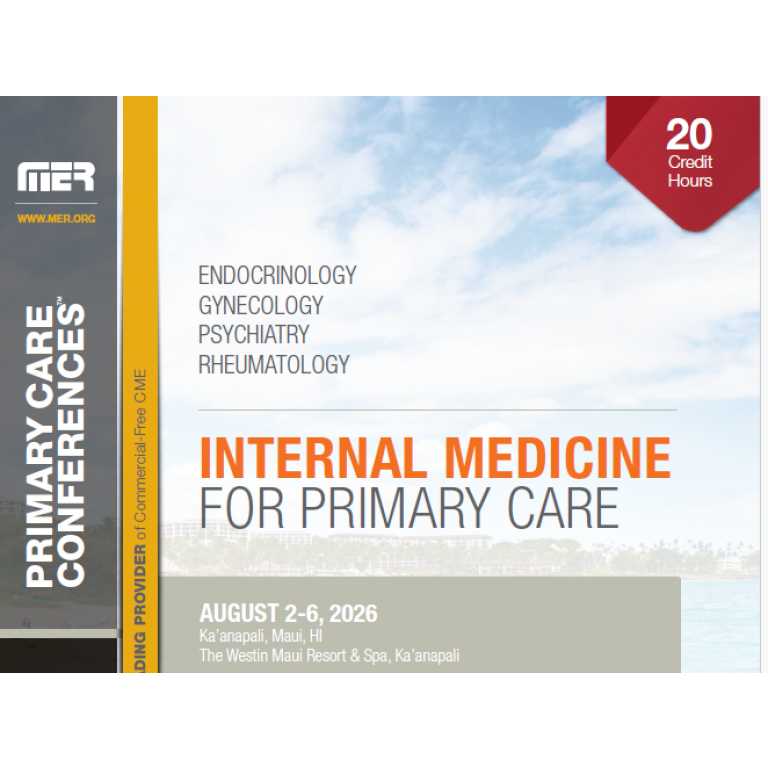
MER Primary Care Conferences Internal Medicine for Primary Care 2026: Endocrinology, Gynecology, Psychiatry & Rheumatology – August 2–6, 2026
Original price was: $85.00.$67.15Current price is: $67.15.
This Product is shared via google drive download link, So please share your correct Gmail id while placing the order .Please note that there are no CME points or certificate associated with this course Samples for Courses Can be found here : Free Samples Here!
MER Internal Medicine for Primary Care: Endocrinology, Gynecology, Psychiatry & Rheumatology 2026 (Videos)
Comprehensive Primary Care CME | Endocrinology, Gynecology, Psychiatry & Rheumatology
Stay current with practical, evidence-based approaches to common conditions encountered in primary care with MER Internal Medicine for Primary Care: Endocrinology/Gynecology/Psychiatry/Rheumatology 2026.
Organized by Medical Education Resources (MER), this comprehensive continuing medical education program provides clinically relevant updates across four important areas of primary care: Endocrinology, Gynecology, Psychiatry, and Rheumatology.
The conference will take place from August 2–6, 2026, at The Westin Maui Resort & Spa, Kaanapali, Maui, Hawaii.
Product Details
- Course: Internal Medicine for Primary Care: Endocrinology/Gynecology/Psychiatry/Rheumatology
- Provider: Medical Education Resources (MER)
- Conference Dates: August 2–6, 2026
- Location: Maui, Hawaii
- Venue: The Westin Maui Resort & Spa, Kaanapali
- Format: Educational Videos
- Language: English
- Educational Focus: Primary Care & Internal Medicine
- Specialties: Endocrinology, Gynecology, Psychiatry & Rheumatology
- Learning Format: Expert Lectures, Discussion & Case-Based Learning
Course Overview
Primary care physicians regularly manage patients with diabetes, thyroid disorders, osteoporosis, psychiatric conditions, reproductive health concerns, inflammatory arthritis, osteoarthritis, and crystal-associated joint disease.
The MER Internal Medicine for Primary Care 2026 program provides a multidisciplinary review of these important clinical areas, with emphasis on practical diagnosis, evidence-based treatment, patient-specific management, and clinical decision-making.
The curriculum covers diabetes and insulin therapy, osteoporosis, thyroid and pituitary disease, adult ADHD, bipolar disorder, anxiety, substance-use disorders, suicide and violence risk, contraception, abnormal uterine bleeding, HPV and abnormal Pap smears, menopause, breast cancer screening, inflammatory arthritis, osteoarthritis, gout, and pseudogout.
What You’ll Learn
Participants will strengthen their knowledge of:
- Type 1 diabetes
- Type 2 diabetes
- Diabetes screening
- Prediabetes
- Diabetic emergencies
- Insulin therapy
- Osteoporosis
- DEXA interpretation
- FRAX risk assessment
- Bisphosphonate therapy
- Hypothyroidism
- Hyperthyroidism
- Pituitary disorders
- Adult ADHD
- Bipolar spectrum disorders
- Anxiety disorders
- PTSD
- Substance-use disorders
- Motivational interviewing
- Suicide risk assessment
- Violence risk assessment
- Contraceptive counseling
- Abnormal uterine bleeding
- Abnormal Pap smears
- High-risk HPV
- HPV vaccination
- Menopause
- Hormone replacement therapy
- Breast cancer screening
- BRCA-related cancer risk
- Genetic counseling
- Inflammatory versus non-inflammatory joint pain
- Rheumatoid arthritis
- Systemic lupus erythematosus
- Spondyloarthropathies
- Infectious arthritis
- Systemic sclerosis
- Sjögren syndrome
- Polymyalgia rheumatica
- Osteoarthritis
- Gout
- Pseudogout
Endocrinology
Type 2 Diabetes Mellitus
Review practical approaches to the diagnosis and treatment of diabetes, including important lessons from the DCCT, diabetic emergencies, screening, and prediabetes.
Topics include:
- Diabetes diagnosis
- Diabetes treatment
- Diabetes screening
- Prediabetes
- Type 2 diabetes mellitus
- Diabetic emergencies
- Patient-specific diabetes management
Insulin Therapy for Diabetes
Review practical strategies for insulin therapy, including:
- Insulin treatment for type 2 diabetes
- Type 1 diabetes
- Insulin treatment strategies
- Individualized diabetes management
Osteoporosis
Explore contemporary approaches to osteoporosis, including:
- Epidemiology
- Pathophysiology
- DEXA scan interpretation
- FRAX risk assessment
- Current treatment options
- Risks and benefits of bisphosphonates
Disorders of Thyroid Function
Review the diagnosis and management of thyroid disorders.
Topics include:
- Prevalence of thyroid disease
- Hypothyroidism
- Treatment of hypothyroidism
- Hyperthyroidism
- Treatment of hyperthyroidism
- Clinical implications of abnormal thyroid function
Pituitary Disease
Learn practical approaches to:
- Diagnosis of pituitary disorders
- Evaluation of pituitary disease
- Treatment of pituitary disorders
- Management of pituitary conditions
Psychiatry
Adult ADHD
Review the complexity of diagnosing and treating adult attention-deficit/hyperactivity disorder (ADHD).
Topics include:
- Identification of ADHD symptoms in adults
- Co-occurring conditions
- Psychiatric differential diagnosis
- Medical differential diagnosis
- Evidence-based treatment
- FDA-approved pharmacologic treatments
Bipolar Spectrum Disorders
Explore bipolar disorders in adults, including:
- Bipolar disorders in adults versus youth
- Comprehensive psychiatric history-taking
- Differential diagnosis
- Psychiatric comorbidities
- Medical comorbidities
- Phase-specific treatment
- Psychosocial interventions
- Pharmacologic treatment
Anxiety Disorders
Review the clinical approach to:
- Generalized anxiety disorder
- Panic disorder
- Social anxiety disorder
- Post-traumatic stress disorder
- Etiology
- Diagnosis
- Co-occurring conditions
- Treatment options
Substance-Use Disorders
Develop practical approaches to substance-use assessment and treatment.
Topics include:
- Substance-use history-taking
- Screening tools
- Accurate diagnosis
- Brief interventions
- Recovery options
- Treatment strategies
- Motivational interviewing
- Family symptoms and codependency
- Encouraging honest patient communication
Suicide & Violence Risk
Review strategies for identifying and managing patients at risk for suicide or violence.
Topics include:
- Suicide risk assessment
- Violence risk assessment
- Psychotropic medications and suicidal behavior
- Psychotropic medications and violent behavior
- Management of suicidal patients
- Management of potentially violent patients
- Appropriate and timely referral
Gynecology
Contraception: A Primary Care Review of Best Practice
Review modern contraceptive counseling and management, including:
- Effectiveness of contraceptive methods
- Side-effect profiles
- Non-contraceptive benefits
- Patient-centered contraceptive counseling
- Communication without coercion
- Complex contraceptive decisions
- Contraception in patients with previous VTE
- Breast cancer considerations
- Hypertension and contraception
Abnormal Uterine Bleeding
Review normal and abnormal menstrual physiology and practical approaches to diagnosis and treatment.
Topics include:
- Normal menstrual physiology
- Abnormal menstrual physiology
- Menstrual disturbances
- Ovulatory uterine bleeding
- Anovulatory uterine bleeding
- Other menstrual abnormalities
- Diagnosis
- Treatment options
Abnormal Pap Smears & High-Risk HPV
Review contemporary approaches to cervical cancer screening and abnormal cervical cytology.
Topics include:
- Cervical cancer screening recommendations
- Abnormal cervical cytology
- ASC-US
- LGSIL
- HGSIL
- Atypical glandular cells
- ASCCP consensus guidelines
- HPV testing
- HPV vaccination
- Missed HPV vaccine doses
- Vaccine storage
- Vaccine administration
Menopause & Hormone Replacement Therapy
Review important aspects of the menopause transition and treatment options.
Topics include:
- Hot flashes
- Night sweats
- Atrophy
- Osteoporosis
- Breast cancer considerations
- Cardiovascular disease
- Colon cancer
- Estrogen analogs
- Hormone replacement therapy
- SERMs
- Alternatives to hormone therapy
- Risks and benefits of HRT
Breast Cancer Screening
Review contemporary breast cancer screening recommendations, including:
- USPSTF recommendations
- ACOG recommendations
- ACS recommendations
- NCCN recommendations
- Screening at different ages
- Risks and benefits of screening
- BRCA-related cancer risk assessment
- Genetic counseling
- Genetic testing
- Family history risk assessment
- Personal history risk assessment
Rheumatology
Evaluating the Patient With Joint Pain
Learn to differentiate inflammatory from non-inflammatory joint pain.
Topics include:
- Clinical evaluation of joint pain
- Differential diagnosis
- Joint aspiration
- Laboratory investigations
- Synovial fluid analysis
- Interpretation of synovial fluid findings
- Evaluation of inflammatory arthritis
Pharmacology for Arthritis
Review commonly used pharmacologic treatments for arthritis, including:
- Traditional NSAIDs
- COX-2 inhibitors
- Analgesics
- Narcotic analgesics
- Tramadol
- Acetaminophen
- Conventional synthetic DMARDs
- Biologic DMARDs
Differential Diagnosis of Inflammatory Arthritis
Review the clinical presentation, laboratory evaluation, and treatment of:
- Rheumatoid arthritis
- Systemic lupus erythematosus
- Spondyloarthropathies
- Infectious arthritis
- Systemic sclerosis
- Sjögren syndrome
- Polymyalgia rheumatica
The program also reviews the use of DMARDs in rheumatoid arthritis and treatment principles for important systemic rheumatic diseases.
Osteoarthritis
Review:
- Pathogenesis of osteoarthritis
- Diagnosis of osteoarthritis
- Evidence-based treatment strategies
Crystal Disease: Gout & Pseudogout
Learn practical approaches to the diagnosis and treatment of:
- Gout
- Pseudogout
- Crystal-associated joint disease
Learning Objectives
Upon completion of this educational program, participants should be better able to:
- Develop patient-specific treatment plans for type 2 diabetes.
- Diagnose and tailor treatment strategies for type 1 and type 2 diabetes.
- Identify the risks and benefits of bisphosphonate therapy for osteoporosis.
- Recognize risks associated with abnormal thyroid function.
- Describe treatment options for pituitary disorders.
- Compare pharmacologic treatment options for adult ADHD.
- Discuss psychosocial and pharmacologic treatment of bipolar disorder.
- Review evidence-based treatment of anxiety disorders.
- Identify and treat substance-use disorders.
- Assess patients at risk for suicide and violence.
- Counsel patients regarding complex contraceptive decisions.
- Assess and manage abnormal uterine bleeding.
- Manage abnormal Pap smears and HPV.
- Discuss menopause and the risks and benefits of available treatments.
- Review current evidence and recommendations for breast cancer screening.
- Differentiate inflammatory from non-inflammatory joint pain.
- Review pharmacologic treatment options for arthritis.
- Develop differential diagnoses for inflammatory arthritis.
- Design evidence-based treatment strategies for osteoarthritis.
- Diagnose and treat gout and pseudogout.
Educational Highlights
- Primary Care Medicine
- Internal Medicine
- Endocrinology
- Gynecology
- Psychiatry
- Rheumatology
- Diabetes Mellitus
- Insulin Therapy
- Osteoporosis
- DEXA Scan
- FRAX
- Thyroid Disease
- Pituitary Disease
- Adult ADHD
- Bipolar Disorder
- Anxiety Disorders
- PTSD
- Substance-Use Disorders
- Suicide Risk Assessment
- Violence Risk Assessment
- Contraception
- Abnormal Uterine Bleeding
- HPV
- Abnormal Pap Smears
- Menopause
- Hormone Replacement Therapy
- Breast Cancer Screening
- Rheumatoid Arthritis
- Lupus
- Inflammatory Arthritis
- Osteoarthritis
- Gout
- Pseudogout
- Continuing Medical Education (CME)
Why Choose This Course?
The MER Internal Medicine for Primary Care: Endocrinology/Gynecology/Psychiatry/Rheumatology 2026 program provides a broad multidisciplinary update covering four major areas of primary care medicine.
From diabetes, osteoporosis, and thyroid disease to ADHD, anxiety, reproductive health, menopause, inflammatory arthritis, osteoarthritis, and crystal disease, the course brings together high-yield clinical topics relevant to everyday practice.
Its practical focus makes it particularly useful for healthcare professionals who want to strengthen diagnosis, treatment planning, patient counseling, and evidence-based clinical decision-making.
Target Audience
This educational program is targeted toward office-based primary care providers and other healthcare professionals seeking updates in primary care medicine.
Best For
- Internal Medicine Physicians
- Primary Care Physicians
- Family Medicine Physicians
- General Practitioners
- Nurse Practitioners
- Physician Associates / Physician Assistants
- Nurses
- Healthcare Professionals involved in primary care
Particularly Relevant For Physicians Seeking Updates In
- Endocrinology
- Gynecology
- Psychiatry
- Rheumatology
Who Should Take This Course?
This program is particularly useful for clinicians who:
- Manage patients with type 1 and type 2 diabetes.
- Treat patients requiring insulin therapy.
- Evaluate and manage osteoporosis.
- Diagnose thyroid and pituitary disorders.
- Evaluate adult ADHD and psychiatric comorbidities.
- Manage bipolar and anxiety disorders.
- Address substance-use disorders.
- Assess suicide and violence risk.
- Provide contraceptive counseling.
- Evaluate abnormal uterine bleeding.
- Manage abnormal Pap smears and HPV.
- Counsel patients during menopause.
- Evaluate breast cancer screening needs.
- Diagnose and manage inflammatory arthritis.
- Treat osteoarthritis.
- Diagnose and manage gout and pseudogout.
Course Benefits
By reviewing this program, learners can strengthen their approach to:
- Diabetes diagnosis and management
- Insulin therapy
- Osteoporosis assessment
- Thyroid disease
- Pituitary disorders
- Adult ADHD
- Bipolar disorder
- Anxiety disorders
- Substance-use disorders
- Suicide and violence risk assessment
- Contraceptive counseling
- Abnormal uterine bleeding
- HPV and cervical screening
- Menopause management
- Breast cancer screening
- Inflammatory arthritis
- Osteoarthritis
- Gout and pseudogout
- Evidence-based primary care decision-making
Related products

Endocrine and Nutrition
Comprehensive Care for Persons with Diabetes 2022: A Certificate Program
Cardiology

Endocrine and Nutrition
Master Course Carotid and Vertebral Arteries (ABC Vascular) (Videos, Slides & Quizzes)


Endocrine and Nutrition
The Brigham Board Review and Comprehensive Update in Endocrinology 2023

Internal Medicine